

AI-Driven Quality Control in Business: Roi, Risks and Reality
Written with AI assistance under our editorial guidelines
AI-driven quality control promises automation and error elimination, but reality proves messier. Early systems failed due to rigid rules and poor data discipline, causing false alarms and recalls. Modern approaches succeed by hybridizing AI with human oversight, investing in robust data infrastructure, and adapting to real-world complexity rather than pursuing mindless automation alone.
The myth: AI-driven quality control in business is a silicon bullet—flawless, tireless, always impartial. The reality? Messier, grittier, and infinitely more human than most tech evangelists dare admit. In 2025, the intersection of AI quality assurance and business risk looks more like a battleground than a utopia. Companies are chasing the holy grail: automated inspections, predictive maintenance, and error-free production lines. But the road is littered with broken promises, hidden pitfalls, and, yes, a few jaw-dropping breakthroughs. Whether you’re a small business owner or a Fortune 500 exec, understanding AI-driven quality control is no longer optional—it’s existential. This deep dive unpacks the raw truths, exposes the epic wins (and spectacular failures), and hands you the unvarnished playbook for surviving—and thriving—in the age of the algorithm.
The AI quality control revolution nobody planned for
From clipboards to code: how we got here
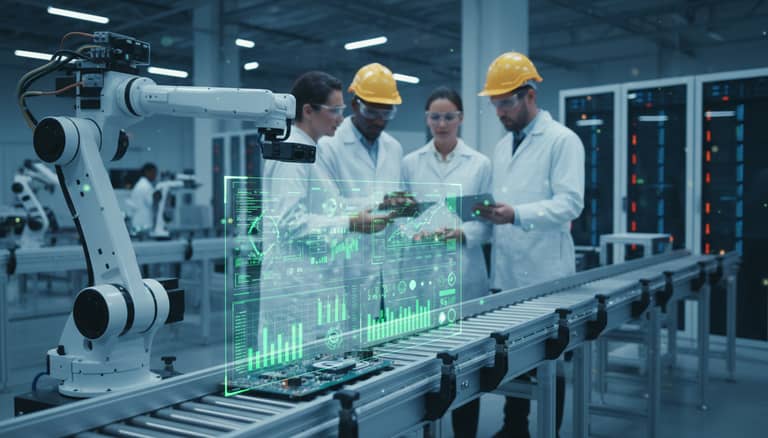
Rewind a decade. Quality control lived and died by the clipboard—human inspectors scrutinizing products on the line, ticking boxes, and praying they didn’t miss the next catastrophic defect. The rise of business process automation and AI-driven quality control was supposed to liberate us from human error and inefficiency. But the journey was anything but smooth. Early automation systems, built around rigid rules and brittle sensors, often failed spectacularly when faced with real-world complexity—the infamous “robot can’t spot a smudge” phenomenon. Factories that rushed into automation without real data discipline found themselves overwhelmed by false alarms, costly recalls, and frustrated staff.

Ironically, these failures taught the industry its most valuable lesson: mindless automation is just as dangerous as no automation at all. Companies learned that quality is not just about speed or scale; it’s about nuance, context, and relentless adaptation. Each stumble forced a rethink—leading manufacturers to hybridize, layer AI atop human oversight, and invest in data infrastructure that could actually support true machine learning defect detection.
A new definition of 'quality' in the algorithm age
Today’s definition of quality isn’t just about defect rates; it’s about real-time adaptability, continuous improvement, and aligning with rapidly shifting consumer expectations. AI-driven quality control in business means an algorithmic gaze scanning for flaws, but it also means redefining what “flawless” even means. Is a perfectly calibrated product always the goal, or is it consistent customer satisfaction and fewer recalls?
"Sometimes the algorithm misses what the human eye never would." — Carlos, veteran QC manager
This tension—between speed, scale, and the soul of quality—sits at the heart of the AI QC revolution. Business leaders are forced to ask: Is automation chasing perfection, or just a faster path to mediocrity? According to QualityMag, 2024, only about 63% of manufacturing firms have integrated AI into quality control, with complexity, cost, and workforce resistance as persistent roadblocks. The lesson? AI is powerful, but it doesn’t get the final word on quality—people still do.
How AI actually 'sees' flaws: behind the black box
The neural network’s eye view
The technical wizardry behind AI QC is seductive: machine vision systems ingest thousands of product images, learning to spot scratches, warps, or smudges invisible to the naked eye. Neural networks—built atop millions of labeled examples—claim to outpace even the most seasoned human inspectors. But does the data back up the hype?
| Industry | Human Detection Rate | AI Detection Rate | Notes |
|---|---|---|---|
| Automotive | 92% | 97% | AI excels at surface defect detection |
| Electronics | 85% | 95% | AI picks up on micro-defects missed by humans |
| Food Processing | 91% | 90% | AI struggles with ambiguous spoilage markers |
| Pharmaceuticals | 94% | 93% | Human expertise still superior for outliers |
Table 1: Comparison of human vs. AI defect detection rates in key sectors (Source: QA.tech, 2024)
Despite impressive figures, some flaws still sneak past even the most advanced systems. AI struggles with context—subtle changes in lighting, oddball defects not in the training set, or “one-in-a-million” failures that can upend entire supply chains. That’s why industry leaders warn against blind trust: the AI “black box” is powerful, but far from omniscient.
Data is the DNA: why training sets make or break AI QC
Here’s the dirty secret of AI quality assurance: your results are only as good as your data. High-performing models demand massive, meticulously labeled datasets—something most companies simply don’t have. According to Vena Solutions, 2024, lack of high-quality data is the single biggest hurdle to effective AI adoption.
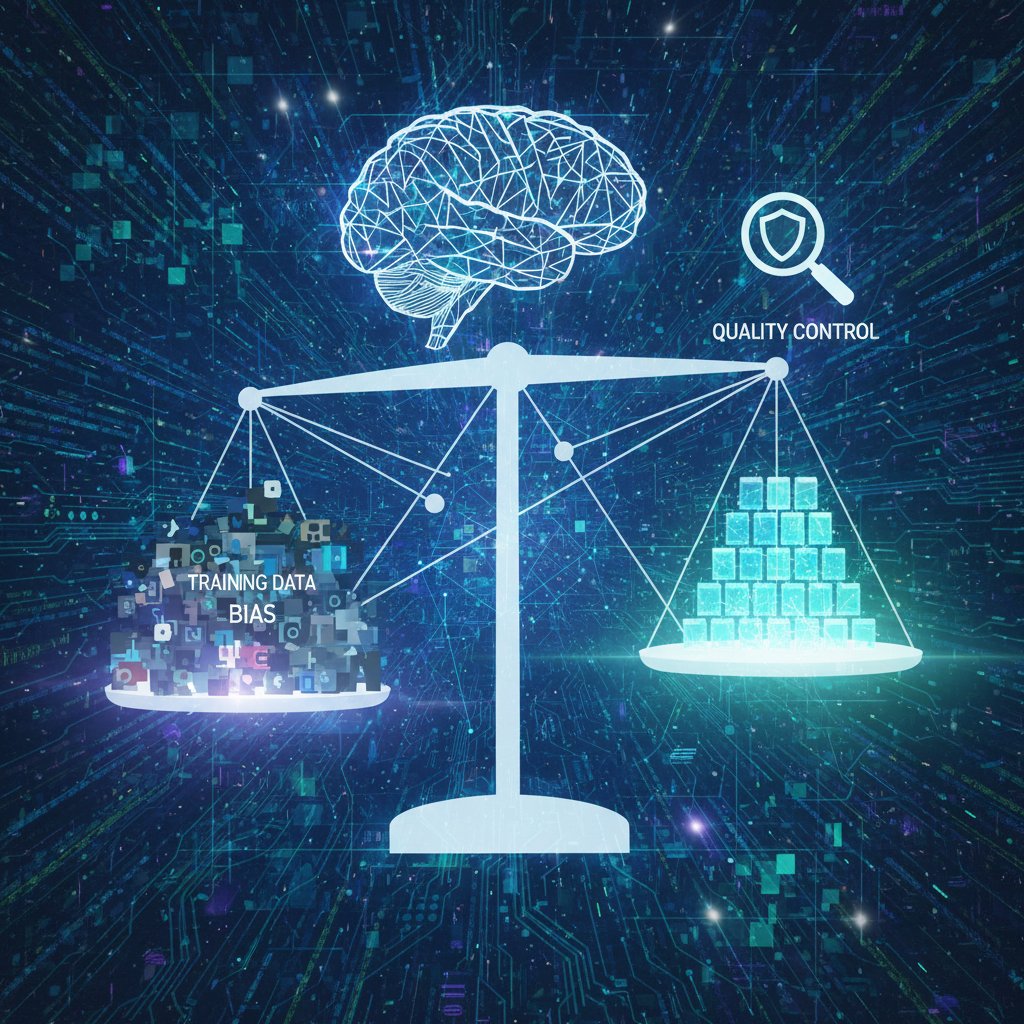
Get the data wrong, and your expensive new system becomes a liability. There have been notorious cases where flawed datasets trained AI to miss critical defects—resulting in product recalls and public embarrassment. For example, when a major automotive plant fed its AI only “normal” images, the system simply learned to pass everything, flagging nothing. The lesson: without diverse, representative data, even the most advanced algorithms will reinforce old biases and miss the outliers that actually matter.
Myth-busting: what AI-driven quality control can (and can’t) do
Debunking the hype: AI is not infallible
AI-driven quality control in business is often sold as an infallible solution to human shortcomings: no fatigue, no bias, just pure, relentless scrutiny. But that’s a myth—and a dangerous one. According to recent research, even state-of-the-art AI systems can be tripped up by adversarial noise, rare defect types, or shifting production contexts.
- Hidden risks and overlooked limitations of AI-driven quality control in business:
- Data drift: AI models degrade if production changes faster than retraining schedules.
- False positives/negatives: Overly sensitive systems flag harmless variations; insensitive ones miss real flaws.
- Context blindness: Algorithms lack the intuition to spot process-level issues or emerging defect patterns.
- Integration headaches: Seamless connection with legacy systems is rarely as easy as vendors promise.
- Regulatory tripwires: In regulated industries, AI decisions must be explainable—often a challenge for black-box systems.
- Overreliance risk: Blind trust in AI can erode critical human oversight, leading to catastrophic misses.
A high-profile failure in 2024 saw a major food manufacturer recall millions of units after its AI-driven system failed to spot a subtle packaging defect—a problem traced back to training data that excluded rare but critical failure cases. The fallout was severe: lost sales, public trust eroded, and a bruising regulatory review.
The human factor: why people still matter
Despite the AI hype, certain human skills remain irreplaceable—contextual reasoning, intuition, and the ability to question not just the product, but the process behind it. As AI continues to advance, the most successful companies are those that double down on hybrid models, pairing algorithmic speed with human judgment.
"AI can spot a scratch, but it can’t question a process." — Aisha, senior quality engineer
Hybrid quality control models—where humans handle exceptions, process improvements, and complex judgment calls—are emerging as the gold standard. According to Forbes, 2024, businesses that maintain a strong human-in-the-loop approach see fewer catastrophic misses and more sustainable ROI.
Case studies: the messy real world of AI QC adoption
When AI delivers: success stories with hard numbers
The headlines aren’t all grim. When executed intelligently, AI-driven quality control in business can slash defect rates, cut inspection times, and boost profits—sometimes dramatically. Consider the automotive manufacturer that reduced manual inspection hours by 50% and increased profits by 45% after rolling out AI-powered vision systems. Nordstrom, a retail giant, leveraged AI for inventory optimization, resulting in improved product availability and customer satisfaction.
| Industry | Before AI QC (Accuracy/Speed/Cost) | After AI QC (Accuracy/Speed/Cost) |
|---|---|---|
| Automotive | 92% / 8h / $1M | 97% / 4h / $600k |
| Electronics | 85% / 10h / $900k | 95% / 6h / $500k |
| Retail | 88% / 12h / $750k | 93% / 7h / $450k |
Table 2: Before-and-after stats from three industries adopting AI-driven quality control (Source: Original analysis based on QA.tech, 2024, Forbes, 2024)
What made these deployments successful? Deep integration with existing workflows, continuous dataset improvement, and unwavering human oversight. Predictive maintenance and anomaly detection—once the stuff of science fiction—now deliver tangible results, reducing downtime and cutting costs across sectors.
When things break: failures, fraud, and unintended consequences
But it’s not all roses. One medical device manufacturer, seduced by AI’s promise, eliminated most of its human inspectors. When a rare defect slipped through—missed by an algorithm trained on sanitized data—the company faced lawsuits, regulatory scrutiny, and a PR nightmare.

These public failures teach hard lessons: overreliance on AI, poor data hygiene, and lack of transparency can have devastating consequences. As one industry observer dryly noted, “AI doesn’t make mistakes—unless you let it.”
Beyond manufacturing: AI QC hits every industry (and what that means)
Unexpected sectors embracing AI quality control
AI-driven quality control in business is no longer a manufacturing-only game. Food processors use computer vision to spot contamination; hospitals deploy AI to flag anomalies in medical imaging; creative industries harness machine learning to ensure consistency in digital output.
- 2010-2012: Early adoption in automotive and electronics manufacturing, mostly pilot projects.
- 2013-2016: Food processing and pharmaceuticals start experimenting with AI for defect detection.
- 2017-2019: Retailers (notably Nordstrom) leverage AI for inventory and product QC.
- 2020-2022: Healthcare, logistics, and creative content industries onboard AI-driven QC tools.
- 2023-2025: Cross-industry expansion, with regulatory bodies and consumers pushing back on transparency and fairness.
Regulatory and consumer pushback is loudest in sectors where mistakes mean harm: food, medicine, public safety. Here, explainability isn’t a luxury—it’s a mandate, forcing companies to reconcile cutting-edge tech with old-fashioned accountability.
Cross-industry lessons and wildcards
Lessons learned in one sector often ripple into another. Automotive’s obsession with traceability now informs food safety standards. Retail’s AI inventory tricks inspire supply chain optimizations in pharma. But wildcards remain: some industries, like legal services or high-touch B2B, resist full automation—at least for now.
Key AI QC terms explained with context and business relevance:
- Machine vision: AI-powered cameras and algorithms that scan products for surface or structural defects; crucial for speed and objectivity.
- False positive/negative: When an AI QC system flags a non-defective item (false positive) or misses a defect (false negative); critical for risk analysis.
- Data drift: Gradual change in production data over time, causing AI models to lose accuracy if not retrained.
- Predictive maintenance: AI-driven monitoring that forecasts equipment failures before they occur; major source of ROI.
- Anomaly detection: Identifying unusual patterns that may signal emerging defects or systemic issues; key for proactive QC.
- Explainable AI: Systems designed to make their decisions understandable to humans; essential for regulated industries.
- Human-in-the-loop: QC models that keep human operators engaged for confirmation, exceptions, and process improvement.
Industries primed for next-wave adoption? Logistics, energy, and construction—sectors with big data, high error costs, and increasing regulatory pressure. Those resisting? Fields where human creativity, nuance, or trust remain irreplaceable.
The ethical minefield: bias, accountability, and job disruption
Algorithmic bias: who pays the price?
AI is only as fair as its training data. When datasets reflect past oversights or skewed definitions, bias seeps in—hurting both businesses and their customers. In regulated industries, biased AI can mean not just bad PR, but real-world harm and legal exposure.

The best companies implement strategies for bias detection and mitigation: diverse datasets, regular audits, and “explainability layers” to make decisions traceable. According to IQVIA, 2024, generative AI tools are now being used to streamline compliance and documentation, but human oversight is indispensable for ethical assurance.
Jobs, power, and the new workplace struggle
AI-driven quality control is rewriting the workplace script. Some roles—manual inspectors, data entry staff—are shrinking or evolving, while demand for AI-literate analysts explodes. Management’s power to define “quality” is no longer absolute; it’s shared with algorithms, sometimes uneasily.
"The power to decide quality is shifting—and not everyone’s happy." — Jenna, operations director
Upskilling is no longer optional. According to Vena Solutions, 2024, 96% of companies hiring in 2024 prefer candidates with robust AI skills. The upside? New career paths in data curation, algorithm auditing, and AI system oversight—provided workers can navigate the transition.
The practical playbook: how to implement AI-driven quality control without regret
Readiness checklist: can your business handle AI QC?
Before chasing the AI QC dream, businesses must lay a foundation: robust datasets, clear quality definitions, and a culture ready for change. Half-baked implementations waste money and breed cynicism.

- Audit your data: Assess if you have enough, and if it’s clean and representative.
- Map your processes: Identify where automation delivers the most value—and where human expertise must remain.
- Define quality: Clarify what “quality” means for your customers and products.
- Select the right vendor: Vet AI QC providers for transparency, explainability, and integration support.
- Pilot, iterate, improve: Start small, gather feedback, and refine before scaling.
- Upskill your team: Invest in training, not just tools, to bridge the human-AI divide.
- Monitor and adapt: Establish continuous monitoring for model drift, bias, and data anomalies.
Avoiding the money pit: cost-benefit analysis
AI QC projects are notorious for hidden costs: integration headaches, data wrangling, retraining, and the (often underestimated) need for human oversight. A rigorous cost-benefit analysis is non-negotiable.
| Solution Type | Upfront Cost | Integration Time | Ongoing Cost | Typical ROI |
|---|---|---|---|---|
| Off-the-shelf AI QC | $100k | 3 months | $2k/month | 18 months |
| Custom AI QC build | $500k | 9-12 months | $10k/month | 24-36 months |
| Hybrid (AI + human) | $200k | 4-6 months | $5k/month | 12-24 months |
Table 3: Cost-benefit breakdown of AI-driven quality control solutions (Source: Original analysis based on Forbes, 2024)
The key: project your ROI with brutal honesty. Outsized promises and “plug-and-play” pitches often ignore the sweat equity needed to make AI QC systems actually deliver.
What’s next? The future of AI-driven quality control and the human touch
Emerging trends: from explainable AI to self-healing systems
Cutting-edge trends in AI-driven quality control include self-learning systems that update from real-world feedback, “explainable AI” dashboards for regulatory compliance, and cross-domain QC solutions that adapt to new environments.
- Unconventional uses for AI-driven quality control in business:
- Social media monitoring for reputational risk in product feedback loops.
- Automated audit trails for regulatory compliance and legal defense.
- Adaptive QC for digital assets like brand content and software releases.
- Real-time anomaly detection in supply chains to catch fraud or environmental hazards.
- Employee safety monitoring through AI-powered cameras.
What’s hype? Fully autonomous, context-free AI QC is still more fantasy than fact. What’s real? AI as a force multiplier for humans—augmenting, not replacing, real expertise.
Will the algorithm ever be good enough?
The dream of perfect, autonomous quality control is as seductive as it is elusive. Every improvement brings new complexity—and new risks. The real question for business leaders isn’t whether AI will ever be “good enough,” but how much trust, oversight, and risk they’re willing to stake on the algorithm.

As the power dynamic shifts, the only certainty is that the future belongs to those who don’t just adopt AI-driven quality control in business, but wield it wisely—balancing speed and scale with judgment and nuance.
Resources and next steps: your toolset for thriving in the AI QC era
Where to learn more and who to trust
Staying ahead in AI-driven quality control is a moving target. Sites like futuretoolkit.ai are rapidly becoming the go-to resource for tracking advances, pitfalls, and best practices as the field evolves.
Red flags to watch out for when evaluating AI QC vendors:
- Black-box solutions with no transparency or explainability.
- Overpromising ROI without clear, industry-relevant case studies.
- Lack of integration support for your existing processes and data systems.
- Poor data hygiene—vendors that don’t audit for bias, drift, or representativeness.
- No upskilling support for your team or lack of documentation.
The bottom line: As AI rewrites the rules of quality, the winners will be those who build deep expertise, demand transparency, and never stop questioning—algorithm or not.
Glossary: decoding the jargon
Understanding the lingo is power. Here’s your cheat sheet for AI-driven quality control in business.
Cameras and AI algorithms that inspect products or processes for defects, used in manufacturing, food, and more.
When an AI system flags a product as defective when it’s actually fine; wastes resources and erodes trust.
Changes in real-world data that make AI models less accurate if not updated; a silent killer of AI projects.
AI-powered analysis that forecasts when equipment will fail, reducing downtime and saving money.
Spotting unusual patterns or deviations that may signal emerging quality issues or fraud.
AI systems designed to make their decisions understandable by humans—crucial for compliance and trust.
Quality control workflows that keep humans involved in critical decisions or exceptions, ensuring oversight.
With the right vocabulary, you’re ready to challenge vendors, advocate for your team, and drive smarter decisions.
In the end, AI-driven quality control in business is not a tech fairytale—it’s a high-stakes negotiation between promise and peril, clarity and opacity, speed and substance. The companies earning real results aren’t the ones blindly chasing automation, but those who interrogate every metric, every model, and every outcome. Will you let the algorithm have the last word, or will you stay in the fight?
Sources
References cited in this article
- QualityMag(qualitymag.com)
- Forbes(forbes.com)
- Vena Solutions(venasolutions.com)
- IQVIA(iqvia.com)
- QA.tech(qa.tech)
- Datategy(datategy.net)
- ComplianceQuest(compliancequest.com)
- MDPI Electronics(mdpi.com)
- MyLens.ai(mylens.ai)
- TTMS(ttms.com)
- AI-Pro.org(ai-pro.org)
- LambdaTest(lambdatest.com)
- QUATIC 2024(2024.quatic.org)
- Effivity(effivity.com)
- PYMNTS(pymnts.com)
- Invoca(invoca.com)
- World Economic Forum(weforum.org)
- NASSCOM(community.nasscom.in)
- Tandfonline(tandfonline.com)
- TechMagic(techmagic.co)
- Full Stack AI(fullstackai.co)
- Forbes(forbes.com)
- Forbes(forbes.com)
- CIO(cio.com)
- AIMultiple(research.aimultiple.com)
- World Economic Forum(weforum.org)
- BCG(bcg.com)
- Forbes(forbes.com)
- Automation World(automationworld.com)
- Forbes(forbes.com)
- Frozenet(frozenet.com)
- Quality Magazine(qualitymag.com)
- ResearchGate(researchgate.net)
- HSO Blog(hso.com)
- Katalon(katalon.com)
- ResearchGate(researchgate.net)
- Forbes(forbes.com)
- ISC2(isc2.org)
- Forbes(forbes.com)
- Insight7(insight7.io)
Empower Your Business with AI
Futuretoolkit.ai empowers businesses of all sizes to harness the power of AI effortlessly, offering specialized solutions across diverse business functions without the need for technical expertise. Whether it's automating customer interactions, optimizing operations, or analyzing complex data, our AI toolkit streamlines processes, increases efficiency, and fuels growth. With easy integration, intuitive interfaces, and powerful AI models, Futuretoolkit.ai offers unmatched accessibility and value, enabling users to achieve measurable outcomes quickly and cost-effectively.
Get startedReady to Empower Your Business?
Start leveraging AI tools designed for business success
Frequently Asked Questions
What was the main problem with early automation systems in quality control?
Early automation systems built around rigid rules and brittle sensors often failed when faced with real-world complexity, causing issues like false alarms, costly recalls, and frustrated staff. Companies learned that mindless automation without proper data discipline was just as dangerous as having no automation at all.
Why is AI-driven quality control described as messier than the tech industry promised?
The article states that AI quality control is 'messier, grittier, and infinitely more human' than tech evangelists admit, with the road 'littered with broken promises, hidden pitfalls,' reflecting a reality that differs significantly from the 'silicon bullet' myth of flawless, tireless automation.
How has the definition of quality changed in the algorithm age?
Today's definition of quality has expanded beyond just defect rates to include real-time adaptability, continuous improvement, and alignment with rapidly shifting consumer expectations, moving beyond simple speed and scale considerations.
What key lesson did the manufacturing industry learn from early automation failures?
Leading manufacturers learned that quality requires nuance, context, and relentless adaptation, leading them to hybridize systems by layering AI atop human oversight and investing in data infrastructure that could truly support machine learning defect detection.
Continue Reading
Keep exploring Comprehensive business AI toolkit

AI-Driven Business Transformation Solutions That Actually Deliver ROI

AI Integration in Business: Separating Real ROI From Hype

AI-Driven Business Process Improvement: What Works and What Fails

AI-Driven Business Innovation Analytics: 7 Truths for Real ROI

AI-Powered Business Management Software: Risks and Real Benefits
