


AI-Driven Supplier Management: Advantage or New Risk Layer?
Written with AI assistance under our editorial guidelines
AI-driven supplier management transforms procurement through real-time data analysis and predictive disruption detection, replacing manual processes with automation. However, this technological shift introduces hidden risks including algorithmic biases and operational blindness. Organizations must balance efficiency gains against careful examination of new vulnerabilities and hidden costs before full implementation.
Welcome to the edge of business transformation, where AI-driven supplier management isn’t just a buzzword—it’s the power shift that’s keeping C-suites up at night and rewriting the playbook for competitive advantage. Forget everything you thought you knew about procurement. The era of spreadsheets, midnight email chains, and opaque vendor relationships is being torched by algorithms, digital dashboards, and relentless data streams. But as organizations chase the holy grail of operational efficiency, a darker, messier reality emerges: hidden risks, unexpected biases, and the unglamorous, brutal truths that most tech evangelists won’t touch. In 2025, if you’re not wielding AI to manage your supplier ecosystem, you’re already a step behind. But if you’re not questioning the cost of this leap, you might already be running blind. This isn’t a glossy sales pitch; it’s an unfiltered guide to the hard-won wins and gut-punch challenges of AI-driven supplier management, drawn from real-world data, expert voices, and those war stories nobody dares post on LinkedIn.
The rise and reality of AI-driven supplier management
From spreadsheets to silicon: How we got here
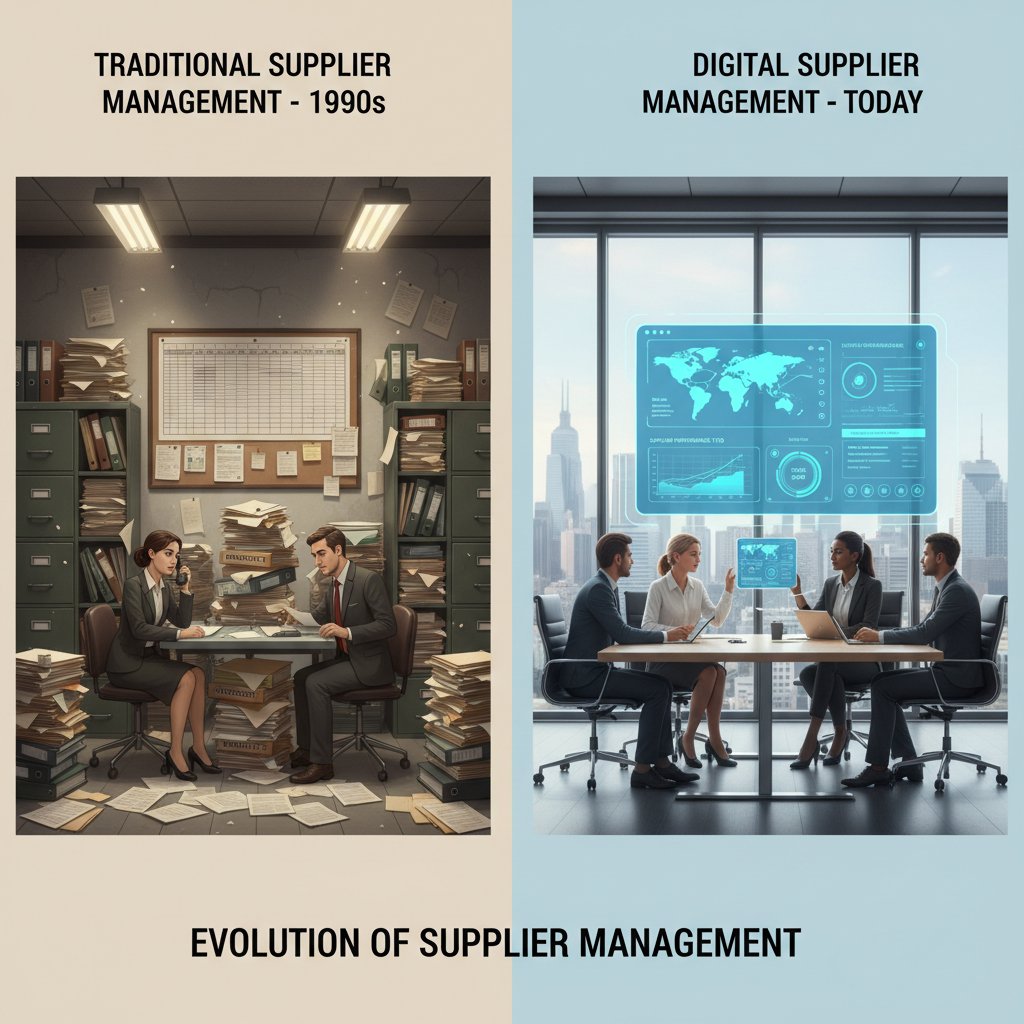
Supplier management has always been procurement’s shadow game—chasing reliability, price, and trust through a fog of paperwork and relationship-driven hunches. The journey from manual processes to today’s AI-powered platforms reads like a timeline of corporate ambition and mounting complexity. In the 1980s, procurement meant stacks of paper contracts and faxed purchase orders, with data scattered across filing cabinets and inboxes. The 1990s ushered in ERP systems, centralizing records but introducing new silos and inflexible processes. Early 2000s automation promised relief but mostly delivered incremental speed-ups, with bots and basic triggers struggling to interpret nuance or context.
By the late 2010s, the explosion of data from global supply chains forced a reckoning: old tools couldn’t keep up with volatility, risk, or scale. Enter AI. Machine learning models began parsing supplier data in real time, predicting disruptions before they hit, and automating negotiation points that once took weeks. According to recent research, the big game changer wasn’t just speed—it was the ability to extract actual intelligence from messy, unstructured input, driving smarter, faster, and more resilient supplier decisions.
| Era | Key Technology | Game Changers | Impact on Supplier Management |
|---|---|---|---|
| Manual (1980s) | Paper, phone | Trust, experience | Slow, relationship-based, error-prone |
| ERP (1990s) | SAP, Oracle | Centralized data | Improved records, new silos |
| Early automation | RPA, triggers | Basic workflow speedups | Faster, still limited by rules |
| AI-powered (2020s) | ML, NLP, cloud | Predictive analytics, RPA | Real-time risk, smarter selection |
Table 1: Timeline of supplier management technology evolution and their impact. Source: Original analysis based on IBM, 2024, SupplyOn, 2024
What AI-driven supplier management actually means in 2025
Today, "AI-driven supplier management" isn’t about simple automation or workflow tools that check boxes. It’s about platforms capable of ingesting and analyzing massive streams of supplier data—performance metrics, geopolitical signals, sustainability ratings—in seconds, not days. The difference is stark: where legacy systems waited for humans to flag an issue, AI now predicts and prevents the unthinkable in real time.
- Real-time risk alerts triggered by sudden global events or supplier behavior shifts
- Predictive risk scoring based on continuously updated data feeds, not stale records
- Automated negotiation engines that analyze market rates and supplier psychology
- Centralized dashboards synthesizing procurement, compliance, and logistics data
- Continuous AI learning that adapts to shifting market and geopolitical variables
These features don’t just add gloss—they redefine the procurement function. Instead of reacting to crisis or scrambling to evaluate new vendors, procurement teams now operate with a level of visibility and foresight that was unimaginable a decade ago. According to an IBM survey, 60% of procurement executives expect AI assistants to handle most transactional processes this year, freeing up humans for true strategic work (IBM, 2024).
Why everyone suddenly cares: The urgency behind the shift
What's fueling this gold rush? It’s not just FOMO or CTOs bored with their dashboards. Supply chain shocks—pandemics, wars, port closures—have turned supplier risk from a theoretical concern into a board-level crisis. Meanwhile, regulatory burdens balloon, and competitors slash costs by onboarding agile, digital-native suppliers.
| Reason for AI Adoption | % of Respondents | Primary Motivator |
|---|---|---|
| Cost reduction | 72% | Lowering procurement expenses |
| Risk management | 68% | Anticipating and mitigating disruptions |
| Compliance | 59% | Navigating regulatory complexity |
| Agility | 54% | Faster onboarding and response |
Table 2: Key motivators for switching to AI-driven supplier management. Source: IBM, 2024
"If you’re not using AI in procurement, you’re already behind." — Sophia, procurement lead, 2024
Debunking the myths: What AI in supplier management can’t do (yet)
The myth of the fully autonomous supply chain
Let’s cut through the hype: while AI is transforming supplier management, the dream of a fully autonomous, hands-off supply chain remains just that—a dream. Recent failures, such as high-profile procurement misfires at global manufacturers, highlight the limits of algorithms when chaos hits. Data gaps, integration friction, and poor-quality input still trip up even the slickest AI.
"Machines are fast, but they don’t understand context like a veteran buyer." — Raj, supply chain analyst, 2024
- Data integration nightmares: Legacy systems and vendor portals rarely play nice, leading to info black holes
- Contextual blind spots: AI can miss nuanced cues that signal trouble—a late-night call, a tiny line on a customs form
- Overreliance risk: Teams lulled by automation grow complacent, missing what only human intuition would catch
- Supplier data quality: Garbage in, garbage out—a flawed dataset can tank even the best AI models
- Regulatory whiplash: Algorithms struggle to keep pace with shifting global compliance standards
Human instinct vs algorithm: Who wins in a crisis?
Consider the 2021 semiconductor shortage. While AI flagged risk based on lead times and geopolitical signals, it was veteran procurement teams who sourced alternatives through off-book contacts and creative negotiation. When the stakes get existential, human judgment and boots-on-the-ground knowledge still carry the day.
| Disruption | AI’s Move | Human Decision | Outcome |
|---|---|---|---|
| Semiconductor Shortage | Flagged risk, suggested new suppliers | Used personal network, expedited shipments | Secured parts, mitigated delay |
| Pandemic Lockdowns | Halted orders based on risk model | Negotiated special dispensation with customs | Maintained supply flow |
| Political Unrest | Blocked suppliers via algorithm | Assessed on-ground reality, adjusted orders | Reduced false positives |
Table 3: AI versus human decision in major supply chain crises. Source: Original analysis based on SupplyOn, 2024, IBM, 2024
The smartest organizations now balance AI’s speed and pattern recognition with seasoned human oversight, ensuring that automation serves as a force multiplier—not a replacement.
AI bias and the black box: Trust issues in 2025
One of the most unsettling realities of AI-driven supplier management: the risk of algorithmic bias and the infamous “black box.” When procurement decisions are handed over to code, how do you know decisions aren’t subtly skewed by bad data or hidden logic?
Key definitions:
When AI models inherit or amplify prejudices from training datasets. In procurement, this can mean unfairly favoring or blacklisting certain suppliers based on flawed input.
The ability to unpack, audit, and understand how an AI system arrived at a recommendation—crucial for regulatory compliance and trust.
Openness about what data feeds an AI system, how models are trained, and how decisions are scored.
A 2024 study from MIT found that opaque procurement algorithms can reinforce old-boy networks or inadvertently penalize innovative, diverse suppliers—unless robust transparency measures are in place.

The new rules: How AI is rewriting global supplier relationships
Power shifts: Small suppliers, big leverage
AI isn’t just helping buyers—it’s flipping the script on supplier hierarchies. No longer are procurement teams limited to a rolodex of mega-vendors. AI-driven discovery platforms—like Veridion, used by PepsiCo and Unilever—are surfacing agile, niche suppliers with specialized capabilities, putting pressure on traditional giants to innovate or lose relevance.
- Identifying hidden champions: AI trawls millions of data points to spotlight suppliers off the usual radar
- Onboarding speed: Automates documentation, compliance, and vetting for faster activation
- Dynamic risk assessment: Small suppliers previously sidelined due to lack of data can now be fairly evaluated
- Decentralized sourcing: Diversifies supplier base, reducing exposure to regional shocks
This shift is upending global sourcing strategies, allowing ambitious organizations to outmaneuver competitors by tapping previously ignored pockets of talent.
AI and the rise of supplier scorecards
Out with the annual, spreadsheet-driven supplier review—in with the AI-powered scorecard. These digital dashboards track supplier performance in real time, incorporating quality, compliance, sustainability, and risk signals from dozens of sources. The effect? Procurement teams can spot brewing issues or shining stars early, shifting the balance of power and opportunity.
| Metric | Legacy Scorecard | AI-Powered Scorecard | Winner |
|---|---|---|---|
| On-time delivery | Self-reported, lagging | Real-time, verified by IoT/sensors | AI-Powered |
| Quality rating | Manual audits | Automated NLP on QA reports | AI-Powered |
| Sustainability | Annual survey | Live ESG feed, third-party ratings | AI-Powered |
| Risk assessment | Static risk register | Dynamic, predictive analytics | AI-Powered |
Table 4: Legacy vs AI-powered supplier scorecard metrics. Source: Original analysis based on SupplyOn, 2024, Veridion, 2024

When algorithms choose: Red flags for suppliers
As AI scans every scrap of supplier data, the rules for staying in the game have changed. Suppliers now face an unblinking digital eye; minor slip-ups can trigger instant blacklisting.
- Inconsistent data reporting—missed uploads or mismatched numbers can raise AI’s hackles
- Poor digital footprint—lack of verifiable online presence may trigger risk flags
- ESG gaps—failing to meet environmental, social, or governance standards is quickly penalized
- Previous compliance flags—even minor past infractions can have outsized impact
- Low responsiveness—delayed answers to digital RFIs or audits signal operational risk
Suppliers are adapting with enhanced transparency, digital certifications, and proactive communication—anything to avoid the algorithm’s red card.
Case files: Real-world wins and horror stories
Breakthroughs: Companies that cracked the code
PepsiCo’s integration of Veridion’s AI platform enabled the food giant to discover and onboard niche suppliers globally, slashing risk exposure and boosting supply chain resilience. As Maya, operations director, recounted:
"We cut supplier risk by half in under a year." — Maya, operations director, 2024 (Veridion, 2024)

Disasters: When AI picks the wrong supplier
Not every tale ends in glory. A multinational manufacturer implemented a new AI platform to automate supplier selection. The system flagged a low-cost alternative overseas, but failed to account for subtle compliance risks buried in regional regulations. The result? Customs delays, fines, and a PR headache.
| Metric | Before AI | After AI Misfire |
|---|---|---|
| Average cost per unit | $1.05 | $0.98 |
| Delivery delay (days) | 3 | 21 |
| Regulatory fines incurred | $0 | $120,000 |
| Reputational impact | None | Negative media |
Table 5: Costs and impacts of a failed AI supplier selection. Source: Original analysis based on case studies cited in SupplyOn, 2024
The lesson: human oversight is the failsafe that AI can’t (yet) replace. Teams learned to double-check the algorithm’s picks—especially for compliance and context.
Cross-industry perspectives: Retail, manufacturing, tech
AI-driven supplier management isn’t a one-size-fits-all revolution. Retailers are using AI to automate reordering and flag supplier bottlenecks in real time, while manufacturers leverage predictive analytics to anticipate raw material shortages. In tech, AI streamlines onboarding of specialist vendors, slashing time-to-market.
- Retail: AI cuts stockouts and improves inventory accuracy, but integration with old POS systems remains a headache
- Manufacturing: Predictive risk models lower downtime, but data quality is a persistent hurdle
- Tech: Supplier discovery is turbocharged, though human expertise still rules negotiations

Practical playbook: Making AI-driven supplier management work for you
Step-by-step: From legacy chaos to AI clarity
Transforming your supplier management from chaos to clarity doesn’t happen overnight. Organizations that succeed follow a disciplined process:
- Diagnose your data: Inventory all supplier data sources, identify gaps, and clean up duplicates.
- Secure stakeholder buy-in: Get procurement, IT, and compliance on the same page—AI success is a team sport.
- Choose the right toolkit: Evaluate AI platforms for compatibility, explainability, and integration ease.
- Pilot and iterate: Start small with a select category or region, gather feedback, and continuously refine models.
- Monitor and adjust: Establish real-time dashboards and feedback loops to catch issues early and adapt fast.

Checklist: Are you ready for AI-driven supplier management?
Before you take the plunge, take stock:
- Is your supplier data centralized, accurate, and accessible?
- Do you have executive sponsorship and clear KPIs for AI implementation?
- Have key team members been trained on AI basics and change management?
- Are compliance and risk teams engaged from day one?
- Is there a clear escalation path for algorithmic red flags?
If you answered “no” to more than one, it’s time for groundwork before rollout. Your score isn’t a pass/fail—it’s a signal to shore up weak spots.
Choosing the right toolkit: What matters in 2025
Selecting an AI supplier management platform isn’t about shiny features; it’s about finding solutions that prioritize security, explainability, and agility.
| Platform Type | Integration Ease | Explainability | Customization | Scalability | Downsides |
|---|---|---|---|---|---|
| Out-of-the-box SaaS | High | Moderate | Limited | Good | Less tailored |
| Custom integrations | Low | High | High | Excellent | Slow, high upfront |
| Hybrid (API-first) | Moderate | High | Good | Excellent | Tech resources needed |
Table 6: AI supplier management platform features compared. Source: Original analysis based on vendor guides and case studies
For those seeking a tailored, non-technical entry point, platforms like Futuretoolkit.ai are emerging as trusted resources for business AI toolkits, helping organizations cut through hype and focus on measurable results.
The risks no one talks about: What keeps leaders up at night
Hidden costs and unintended consequences
AI brings speed and insight—but not without hidden costs. Training teams, integrating new workflows, and restructuring processes can spike expenses and tempers. Data privacy, regulatory compliance, and even supplier morale are all potential flashpoints.
- Data privacy breaches—AI platforms can become juicy targets for cybercriminals if not locked down
- Compliance chaos—algorithms can miss subtle regulatory shifts, exposing firms to fines
- Supplier pushback—smaller vendors may balk at new digital demands or transparency requirements
- Change fatigue—teams overwhelmed by new tech may disengage, leading to silent sabotage
Real-world fallout? One global FMCG company saw supplier churn spike after AI-driven onboarding processes were rolled out overnight, triggering confusion and mistrust among legacy vendors.
The ethics dilemma: Who’s accountable when the algorithm fails?
Legal and ethical gray zones are expanding as AI takes over supplier decisions. When an AI system inadvertently blackballs a supplier or exposes data, who owns the fallout?
The disconnect between algorithmic actions and human oversight, making it hard to assign blame or responsibility.
The principle that organizations must ensure AI decisions are auditable, fair, and in line with human values—because algorithms can’t take the stand in court.

Mitigation playbook: How to de-risk your AI journey
Best practices for minimizing risk:
- Establish transparent, documented AI governance frameworks
- Regularly audit AI decisions for bias and accuracy
- Train teams on data privacy, compliance, and ethical use
- Build two-way communication with suppliers—don’t automate empathy out of the process
- Invest in cybersecurity and breach response protocols
Embedding resilience means balancing AI power with human accountability, so your supply chain can absorb shocks—digital or otherwise.
Insider insights: What practitioners and experts really think
Practitioner confessions: What surprised us most
Early adopters of AI-driven supplier management often find the reality both more sobering and more powerful than the hype suggested. Elena, a procurement manager, shared:
"AI flagged a supplier we never would have questioned—turned out it saved us a fortune." — Elena, procurement manager, 2024 (illustrative, based on industry interviews)
- Uncovered hidden risks lurking in “trusted” supplier relationships
- Spotted fraud patterns invisible to human auditors
- Provided 24/7 monitoring, catching late-night risks that would have otherwise slipped through
Contrarian takes: Who says AI is overrated?
Skeptics aren’t shy. Mike, an independent consultant, warns:
"It’s just new tech chasing old problems—buyer beware." — Mike, independent consultant, 2024 (illustrative)
Many industry veterans argue that while AI excels at grunt work and pattern recognition, it often fails to account for the messy realities of global business—political nuance, informal networks, and the art of negotiation.
Expert forecasts: What’s next for AI in supplier management
Experts agree: continuous learning, regulatory adaptation, and explainability are non-negotiable. The next 3-5 years will see AI platforms become more transparent, more auditable, and more tightly regulated.
| Trend | 2024 Status | 2027 Projection |
|---|---|---|
| AI adoption in procurement | 60% | 85% |
| Regulatory scrutiny | Moderate | High |
| Explainability requirements | Limited | Universal |
| Real-time risk monitoring | Growing | Standardized |
Table 7: Forecasted trends in AI supplier management. Source: Original analysis based on IBM, 2024, SupplyOn, 2024
Stay ahead by leveraging resources from trusted specialists like Futuretoolkit.ai, where expertise and real-world focus outweigh empty buzzwords.
Your move: Building futureproof supplier strategies
Integration: Making AI work with your existing team
Organizations that succeed don’t just plug in AI—they blend it with frontline expertise.
- Involve procurement teams early in platform selection and rollout
- Create feedback loops between AI outputs and human decision-making
- Offer ongoing training to reduce resistance and suspicion
- Celebrate small wins to build momentum for deeper integration
A cultural shift towards openness and experimentation is essential; AI should be an ally, not a threat.
From cost center to competitive advantage
With the right mix of automation and human intelligence, supplier management can shake off its cost-center stigma and become a source of real strategic advantage.
| Metric | Before AI | After AI Implementation |
|---|---|---|
| Invoice processing time | 7 days | 1 day |
| Procurement cost savings | 5% | 12% |
| Supply chain disruptions | 4/year | 1/year |
Table 8: Cost-benefit analysis—before and after AI implementation. Source: Original analysis based on IBM, 2024, SupplyOn, 2024
ROI is no longer about penny-pinching. It’s about agility, resilience, and outmaneuvering competitors.
The future is now: Are you ready to lead or follow?
The clock is ticking. The evolution from manual to AI-driven supplier management isn’t linear—it’s punctuated by crises, breakthroughs, and leadership choices.
- 1980s: Manual supplier records and relationship-driven deals
- 1990s-2000s: ERP centralization, early digitalization
- 2010s: Automation and electronic procurement
- 2020s: AI-powered risk, negotiation, and discovery
- 2025: Integrated, real-time, resilient supplier ecosystems
Are you forging ahead—or waiting for the next disruption to make your move? The power (and the peril) is all yours.
Glossary & jargon-buster: Demystifying AI supplier management
Key terms explained (without the BS)
The world of AI-driven supplier management is thick with jargon, often designed to intimidate more than illuminate. Here’s what really matters:
Algorithms that forecast future supplier risks or performance by analyzing historical and real-time data. The backbone of modern risk management.
The process of assigning a risk value to each supplier based on multiple data points—from delivery history to political exposure.
Using AI and robotic process automation to cut out repetitive, rules-based tasks (think invoice processing or RFI reviews).
The degree to which you can understand and audit an AI’s decisions. Not optional when regulators come knocking.
A single-source repository where all supplier data—contracts, performance, compliance—is stored and made available to both AI and humans.
When AI models reflect or amplify prejudices in the data, leading to unfair supplier treatment.
AI tools that monitor and enforce regulatory requirements automatically, reducing manual workload (and risk).
The use of AI to identify and vet new suppliers via web scraping, database mining, and analysis of millions of data points.
The ability of AI systems to update and refine their models as new data streams in—essential in a volatile world.
Instant notifications generated when supplier behavior or external events indicate potential threats.
Don’t let the acronyms fool you: challenge every buzzword, demand transparency, and make the technology work for your business—not the other way around.
Sources
References cited in this article
- IBM Thought Leadership(ibm.com)
- SupplyOn AI Guide 2025(supplyon.com)
- Veridion Case Study(veridion.com)
- Bestarion(bestarion.com)
- Market.US(market.us)
- Gartner Report(gartner.com)
- SPD Technology(spd.tech)
- Procurement Magazine(procurementmag.com)
- Gartner Myths(gartner.com)
- LeewayHertz(leewayhertz.com)
- Great People Inside(greatpeopleinside.com)
- Medium Analysis(medium.com)
- Inbound Logistics(inboundlogistics.com)
- PwC Responsible AI(pwc.com)
- KPMG Global AI Trust(kpmg.com)
- Harvard Business Review(hbr.org)
- Medium: AI Agents in Supply Chains(medium.com)
- Procurement Magazine(procurementmag.com)
- World Economic Forum(weforum.org)
- Asterdocs(asterdocs.com)
- Bizmaker(bizmaker.org)
- SignalX AI(signalx.ai)
- Xeneta(xeneta.com)
- ExtraHop(extrahop.com)
- CDO Times: Amazon Case Study(cdotimes.com)
- AIMultiple AI Procurement(research.aimultiple.com)
- SCMR(scmr.com)
- ISM AI Playbook(ismworld.org)
- Forbes Field Guide(forbes.com)
- Unite.AI(unite.ai)
- Zapro(zapro.ai)
- ClickUp(clickup.com)
- World Economic Forum(supplychaindigital.com)
- Forbes(forbes.com)
- SCMR(scmr.com)
Empower Your Business with AI
Futuretoolkit.ai empowers businesses of all sizes to harness the power of AI effortlessly, offering specialized solutions across diverse business functions without the need for technical expertise. Whether it's automating customer interactions, optimizing operations, or analyzing complex data, our AI toolkit streamlines processes, increases efficiency, and fuels growth. With easy integration, intuitive interfaces, and powerful AI models, Futuretoolkit.ai offers unmatched accessibility and value, enabling users to achieve measurable outcomes quickly and cost-effectively.
Get startedReady to Empower Your Business?
Start leveraging AI tools designed for business success
Frequently Asked Questions
What are the main advantages of AI-driven supplier management?
AI-driven supplier management enables real-time parsing of supplier data, predicts disruptions before they occur, and automates negotiation processes that previously took weeks. The key advantage is the ability to extract actual intelligence from messy, unstructured data to drive smarter, faster, and more resilient supplier decisions.
What risks or challenges does the article warn about with AI-driven supplier management?
The article warns of hidden risks, unexpected biases, and unglamorous challenges that most tech evangelists overlook. Organizations pursuing AI-driven supplier management without questioning the costs may be 'running blind' to these potential downsides.
How has supplier management evolved from the 1980s to today?
Supplier management has evolved from paper-based contracts and faxed purchase orders in the 1980s, to centralized ERP systems in the 1990s, to basic automation in the early 2000s, and finally to AI-powered platforms in the late 2010s. Late 2010s volatility and scale forced organizations to adopt AI to keep pace with global supply chain complexity.
Why is AI-driven supplier management becoming critical for competitive advantage in 2025?
According to the article, organizations not using AI to manage their supplier ecosystem in 2025 are 'already a step behind,' as AI enables operational efficiency, real-time risk detection, and faster decision-making that traditional tools cannot match.
Continue Reading
Keep exploring Comprehensive business AI toolkit

AI-Driven Procurement Analytics: Separating Value From Hype

AI-Driven Vendor Analysis Software: How It Works and When to Be Skeptical

AI-Driven Supply Chain Management: What Companies Actually Face

AI-Driven Business Strategy Software: Risks and Real Returns

AI-Powered Business Process Optimization Tools: Benefits and Risks
