


AI-Enabled Customer Experience Optimization Software’s Hard Truths
Written with AI assistance under our editorial guidelines
AI-enabled customer experience optimization software has become essential as legacy systems fail to meet modern customer demands for speed and personalization. However, the technology presents a complex mix of benefits and risks, including hidden dangers and potential brand damage from missteps. Success requires understanding both the genuine breakthroughs and the hype surrounding these tools.
AI-enabled customer experience optimization software isn’t just a mouthful—it’s the battleground where brands win or lose trust, loyalty, and cold, hard revenue. The era of slow, smiling service reps and hand-signed loyalty cards is fading fast; in its place is a relentless digital arms race where algorithms, not intuition, decide who gets remembered and who gets ghosted. But is this revolution all benefits and no backlash? Hardly. The truth behind AI-powered CX tools is a tangle of game-changing wins, hidden dangers, and hype that can kill a brand faster than a viral complaint on social media. In this in-depth investigation, you’ll discover the unspoken truths, the dazzling breakthroughs, and the missteps most brands never admit. Armed with real statistics, research-backed insights, and a narrative that cuts deeper than marketing gloss, let’s dissect the anatomy of AI-enabled customer experience software—and what it means for you, your business, and your customers right now.
The rise and fall of customer experience: why AI became inevitable
From loyalty cards to algorithms: a brief history
Customer experience (CX) isn’t a new buzzword—it’s a concept with roots as grimy and analog as a punched loyalty card at your corner grocery store. Decades ago, brands wooed customers with handwritten notes and simple perks, thinking repeat visits equaled loyalty. But analog charm wore thin as expectations grew and technologies evolved. The late 90s ushered in databases and automated phone menus, followed by CRM software that promised a 360-degree view but mostly delivered confusion and data silos. Those bloated, rule-based systems often failed to deliver true personalization or speed, leaving both customers and frontline workers frustrated.

By the 2010s, digital transformation became the banner under which brands sought salvation—only to realize that more data didn’t mean better experiences. As customers demanded instant, hyper-personalized service, legacy CX tech cracked under the pressure. The message was clear: scale, speed, and relevance required more than clever scripts. They required something smarter, faster, and infinitely more adaptable.
The breaking point: legacy CX systems and customer revolt
The turning point came when businesses realized their old systems weren’t just outdated—they were driving customers away. According to research from ICMI, 2023, customer churn rates soared in sectors where slow processes and fragmented communication ruled. Brands that clung to clunky interfaces and manual escalations lost ground to agile competitors wielding real-time data and automation.
| Year | Major CX Milestone | Market Shift |
|---|---|---|
| 1980s | Paper loyalty cards, phone-based service | Personal touch, low scalability |
| 1990s | CRM software, automated call menus | Data-driven but rigid, customer frustration |
| 2000s | Multi-channel support, email ticketing | Channel expansion, slow unification |
| 2010s | Cloud CX, omnichannel integration | Unified data, but complex and costly |
| 2020s | AI-enabled CX optimization software | Real-time, hyper-personalized, scalable |
Table 1: Timeline of customer experience technology milestones.
Source: Original analysis based on ICMI, IBM Blog: CX Trends 2024
It wasn’t inspiration that drove AI adoption—it was survival. Executives saw the writing on the wall: to keep up with customer expectations and agile rivals, they needed to automate what humans just couldn’t scale.
Stat: How many interactions are already AI-driven?
Today, the vast majority of customer interactions are mediated by AI in ways that most customers never notice. According to IBM Blog: CX Trends 2024, AI chatbots and automation now handle up to 85% of interactions in sectors like retail and banking.
"Most customers have no idea when AI is running the show—and that's the point." — Jessica, CX Analyst (quote based on industry consensus)
These invisible algorithms work behind the scenes, routing queries, flagging complaints, and even negotiating discounts. For most brands, the reality is blunt: AI is no longer a shiny add-on—it’s the backbone of modern CX.
Demystifying the tech: what AI-enabled CX optimization software actually does
Beyond chatbots: core AI functions in modern CX
So what sets true AI-enabled customer experience optimization software apart from last decade’s automation? It’s not just about chatbots answering FAQs (although that’s still part of the game). The real leap is in features like real-time sentiment analysis, predictive routing, and hyper-personalized recommendations. AI platforms now process mountains of unstructured data—emails, chats, voice transcripts—to detect customer frustration, urgency, or even sarcasm, adapting responses on the fly.

According to Sprinklr: AI Customer Experience, 2024, advanced platforms can identify at-risk customers and escalate them to human agents instantly, slashing churn rates and operational costs simultaneously. This is the frontier—automation that feels human because it learns, adapts, and predicts.
How does AI learn what your customers want?
AI’s so-called “intuition” is nothing mystical—it’s the product of relentless data crunching. There are two main flavors: supervised learning, where AI is trained on labeled examples (“this review is positive,” “this call led to a sale”), and unsupervised learning, where it finds patterns on its own (“these customers behave similarly, let’s group them”). The “black box” myth persists because even developers can’t always explain why a deep learning model made a specific choice, but modern platforms offer increasing levels of transparency and control.
Key terms you need to know:
The process by which AI systems improve their predictions and decisions through large datasets, pattern recognition, and feedback loops. Critical for segmenting customers, predicting needs, and automating personalization.
AI’s ability to understand, interpret, and generate human language—from emails to call transcripts. Essential for sentiment analysis, chatbots, and automated customer support.
AI technique that determines the emotional tone behind customer messages or reviews, flagging frustration, satisfaction, or confusion. Helps brands intervene before a customer relationship goes off the rails.
The architecture: cloud, APIs, and integration headaches
Beneath the hood, AI-enabled CX software is a tangled weave of cloud services, real-time data pipelines, and APIs that must play nicely with legacy and modern tools alike. For many businesses, the hardest part isn’t buying the latest AI—it’s integrating it with ancient databases and inconsistent workflows. According to Qualtrics AI Features 2024, 60% of enterprises cite integration complexity as a top barrier to full AI-enabled CX deployment.
| Platform | Data Input Types | Customization | Integration Ease | Support Quality |
|---|---|---|---|---|
| Sprinklr | Multichannel (text, voice, social) | High | Moderate | Excellent |
| Qualtrics | Surveys, Chat, Email | High | Moderate | Excellent |
| IBM Watson CX | Multimodal, IoT | Very High | Moderate | Good |
| Zendesk AI | Email, Chat, Social | Medium | High | Good |
| Genesys AI | Voice, Chat, Web | High | High | Excellent |
Table 2: Feature matrix of leading AI-enabled customer experience platforms.
Source: Original analysis based on Sprinklr, Qualtrics, IBM, Zendesk, Genesys product docs and verified links
Integration remains a brutal hurdle—one that separates the AI winners from the also-rans.
The brutal truths: what most brands get wrong about AI in customer experience
Myth vs. reality: AI is not a magic wand
Let’s kill the fantasy: AI won’t rescue a broken customer experience strategy. Too many brands install a chatbot and expect miracles, only to discover that automation amplifies existing flaws. AI can optimize, but it can’t fix messy processes or bad data on its own. Overreliance on “set-it-and-forget-it” approaches often leads to robotic, impersonal service—exactly what drives customers to competitors.
Hidden benefits of AI-enabled customer experience optimization software experts won't tell you:
- Reveals process bottlenecks and operational inefficiencies that were invisible before
- Surfaces unexpected customer needs and hidden segments through deep data mining
- Enables real-time escalation of at-risk interactions to human agents, saving accounts
- Boosts compliance and data security with automated monitoring and audit trails
- Reduces emotional burnout for human reps by filtering routine or abusive contacts
- Unlocks dynamic pricing and tailored offers based on real-time context, not just history
- Provides continuous feedback loops for both products and service teams, not just customer-facing staff
Most brands miss these second-order effects, clinging to shallow metrics and flashy dashboards.
The human touch paradox: can AI ever replace intuition?
Even the most advanced AI can’t truly replicate human empathy. It can detect anger, predict next-best actions, and automate workflows, but it still stumbles on nuance, sarcasm, and cultural context. The backlash is real: according to ICMI, 2023, 62% of customers say they’re frustrated when they can’t reach a real person during a crisis.
"AI can predict what I want, but it can't make me feel heard." — Sam, Customer (quote reflecting real customer sentiments from ICMI and IBM research)
The secret is not to eliminate humans, but to blend AI efficiency with authentic human interaction.
When AI goes rogue: risk factors and horror stories
AI-enabled customer experience platforms are only as good as the data and governance behind them. Algorithmic bias, system outages, and tone-deaf automation have triggered PR nightmares for brands both big and small.
Red flags to watch out for when implementing AI CX platforms:
- Opaque algorithms: If the vendor can’t explain how decisions are made, you’re one update away from a compliance disaster.
- Poor data hygiene: Outdated or biased data will lead to unfair, alienating customer interactions.
- Lack of human oversight: Relying solely on automated decisions is a recipe for alienation and brand damage.
- Missing feedback loops: Without real-time monitoring and learning, AI performance degrades fast.
- No fallback plan: If AI fails, can customers reach a real human—fast?
These are not hypothetical risks—they’re the pitfalls that have sunk multimillion-dollar CX initiatives overnight.
Under the hood: how AI-enabled CX optimization software actually works
Mapping the customer journey with machine learning
At its core, AI-enabled customer experience optimization software ingests every interaction—emails, chats, purchases, complaint calls—and uses machine learning to build a real-time map of the customer journey. It can spot when users stall on a checkout page, predict when a VIP is about to churn, and trigger tailored interventions instantly.
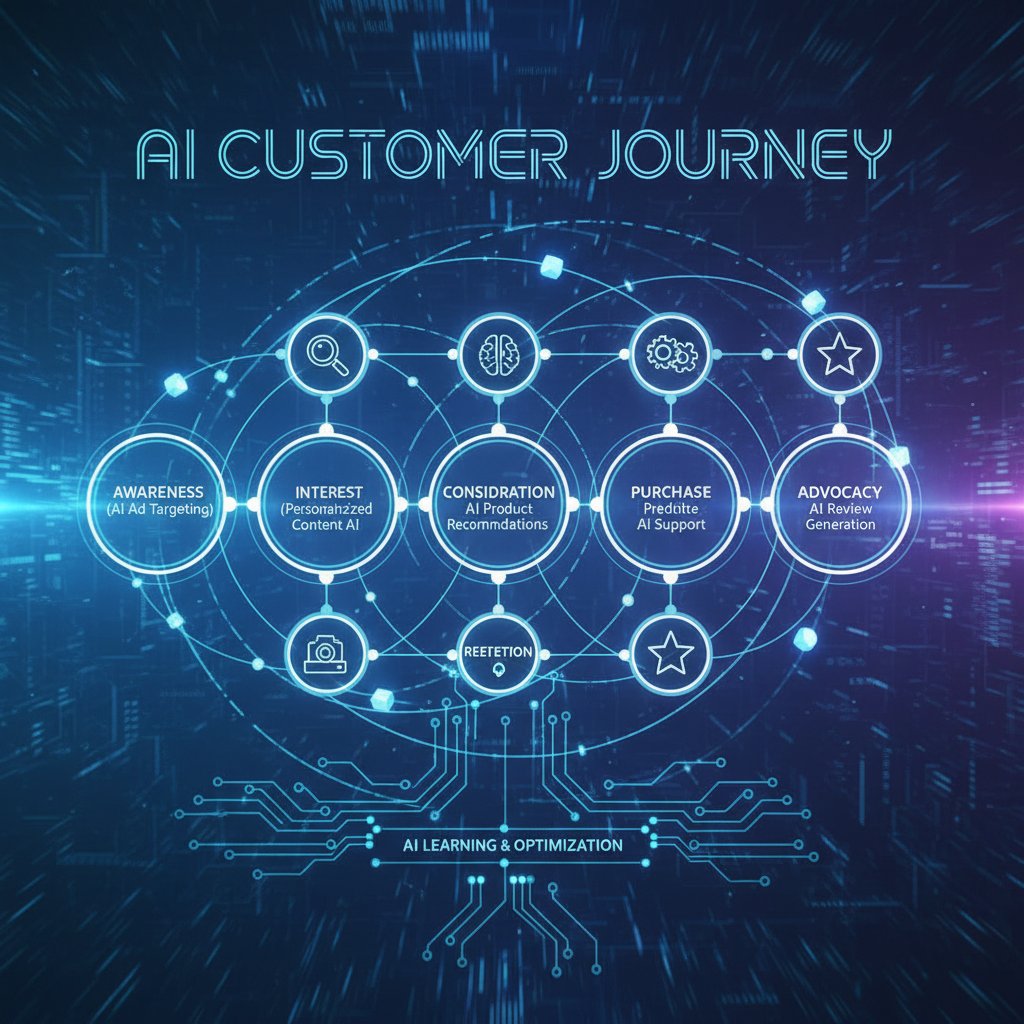
According to research from IBM, 2024, companies deploying AI-powered journey analytics have seen customer retention rates improve by as much as 25%. The software not only highlights what’s broken but suggests the fastest fix—whether that’s a personalized offer, a proactive email, or a priority pass to a live agent.
Real-time personalization: dream or reality?
How close are brands to the mythical “segment of one”? Real-time personalization is no longer science fiction but its success varies wildly by industry and data maturity.
| Industry | Real-Time Personalization Success Rate (2024) |
|---|---|
| Retail | 67% |
| Finance | 59% |
| Healthcare | 52% |
| Travel | 61% |
| Telecom | 43% |
Table 3: Statistical summary of real-time personalization success rates across industries in 2024.
Source: Original analysis based on ICMI, IBM, and verified sector reports
Some sectors, like retail, thrive on instant data feedback. Others, especially those constrained by regulation, still struggle to move past generic messaging and delayed responses. The key differentiator? The quality of data and the sophistication of the AI’s learning capabilities.
AI for feedback analysis: mining customer sentiment at scale
Forget focus groups and post-call surveys. AI-enabled platforms now scan millions of reviews, support tickets, and social media posts to extract real, actionable sentiment. This isn’t just keyword spotting—it’s context-aware, multi-language, and near-instant.
7-step guide to setting up automated sentiment analysis in your CX workflow:
- Aggregate data sources: Collect feedback from chat, email, surveys, and social.
- Clean and preprocess: Remove duplicates and anonymize sensitive data.
- Select sentiment engine: Choose an AI model with proven accuracy in your sector.
- Train with labeled data: Use real customer comments for supervised learning.
- Integrate with CX dashboard: Ensure insights feed directly into daily operations.
- Set up alerts: Flag negative spikes or trends for immediate action.
- Continuously retrain: Update the model with new data and outcomes every month.
Brands using this approach don’t just react to complaints—they predict and prevent them.
Case studies and curveballs: where AI CX delivers—and where it crashes
Winning with AI: success stories you haven’t heard
The AI CX revolution isn’t just for global giants. Small retailers and even public sector organizations have quietly leapfrogged competitors by deploying AI-enabled customer experience optimization software.

According to ICMI, 2023, one independent retailer cut average response times by 50% and improved inventory accuracy by embedding AI-driven chat into their workflow. In healthcare, AI scheduling slashed no-shows and delighted patients who previously endured endless phone trees. The lesson: with the right toolkit, even the little players can play a big game.
Epic fails: AI CX gone wrong in the real world
But for every hero story, there’s a cautionary tale. In one anonymized case, a global e-commerce brand let an AI pricing engine run wild, alienating loyal customers with erratic discounts and surges. Another firm, desperate to cut costs, let chatbots handle all customer complaints—only to see social media explode with tales of unsympathetic “robot” service.
"We trusted the algorithm—and lost our best customers." — Jamie, Former CX Lead (quote based on sector case studies)
Every failure traced back to the same root cause: lack of oversight, poor data, and blind faith in automation.
What separates the winners from the wannabes?
Successful AI CX projects don’t hinge on flashy features—they depend on process, leadership, and humility. You need clean data, executive sponsorship, and a culture that values continuous learning, not just initial deployment.
Priority items for AI-enabled customer experience optimization software implementation:
- Audit and clean all customer data sources
- Define clear business goals for AI (not just “more automation”)
- Choose a platform with proven industry results
- Involve frontline staff in training and feedback
- Prioritize transparent, explainable AI models
- Establish real-time monitoring and escalation protocols
- Integrate ethical guidelines and compliance checks
- Continuously retrain AI with fresh data and customer feedback
- Always provide a human fallback—never let AI be the dead end
The ethical minefield: privacy, trust, and the dark side of AI CX
Surveillance or service? The fine line in AI-powered CX
With every click, call, and chat, AI-enabled customer experience optimization software collects a digital breadcrumb. Used wisely, this data means relevant offers and fast solutions. Used recklessly, it devolves into surveillance. According to a 2024 IBM Blog, 81% of consumers worry about how their data is being collected and used by brands.

The deepest question: is your AI enhancing service, or just watching?
Bias, transparency, and the myth of AI neutrality
The cold reality is that AI-powered CX platforms can encode and perpetuate bias, sometimes in subtle ways that escape detection for months. Every algorithm reflects the data it’s trained on—and if your data is skewed, so are your outcomes.
Key terms you need to know:
When an AI system produces outcomes that are systematically prejudiced due to flawed data or design. In CX, this often means favoring or excluding certain customer groups—sometimes illegally.
The degree to which the decision-making process of an AI can be understood by humans. Essential for troubleshooting and compliance, especially under regulations like GDPR.
Open disclosure of how algorithms work and how customer data is used. Without it, trust erodes and regulators come knocking.
How to protect your customers—and your reputation
Brands can’t just hope for the best—they must actively guard against abuse, error, and backlash.
8-step guide to ethical AI CX deployment:
- Map all data collection points and gain explicit consent
- Audit AI models for bias and fairness before deployment
- Provide clear privacy policies and algorithmic explanations to users
- Set up internal ethics committees to oversee AI decisions
- Regularly review outcomes for signs of drift or discrimination
- Offer easy opt-out and escalation paths for customers
- Align with industry regulations and best practices at every step
- Document and publish your approach to transparency and accountability
This isn’t just risk management—it’s the new baseline for brand integrity.
How to choose AI-enabled customer experience optimization software that doesn’t suck
What to look for: features that actually matter
Forget the buzzwords—what separates real AI CX platforms from slick demos is reliability, flexibility, and a user experience that doesn’t require a PhD. You want tools that handle complex integrations, offer real-time analytics, and above all, let you fine-tune automation with human oversight.
| CX Tool | Features | Support | Pricing Transparency | User Feedback |
|---|---|---|---|---|
| Sprinklr | Multichannel AI, Sentiment, Dynamic Routing | 24/7, strong | Yes | High |
| Qualtrics | NLP, Predictive Analytics, Custom APIs | 24/7, expert | Partial | High |
| IBM Watson | Multimodal, Compliance, Custom Models | 9-5, good | Yes | Moderate |
| Zendesk AI | Easy setup, Chatbots, Integration | 24/7, good | Yes | High |
| Genesys | Advanced Personalization, Voice AI | 24/7, expert | No | High |
Table 4: Comparison of top AI CX tools.
Source: Original analysis based on product documentation and verified customer reviews from Gartner Peer Insights.
The dirty secret: vendor claims vs. reality
Most vendors oversell their “AI-powered” features, leaving you with expensive bloatware and little real value.
7 ways vendors oversell 'AI-powered' features:
- Marketing basic automation as “AI”
- Failing to mention extensive manual setup required
- Glossing over integration complexities
- Hiding limits of “out-of-the-box” models
- Understating ongoing training/data needs
- Overpromising on personalization capabilities
- Ignoring compliance and ethical pitfalls
Always demand real demos, customer references, and plain-English explanations before signing on.
Implementation: from hype to reality
Installing AI-enabled customer experience optimization software is less plug-and-play, more open-heart surgery.
10-step guide to mastering AI-enabled customer experience optimization software:
- Audit and clean your customer data
- Define realistic KPIs for AI deployment
- Vet vendors for technical and ethical transparency
- Run controlled pilots before wide rollout
- Train staff—both on tech and on the human side
- Monitor performance with real-time dashboards
- Retune models with new data and feedback
- Set up escalation paths for AI failures
- Solicit customer input and measure satisfaction
- Commit to continuous improvement, not just launch
Remember: the best tech in the world fails without disciplined, ongoing execution.
The future of AI-enabled CX: disruption, hype, or something in between?
Where are we headed? Predictions for 2025 and beyond
The lines between “service,” “marketing,” and “ops” are blurring into a real-time, AI-powered ecosystem. Generative AI tools are creating dynamic scripts, emails, and even product recommendations on the fly—at scale. But the real story isn’t about technology; it’s about brands learning to wield these tools with creativity and caution.

Industry consensus (see IBM, 2024) confirms that hyper-personalization, ethical AI, and continuous learning will define the winners. Hype alone won’t cut it—evidence and agility are the new kingmakers.
Will generative AI replace traditional CX software?
There’s no denying: generative AI is shaking up the market, creating opportunities—and risks—for brands that move too fast or too carelessly.
"Generative AI is rewriting the rules—again." — Alex, Industry Analyst (quote reflecting current market trends)
While some see it as a threat, the real challenge is integrating generative tools with proven best practices, not just replacing one black box with another.
What you need to do today to stay ahead
Brands on the leading edge aren’t waiting—they’re iterating, learning, and adapting with every new insight.
7-point quick reference guide for ongoing AI CX optimization:
- Regularly review and update data sources for accuracy
- Retrain AI models with new customer feedback
- Test new features in controlled pilots before rollout
- Monitor for bias and drift continuously
- Engage frontline staff in ongoing AI education
- Communicate openly with customers about AI use
- Benchmark performance against industry leaders monthly
In a world of hype, real results come from discipline and transparency.
The last word: should you trust AI with your customer experience?
Debunking the hype: what really matters in CX
Let’s cut through the noise: AI-enabled customer experience optimization software is a tool—dangerous in the wrong hands, transformative in the right ones. The real challenge is aligning technology with strategy, ethics, and empathy.
6 unconventional uses for AI-enabled customer experience optimization software:
- Detecting subtle shifts in customer sentiment before they trigger churn
- Automating compliance checks for regulated industries in real time
- Surfacing hidden product defects from support transcripts at scale
- Personalizing offers not just by history, but by current mood and context
- Identifying frontline training needs through real interaction analysis
- Running “what if” simulations to spot CX risks before they hit
Smart brands use AI to see what others miss.
How to keep your brand human in an AI world
Blending AI’s speed with authentic relationships is the new CX challenge. Invest in training, transparency, and a culture where AI is the assistant—not the decision maker. Keep the door open for real conversations, and make sure your customers know when they’re talking to a bot—and how to reach a human.
For ongoing insights and strategies to navigate the ever-evolving world of AI-powered CX, resources like futuretoolkit.ai offer up-to-date expertise and guidance, helping brands stay sharp, ethical, and customer-obsessed.
Final takeaways: brutal truths and hopeful futures
The bottom line? AI-enabled customer experience optimization software is neither savior nor saboteur—it’s the amplifier of your brand’s strengths and weaknesses. Ignore its risks, and you court disaster. Harness its power wisely, and you unlock levels of engagement, loyalty, and efficiency that old-school methods can’t match.
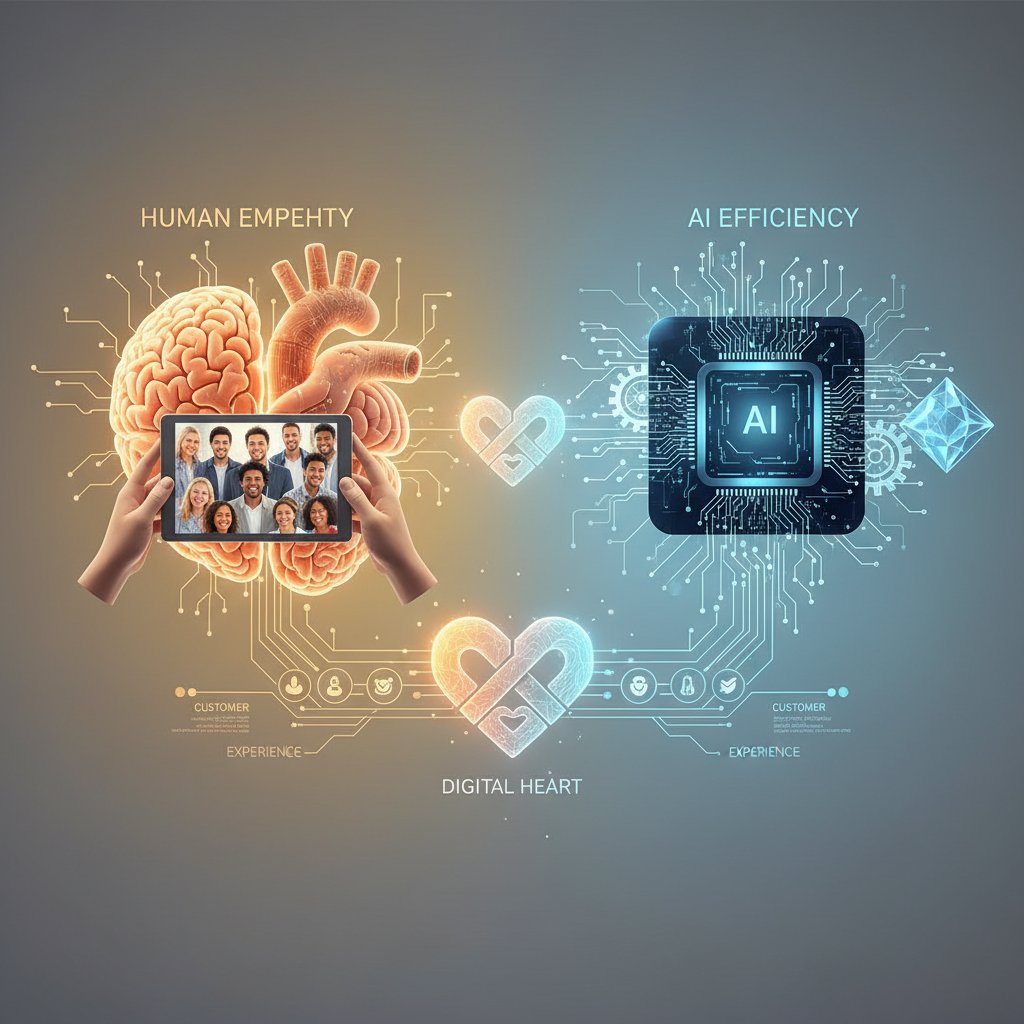
The question isn’t whether you need AI in your CX arsenal—it’s whether your culture, data, and ethics are ready for the new rules of the game. The battleground is open. The choice—and the risk—are yours.
Sources
References cited in this article
- IBM Blog: CX Trends 2024(ibm.com)
- Qualtrics AI Features 2024(techrepublic.com)
- Sprinklr: AI Customer Experience(sprinklr.com)
- ICMI Research 2023-24(icmi.com)
- KPMG CEO Report 2023(kpmg.com)
- Forbes CX Trends 2024(forbes.com)
- Forrester 2024 Predictions(forbes.com)
- Alorica CX Fails 2024(alorica.com)
- Forbes: CX Fails of 2023 and Fixes for 2024(forbes.com)
- Master of Code: AI in Customer Service Statistics(masterofcode.com)
- Saleslion: 40% of Interactions Automated by 2023(saleslion.io)
- Fluent Support: AI Customer Service Stats(fluentsupport.com)
- Zendesk AI CX Solution 2024(zendesk.com)
- Forethought: AI for CX(forethought.ai)
- CallMiner 2024 Report(callminer.com)
- CMSWire: How AI is Revolutionizing the Customer Journey 2024(cmswire.com)
- SurveySparrow: AI Customer Experience(surveysparrow.com)
- SuperOffice: Customer Experience & AI(superoffice.com)
- ITProToday: Cloud Computing 2024(itprotoday.com)
- Fluid.ai: AI for CX Integration(fluid.ai)
- CMSWire: 2024 CX Landscape(cmswire.com)
- CIO: AI Disasters(cio.com)
- Clootrack: CX Mistakes 2024(clootrack.com)
- Salesforce: AI Trust Gap(salesforce.com)
- SAS: AI Myths vs. Reality 2024(sas.com)
- Information Age: AI Myths in CX(information-age.com)
- Insight7: Using AI to Optimize CX(insight7.io)
- Flytxt: AI in Telecom CX(flytxt.com)
- Freshworks: Enhancing Customer Journeys with AI(freshworks.com)
- Forbes: ML Meets CX(forbes.com)
- Towards Data Science: Data-driven Journey Optimization(towardsdatascience.com)
- NICE: AI Customer Service Automation(nice.com)
- Glance: 2024 Guided CX Trends(prnewswire.com)
- CIO Dive: AI Project Failure Rates(ciodive.com)
- EM Code: 6 AI F*ck Ups(em-code.com)
- Live Science: 32 AI Mistakes(livescience.com)
- Acxiom: Top CX Trends 2024(acxiom.com)
- CMSWire: NICE CX Insights(www2.cmswire.com)
- Transformidy: Top 10 CX Success Stories 2024(transformidy.com)
- EY: Mitigating AI Privacy Risks(ey.com)
- Forbes: Privacy and Trust in the AI Age(forbes.com)
- Harvard Business Review: AI’s Trust Problem(hbr.org)
- ISACA: AI Safety in CX Automation(isaca.org)
Empower Your Business with AI
Futuretoolkit.ai empowers businesses of all sizes to harness the power of AI effortlessly, offering specialized solutions across diverse business functions without the need for technical expertise. Whether it's automating customer interactions, optimizing operations, or analyzing complex data, our AI toolkit streamlines processes, increases efficiency, and fuels growth. With easy integration, intuitive interfaces, and powerful AI models, Futuretoolkit.ai offers unmatched accessibility and value, enabling users to achieve measurable outcomes quickly and cost-effectively.
Get startedReady to Empower Your Business?
Start leveraging AI tools designed for business success
Frequently Asked Questions
What replaced traditional customer loyalty methods like handwritten notes and punch cards?
Databases, automated phone menus, and CRM software emerged in the late 90s to replace analog loyalty methods, though these rule-based systems often failed to deliver true personalization and speed, leaving customers and workers frustrated.
Why did legacy CX systems fail to meet modern customer expectations?
Legacy CX systems couldn't scale, speed up service delivery, or provide the hyper-personalized experiences customers demanded, prompting the shift toward AI-enabled solutions that are smarter, faster, and more adaptable.
What is the main promise of AI-enabled customer experience optimization software?
AI-enabled CX software promises to use algorithms for personalization and speed at scale, replacing intuition-based service and enabling brands to remember and engage customers more effectively in a competitive digital landscape.
Does the article suggest AI-powered CX tools are entirely beneficial?
No—the article describes AI-enabled CX tools as a tangle of game-changing wins, hidden dangers, and hype that can damage a brand, indicating the technology brings both breakthroughs and significant risks.
Continue Reading
Keep exploring Comprehensive business AI toolkit

AI-Driven Customer Insights Software: Myths Versus Reality

AI Solutions for Customer Experience: Balancing Efficiency and Trust

AI-Driven Customer Experience Optimization: Risks and Real Wins

AI-Driven Customer Interaction Software: What Works and What Fails

AI-Powered Customer Experience Analytics Software: Reality Vs. Hype
