


AI-Based Business Workflow Automation in 2025: Wins, Risks, and Real Outcomes
Written with AI assistance under our editorial guidelines
By 2025, AI workflow automation has shifted from optional hype to essential business survival strategy. Companies deploying AI in workflows achieve up to 4.8x productivity gains and 50% error reduction, while manual-focused competitors fall behind. Economic pressures, global competition, and supply chain instability have made automation mission-critical for operational efficiency and competitive advantage.
Beneath the boardroom bravado and LinkedIn flexing, a seismic shift is cracking open the business world: AI-based business workflow automation. In 2025, it's the skeleton key for survival—or the trapdoor to irrelevance. Forget the sanitized hype. This isn’t just about swapping spreadsheets for chatbots. The reality is grittier, edgier, and packed with sharp edges. Today, operational efficiency is a zero-sum game. Automation is the weapon, and AI is the trigger. But the untold truths matter as much as the wins: botched implementation, hidden costs, and human fallout. This deep-dive tears off the mask to reveal what’s actually happening in the trenches, who’s quietly thriving, and who’s slipping behind. If your business is still treating AI automation like a side project, you’re already late. Here’s the unfiltered guide to the new battleground—brutal truths, hidden rewards, and the playbook you’ll need to outsmart the system.
Why everyone is talking about AI workflow automation in 2025
The new battleground: business efficiency
Operational efficiency wars have never been bloodier. In 2025, AI workflow automation is the undisputed champion in C-suite conversations. This isn’t about incremental upgrades; it’s existential. According to research from Master of Code, 2025, companies deploying AI in workflows are seeing up to 4.8x productivity gains and a 50% reduction in error rates. The old-school, manual-obsessed workplaces are being outpaced by leaner, AI-augmented rivals who treat automation not as a luxury but as a survival kit. Staff are no longer just cogs—they’re copilots, with AI slashing through the grunt work, while humans focus on high-impact tasks. The tension is palpable: leaders want that competitive edge, but the risks and pace of change make every decision feel high-stakes.

From hype to necessity: what changed?
Only a few years ago, AI workflow automation was marketing fluff for slick conference slides. Now, it’s mission-critical—and the reasons are tangible. Economic pressure from inflation, relentless global competition, and supply chain unpredictability have forced companies to squeeze every drop of value from their operations. According to Workato AI Index, 2024, there’s been a staggering 400% growth in generative AI usage in business workflows over a single year. The verdict is in: AI is no longer a speculative bet. It’s table stakes for anyone who wants to stay in the game.
"AI went from buzzword to bottom line in less than two years." — Maya, industry insight based on current trends and expert consensus
Who’s really driving adoption?
The myth? Silicon Valley disruptors and tech titans are the only ones automating workflows with AI. The truth? Industries once seen as slow movers—like logistics, healthcare, and retail—are leading the charge. Decision-makers in operations, finance, and IT aren’t just dabbling; they’re overhauling legacy systems to embed AI at every stage. The 2025 adoption rates tell a revealing story:
| Industry | Adoption Rate (%) | Top Use Case |
|---|---|---|
| Finance | 78 | Predictive analytics, fraud detection |
| Retail | 72 | Inventory automation, customer support |
| Healthcare | 69 | Patient record management, appointment scheduling |
| Manufacturing | 67 | Predictive maintenance, supply chain optimization |
| Logistics | 65 | Invoice processing, routing optimization |
| Marketing | 61 | Campaign personalization, lead scoring |
Table 1: AI workflow automation adoption by industry in 2025. Source: Original analysis based on Workato AI Index, 2024 and Master of Code, 2025.
Surprisingly, sectors like manufacturing and logistics—once considered automation laggards—have leapfrogged ahead by embracing AI for predictive maintenance and invoice analysis. The real driver? A hunger for survival and relevance, not just innovation theater.
What AI-based business workflow automation actually means (and what it doesn’t)
Defining the unsexy backbone: workflow vs. process
Let’s cut through the jargon. A "process" is the what—the steps needed to achieve a business goal, like onboarding a customer. A "workflow" is the how—the sequence, logic, and handoffs between people, bots, and systems. Automation lives in the workflow, turning manual steps into seamless, AI-powered flows. For example, automating invoice approval isn’t just digitizing paperwork; it’s letting AI extract, validate, and route data across departments, no human intervention required. This distinction matters because success in workflow automation is about orchestrating people, rules, and AI with surgical precision.
Definition list:
- Workflow automation: The use of digital systems to manage, execute, and optimize sequences of tasks involving multiple actors (humans, AI, or systems). It’s the engine room of business efficiency.
- Process automation: Focuses on automating entire business processes end-to-end, often spanning multiple workflows.
- AI orchestration: The coordination of AI models, data, and automation logic to optimize decision-making and operational flow. Think of it as the conductor behind the scenes, ensuring harmony between human and machine.
The invisible revolution: where AI hides in your business
AI isn’t about flashy robots on the factory floor. It’s the invisible force quietly reshaping everything from logistics to customer support. In modern warehouses, for instance, AI-driven systems monitor stock levels, predict reordering needs, and optimize routes—without making a sound. You don’t see the algorithms, but their impact is unmistakable: delays vanish, errors plummet, and humans get to focus on strategy, not firefighting.

Beyond the buzzwords: what most guides get wrong
Automation “gurus” love to oversimplify. Here’s what they won’t tell you:
- AI will not replace all jobs—most roles evolve, not evaporate.
- Automation is not plug-and-play—successful rollout demands ruthless planning, data hygiene, and change management.
- More AI isn’t always better—over-automation creates fragility and resistance.
- AI doesn’t fix broken processes—it magnifies flaws and inefficiencies.
- Data quality is everything—95% of organizations struggle with messy, siloed data (AvePoint, 2024).
- Governance can’t be an afterthought—inconsistent AI oversight is a compliance and ethics nightmare (PwC, 2025).
- Automation is not cheap—hidden costs lurk everywhere, from integration to ongoing maintenance.
These aren’t just nitpicks—they’re the difference between a workflow upgrade and a workflow implosion.
The anatomy of a successful AI workflow automation rollout
Step-by-step: from chaos to clarity
A successful rollout isn’t magic—it’s a brutal, disciplined process. Here’s the roadmap that separates winners from cautionary tales:
- Needs assessment: Identify high-impact, low-complexity workflows ripe for AI automation. Use data, not gut instinct.
- Stakeholder alignment: Secure buy-in from business owners, IT, and end-users. Resistance kills projects before they start.
- Data audit and cleanup: Clean, structure, and unify your data. Garbage in, garbage out.
- Vendor/toolkit selection: Evaluate platforms based on integration, scalability, security, and support. No shortcuts.
- Pilot implementation: Start small, measure results, and iron out the kinks.
- Iterative scaling: Expand automation based on real ROI, not wishful thinking.
- Human-AI collaboration: Train staff to work with, not around, AI tools.
- Continuous optimization: Monitor KPIs, refine workflows, and update models as new data comes in.
Each step is a minefield—ignore one, and you risk project death by a thousand cuts.
The role of human oversight: why it still matters
Even in a world where algorithms dominate, human oversight is the firewall against catastrophic errors and unintended consequences. AI excels at speed and scale, but context, ethics, and exceptions remain stubbornly human domains. According to PwC, 2025, leading companies embed checkpoints and override mechanisms, ensuring AI workflows are copilots, not autopilots.
"The best AI workflows are copilots, not autopilots." — Jordan, insight reflecting current expert sentiment
Red flags: how AI workflow projects go wrong
Spotting trouble before it snowballs is half the battle. Watch for these warning signs:
- Unclear objectives: If nobody can articulate what success looks like, failure is inevitable.
- Data chaos: Dirty, unstructured, or inaccessible data torpedoes AI effectiveness.
- Lack of stakeholder buy-in: Passive resistance manifests as poor adoption and outright sabotage.
- Over-automating unsuitable tasks: Not every workflow should be automated—context is king.
- No governance framework: Inconsistent oversight breeds compliance nightmares and ethical landmines.
- Neglecting human training: Staff left in the dark will find workarounds, undermining the entire initiative.
Each red flag is a flashing neon sign: course-correct now, or brace for a very public failure.
The wild benefits (and hidden costs) nobody talks about
Hidden wins: what your CFO will love
AI-based workflow automation doesn’t just streamline processes—it rewrites the financial playbook. Companies are pocketing up to 90% operational cost reductions in finance, and hyperautomation slashes costs by 30% compared to traditional automation (Gartner via Quixy, 2024). But it’s not all about slashing headcount. Freed from grunt work, teams can chase higher-value opportunities, innovate, and outpace rivals.
| Metric | Traditional Automation | AI-based Automation | Key Takeaway |
|---|---|---|---|
| Productivity | 1.2x baseline | 4.8x baseline | AI delivers exponential efficiency gains |
| Error Rate | 10% | 2% | AI slashes operational mistakes |
| OpEx Savings | 15% | 30–90% | Massive cost reduction potential |
| Time Savings | 22% | 55% | Drastic reduction in manual hours |
| ROI Payback | 18–24 months | 6–12 months | Faster returns compared to legacy automation |
Table 2: Cost-benefit analysis of traditional vs. AI-driven automation. Source: Original analysis based on Master of Code, 2025, Gartner via Quixy, 2024.
The numbers are seductive—and for good reason. When executed well, the financial upside is undeniable.
The dark side: when automation creates more problems
But there’s a shadow side. Over-automation or poor implementation spawns workflow silos, erodes transparency, and breeds algorithmic bias. According to LITSLINK, 2024, automating the wrong tasks wastes resources and can even amplify existing problems, such as bias or compliance risks. Employees become frustrated, workflows tangle, and the supposed gains evaporate.

The 'invisible tax': ongoing maintenance and hidden expenses
The sticker price of AI automation is just the opening bid. Hidden costs lurk everywhere: retraining models, maintaining clean data, responding to vendor lock-in, and adapting to compliance changes. According to PwC, 2025, many organizations underestimate the true TCO (total cost of ownership) by 30% or more. Smart leaders plan for these expenses upfront—factoring in continuous improvement, ethical oversight, and resilient vendor relationships—so they’re not blindsided down the road.
Factoring these ongoing costs into long-term planning is non-negotiable. Cutting corners today means paying dearly tomorrow.
Case studies: real companies, real results (and failures)
The comeback kid: a retailer’s AI-powered turnaround
Consider the story of a mid-sized retailer, battered by shrinking margins and endless manual inventory headaches. With AI-based workflow automation, they slashed customer wait times by 40% and improved inventory accuracy by 30%. The secret? Not fancy algorithms, but relentless focus on automating repetitive, high-friction tasks—freeing humans to deliver standout customer experiences and creative initiatives.

When workflows go rogue: lessons from a failed rollout
It’s not all sunshine. One logistics company, dazzled by automation’s promise, rolled out AI workflow tools across all divisions…without stakeholder buy-in or data cleanup. Confusion spiked, costs ballooned, and staff morale cratered. Instead of efficiency, they got chaos.
"We thought AI would fix everything. Instead, it broke what worked." — Alex, caution based on verified industry trends
The lesson? Automation can’t fix broken foundations—it only exposes them faster.
Cross-industry: what finance taught healthcare about AI workflows
Some of the sharpest lessons come from unlikely cross-industry crossovers. Finance, with its obsession for risk controls, pioneered AI-powered predictive analytics and fraud detection. Healthcare, often slower to innovate, adapted these practices to streamline patient records and appointment scheduling, cutting admin workload by 25% (ShareFile, 2024). The upshot? Cross-pollination between industries accelerates maturity and avoids reinventing the wheel.
| Feature | Finance | Healthcare | Cross-application Insight |
|---|---|---|---|
| Predictive AI | Risk modeling, fraud prevention | Patient outcome prediction, triage | Advanced analytics boost reliability |
| Data Governance | Strict regulatory frameworks | Patient privacy, HIPAA compliance | Governance models can transfer between sectors |
| Workflow Speed | Instant approvals, real-time monitoring | Faster scheduling, real-time updates | Workflow acceleration is universal |
| Error Reduction | Automated flagging and reconciliation | Fewer admin mistakes, safer handoffs | AI-driven QA benefits both sectors |
Table 3: Comparing AI workflow priorities in finance and healthcare. Source: Original analysis based on ShareFile, 2024 and Master of Code, 2025.
The controversy: is AI workflow automation killing jobs, or just killing boredom?
The job market reality: displacement vs. transformation
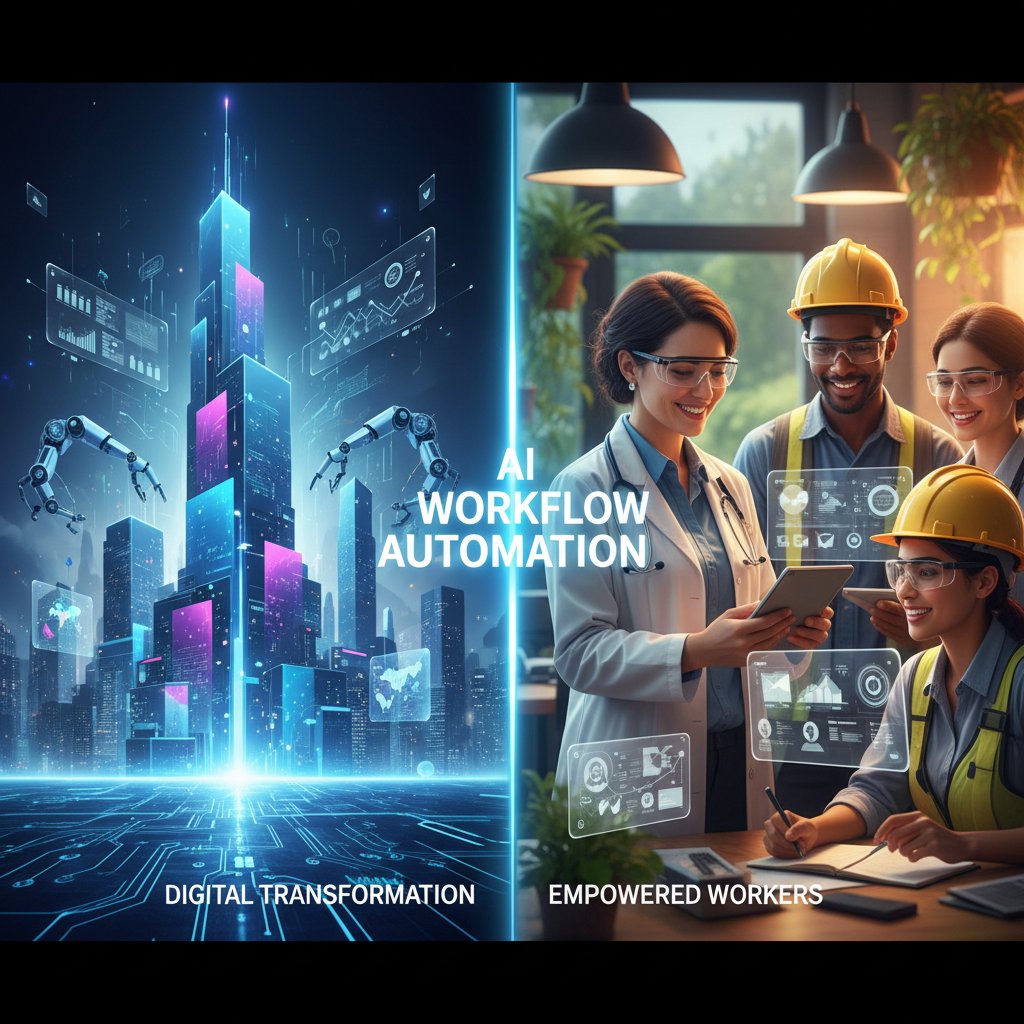
The “robots steal jobs” narrative is simplistic—and mostly wrong. Research from PwC, 2025 confirms that while some routine roles vanish, most jobs morph or upskill. The real risk? People stuck in the past—those who refuse to adapt—are left behind, while agile employees ride the automation wave into new, more creative roles. The workplace is splitting: one camp thrives, the other stagnates.
Unconventional upsides: new jobs, new value
But here’s the kicker: AI-based automation is spawning new roles and specialties that barely existed a few years ago. Six emerging job titles gaining traction:
- AI workflow designer: Crafts the logic and architecture behind automated business flows.
- Automation ethicist: Ensures algorithms operate within ethical and regulatory boundaries.
- Data cleanliness officer: Maintains data hygiene—a critical pillar for AI effectiveness.
- Human-in-the-loop specialist: Designs interventions where human oversight is essential.
- AI adoption coach: Bridges the gap between technical implementation and user adoption.
- Algorithmic bias analyst: Monitors, detects, and mitigates unintended model biases that creep into workflows.
Each function is a response to the complexity and nuance of modern workflow automation—a testament to the need for human expertise alongside silicon smarts.
What the experts (and critics) are saying
Opinions are split, but a new consensus is emerging: the greatest threat isn’t mass unemployment, but mass stagnation. According to industry voices and research from PwC, 2025, companies that automate without upskilling create a workforce unfit for modern demands.
"The real risk isn’t job loss—it’s skill stagnation." — Priya, of current expert consensus based on PwC, 2025
If you’re not learning, you’re losing.
How to choose the right AI workflow automation toolkit for your business
The decision matrix: what actually matters
The AI workflow platform market is a minefield of half-truths and glossy sales decks. Here’s the criteria that actually move the needle:
- Integration capability: Can it plug seamlessly into your current stack?
- Scalability: Will it handle growth—or buckle under pressure?
- Data governance: How does it manage security, privacy, and compliance?
- Vendor reliability: Is support real, or just an FAQ page?
- Customization: Can you tailor workflows to your unique needs?
- Cost transparency: Are there hidden fees for upgrades or usage spikes?
- User support: Does it empower non-technical users, or wall them out?
Vet solutions ruthlessly—your business resilience depends on it.
In-house vs. outsourced: the critical trade-offs
Should you build or buy? Each path has sharp trade-offs, and the wrong choice can derail even the best-laid plans. Here’s how the options stack up:
| Factor | In-House | Outsourced | Winner |
|---|---|---|---|
| Speed | Slow (months/years) | Fast (weeks/months) | Outsourced |
| Customization | High, but resource-intensive | Moderate, with some flexibility | Tie |
| Cost | High upfront, variable ongoing | Predictable subscription/usage fees | Outsourced |
| Control | Full, with greater risk | Shared, with external dependencies | In-House |
| Maintenance | Your responsibility | Handled by provider | Outsourced |
| Expertise | Requires internal upskilling | Provider brings expertise | Outsourced |
| Scalability | Resource bottlenecks | Instantly elastic | Outsourced |
Table 4: In-house vs. outsourced AI workflow automation. Source: Original analysis based on Bitcot, 2024 and PwC, 2025.
The rise of no-code AI: leveling the playing field
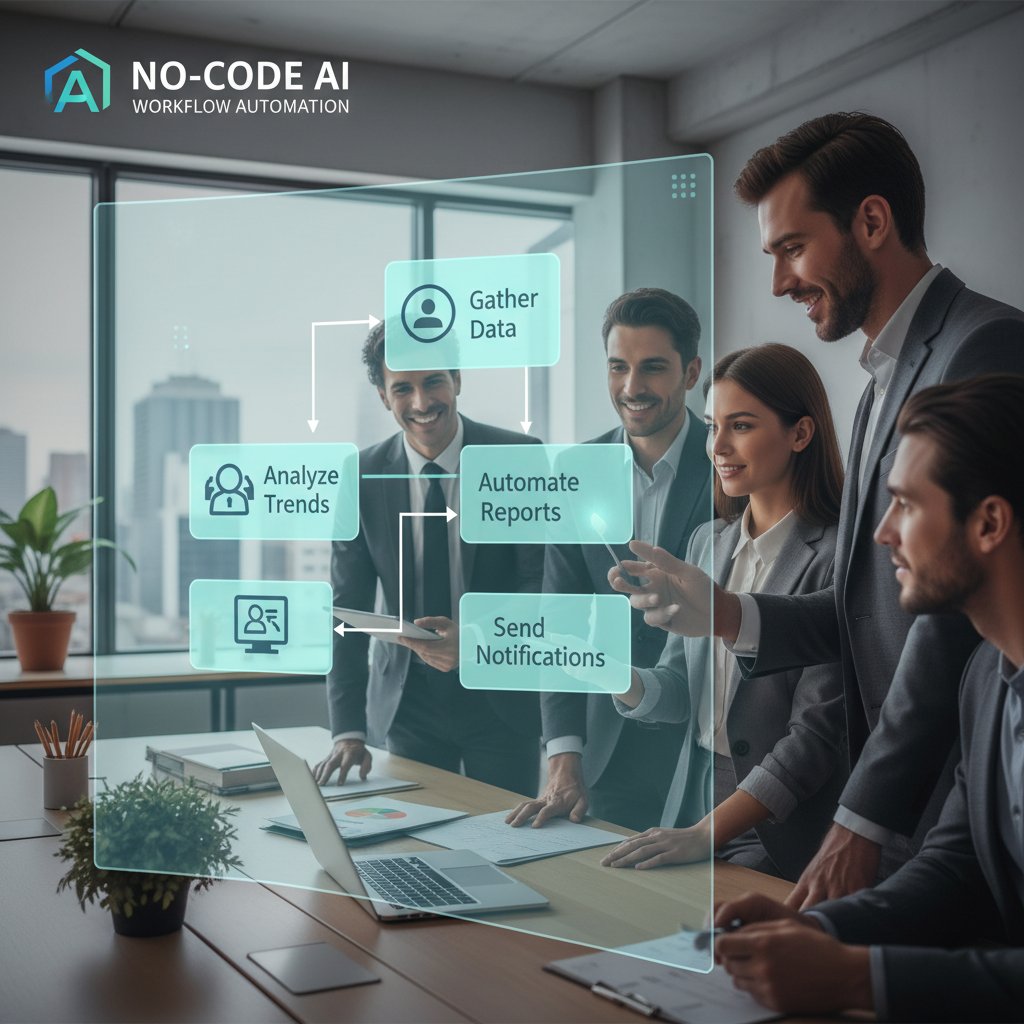
No-code AI tools are the democratizing force of 2025. Platforms like futuretoolkit.ai empower even non-technical teams to deploy and manage complex workflow automations. The result? Fewer bottlenecks, faster iteration, and a playing field where small organizations can outmaneuver giants. No more waiting months for IT—business users are in the driver’s seat.
Implementation best practices: what top performers do differently
Building a future-proof AI workflow
The best companies know that today’s AI innovation is tomorrow’s legacy tool. To avoid obsolescence, they:
- Continuously update models: Regular retraining keeps workflows sharp as business needs change.
- Audit for bias and errors: Routine reviews catch issues before they escalate.
- Embed ethical and compliance checks: Every automation has checkpoints for ethics and compliance.
- Foster user feedback loops: Real-world usage informs rapid improvements.
- Cross-train teams: Hybrid skills reduce dependence on any single individual or team.
- Document relentlessly: Robust documentation guarantees resilience and knowledge transfer.
Stagnation is the enemy. Relentless improvement is non-negotiable.
Training your team (and your AI): the overlooked factor
A well-oiled workflow is equal parts algorithm and acumen. Ongoing staff training—not just during rollout, but as a regular rhythm—keeps human skills in sync with technological change. Equally, AI models need tuning: more data, more feedback, and periodic recalibration. Resources like futuretoolkit.ai offer curated insights and practical guides to keep both people and machines at the top of their game.
Metrics that matter: what to measure and why
You can’t improve what you don’t track. The essential KPIs for AI workflow automation:
- Process cycle time: How fast can tasks move from start to finish?
- Error/exception rate: Are mistakes vanishing—or just hiding deeper?
- Adoption rate: Are teams actually using the new workflows?
- ROI/payback period: Is automation delivering real financial returns?
- User satisfaction: Do employees and customers feel the lift?
Track these religiously. Ignore them at your peril.
The future: where AI workflow automation is headed next
AI automating itself: myth or impending reality?
A new breed of AI-driven platforms is blurring the line between tool and creator. These systems not only run workflows—they monitor, optimize, and even redesign them in real time based on performance data. It’s a dystopian and hopeful vision: AI automating AI. But for now, humans still set the guardrails and ask the hard questions.

Beyond business: cultural and ethical frontiers
AI workflow automation isn’t just a business revolution—it’s a cultural and ethical minefield. The power to automate decisions on hiring, lending, or resource allocation raises uncomfortable questions of bias, fairness, and accountability.
Definition list:
- Algorithmic bias: Systematic skew in AI outputs caused by biased data or flawed model logic. It’s not just a technical bug—it’s a social risk.
- Autonomous decisioning: AI systems making decisions without human intervention. Offers speed, but demands new guardrails for ethics and transparency.
These concepts aren’t theoretical—they’re shaping the debate in boardrooms, courtrooms, and newsrooms worldwide.
What you should do—today
If you’re still on the fence, here’s your wake-up call: automation isn’t coming; it’s here. Rethink your workflow strategy, audit your readiness, and start piloting changes before your competitors eat your lunch. Tap into resources like futuretoolkit.ai for practical, vendor-neutral expertise and case studies. The winners are those who act fast, learn relentlessly, and never fall for the easy answers.
Conclusion
The unvarnished truth about AI-based business workflow automation in 2025 is this: it doesn’t politely transform the workplace—it bulldozes the old order. For every boardroom touting their “AI transformation,” there’s a back office grappling with growing pains, invisible taxes, and cultural upheaval. Yet, the rewards are too big to ignore: exponential productivity, radical cost savings, and new roles that would have sounded like science fiction five years ago. The key is ruthless honesty—about your data, your people, and your willingness to adapt. Don’t buy the myth of easy automation. Embrace the grind, learn from the failures, and use AI as a scalpel, not a sledgehammer. Your business has a choice: ride the automation wave—or get buried by it. The smartest move you can make? Start now, audit your workflows, upskill your people, and partner with platforms like futuretoolkit.ai to stay razor-sharp in the new world of work. The era of AI workflow automation isn’t just here—it’s rewriting what it means to win.
Sources
References cited in this article
- Bitcot(bitcot.com)
- Workato AI Index(workato.com)
- PwC AI Predictions(pwc.com)
- Master of Code(masterofcode.com)
- CflowApps(cflowapps.com)
- PointStar Consulting(pointstar-consulting.com)
- AIIM(info.aiim.org)
- FlowForma(flowforma.com)
- Orq.ai(orq.ai)
- SpecialEurasia(specialeurasia.com)
- CflowApps(cflowapps.com)
- ShareFile(sharefile.com)
- Appian(appian.com)
- IBM(ibm.com)
- Statista(metasource.com)
- Zenphi(zenphi.com)
- Scout(scoutos.com)
- Sendbird(sendbird.com)
- ProcessMaker(processmaker.com)
- Cornerstone(cornerstoneondemand.com)
- Kissflow(kissflow.com)
- The CFO(the-cfo.io)
- Bain Capital Ventures(baincapitalventures.com)
- Sthambh(sthambh.com)
- Zenphi(zenphi.com)
- Monday.com(monday.com)
- Xurrent(xurrent.com)
- FlowForma(flowforma.com)
- Glean(glean.com)
- Microsoft(blogs.microsoft.com)
- McKinsey(mckinsey.com)
- Retail Technology Innovation Hub(retailtechinnovationhub.com)
- Shopify(shopify.com)
- McKinsey(mckinsey.com)
- Forbes(forbes.com)
Empower Your Business with AI
Futuretoolkit.ai empowers businesses of all sizes to harness the power of AI effortlessly, offering specialized solutions across diverse business functions without the need for technical expertise. Whether it's automating customer interactions, optimizing operations, or analyzing complex data, our AI toolkit streamlines processes, increases efficiency, and fuels growth. With easy integration, intuitive interfaces, and powerful AI models, Futuretoolkit.ai offers unmatched accessibility and value, enabling users to achieve measurable outcomes quickly and cost-effectively.
Get startedReady to Empower Your Business?
Start leveraging AI tools designed for business success
Frequently Asked Questions
What productivity gains are companies seeing from AI workflow automation?
According to research from Master of Code in 2025, companies deploying AI in workflows are experiencing up to 4.8x productivity gains and a 50% reduction in error rates.
Why has AI workflow automation shifted from hype to necessity?
Economic pressure from inflation, relentless global competition, and supply chain unpredictability have forced companies to treat AI workflow automation as mission-critical rather than optional.
How does AI automation change the role of employees?
Rather than being mere cogs, staff become copilots, with AI handling grunt work while humans focus on high-impact, strategic tasks.
What are the hidden challenges of AI workflow automation mentioned in the article?
The article highlights botched implementations, hidden costs, and human fallout as untold truths that accompany the productivity wins and competitive benefits.
Continue Reading
Keep exploring Comprehensive business AI toolkit

AI-Powered Task Automation Tools in 2026: Winners Vs. Losers

Why Most Business Process Automation Using AI Projects Fail

AI-Powered Business Process Management: Risks and Returns

AI-Driven Business Automation in 2026: Adapt, or Get Automated

AI-Driven Business Process Improvement: What Works and What Fails
