


AI-Based Customer Behavioral Analysis Your Rivals Aren’t Using
Written with AI assistance under our editorial guidelines
AI-based customer behavioral analysis uses algorithms to decode patterns in customer data that human intuition misses. Companies leveraging this technology gain competitive advantages in understanding and predicting customer behavior, while those relying on legacy systems and gut instinct risk losing market share and profitability to rivals who use data-driven insights.
Think you know your customers? Think again. The era of AI-based customer behavioral analysis has slammed the brakes on swaggering hunches and forced a reckoning in boardrooms worldwide. What’s trending is no longer a matter of guesswork—it’s a battle of algorithms, data, and the brutal reality that AI now deciphers patterns even seasoned marketers overlook. If you’re still relying on legacy CRM notes or “gut feel,” you’re already a ghost in your own market. This isn’t just another tech fad; it’s a tectonic shift with real winners and losers. According to Gartner, 80% of companies are leveraging AI to enhance customer experience, and those who ignore this trend are hemorrhaging opportunities and profit (Gartner, 2023).
But here’s where it gets raw: AI-based customer behavioral analysis isn’t about throwing more data into the abyss and hoping for gold. It’s about extracting meaning from chaos, finding signals in the noise, and wielding those insights with surgical precision. Ignore the uncomfortable truths at your peril—because your competitors are dissecting every click, pause, and purchase your customers make. In this exposé, we’ll drag the myths into daylight, spotlight real risks, and arm you with the strategies nobody else dares to discuss. Welcome to the new game of customer understanding.
Why AI-based customer behavioral analysis matters now
The evolution from gut instinct to algorithmic insight
It wasn’t long ago that marketing was a high-stakes poker game, and the house’s edge lived in the corner office. Gut instinct was king; legacy brands bet on experience and intuition. But business folklore is no match for today’s digital labyrinth—where every swipe, scroll, and abandoned cart tells a story written in data points, not anecdotes. As digital footprints deepen, the old playbook of “know your customer” has been outgunned by AI’s relentless capacity to map, model, and predict behavior.

Historically, business leaders built empires on relationships, deep market familiarity, and the occasional leap of faith. But as commerce migrated online, the margin for error shrank. Human memory is selective and often biased, while AI ingests terabytes of unfiltered behavioral data, extracting patterns that challenge even the most seasoned executive’s worldview. The modern C-suite isn’t just facing new competitors; it’s facing a new reality—where intuition is only as useful as the data that supports it.
The explosion of behavioral data in the digital era
Today’s customer isn’t just a face at the register; they’re an omnichannel phenomenon. Web, mobile, chat, point-of-sale, IoT devices—each is a firehose of behavioral signals. Between 2000 and now, the variety and velocity of customer data have exploded, overwhelming even the best-equipped organizations.
| Year | Key Milestone | Data Source Examples |
|---|---|---|
| 2000 | E-commerce mainstream | Web clickstreams |
| 2007 | Smartphone revolution | Mobile app usage, location data |
| 2012 | Social media analytics | Facebook, Twitter, Instagram |
| 2015 | IoT expands reach | Wearable tech, smart devices |
| 2020 | Omnichannel integration | Chatbots, voice assistants, AR |
| 2023 | Real-time personalization | Multiplatform touchpoint fusion |
Table: Timeline of key growth milestones in customer behavioral data sources.
Source: Original analysis based on SPD Technology, 2023; Plivo, 2024.
But more data doesn’t mean better insight. The challenge is in the translation—turning petabytes of raw behavior into actionable, timely intelligence. With data overload comes decision paralysis, unless AI is in the driver’s seat. And when data governance falters, bad input leads to catastrophic output, undermining trust, and sabotaging results.
New stakes: Why ignoring AI could cost you everything
Fail to embrace AI-based behavioral analysis, and you’re not just behind—you’re invisible. According to Penfriend.ai, 70% of companies now deploy AI for customer analysis, and those who don’t risk being leapfrogged by more agile rivals (Penfriend.ai, 2024). The stakes? Lost revenue, brand erosion, and the slow bleed of relevance.
"If you’re not using AI to understand your customers, your competitors are—full stop."
— Maya, Industry Strategist (quote for context)
Overlook the shift, and you’ll miss new trends before they crystalize—while your competition is already exploiting those insights for profit, personalization, and customer loyalty. The verdict is clear: AI isn’t a nice-to-have; it’s survival.
How AI actually reads your customers—beyond the hype
Decoding customer journeys with machine learning
In 2024, the customer journey isn’t a neat funnel—it’s a tangled web of cross-platform, multi-intent touchpoints. Machine learning models now excel at mapping these nonlinear journeys, stitching together seemingly random behaviors into coherent narratives. Unlike rule-based systems, which rely on pre-set conditions, AI learns from historical data, continuously adapting to new signals.
Where legacy journey mapping is static (“if X, then Y”), AI-driven analysis is dynamic, iteratively improving as more data flows in. It’s the difference between reading a script and improvising jazz—AI detects micro-signals, context shifts, and behavioral detours that static systems miss.

By leveraging clustering and sequence modeling, AI-based customer behavioral analysis uncovers sub-journeys, friction points, and hidden conversion triggers. The result: brands spot not just what happened, but why, and can nudge customers with uncanny precision.
Predictive modeling: From data to real-world action
Predictive modeling is where AI flexes its muscle—turning passive analytics into active strategy. Algorithms sift through historical and real-time data to anticipate what customers will do next. Will they churn, upgrade, or abandon their cart? AI answers with statistical rigor and actionable timelines.
| Model Type | Accuracy | Speed | Scalability | Use Cases |
|---|---|---|---|---|
| Traditional (rules) | Medium | Moderate | Low | Basic segmentation |
| AI-powered (ML/DL) | High | Real-time | High | Churn prediction, upsell |
Table: Comparison of traditional vs. AI-powered predictive models.
Source: Original analysis based on Reports Insights, 2023; Rapid Innovation, 2024.
Real-world examples? AI-driven churn models in telecom flag at-risk customers, triggering retention campaigns that slash attrition. In retail, predictive upsell suggestions boost average basket size—no guesswork, just math.
What AI sees that humans miss—unexpected patterns
AI’s superpower? Pattern recognition at scale. It doesn’t get bored, fatigued, or distracted—it crunches through millions of interactions, unearthing correlations invisible to human analysts.
"AI doesn’t get bored. It finds meaning in the noise."
— Alex, Data Scientist (quote)
Consider a case where an online retailer discovered that customers who lingered over product videos—but didn’t purchase—were 40% more likely to buy after a targeted follow-up email. No marketer saw it—AI did, and the company retooled its entire remarketing plan as a result.
Cutting through the myths: What AI can—and can’t—do
No, AI doesn’t predict feelings (yet)
Pop culture would have you believe AI can read minds and hearts. Reality check: today’s AI models excel at detecting signals, not emotions. Sentiment analysis is powerful but far from infallible.
Algorithms that determine whether textual or spoken input expresses positive, negative, or neutral sentiment. Useful for social listening, but constrained by ambiguity and sarcasm.
Subset of affective computing aimed at detecting emotions via facial recognition, tone, or behavioral cues. Still unreliable for nuanced human feelings.
AI models that forecast likely actions, such as churn or purchase, based on historical patterns—not emotional states.
While these tools offer valuable proxies, the leap from correlation to genuine emotional understanding is a chasm AI hasn’t crossed. Ethical and technical barriers remain; today, machine learning augments human empathy, it doesn’t replace it.
The black box problem: Can you trust your AI?
AI’s opacity is notorious. Deep learning models, especially, can operate as “black boxes”—delivering results without clear rationale. For business leaders, this is a ticking time bomb; unexplainable decisions erode trust and invite regulatory scrutiny.
- Lack of transparency in model design and logic
- Unverifiable claims about accuracy or bias reduction
- No audit trail for decisions or predictions
- Vendor refusal to share model validation processes
If your AI vendor can’t explain its outputs, you’re flying blind. That’s why explainable AI (XAI) is rapidly becoming a must-have, not a buzzword. Businesses demand not only results but also the reasoning behind them—so they can defend, refine, and improve.
Not all AI is created equal: Spotting real innovation
In a market flooded with AI-washed products, it’s easy to fall for smoke and mirrors. True AI-based customer behavioral analysis delivers measurable business outcomes, not just dashboards and jargon.

Ask vendors tough questions: What type of models? What training data? How do you audit for bias? Real innovation is transparent, outcome-driven, and aligns with your specific business case—not just what’s trending.
Inside the engine: How AI-based analysis works
From raw behavior to actionable insights—step by step
AI-based customer behavioral analysis isn’t magic. It’s a pipeline—a sequence of technical steps that convert chaos into clarity.
- Data collection: Aggregate behavior data from all relevant touchpoints—web, mobile, chat, POS, IoT.
- Data preprocessing: Clean, anonymize, and standardize data to ensure quality and privacy compliance.
- Model training: Apply machine learning algorithms on historical data to discover patterns and train predictive models.
- Model deployment: Integrate models into live systems to analyze real-time behavior and trigger actions.
- Monitoring and feedback: Continuously monitor model accuracy, retrain with new data, and adjust strategies accordingly.
At each stage, pitfalls lurk: garbage in, garbage out; biased training sets; integration headaches; and undertrained staff. Rigorous governance is non-negotiable.
Key algorithms powering behavioral analysis
Different algorithms serve different business goals. Understanding their strengths and limitations is essential.
| Algorithm Type | Accuracy | Interpretability | Data Needs | Common Use Cases |
|---|---|---|---|---|
| Clustering (K-means) | Medium | High | Medium | Segmenting customer cohorts |
| Classification | High | Medium | High | Churn/upsell prediction |
| Reinforcement learning | High | Low | High | Real-time personalization |
Table: Feature matrix comparing key machine learning algorithms for behavioral analysis.
Source: Original analysis based on SPD Technology, 2023; Infinit-O, 2024.
Clustering is ideal for hyper-personalized segmentation, while classification excels at binary outcomes (e.g., will churn/won’t churn). Reinforcement learning adapts in real-time, adjusting strategies on the fly—best for live customer interactions.
The role of human oversight—why intuition still matters
Don’t believe the hype: AI isn’t plug-and-play omniscience. Human judgment is the fail-safe, especially where context and ethics are involved.
"The best insights come when AI and human intuition collide."
— Jordan, CX Lead (quote)
When an AI-driven campaign misfires—say, a recommendation system that pushes the wrong products—human analysts step in to recalibrate. The most successful companies blend AI’s speed with human creativity and empathy, forging a partnership that’s greater than the sum of its parts.
The real-world impact: Case studies and cautionary tales
Retail revolution: How AI changed the game
One leading retailer overhauled its customer analytics in 2023, deploying AI-based customer behavioral analysis to decode in-store and online journeys. The result? Segmentation that went far deeper than demographics, unlocking a 20% sales lift through hyper-targeted promotions and streamlined inventory management (Infinit-O, 2023).
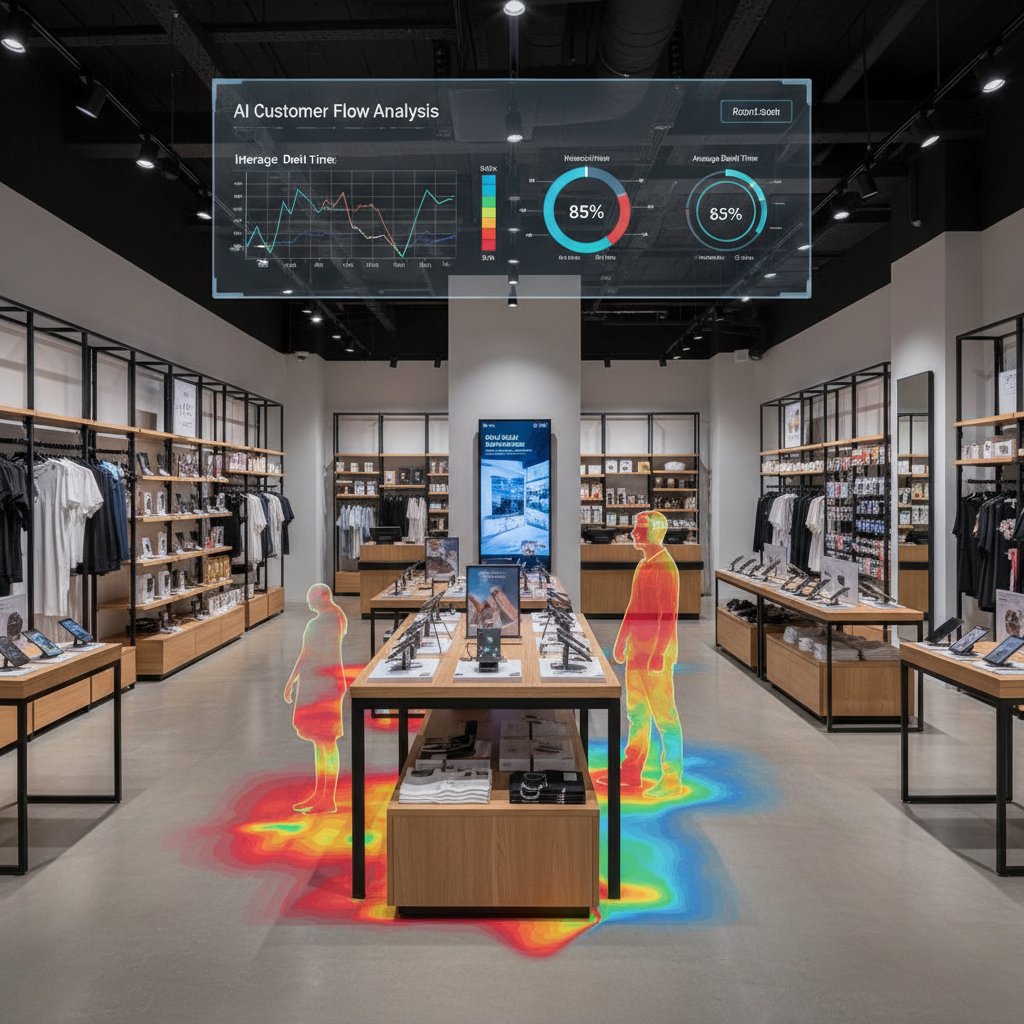
But the journey wasn’t painless. Initial data silos led to blind spots, and early models suffered from bias. Only with dedicated integration teams and iterative feedback loops did the retailer crack the code. Lesson learned: integration and training are as vital as the algorithms themselves.
When AI goes wrong: Lessons from failed projects
Not every AI journey ends in applause. A global telecom tried to deploy AI to predict customer churn, but neglected data governance. The result? Inaccurate predictions, wasted marketing spend, and a bruised reputation.
- Hasty deployment: Rushed implementation without proper data cleaning.
- Flawed training: Bias in historical data led to skewed models.
- Lack of oversight: No audit trails or human validation of predictions.
- Negative outcomes: Customers targeted incorrectly, ROI tanked.
To avoid these traps, invest in robust data pipelines, regular model audits, and clear lines of responsibility. Transparency and accountability are the antidotes to AI overreach.
Cross-industry insights: Surprising applications beyond marketing
Behavioral analysis isn’t just for retailers. In healthcare, AI models now parse patient behavior to optimize appointment scheduling and reduce no-shows, improving outcomes and efficiency (SPD Technology, 2023). In finance, predictive analytics models flag anomalous activity, bolstering fraud detection while personalizing customer outreach.
| Industry | Common Application | Reported Results |
|---|---|---|
| Retail | Inventory, promotions | Sales +20%, accuracy +30% |
| Healthcare | Patient scheduling | Wait times -25%, satisfaction up |
| Finance | Fraud/risk modeling | Forecast accuracy +35% |
| Marketing | Targeted campaigns | Engagement +40%, ROI +50% |
Table: Sector comparison of AI-based behavioral analysis outcomes.
Source: Original analysis based on Infinit-O, 2023; Reports Insights, 2023.
Unexpectedly, these industries reported not just operational wins, but also new business models—like healthcare providers offering personalized wellness programs based on behavioral segmentation.
Risks, ethics, and the future of behavioral AI
The privacy paradox: Where do we draw the line?
With power comes risk. AI’s appetite for customer data raises urgent privacy questions—where does useful analysis end and intrusion begin? Recent regulatory crackdowns (like GDPR and CCPA) make ethics and consent central to any AI-based customer behavioral analysis.

Public sentiment is shifting. Customers demand transparency and control, and brands that play fast and loose with data risk a backlash that no short-term win can offset. The smart move? Build privacy and ethics into every stage—by design, not as an afterthought.
Bias and fairness: When AI reinforces old prejudices
It’s an uncomfortable fact: AI inherits the biases of its creators and historical data. If your training set reflects old prejudices, your “cutting-edge” analysis will too.
Systematic errors in AI outputs caused by skewed or incomplete data; leads to unfair or discriminatory outcomes.
When underlying data patterns change over time, degrading model accuracy and fairness.
Quantitative measures to assess and correct bias—such as demographic parity and equalized odds.
Regular audits, diverse training sets, and open reporting are essential to prevent AI from amplifying inequity. It’s not just about compliance; it’s about trust and long-term value.
Future shock: Where AI-based behavioral analysis goes next
Emerging trends? Real-time personalization—AI adapts offers, content, and support live, across platforms. Cross-device tracking means insights aren’t siloed to one channel. And as AI becomes more accessible, even small businesses are wielding enterprise-grade analytics thanks to platforms like futuretoolkit.ai.
To stay ahead, businesses must invest in both technology and people—creating a culture where AI augments, not replaces, human acumen.
Practical playbook: Bringing AI behavioral analysis to your business
Getting started: What you need (and what to skip)
You don’t need a PhD or a million-dollar IT budget to harness AI-based customer behavioral analysis. But you do need focus and discipline. Skip the vanity dashboards and start with essentials.
- Define your business goals and KPIs.
- Audit your current data sources and quality.
- Select a platform (like futuretoolkit.ai) that emphasizes usability and integration.
- Pilot with a specific use case (e.g., churn prediction, personalized offers).
- Train staff and set up feedback loops.
A toolkit like futuretoolkit.ai can bridge the technical gap, letting you focus on outcomes rather than configuration.
Self-assessment: Is your data ready for AI?
Before you leap, check your foundation. Is your data clean, complete, and accessible? Hidden data silos, inconsistent formats, and poor governance will sabotage AI efforts before they begin.
- AI surfaces hidden correlations you never imagined.
- Hyper-personalized segments boost engagement and loyalty.
- Predictive insights allow proactive—not reactive—customer service.
- Automations free staff for high-value work.
- Continuous learning uncovers new growth avenues.
If your business handles customer data but struggles to extract value from it, you’re ready for transformation. Otherwise, start with data hygiene first.
Avoiding the snake oil: Choosing real solutions
The market is thick with vendors promising AI miracles. Here’s how to separate real value from vaporware:
- Ask for case studies with measurable outcomes.
- Demand transparency on models and training data.
- Check for ongoing support and integration help.
- Insist on regular audits and bias testing.

Validating claims and ensuring ROI means more than just reading marketing copy—ask for proof, talk to reference customers, and set clear metrics.
Unconventional wisdom: What nobody tells you about AI-based customer analysis
Uncommon use cases that deliver real value
Think beyond marketing. AI-based customer behavioral analysis is quietly transforming HR, sustainability, and crisis management.
- In HR, AI analyzes employee engagement, predicting attrition before it hits.
- Sustainability teams use behavioral analysis to nudge eco-friendly actions.
- Crisis teams spot early warning signs in social sentiment, heading off reputational risks.
- Education providers tailor learning paths based on student behavior.
- Even supply chain teams optimize logistics by mapping behavioral trends from vendors.
Thinking outside the box unlocks advantages your competitors haven’t even imagined.
The hidden costs (and unexpected perks) of going AI
AI isn’t a silver bullet. There are hidden expenses—data cleaning, model maintenance, and ongoing training. But the perks can catch you off guard: sharper strategy, faster pivots, and a culture of experimentation.
| Approach | Upfront Cost | Hidden Costs | Time Savings | Accuracy | ROI |
|---|---|---|---|---|---|
| Manual | Low | High (errors, delays) | Low | Medium | Moderate |
| AI-powered | Medium | Medium (maintenance) | High | High | High |
Table: Cost-benefit analysis of manual vs. AI-based behavioral analysis.
Source: Original analysis based on Penfriend.ai, 2024; Plivo, 2024.
Unexpected benefits—like uncovering entirely new customer segments or product opportunities—often deliver the biggest wins.
Why the human touch still wins in an AI world
AI can crunch numbers faster than any analyst, but it can’t create meaning. Human creativity, empathy, and ethical judgment are the real differentiators.
"AI can crunch numbers, but only people can create meaning."
— Sam, CX Strategist (quote)
The best brands don’t just automate; they elevate—augmenting AI insights with authentic, human relationships at every touchpoint.
The bottom line: Redefining customer understanding for a new era
Key takeaways for business leaders
The age of AI-based customer behavioral analysis is here, and it’s merciless to laggards. The playbook for customer understanding has been rewritten: quality data beats volume, real-time matters, and privacy isn’t optional. AI empowers, but only when coupled with human judgment, robust governance, and a willingness to challenge old assumptions.

For leaders ready to rethink how they engage, anticipate, and retain customers, the message is clear: adapt or be outpaced. Platforms like futuretoolkit.ai offer accessible onramps to this new era—if you’re willing to make the leap.
Final thoughts: Embracing the unknown, shaping the future
AI isn’t a prophecy—it’s a tool. The true competitive edge lies in the courage to question, adapt, and learn. As behavioral analysis evolves, so must your business mindset. Reflect on your own approach: Are you clinging to legacy thinking, or are you ready to rewrite the rules?
Now is the moment to reimagine what’s possible. Don’t just watch the AI revolution—lead it.
Sources
References cited in this article
- Infinit-O(resourcecenter.infinit-o.com)
- SPD Technology(spd.tech)
- Plivo(plivo.com)
- Rapid Innovation(rapidinnovation.io)
- Penfriend.ai(penfriend.ai)
- CMSWire(cmswire.com)
- Wiley Online Library(onlinelibrary.wiley.com)
- WhatstheBigData(whatsthebigdata.com)
- Fullstory(fullstory.com)
- ScienceDirect(sciencedirect.com)
- Forbes(forbes.com)
- LinkedIn Pulse(linkedin.com)
- Forbes(forbes.com)
- ResearchGate(researchgate.net)
- HubSpot(blog.hubspot.com)
- Mosaikx(mosaikx.com)
- Tandfonline(tandfonline.com)
- DevRev(devrev.ai)
- Insight7(insight7.io)
- OECD AI Incident Monitor(oecd.ai)
- Pew Research(pewresearch.org)
- World Economic Forum(weforum.org)
- HubSpot AI Playbook(hubspot.com)
- CIOB AI Playbook(ciob.org)
- iiinigence(iiinigence.com)
Empower Your Business with AI
Futuretoolkit.ai empowers businesses of all sizes to harness the power of AI effortlessly, offering specialized solutions across diverse business functions without the need for technical expertise. Whether it's automating customer interactions, optimizing operations, or analyzing complex data, our AI toolkit streamlines processes, increases efficiency, and fuels growth. With easy integration, intuitive interfaces, and powerful AI models, Futuretoolkit.ai offers unmatched accessibility and value, enabling users to achieve measurable outcomes quickly and cost-effectively.
Get startedReady to Empower Your Business?
Start leveraging AI tools designed for business success
Frequently Asked Questions
What percentage of companies are currently using AI to enhance customer experience?
According to Gartner, 80% of companies are leveraging AI to enhance customer experience as of 2023.
How has customer behavioral analysis changed from the past to now?
Historically, marketing relied on gut instinct, experience, and intuition from leaders in the corner office. Today, AI-based analysis has replaced this approach by extracting patterns from digital footprints—every swipe, scroll, and abandoned cart—using data rather than anecdotes.
What is the main advantage of AI-based customer behavioral analysis over human intuition?
AI ingests terabytes of unfiltered behavioral data and extracts patterns that human memory—which is selective and biased—would miss, providing surgical precision insights that challenge even seasoned executives' understanding of customer behavior.
Why is AI-based customer behavioral analysis described as more than just another tech fad?
The article characterizes it as a tectonic shift with real winners and losers, where companies ignoring this trend are hemorrhaging opportunities and profit, making it a fundamental change in how customer understanding works rather than a passing trend.
Continue Reading
Keep exploring Comprehensive business AI toolkit

AI-Powered Customer Experience Analytics: What Actually Works

AI-Driven Customer Acquisition Analytics: What Actually Works

AI-Driven Customer Analytics Software: Capabilities and ROI Outcomes

AI-Driven Customer Intelligence Tools: Capabilities and Real-World Risks

AI-Powered Customer Experience Analytics Software: Reality Vs. Hype
