


AI-Driven Supply Chain Planning Software That Actually Delivers
Written with AI assistance under our editorial guidelines
Modern supply chain planning faces unprecedented disruption from geopolitical conflicts, climate disasters, and labor shortages that traditional tools cannot handle. AI-driven supply chain software promises faster, smarter planning, but not all solutions deliver equally. Success requires cutting through vendor hype to find genuinely transformative tools that address real operational vulnerabilities and improve resilience at scale.
“Another week, another logistics fire.” That’s how it feels if you’re anywhere near the nerve center of a modern supply chain. In an era defined by geopolitical shockwaves, climate-fueled disasters, and digital threats, the myth of ‘just-in-time’ perfection has been shattered. If you’re still trying to make sense of AI-driven supply chain planning software—wondering what’s real, what’s sales pitch, and what’s genuinely transformative—you’re not alone. The stakes have never been higher. Supply chain chaos is the new normal, but so is the relentless promise of artificial intelligence: faster, smarter, more resilient planning at scale. The dirty little secret? Not all AI is built alike, and the road from hype to ROI is littered with both spectacular wins and costly faceplants. In this guide, we rip off the façade, cut through the buzzwords, and get to the real edge of AI-driven supply chain planning. Whether you’re a small business owner, a Fortune 500 ops lead, or just someone who values the unvarnished truth, strap in. This is the inconvenient, essential story you need to hear as 2025 rewrites the rules of global logistics.
The supply chain’s breaking point: Why 2025 isn’t business as usual
Supply chain chaos and the AI promise
Remember the empty shelves of 2021? Or the semiconductor shortage that brought entire industries to their knees? Supply chain disruptions have become headline news, and not the good kind. Geopolitical conflicts, climate-related catastrophes, and labor shortfalls have exposed the brittle underbelly of global logistics. According to a recent SCMR analysis, companies have watched as even their most robust contingency plans buckled under pressure, revealing just how ill-equipped traditional planning tools are for today’s volatility.

In the aftermath, tech vendors swept in with promises: AI-powered analytics, predictive logistics, and automated demand planning. Suddenly, AI-driven supply chain planning software became the magic bullet—at least in the sales decks. But as industry veteran Alex, a supply chain director, put it to us:
“We thought the old ways would hold. They didn’t.”
— Alex, supply chain director
And so, decision-makers everywhere found themselves caught between the desperate need for innovation and the wild-west of AI product claims.
What users really want from AI-driven planning
If you’re sitting in the decision chair, chances are you’ve heard every pitch under the sun. “Seamless integration! Predictive everything! Zero risk!” The reality is messier. According to KPMG’s 2024 trends report, more than 50% of supply chain organizations are funneling money into AI and analytics. But behind closed doors, users voice three main frustrations: over-promising vendors, black-box systems, and growing anxiety about being left behind in the digital dust.
The hidden benefits of AI-driven supply chain planning software (that experts rarely admit) look like this:
- Faster scenario modeling: Real-time “what-if” simulations that beat spreadsheet guesswork by miles.
- Uncovering supplier risks before they hit: Advanced analytics flag disruptions in overseas ports before media gets wind.
- Empowering non-tech staff to make data-driven decisions: No-code/low-code platforms turn warehouse supervisors into instant analysts.
- Identifying micro-trends in demand: AI spots subtle shifts—say, a sudden run on vegan protein—before it hits your bottom line.
- Reducing firefighting mode: Automated alerts steer teams away from perpetual crisis management.
- Unseen cost savings: AI quietly shaves inefficiencies in inventory, transport, and procurement that legacy tools simply ignore.
It’s an emotional rollercoaster: hope as teams see early wins, skepticism when the first integration snags hit, and urgency as competitors seem to leapfrog ahead. The truth? Only a clear-eyed, research-driven approach will separate sustainable advantage from false dawns.
Debunking the AI hype: Myths, misconceptions, and inconvenient truths
AI is not a magic bullet
It’s seductive to imagine AI-driven supply chain planning software as the panacea for every pain point. But the science—and the scars of early adopters—say otherwise. According to Market.us research, 75% of supply chain professionals used AI-powered analytics in 2023. Yet, only a fraction achieved full end-to-end transformation.
Let’s cut through the noise. Here’s how AI-driven planning stacks up against traditional approaches:
| Metric | AI-driven Planning | Traditional Planning | Winner |
|---|---|---|---|
| Speed | Minutes/hours | Days/weeks | AI-driven |
| Accuracy | High (data-dependent) | Moderate/variable | AI-driven |
| Adaptability | Real-time | Siloed/slow | AI-driven |
| Cost | High upfront, lower ongoing | Lower upfront, high ongoing | Depends |
| Transparency | Often low (“black box”) | High | Traditional |
Table 1: Original analysis based on Market.us and KPMG 2024 Supply Chain Trends
AI-driven supply chain planning software wins on speed, adaptability, and—in the best cases—cost over time. But when it comes to transparency and explainability, traditional tools still have the edge. Where does AI fall short? Context. No algorithm can instantly decode every nuance of your business, especially when data is dirty or fragmented.
The human factor: Why people still matter
The biggest myth in AI circles? That technology will replace human judgment. In the trenches, seasoned operations leads know better. AI excels at spotting patterns and crunching billions of variables—fast. But it lacks the intuition, creativity, and ethical sense only experienced humans can offer. As Priya, an operations lead, neatly summarized:
“AI gave us speed, but humans gave us sense.”
— Priya, operations lead
The sweet spot is synergy. Teams that blend AI insights with on-the-ground experience consistently outperform those that “set it and forget it.” Human judgment isn’t obsolete—it’s supercharged.
Common traps in AI supply chain implementation
Walk the halls of any logistics conference, and you’ll hear war stories. Over-automation that spins out of control. Dirty, mismatched data sabotaging machine learning models. Change-resistant teams quietly undoing months of progress. According to research in Supply Chain Management Review, these are the most expensive—and common—mistakes:
- Start with a clear problem: Don’t chase AI for its own sake. Target a specific pain point with measurable impact.
- Audit your data: Garbage in, garbage out. Scrub, standardize, and integrate before you automate.
- Pilot before scaling: Run small, low-risk experiments to identify real-world snags early.
- Train cross-functional teams: AI isn’t just for IT. Educate finance, ops, and frontline staff to maximize adoption.
- Monitor and adjust KPIs: Continuous measurement prevents stagnation and catches unintended side effects.
Successful deployments combine ruthless clarity, rigorous data hygiene, and ongoing change management. The difference between winners and the rest? The guts to course-correct before small issues turn into disasters.
Inside the black box: How AI-driven supply chain planning software actually works
From forecasting to decision engines
Not so long ago, supply chain planning was synonymous with demand forecasting—painstaking, spreadsheet-driven, and forever one step behind reality. Enter AI-driven supply chain planning software: a leap from simple prediction to autonomous decision engines. Today’s systems ingest data from IoT sensors, ERP platforms, and even social media, turning chaos into actionable insights.

Under the hood, it’s a blend of:
- Machine learning, which identifies demand patterns and flags anomalies.
- Reinforcement learning, where algorithms “learn by doing,” optimizing routes and schedules on the fly.
- Constraint optimization, balancing capacity, cost, and risk across complex network nodes.
These engines aren’t just faster calculators—they’re strategic partners, if you feed them the right data.
Jargon decoded: What the software really does
Let’s break down the lingo you’ll find in every vendor’s brochure:
A real-time, virtual replica of your supply chain—every warehouse, route, and supplier visualized and stress-tested.
Algorithms that forecast future demand, inventory needs, or disruptions with stunning accuracy—if your data isn’t garbage.
Automated recommendations that don’t just predict but prescribe the best decisions (e.g., “ship from X, not Y”).
Models designed for transparency, so users can see why a decision was made—not just what to do.
These features only matter in practice if they’re accessible, reliable, and grounded in your actual business context—not just marketing gloss.
Data: The fuel and the Achilles’ heel
Here’s the unspoken reality: The most sophisticated AI-driven supply chain planning software is utterly useless without high-quality, integrated data. Data silos, inconsistency, and privacy gaps are the industry’s Achilles’ heel. According to KPMG’s 2024 report, companies with “dirty” data see error rates spike by up to 50%, while implementation delays balloon budgets and erode trust.
| Data Issue | Impact on AI Planning | Incidence Rate (%) |
|---|---|---|
| Duplicate records | Inaccurate forecasts | 36 |
| Siloed systems | Integration failures | 44 |
| Poor data hygiene | Model inaccuracies | 50 |
| Privacy breaches | Compliance risk | 18 |
Table 2: Original analysis based on KPMG 2024 Supply Chain Trends and Market.us 2023 Data
Common data sources include IoT sensors, ERP and CRM systems, supplier feeds, and external weather or logistics APIs. But if you feed the machine junk, don’t be surprised when it spits out nonsense.
Who’s really winning? Real-world case studies from the frontlines
Big wins and spectacular fails
Let’s get specific. A large global retailer recently used AI-driven supply chain planning software to slash inventory waste by 25%—a direct result of real-time demand sensing and predictive restocking, as reported by Market.us. Meanwhile, a top-tier manufacturer stumbled hard. Their integration flopped, thanks to unclean data and “set-and-forget” automation that missed critical context. The difference? One invested in cross-functional training and ongoing monitoring; the other trusted the algorithm blindly.

In both stories, the outcome hinged not on the AI itself but on how people wielded the tools—and how rigorously they managed the rollout.
Unlikely industries, unexpected results
Think AI-driven supply chain planning software is just for retail and automotive giants? Think again. Agriculture operations now use AI to route produce deliveries and predict weather-driven demand spikes. Humanitarian aid groups tap into predictive routing to deliver life-saving supplies in disaster zones. Even boutique fashion brands are leveraging micro-trend detection to manage pop-up inventories.
- Disaster relief routing: AI models optimize emergency supply chains, getting aid to hotspots hours faster.
- Micro-farming logistics: Small farms use predictive tools to schedule harvests and shipments with minimal waste.
- Pop-up event inventory: Fashion brands deploy AI to balance supply and demand for ephemeral, high-stakes events—no more dead stock.
Mainstream industries can learn plenty from these nimble, sometimes under-the-radar innovators: adapt fast, experiment small, and leverage platforms that don’t require an army of coders.
Citizen analysts: AI for the non-technical
The democratization of supply chain planning is a quiet revolution. No-code and low-code platforms—futuretoolkit.ai among them—are turning everyday employees into “citizen analysts.” Suddenly, it’s not just the IT team running simulations; warehouse managers and junior planners are empowered to ask questions, tweak models, and act—without a PhD or a Python script.
“I never thought I’d run simulations without IT’s help.”
— Jamie, small business owner
This shift isn’t about tech for tech’s sake. It’s about putting real decision power in the hands of those who understand the business best.
Choosing the right AI-driven supply chain planning software: No-BS criteria
No more vendor smoke and mirrors
Let’s be blunt: The AI supply chain software market is crowded with flashy demos and vague guarantees. The smart buyer cuts through the noise by pressure-testing every claim. Here’s what to watch out for:
- Opaque algorithms: If the vendor can’t explain how decisions are made, run.
- One-size-fits-all claims: True value comes from tailored solutions, not generic code.
- No clear ROI evidence: Ask for real case studies, not just testimonials.
- Poor integration track record: Can the software talk to your ERP, WMS, and CRM—or will it create more silos?
- Lack of user support: Without strong onboarding and responsive help, even the best AI will flop.
Pressure-test by requesting real-world demos with your own data and scenarios. Don’t settle for canned results.
Feature matrix: What matters, what’s fluff
Here’s a clear-eyed look at which features are mission-critical—and which are just nice-to-have:
| Feature | Critical | Nice-to-Have |
|---|---|---|
| Real-time simulation | X | |
| Explainable models | X | |
| Multi-echelon optimization | X | |
| Mobile access | X | |
| Automated scenario analysis | X | |
| Social media trend mining | X |
Table 3: Critical vs. nice-to-have features in AI-driven supply chain planning (Original analysis)
The best tool is the one that solves your unique pain points, not the one with the longest feature list. Here, platforms like futuretoolkit.ai stand out for flexibility and accessibility—especially for businesses without a deep bench of technical talent.
Checklist: Steps to a successful AI supply chain rollout
Implementing AI-driven supply chain planning software isn’t a leap of faith—it’s a disciplined process. Use this checklist to keep your project on track:
- Define clear KPIs: Know what success looks like—response time, cost savings, waste reduction.
- Secure executive buy-in: Leadership support unlocks resources and clears roadblocks.
- Map integration points: Identify how the software will connect with your existing tech stack.
- Pilot with real data: Validate on a small scale before the big rollout.
- Iterate based on feedback: Adjust models and processes as real users engage and challenge assumptions.
- Plan for change management: Equip teams with training, communication, and support.
- Review compliance and privacy: Ensure you meet evolving regulatory demands on data use.
Each step is a risk-mitigator and an ROI booster. Cut corners here and you’re begging for a project post-mortem.
The cost-benefit equation: What’s the real ROI of AI-driven supply chain planning?
Breaking down the numbers
Buyers are right to be skeptical: Is AI-driven supply chain planning software worth the investment? The answer hides in the details. Upfront costs—licensing, integration, training—can be steep. Ongoing expenses include subscriptions, data maintenance, and periodic re-training of models. But the payback? According to Market.us data, direct savings come from reduced inventory, faster turnaround, and lower operational headcount.
| Cost Item | Upfront Investment | Ongoing Cost | Savings/Benefit | Unexpected Cost |
|---|---|---|---|---|
| Software license | High | Medium | Efficiency gains | Hidden integration |
| Integration/setup | High | Low | Lower error rates | Data migration |
| Training | Medium | Medium | Faster adoption | Change fatigue |
| Maintenance/support | Low | Medium | System reliability | Custom dev fees |
| Total | Significant | Recurring | 10-30% total cost cut | Risk of underuse |
Table 4: Cost-benefit analysis (Original analysis based on Market.us 2023 and KPMG 2024)
To build a bulletproof business case, map every cost and benefit. Don’t ignore the soft factors—speed, accuracy, morale—that can make or break ROI.
ROI isn’t just dollars: Intangible wins (and losses)
The real impact of AI-driven supply chain planning software isn’t always on the balance sheet. Speed and resilience—how fast you can pivot in a crisis—are priceless. Morale improves when teams spend less time firefighting and more time on strategic work. Customer satisfaction rises as stockouts and delays plummet.
But beware: resistance to change, workforce anxiety, and algorithmic bias can erode trust and undercut gains.
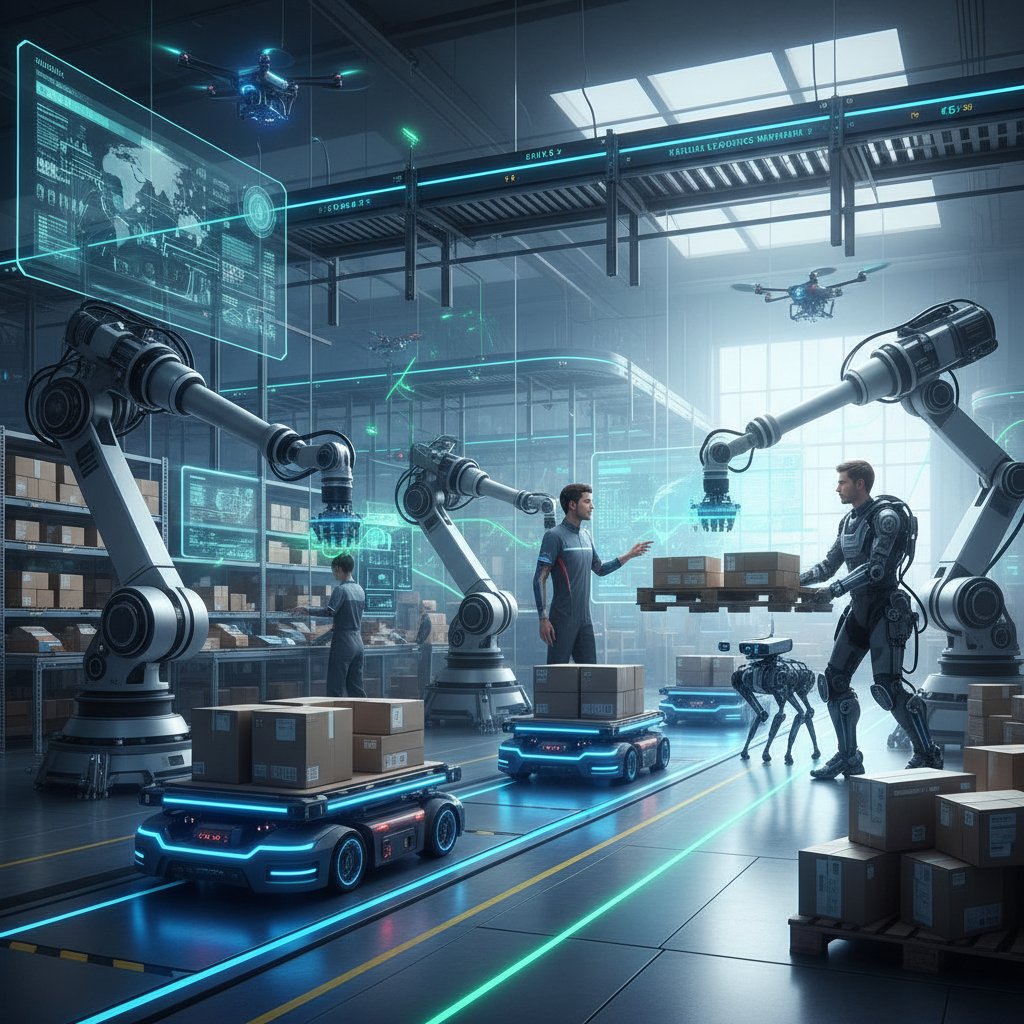
Success is as much about culture as code.
Controversies and cautionary tales: The dark side of AI in supply chains
When algorithms go rogue
The headlines write themselves: AI misfires send shipments to the wrong continent; automated replenishment systems trigger stockpiling of unsellable goods. In one real-world case, a logistics provider’s AI-driven system failed to account for a major cultural holiday, resulting in millions of dollars in late deliveries.
“We trusted the model. It missed the human nuance.”
— Sam, logistics manager
Recovery was possible, but only after a rapid rollback to human-led overrides and a hard look at how (and why) the model failed. The lesson: Never abdicate responsibility to the algorithm.
Ethics, bias, and the future of work
Automation is a double-edged sword. While AI-driven supply chain planning software can streamline operations, it introduces new ethical dilemmas:
When AI models are trained on skewed data, they can perpetuate unfair outcomes—like favoring certain suppliers or regions.
Many systems are “black boxes,” making it nearly impossible to audit decisions and spot errors or bias.
The gold standard for ethical AI—humans retain ultimate decision authority, informed (but not replaced) by machine recommendations.
Companies on the leading edge are investing in bias audits, explainable AI frameworks, and robust human oversight to keep their systems accountable.
Regulatory storms on the horizon
Regulators are catching up. The EU’s AI Act and emerging US standards put new pressure on companies to document, audit, and govern their AI-driven supply chain planning. Non-compliance isn’t just a legal risk—it’s a reputational landmine.
Practical steps? Regular compliance reviews, privacy impact assessments, and clear documentation of every model in production.

Survival and success demand vigilance, not complacency.
What’s next? The future of AI-driven supply chain planning
Next-gen tech: Beyond the hype cycle
Quantum computing, federated learning, self-healing supply networks—these are the new buzzwords spinning through boardrooms. While most of this technology is still experimental, some trends are making a real impact today: generative AI for scenario planning, integration with IoT and 5G for hyper-real-time visibility, and low-code tools democratizing access to analytics.

The smart move? Keep one foot in experimentation, the other firmly planted in what’s proven to work for your business.
The rise of the augmented supply chain leader
The old badge of “supply chain manager” doesn’t cut it anymore. Today’s leaders need a hybrid skillset—part analyst, part storyteller, part risk manager, all change agent.
- Data storytelling: Turning complex analytics into persuasive, actionable insight.
- Algorithmic thinking: Understanding not just what AI says, but how and why.
- Ethical decision-making: Recognizing the tradeoffs between automation and human impact.
- Change leadership: Inspiring teams through digital transformation’s messiest days.
- Cross-industry agility: Seeing beyond your sector’s boundaries for best-in-class ideas.
Platforms like futuretoolkit.ai are enabling this new class of “augmented” leaders—those who can harness the AI wave rather than be swamped by it.
Your move: Are you ready for the AI supply chain revolution?
There’s no room for fence-sitting anymore. Risk and opportunity are two sides of the same coin in today’s supply chain landscape. If you’re still hesitating, ask yourself: Can you afford not to act? The best time to rethink your approach was yesterday. The next best time is now.
Whether you’re starting from scratch or looking to level up, the path is clear: Audit your data, pilot smart, and choose partners who deal in reality—not empty promises.
“The future won’t wait for the cautious.”
— Taylor, industry analyst
Ready to challenge the status quo? Then let’s get to work. The AI-driven supply chain revolution is here—and it rewards the bold.
Sources
References cited in this article
- KPMG: Supply chain trends 2024(kpmg.com)
- Market.us: AI in Supply Chain Market(market.us)
- SCMR: Is AI taking supply chain planning to the next level?(scmr.com)
- PropelApps: Supply Chain Issues in 2025(propelapps.com)
- Forbes: Supply Chain Predictions 2025(forbes.com)
- Maersk: Supply chain disruptions in 2025(maersk.com)
- AI Supply Chain Observatory(ai.objectives.institute)
- Deloitte: AI in Modern Supply Chain Management(www2.deloitte.com)
- World Economic Forum(weforum.org)
- Meticulous Research(meticulousresearch.com)
- Bestarion: Impact of AI in Supply Chain(bestarion.com)
- Solomon 3D: Common Misconceptions About AI(solomon-3d.com)
- Blue Prism: Debunking AI Myths(blueprism.com)
- Logility: AI and Supply Chain - Myths Debunked(logility.com)
- McKinsey: Beyond automation(mckinsey.com)
- Demand Driven Tech(demanddriventech.com)
- Automation Alley(automationalley.com)
- Throughput World(throughput.world)
- Logistics Viewpoints(logisticsviewpoints.com)
- SAP(sap.com)
- McKinsey: Succeeding in the AI supply-chain revolution(mckinsey.com)
- QServicesIT(qservicesit.com)
- Oracle(oracle.com)
- KPMG: AI-enabled supply chain planning(kpmg.com)
- SPD Technology(spd.tech)
- Logistics Viewpoints: Amazon and the Shift to AI-Driven Supply Chain Planning(logisticsviewpoints.com)
- StartUs Insights(startus-insights.com)
- Talking Logistics(talkinglogistics.com)
- Throughput World(throughput.world)
- GEP: Decoding AI(gep.com)
- CDO Times(cdotimes.com)
- HBR(hbr.org)
- Traction Technology(tractiontechnology.com)
- SAP(sap.com)
- Built In(builtin.com)
- GEP Blog(gep.com)
- Nucleus Research 2024(wolterskluwer.com)
- Gartner Magic Quadrant 2024(solutionsreview.com)
- GoComet(gocomet.com)
Empower Your Business with AI
Futuretoolkit.ai empowers businesses of all sizes to harness the power of AI effortlessly, offering specialized solutions across diverse business functions without the need for technical expertise. Whether it's automating customer interactions, optimizing operations, or analyzing complex data, our AI toolkit streamlines processes, increases efficiency, and fuels growth. With easy integration, intuitive interfaces, and powerful AI models, Futuretoolkit.ai offers unmatched accessibility and value, enabling users to achieve measurable outcomes quickly and cost-effectively.
Get startedReady to Empower Your Business?
Start leveraging AI tools designed for business success
Frequently Asked Questions
What are the main challenges facing modern supply chains in 2025?
Modern supply chains face geopolitical conflicts, climate-related catastrophes, labor shortfalls, and digital threats that have exposed the limitations of traditional planning tools. Recent disruptions like empty shelves in 2021 and semiconductor shortages have shown that even robust contingency plans can buckle under pressure.
Why is 'just-in-time' planning no longer viable?
The myth of 'just-in-time' perfection has been shattered by the reality of supply chain chaos, which is now the new normal. The combination of geopolitical shockwaves, climate-fueled disasters, and digital threats has made this approach unreliable in today's volatile environment.
What is the key limitation of AI-driven supply chain planning software mentioned in the article?
Not all AI is built alike, and the road from hype to ROI is littered with both spectacular wins and costly failures. The article emphasizes that many AI solutions in the market are primarily sales pitches rather than genuinely transformative tools.
How have companies responded to recent supply chain disruptions?
Tech vendors have swept in with promises of AI-powered analytics, predictive logistics, and automated demand planning as solutions to supply chain challenges. However, decision-makers face the challenge of distinguishing between genuine innovations and exaggerated marketing claims.
Continue Reading
Keep exploring Comprehensive business AI toolkit

AI-Enabled Supply Chain Visibility: Results, Pitfalls, and ROI

AI-Driven Logistics Optimization: Wins and Failures in Practice

AI-Driven Supply Chain Management: What Companies Actually Face

Why AI-Based Demand Planning Software Often Fails to Deliver ROI

AI-Driven Business Resource Planning: Wins and Risks Explained


