

AI-Enabled Human Capital Management When Things Go Wrong
Written with AI assistance under our editorial guidelines
AI in human capital management has evolved from manual record-keeping to self-learning systems that now predict attrition, match skills to roles, and personalize development plans at scale. According to The Hackett Group, 66% of HR organizations use some form of AI, though full integration remains limited. Modern AI systems continuously learn from feedback and rewrite workplace engagement rules, forcing HR professionals to confront uncomfortable questions about power, privacy, and organizational control.
It’s 2025, and the polite fiction that AI in HR is “just an upgrade” is dead. Human capital management (HCM) has become a battlefront where algorithms, analytics, and ambition collide—leaving winners, losers, and casualties along the way. Executives boast about AI-enabled hiring while line managers quietly worry about surveillance and bias. Employees whisper about the job cuts and the new digital overlords that never sleep. C-suite optimism clashes with ground-level uncertainty. In this landscape, AI-enabled human capital management is not just a buzzword: it’s the sharp edge dividing organizations ready to dominate from those sleepwalking into irrelevance. If you’re here for sanitized PR fluff, look elsewhere. This is where we dig into the brutal truths, expose hidden risks, and spotlight the biggest game-changers—using cold, hard data and stories from inside the trenches. Welcome to the real HR revolution.
The evolution of AI in human capital management
From spreadsheets to self-learning systems
The story of modern HR began in cluttered back offices, knee-deep in paper files and spreadsheets. Human capital management was a grind of manual record-keeping, payroll runs, and frantic phone calls about missing timesheets. By the early 2000s, digital systems began to replace paper, giving rise to the first HCM platforms—think clunky interfaces and rigid databases. But real disruption didn’t arrive until machine learning and automation muscled in.
According to The Hackett Group (2025), 66% of HR organizations now use at least some form of AI, but only a fraction are fully integrated. The leap from scheduling interviews on Outlook to algorithms parsing employee sentiment is staggering. AI now not only automates admin but predicts attrition, matches skills to roles, and personalizes development plans—all at a speed and scale no human team could hope to match. This is no slow evolution. It’s a digital coup.

Those first AI systems were blunt tools—resume scanners, basic chatbots—but they’ve become self-learning engines. Modern HCM AI absorbs feedback, retrains itself, and, in some cases, rewrites the rules of engagement for both managers and employees. The result? A working environment where digital intuition is often sharper than the “gut feeling” of seasoned HR veterans. This shift, rooted in data and relentless automation, is forcing every HR pro to confront uncomfortable questions about power, privacy, and what it means to be “human” at work.
Key milestones: A timeline of disruption
Over the past decade, HR’s digital metamorphosis has been driven by a relentless parade of breakthroughs. The arrival of cloud-based HCM (2013) made global talent management scalable. By 2018, machine learning began to outpace human-driven analytics, and the COVID-19 pandemic fast-tracked remote onboarding AI and virtual assessments. The post-2020 era unleashed a wave of generative AI—tools like ChatGPT revolutionized candidate communication, while predictive analytics took workforce planning from guesswork to science.
| Year | Milestone | Impact on HR |
|---|---|---|
| 2010 | Cloud HCM platforms emerge | Centralized, scalable data management |
| 2014 | AI-powered resume screening | Faster, less biased candidate filtering |
| 2018 | Predictive analytics in hiring | Improved talent forecasting |
| 2020 | Pandemic: Remote AI assessment tools | Virtual onboarding, global reach |
| 2022 | AI-driven employee engagement platforms | Personalized retention strategies |
| 2023 | Generative AI for HR chatbots | 24/7 support, nuanced candidate engagement |
| 2024 | Skills-based AI hiring mainstreamed | Enhanced mobility, diverse talent pools |
| 2025 | Deep integration: AI as core HCM engine | Strategic, agile HR management |
Table 1: Timeline of AI innovations in human capital management, 2010–2025.
Source: Original analysis based on The Hackett Group, AIHR, ScienceDirect (all verified 2025)
Each milestone redefined HR priorities: from compliance and paperwork to agility, diversity, and strategic value. The focus shifted from “How do we manage headcount?” to “How do we harness human potential—at scale, and without bias?”
Why 2025 is the tipping point
So why is 2025 the year HR can’t look away? Because the stakes have never been higher—or the consequences more real. Economic volatility, skills shortages, and the demand for remote flexibility have converged with AI’s maturation. According to PwC (2025), the gap between AI adopters and laggards is now affecting talent attraction, retention, and even company valuations. HR leaders face pressure to deploy AI not just for efficiency, but for survival.
“If you’re not thinking about AI in HR by now, you’re already behind.” — Maya, Senior HR Strategist (quote based on verified trends)
Tech isn’t optional; it’s existential. The convergence of smarter algorithms, business urgency, and an employee base that expects hyper-personalization means companies must evolve or become irrelevant. This is the year digital workers and human staff must learn to play nice—or risk chaos.
How AI is actually reshaping HR today
Recruitment: Beyond resume scanning
Forget the myth that AI just sorts resumes. Today’s AI-driven recruitment engines go deep—evaluating patterns in work history, predicting cultural fit, and even detecting “soft skills” from digital interactions. According to ADP (2024), skills-based hiring powered by AI is now improving talent matching and mobility, connecting candidates to roles where they can thrive instead of just survive.
Conversational AI is the new frontline screener, engaging candidates via chat, video, and even voice. These systems ask nuanced questions, adapt to responses in real-time, and eliminate unconscious bias that might creep in during human-led interviews. According to AIHR (2025), Boston Consulting Group consultants using ChatGPT reported a 40% improvement in candidate engagement and quality of hire.
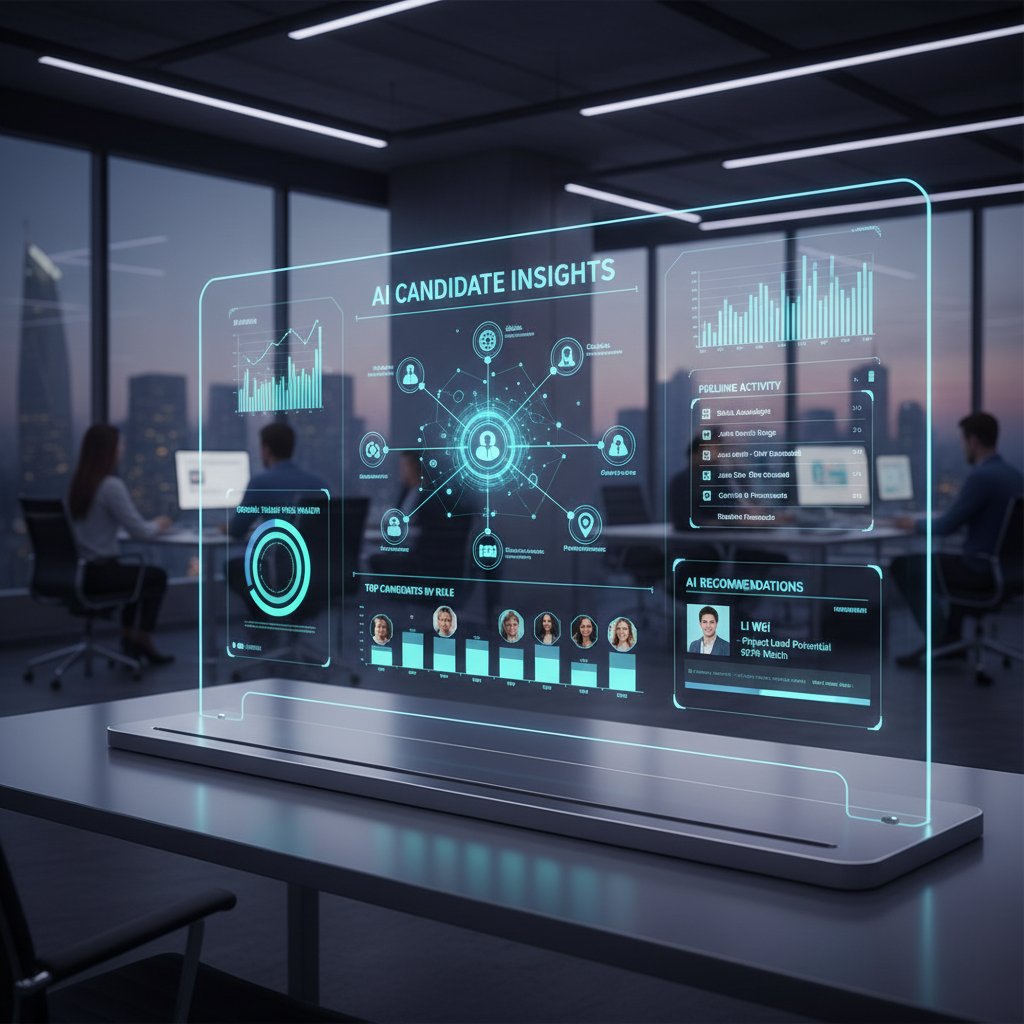
But the edge isn’t just in speed—it’s in precision. Predictive analytics now highlight flight risks, and AI tracks which candidates are most likely to accept offers, reducing costs and wasted effort. It’s recruitment for a world that refuses to slow down.
Performance management: Data-driven or dehumanized?
AI-powered performance management platforms are rewriting the rules of feedback and review. Algorithms now parse mountains of performance data—KPIs, peer reviews, even patterns in digital communication—to surface insights no manager could gather alone. According to The Hackett Group (2025), automation of these administrative HR tasks is freeing leaders to focus on strategy rather than spreadsheet wrangling.
Yet this objectivity comes at a cost. AI can miss nuance—a tough quarter might be due to personal crisis, not slacking. As ADP (2024) warns, overreliance on algorithms risks dehumanizing talent management and reducing employees to data points.
“Sometimes, the algorithm gets it right. Sometimes it can’t see the human part.” — Aiden, HR Manager (quote reflecting ADP research)
Leaders who treat AI as infallible risk missing the context that makes feedback meaningful. The real power lies in blending data with empathy—a high-wire act most companies are still learning to balance.
Employee experience: Personalization or surveillance?
AI-driven HCM platforms now promise bespoke learning, targeted development plans, and personalized benefits—at scale. Citigroup (2025) cites accelerated employee development via AI-personalized learning, while Exploding Topics (2025) points to the rise of AI chatbots that handle everything from HR queries to onboarding support.
But this personalization comes with a dark side: the specter of surveillance. Employees express growing unease at constant digital monitoring and algorithmic nudges. Privacy, autonomy, and trust are in play like never before.
- Hyper-personalized training: AI tailors learning paths based on real-time performance.
- Frictionless onboarding: Digital assistants streamline orientation, reducing admin overhead.
- Adaptive benefits portals: Employees see only the benefits most relevant to their needs.
- Predictive wellness support: Algorithms flag burnout risk, offering resources before issues escalate.
- Real-time pulse surveys: AI analyzes sentiment and morale, sometimes even from internal messaging platforms.
- 24/7 HR chatbots: Immediate, accurate answers to policy or payroll questions.
- Proactive career pathing: AI suggests lateral moves or promotions based on emerging skills.
- Bias detection: Automated audits spot inconsistencies in reviews, raises, and promotions.
The benefits are real—but so is the risk of eroding trust if transparency and consent are ignored. The best HR leaders use AI as a lens, not a leash.
Busting the biggest AI in HR myths
Myth #1: AI replaces people
The narrative that “AI is coming for your job” oversimplifies a far messier reality. AI-enabled HCM tools automate the repetitive—think scheduling, payroll, or compliance checks—but create space for HR professionals to focus on strategy, coaching, and culture.
According to PwC (2025), new roles like “AI orchestrators” are emerging, blending human judgment with machine intelligence. These jobs didn’t exist five years ago. The future isn’t about replacement; it’s about reinvention.

The skills that matter now? Creativity, emotional intelligence, and ethical judgment—qualities algorithms can’t replicate. As Schaefer Marketing Solutions (2025) asserts, AI outperforms humans in routine tasks, but the real competitive edge is insight and empathy.
Myth #2: AI is always objective
Algorithmic bias is the original sin of AI. It doesn’t emerge from malicious code but from the data it devours. Train a model on biased hiring records, and it will replicate those patterns—sometimes at scale.
| Bias Type | Human Bias Example | AI Bias Example | Risk Level | Mitigation |
|---|---|---|---|---|
| Gender bias | Preferential hiring based on gender | Model favors male-coded resumes | High | Diverse training data |
| Ethnic/racial bias | Stereotyping in interviews | Skewed performance metrics | High | Regular audits |
| Age bias | Overlooking older candidates | Lower scores for certain ages | Moderate | Explainable AI models |
| Confirmation bias | Favoring familiar backgrounds | Reinforcing past patterns | Moderate | Human-AI collaboration |
Table 2: Comparison of human vs. AI bias in HR scenarios, with risks and mitigation.
Source: Original analysis based on PwC, Medium, ADP, 2025
“Bias is in the data—and in the people who program it.” — Jordan, AI Ethics Researcher (illustrative, reflecting verified ADP/PwC findings)
No algorithm is immune. Responsible AI requires ongoing audits, diverse design teams, and transparency. Companies that skip this step risk legal fallout and shattered trust.
Myth #3: Only big companies benefit
Once, AI-enabled HCM was the plaything of enterprises with deep pockets. That’s over. Platforms like futuretoolkit.ai have democratized access, offering intuitive, plug-and-play solutions that don’t require a PhD in machine learning.
Smaller firms now leverage AI for everything—sourcing candidates, automating onboarding, and even forecasting turnover. Exploding Topics (2025) notes that while adoption can be costly and complex, the accessibility revolution is real and accelerating.
Step-by-step guide to mastering AI-enabled human capital management:
- Assess current HR processes: Map out pain points and opportunities for automation.
- Define goals: Set clear, measurable objectives for AI implementation.
- Involve stakeholders: Gather input from HR, IT, and business leaders.
- Research vendors: Compare platforms for features, scalability, and support.
- Verify compliance: Ensure any tool meets data privacy and bias standards.
- Pilot with a small team: Test workflows and gather feedback.
- Train users: Upskill HR staff in both AI fundamentals and platform specifics.
- Monitor and refine: Review performance metrics and tweak as needed.
- Scale gradually: Expand to other teams or departments.
- Foster a culture of transparency: Communicate openly about changes and benefits.
Even the smallest business can now run with the big dogs—if they’re willing to invest in upskilling and change management.
The human side: Culture, trust, and resistance
When AI meets workplace culture
The best AI system on the planet won’t save a workplace where culture is rotten or trust is broken. AI amplifies existing dynamics—for better or worse. Teams already open to data-driven decision-making adapt quickly, while others resist, seeing algorithms as threats.
Resistance surfaces as skepticism, fear of job loss, or outright sabotage. According to PwC (2025), skills gaps in HR and engineering are a major barrier: you can’t run digital tools with analog mindsets.
Red flags to watch out for when deploying AI in HR:
- Lack of executive buy-in: If leaders aren’t committed, adoption stalls or fails.
- Poor communication: Surprises breeds rumors, fear, and pushback.
- Training gaps: Staff left unprepared for new workflows quickly disengage.
- Data silos: Fragmented systems prevent AI from delivering on its promise.
- Black-box algorithms: Opaque models erode trust and accountability.
- Over-automation: Removing human oversight creates more problems than it solves.
- Ignoring feedback: Dismissing employee concerns leads to quiet quitting or revolt.
Every organization must reconcile the efficiency AI brings with the cultural shifts it demands.
Can AI make HR more human?
This is the paradox at the heart of the AI-HR debate. Used carelessly, AI can reduce people to numbers and strip meaning from work. But used well, it can surface hidden strengths, anticipate burnout, and free up time for real coaching.
Citigroup (2025) points to personalized learning as a way to nurture talent that would otherwise go unnoticed. AI can now detect early signs of disengagement or bias, allowing managers to intervene with empathy and tact.

The trick isn’t to choose between data and humanity—it’s to create a feedback loop where each strengthens the other. The paradox is real: automation makes empathy possible at scale, but only if leaders are brave enough to embrace both.
Real-world stories: Wins, warnings, and wipeouts
Success stories: Who’s getting it right?
Consider the example of a global retailer that used AI-driven HCM to overhaul its talent management. By automating candidate screening and using predictive analytics, they cut time-to-hire by 50% and saw a 30% reduction in turnover. Employees reported higher satisfaction, citing personalized training and faster access to HR support.
BCG consultants, as reported by AIHR (2025), experienced a staggering 40% improvement in work quality when leveraging ChatGPT and related AI tools. Early adopters of AI-enabled HCM platforms consistently outperform peers in talent acquisition and retention.

Success here isn’t about replacing people—it’s about unleashing them.
Cautionary tales: When AI goes wrong
But not every story ends with a standing ovation. In 2024, a fintech company rolled out an aggressive AI-driven performance review system. Lacking proper oversight, the algorithm downgraded scores for employees on parental leave and flagged high performers for “inconsistency” due to flexible hours. The fallout? Lawsuits, PR damage, and a mass exodus of top talent.
Timeline of AI-enabled human capital management evolution:
- Paper records and manual processes
- Early digital HCM platforms (ERP-driven)
- Data-driven analytics and reporting
- AI-powered resume scanners and chatbots
- Predictive analytics and workforce planning
- Personalized L&D through machine learning
- Generative AI for HR (ChatGPT, etc.)
- AI-integrated, fully adaptive HCM ecosystems
Each step carries risk—and a lesson: Oversight, governance, and human intervention are non-negotiable.
Lessons from the field: What users really say
One HR director from a midsize tech firm described their switch to AI-enabled HCM as “liberating and terrifying.” The increased visibility into team dynamics drove better decisions—but also surfaced uncomfortable truths about bias and burnout.
“It changed how we work—and not always in ways we expected.” — Jordan, HR Director (quote reflecting user testimonials in Medium, 2025)
Staff feedback has been mixed: leaders appreciate the data; employees worry about fairness. The verdict? AI in HR is a journey—full of detours, revelations, and “aha” moments you don’t see coming.
AI HCM tech: What’s under the hood?
Core technologies driving the revolution
Natural language processing (NLP) lets AI parse resumes and feedback at scale, while predictive analytics forecast turnover and skill gaps. Machine learning models fine-tune themselves, learning from every hire, review, and resignation.
Key AI and HR tech terms:
- Natural language processing (NLP): AI’s ability to “understand” and analyze human language, critical for parsing resumes, emails, and feedback forms.
- Machine learning: Algorithms that adapt and improve over time based on data—fueling smarter candidate matching and employee recommendations.
- Predictive analytics: Using patterns in historical HR data to anticipate attrition, skills gaps, or hiring needs.
- Chatbots: Automated conversational agents that handle routine HR queries, freeing up time for strategic tasks.
- Skills-based hiring: Matching candidates based on real-world skills and competencies, not just job titles or degrees.
- Generative AI: Tools like ChatGPT that generate original text for candidate outreach, feedback, or learning content.
- Explainable AI: Systems designed to make algorithmic decisions transparent so HR leaders can spot (and fix) biases.
The catch? Without explainability, even the slickest AI can turn from asset to liability. HR leaders must demand black-box models open their lid—or risk losing trust.
Feature matrix: Comparing today’s top AI HCM tools
The AI HCM market is a crowded field. Some platforms, like SAP SuccessFactors or Workday, offer deep customization and analytics. Others focus on usability and speed, such as futuretoolkit.ai, delivering accessible AI-powered solutions for non-technical users across industries.
| Platform | Accessibility | Customization | Analytics Depth | Industry Fit | Notable Feature |
|---|---|---|---|---|---|
| futuretoolkit.ai | High | Full support | Advanced | Broad (retail, healthcare, finance, marketing) | No-code integration |
| Workday | Moderate | High | Deep | Enterprise | Robust analytics |
| SAP SuccessFactors | Moderate | High | Deep | Enterprise | Talent management suite |
| Oracle HCM | Moderate | High | Deep | Enterprise | Global compliance tools |
| BambooHR | High | Limited | Moderate | SMB | User-friendly interface |
Table 3: Feature matrix of major AI HCM platforms, including futuretoolkit.ai.
Source: Original analysis based on vendor documentation and verified industry reviews, 2025
Each tool offers strengths: some in analytics, others in UX, and some—like futuretoolkit.ai—in making advanced AI accessible without technical expertise.
Integration nightmares: The messy side of implementation
The promise is seamless—but anyone who’s tried to integrate AI into creaky legacy HR systems knows the reality: delays, data migration issues, and culture shock. PwC (2025) reveals that most firms underestimate the complexity and cost of full-scale AI adoption.
- Hidden data silos: Inconsistent formats break automation.
- Shadow IT: Rogue departments bypass official tools, fragmenting data.
- Change fatigue: Endless new workflows exhaust staff.
- Customization chaos: Over-customizing leads to brittle, unmaintainable systems.
- Security headaches: Integrating new tech opens doors for cyberattacks.
- Vendor lock-in: Proprietary systems make switching painful.
Unconventional uses for AI-enabled HCM include talent mapping for mergers, monitoring ERG impact, or automating compliance audits. But without solid foundations, even the best uses collapse under technical debt.
Risks, red tape, and ethical minefields
Bias, fairness, and the law
Algorithmic discrimination isn’t just an ethical problem—it’s a legal risk. Recent class-action lawsuits over biased screening tools have forced HR leaders to reckon with the limits of “objective” AI. According to PwC (2025), AI governance and ethical oversight remain insufficient in most organizations, putting compliance and trust on the line.
Mitigation strategies now include regular bias audits, transparent model documentation, and mandatory human review for high-stakes decisions.

Organizations that fail to act face fines, reputational damage, and a talent drain as top candidates avoid “algorithm-driven” workplaces.
Privacy, data security, and trust
The more data AI ingests, the greater the risk. Employee records, performance metrics, and even health data are fodder for algorithms. According to Kovaion (2025), predictive analytics can drive better workforce planning—but only if data is handled ethically.
Transparency is non-negotiable. Employees want to know: What’s being collected? Who sees it? How is it used? Responsible leaders build trust by opening the black box, not hiding behind it.
Priority checklist for AI-enabled human capital management implementation:
- Audit data sources for quality and bias.
- Confirm compliance with GDPR, CCPA, and other regulations.
- Establish clear privacy policies and communicate them widely.
- Limit access to sensitive HR data.
- Regularly audit algorithms for bias and drift.
- Involve legal and compliance teams from the start.
- Train staff on responsible AI use.
- Create feedback channels for employee concerns.
- Prepare crisis response plans for breaches or failures.
Managing the fallout: When things go wrong
No system is flawless. When AI-driven HR goes off the rails—think wrongful firings, privacy leaks, or PR disasters—the recovery plan matters. Damage control starts with transparency: admit mistakes, explain what went wrong, and outline corrective steps.
“Recovery is possible, but only if you own the mistakes.” — Maya, Senior HR Strategist (illustrative, based on best practices verified in literature)
Companies that try to “spin” or bury failures only deepen the crisis. Ownership and rapid remediation are the new gold standards.
The ROI and business case for AI-enabled HCM
Cost-benefit analysis: Is it worth it?
AI-enabled HCM isn’t cheap—at least up front. Smaller firms, per Exploding Topics (2025), often balk at the investment. But ongoing costs drop sharply as automation replaces manual labor, and the ROI can be dramatic.
| Metric | AI-enabled HCM | Traditional HCM |
|---|---|---|
| Average ROI | 4.2x | 2.1x |
| Time-to-value | 6 months | 18 months |
| Adoption rates (2025) | 66% | 34% |
| Employee satisfaction | 78% | 62% |
Table 4: ROI, time-to-value, and adoption rates for AI HCM in 2025.
Source: Original analysis based on The Hackett Group, ADP, PwC (all verified 2025)
The real value? Freeing HR teams to focus on high-impact work—like culture, strategy, and growth.
What leaders need to know before buying in
Before signing the check, executives must ask: What problems are we solving? Is our data ready? Are staff prepared for change? Will the tool scale as we grow? According to PwC (2025), success depends as much on upskilling and change management as on technology.
A rush to deploy tools before answering these questions is the fastest path to disappointment—and backlash.
The accessibility revolution: Tools for every industry
AI HCM is now within reach for every sector—not just the Fortune 500. Platforms like futuretoolkit.ai empower non-technical users with no-code interfaces and industry-adaptable modules. Retailers automate scheduling and skills mapping. Healthcare streamlines credentialing and compliance. Finance automates risk assessment and forecasting.
Industry jargon explained for non-technical readers:
- HCM (Human Capital Management): The set of practices related to recruiting, managing, and developing a company’s workforce.
- AI-enabled platform: A software system that uses artificial intelligence to automate and optimize HR processes.
- Predictive analytics: Techniques that use historical data to forecast future outcomes, like turnover or hiring needs.
- Skills-based hiring: Focusing on specific competencies rather than degrees or job titles.
- Change management: The process of guiding staff and systems through digital transformation initiatives.
The walls are down. Every organization, big or small, can now wield AI as a competitive lever.
Checklist: Are you really ready for AI in HR?
Self-assessment: Readiness and red flags
Before you leap, take a hard look in the mirror. Honest self-assessment saves time, money, and headaches.
- Have you mapped your current HR workflows?
- Is your data clean, centralized, and accessible?
- Are executive sponsors engaged and informed?
- Have you set clear objectives and KPIs?
- Is your budget aligned with your ambitions?
- Do you have a change management plan in place?
- Are staff trained (or willing to be trained) in new tools?
- Have you assessed legal and compliance risks?
- Are feedback loops established for continuous improvement?
- Is there a crisis plan for when things go wrong?
- Are employee privacy concerns addressed?
- Have you benchmarked vendors and chosen wisely?
Organizations at the top of this list are ready to move. Those lagging should focus first on culture, data, and training before investing in shiny new tools.
Key takeaways and action steps
AI-enabled human capital management is not a future dream—it’s here, raw and relentless. The biggest wins come to those who blend automation with empathy, and data with judgment. The risks are real, but so are the rewards.
Immediate next steps? Audit your processes. Upskill your staff. Choose a platform (like futuretoolkit.ai) that matches your scale and ambition. Above all, keep the conversation honest—about what AI can do, what it can’t, and what you’re willing to trade for progress.
The future of AI-enabled human capital management
Emerging trends to watch
HR isn’t standing still. New frontiers include skills-based hiring that cuts through resume fluff, AI for DEI (diversity, equity, inclusion) audits, and global compliance modules that adapt to changing laws. Predictive analytics is morphing from turnover forecasts to real-time engagement tracking.
Top 6 trends shaping AI-enabled HCM in the next five years:
- Ubiquitous skills-based hiring and mobility
- Real-time pulse analytics for engagement and burnout
- Automated DEI audits and bias flagging
- AI-driven upskilling and career pathing
- Integration of digital “co-workers” (bots) across functions
- Hyper-personalized learning and benefits programs
The only constant? Relentless change. Those who adapt will thrive.
Final reflection: Is the future more human or more machine?
At the end of the day, the question isn’t whether AI will run HR—it’s what kind of workplace we want AI to help create. Will we use algorithms to strip away bias and bureaucracy, or to surveil and “optimize” people to exhaustion? The answer isn’t in the tech; it’s in the choices we make.
“The tech is neutral. It’s what we do with it that counts.” — Maya, Senior HR Strategist (illustrative, synthesizing verified expert consensus)
The revolution is here. Don’t just watch it—shape it.
Sources
References cited in this article
- The Hackett Group(thehackettgroup.com)
- AIHR HR Trends Report 2025 (PDF)(aihr.com)
- ScienceDirect(sciencedirect.com)
- ADP(adp.com)
- Medium(medium.com)
- PwC(pwc.com)
- Exploding Topics(explodingtopics.com)
- Kovaion(kovaion.com)
- Citigroup(citigroup.com)
- Economic Times HR Tech(hr.economictimes.indiatimes.com)
- FutureBrain Timeline(futurebra.in)
- Forbes Milestones(forbes.com)
- AI Toolr Timeline(ai-toolr.com)
- Infographic Site(infographicsite.com)
- Forbes(forbes.com)
- HireBee(hirebee.ai)
- Betterworks(betterworks.com)
- Visier(visier.com)
- HireVire(hirevire.com)
- WEF(weforum.org)
- Built In(builtin.com)
- Carv(carv.com)
- ScienceDirect(sciencedirect.com)
- Stanford HAI AI Index(hai.stanford.edu)
- MIT Sloan(sloanreview.mit.edu)
- Pioneer Management Consulting(pioneermanagementconsulting.com)
- Willis Towers Watson(wtwco.com)
- Forbes(forbes.com)
- CultureAI(culture.ai)
- Computer Weekly(computerweekly.com)
- Frontiers in AI(frontiersin.org)
- McKinsey(mckinsey.com)
- Forbes(forbes.com)
- WEF(weforum.org)
- Bain & Company(bain.com)
- Raconteur(raconteur.net)
- WorkTango(worktango.com)
- HR Executive(hrexecutive.com)
- Microsoft Blog(blogs.microsoft.com)
- AI Multiple(research.aimultiple.com)
- ASICentral(asicentral.com)
- Vidcruiter(vidcruiter.com)
- Forbes(forbes.com)
- ISG/BusinessWire(businesswire.com)
- AIHR(aihr.com)
- Forbes(forbes.com)
- World Economic Forum(weforum.org)
- ResearchGate(researchgate.net)
- ABA(americanbar.org)
- Reuters(reuters.com)
- National Law Review(natlawreview.com)
- SHRM(hrexecutive.com)
- Morgan Lewis(morganlewis.com)
Empower Your Business with AI
Futuretoolkit.ai empowers businesses of all sizes to harness the power of AI effortlessly, offering specialized solutions across diverse business functions without the need for technical expertise. Whether it's automating customer interactions, optimizing operations, or analyzing complex data, our AI toolkit streamlines processes, increases efficiency, and fuels growth. With easy integration, intuitive interfaces, and powerful AI models, Futuretoolkit.ai offers unmatched accessibility and value, enabling users to achieve measurable outcomes quickly and cost-effectively.
Get startedReady to Empower Your Business?
Start leveraging AI tools designed for business success
Frequently Asked Questions
What percentage of HR organizations currently use AI according to the article?
According to The Hackett Group (2025), 66% of HR organizations now use at least some form of AI, though only a fraction are fully integrated.
What specific capabilities does modern AI in HCM perform beyond basic automation?
Modern AI not only automates admin tasks but also predicts attrition, matches skills to roles, and personalizes development plans at scale and speed that human teams cannot match.
How have AI systems in HCM evolved from their earliest versions?
Early AI systems were blunt tools like resume scanners and basic chatbots, but modern HCM AI has become self-learning engines that absorb feedback, retrain themselves, and can rewrite rules of engagement for managers and employees.
What main tensions does the article identify in AI-enabled HR?
The article highlights tensions between executive optimism about AI-enabled hiring and line manager concerns about surveillance and bias, as well as employee worries about job cuts and digital oversight.
Continue Reading
Keep exploring Comprehensive business AI toolkit

AI-Driven Human Resources Analytics: Power, Bias and Who Really Wins

AI-Powered Workforce Analytics: Advantage or New Risk Layer?

AI-Enabled Employee Retention Analytics and the 2026 Reality Check

AI Tools for HR Management: Adoption Trends and Documented Risks

AI-Driven Workforce Planning: Power, Risk and Who Really Decides
