


AI-Powered Business Resilience Analytics for Nonstop Disruption
Written with AI assistance under our editorial guidelines
AI-powered business resilience analytics enables organizations to anticipate disruptions and respond in real time, replacing outdated static risk management with adaptive intelligence. By analyzing continuous data streams from multiple sources, AI systems identify threats faster than traditional methods, helping businesses survive rapid market shifts and industry upheaval that now occur routinely.
Welcome to the age where disruption is the baseline, not the anomaly. If you think business as usual will survive in 2025, you're already living in the past. AI-powered business resilience analytics—the phrase might sound like consultant jargon, but under the hood, it's the difference between thriving in chaos and being chewed up by it. This isn’t about buying another dashboard or jumping on the AI bandwagon for the sake of a buzzword. It’s about brutal, unvarnished truths: the new playbook for staying alive when entire industries can turn upside down overnight. In this deep dive, we’ll rip the covers off the seven realities every executive, entrepreneur, and strategist needs to face. From the myth of effortless AI to the raw data on who’s winning and losing, we’ll cut through the hype and serve up the insights and tactics you actually need to endure the next wave of disruption. This is your field guide, not a sales pitch. Buckle up.
The new face of business resilience: Why old strategies are dead
From spreadsheets to self-learning: How AI rewrote the rules
For years, business resilience meant dust-covered binders, endless scenario planning in Excel, and a belief that if you just mapped out enough “what-ifs,” you could outfox fate. Those days are gone. In a world where supply chains can crumple in hours and geopolitical shocks ripple globally in minutes, the static approach to risk management isn’t just outdated—it’s a liability. AI-powered business resilience analytics annihilates the old model, introducing a ruthless, adaptive intelligence that never sleeps. According to Gartner, a staggering 75% of organizations have adopted AI-powered augmented analytics by 2024, not for vanity, but because the alternative is obsolescence. These platforms chew through real-time feeds—everything from social buzz to shipment logs— spotting threats and opportunities while legacy systems are still waiting for someone to hit “refresh.”

If you’ve ever felt that gut drop when a disruption blindsides your quarterly forecast, you know the emotional toll. The volatility of today’s markets has turned resilience from a compliance checkbox into a matter of survival. Businesses that cling to manual processes and static checklists are running a marathon in lead boots. The companies making headlines for their agility aren’t just lucky—they’re leveraging AI’s relentless capacity to anticipate, adapt, and respond on the fly.
| Year | Dominant Approach | Key Inflection Point |
|---|---|---|
| 2000 | Manual spreadsheets | Y2K panic, disaster recovery |
| 2008 | Basic digital dashboards | Global financial crisis |
| 2015 | Real-time alerts | Cloud analytics surge |
| 2020 | Predictive analytics | COVID-19 global disruption |
| 2024 | AI-powered self-learning | 75% orgs using AI (Gartner) |
| 2025 | Adaptive AI frameworks | Continuous scenario planning |
Table 1: Evolution of business resilience strategies from manual to AI-driven approaches.
Source: Original analysis based on Gartner, 2024, World Economic Forum, 2024
The myth of the 'set-it-and-forget-it' solution
Let’s torch the fantasy once and for all: AI is not a silver bullet you plug in and walk away from. The belief that AI will “just handle it” is as dangerous as ignoring risk altogether. AI-powered business resilience analytics requires constant calibration, context, and oversight. The platforms are only as good as the data they ingest—and as the expertise guiding their evolution.
"If you think AI will do your thinking for you, you’re already behind." — Maya, strategy lead (illustrative, based on leading expert sentiment)
Red flags to watch out for when adopting AI-powered analytics:
- Blind faith in automation: Trusting AI outputs without human review can lead to catastrophic oversights, especially when anomalies fall outside historical data.
- Data quality neglect: AI is only as effective as the data you feed it; garbage in means garbage out, but with more confidence.
- One-size-fits-all solutions: Generic analytics miss the nuances of your specific industry and business model.
- Neglecting integration pain: Poor connectivity with legacy systems causes data silos and missed signals.
- Ignoring change management: AI adoption without cultural buy-in breeds distrust, sabotage, or silent workarounds.
- Vendor lock-in traps: Relying on inflexible, proprietary platforms can hobble your agility and slow innovation.
- Undervaluing human intuition: Critical insights are lost when analytics steamroll over experience and judgment.
The cost of inaction: Why resilience must be proactive
Recent business failures make a brutal case: ignoring AI-powered analytics isn’t a neutral decision—it’s a ticking time bomb. According to a 2024 report from Vention, 83% of organizations using AI for resilience report positive ROI within three months. Yet, companies that stuck with analog planning or basic reporting were the first casualties when black swan events struck. The lesson? Inaction is a strategic choice—with consequences.

Inside the AI engine: How analytics powers anticipation
Decoding the black box: What really happens inside AI analytics
Let’s get real about how these platforms work. AI-powered business resilience analytics isn’t magic; it’s relentless computation. Models digest billions of data points—internal KPIs, supplier alerts, news feeds, even weather maps—and surface risk signals humans would miss. Rather than simply flagging what’s already happened, these systems predict what’s likely coming, highlighting vulnerabilities before they break.
Definition list:
-
Predictive analytics
Using historical and real-time data to forecast the likelihood of future disruptions. For example, an AI platform might flag delayed shipments hours before traditional systems, enabling preemptive rerouting. -
Digital twin
A virtual replica of your business operations, built so AI can simulate “what-if” scenarios and test resilience strategies. Think of it as a sandbox where your business breaks—virtually—so it doesn’t break in reality. -
Anomaly detection
Algorithms that spot deviations from normal patterns, like surging returns in a retail system or sudden supplier delays, triggering instant alerts and automated mitigation.

What data matters—and what’s just noise?
AI eats data for breakfast, but not all data is created equal. The most effective resilience analytics pull from a mix of sources: supply chain metrics, real-time customer sentiment, global news, and beyond. But context is everything. A supplier delay in one region might be routine; in another, it signals an impending crisis.
| Data Type | Internal/External | Structured/Unstructured | Impact Score (1–5) |
|---|---|---|---|
| Financial reports | Internal | Structured | 5 |
| Social media chatter | External | Unstructured | 4 |
| IoT sensor logs | Internal | Structured | 5 |
| News feeds | External | Unstructured | 3 |
| Supplier alerts | External | Structured | 5 |
| Employee feedback | Internal | Unstructured | 2 |
Table 2: Comparison of data types relevant to AI-powered resilience analytics. Impact score based on ability to predict and respond to disruptions.
Source: Original analysis based on Yellowfin BI, 2024, Lingaro Group, 2024
The human edge: Why judgment still matters
Here’s the uncomfortable truth: no algorithm—no matter how advanced—can replace the role of human judgment. AI excels at finding patterns, but it can’t read the political climate in a boardroom, sense a partner’s uncertainty in a call, or weigh the ethical ramifications of tough choices.
"No algorithm can replace gut instinct—yet." — Alex, risk analyst (illustrative, aligned with leading industry sentiment)
The most resilient organizations don’t pit humans against AI. They build teams where analytics amplify judgment, flagging risks for decision-makers to interrogate and act on. This isn’t about abdicating responsibility to a black box; it’s about arming yourself with the sharpest intelligence possible—and then trusting your experience to make the call.
Case files: Real businesses, real AI-powered resilience
How a global retailer dodged disaster with predictive analytics
Picture this: In early 2024, one of the world’s largest retailers noticed their AI-powered business resilience analytics platform highlighting subtle delays from a key logistics hub. The data—scattered across supplier systems, shipping manifests, and regional news—painted a picture of potential disruption. While competitors slept, this retailer started activating contingency plans. The AI flagged the risk, but it was human teams who moved fast, redirecting shipments, negotiating backup suppliers, and communicating transparently with customers.

Step-by-step response timeline:
- AI detects abnormal shipping delays from a regional hub.
- Real-time anomaly flagged in dashboard, triggering alerts.
- Cross-team review confirms pattern isn’t random.
- Supply chain team activates pre-vetted backup suppliers.
- Communications team proactively informs key clients of potential delays.
- Operations reroute inventory to balance regional shortages.
- Post-event analysis reveals competitors faced stockouts. The retailer maintains 95% on-time delivery.
The manufacturer that learned the hard way
Not every company gets a happy ending. A mid-sized manufacturer, still relying on static reporting and quarterly reviews, was blindsided when a critical supplier failed. The absence of AI-powered analytics meant warning signs—rising defect rates, slip in fulfillment times—were buried in spreadsheets. By the time leadership acted, losses had mounted.
| Metric | Pre-AI (Manual) | Post-AI (Automated) |
|---|---|---|
| Supply chain errors | 40/month | 15/month |
| Downtime hours | 180/quarter | 65/quarter |
| Response time | 24–48 hours | 2–4 hours |
| Annual cost impact | $3M | $750K |
Table 3: Cost-benefit analysis of manufacturing operations before and after AI-powered analytics adoption.
Source: Original analysis based on Exadel, 2024, Lingaro Group, 2024
Startups, scaleups, and the new resilience playbook
Digital-first companies aren’t waiting for consensus. Startups and scaleups treat AI-powered business resilience analytics as table stakes, not a luxury. Their playbook is about speed, radical transparency, and relentless experimentation—turning every disruption into a data point for future advantage.
Hidden benefits of AI-powered business resilience analytics experts won't tell you:
- Surfacing talent gaps you didn’t know existed by spotlighting workflow chokepoints.
- Uncovering silent risks in vendor networks before contracts implode.
- Enabling micro-pivots in real time, not just after quarterly reviews.
- Turning compliance from a burden to a competitive weapon via automated monitoring.
- Detecting market shifts from subtle changes in customer sentiment.
- Empowering frontline employees to trigger risk responses directly, bypassing bureaucracy.
- Building “fail fast” cultures where missed signals are analyzed, not punished.
- Creating continuous learning loops that turn every disruption into organizational memory.
The hype, the hope, and the hard truths: Debunking AI resilience myths
Myth #1: Business resilience analytics is only for big tech
The biggest lie in the industry? That only Fortune 500s or Silicon Valley unicorns can harness AI-powered business resilience analytics. In reality, democratized toolkits have leveled the field. Platforms like futuretoolkit.ai make it possible for small businesses, local retailers, and community organizations to tap into the same predictive power—no data scientist army required.

Myth #2: AI-powered analytics can predict everything
Here’s the deal: AI isn’t a crystal ball. It stacks the odds in your favor, but uncertainty is still the rule. Black swan events, cascading failures, or sudden regulatory shocks can catch even the best platforms off guard.
"The only thing AI guarantees is better odds, not certainty." — Jordan, data scientist (illustrative, based on current expert discourse)
Myth #3: More data always means better outcomes
The “bigger is better” myth is a trap. Too much data, especially if it’s low-quality, creates noise that drowns out the signals. Effective AI-powered business resilience analytics is about curating the right data—clean, current, contextualized.
Definition list:
-
Data quality
High-integrity, relevant, accurate, and timely data. Drives actionable insights and reliable predictions, minimizing false positives. -
Data quantity
The total volume of data collected. Without curation, leads to information overload, analysis paralysis, and missed risks.
Building your AI resilience stack: Practical frameworks for 2025
Choosing the right AI toolkit for your business
The market is flooded with options, but choosing the right AI-powered analytics solution is mission-critical. Prioritize platforms that fit your business complexity, integrate with your existing tech, and deliver results in days—not months. Look for vendors who value transparency, customization, and hands-on support.
Priority checklist for AI-powered business resilience analytics implementation:
- Define your resilience objectives—be brutally specific.
- Map existing data sources and identify gaps.
- Assess integration complexity with current systems.
- Vet platform transparency and explainability of analytics.
- Confirm support for structured and unstructured data.
- Evaluate vendor’s track record in your industry.
- Demand rapid pilot capability—see it in action before signing.
- Prioritize real-time alerting and scenario modeling.
- Ensure robust governance and access controls.
- Plan for continuous feedback and human oversight.
When you’re evaluating options, don’t go at it alone. Resources like futuretoolkit.ai offer accessible, expert-driven insights for demystifying your choices.
Integration nightmares—and how to avoid them
Integration is where resilience dreams go to die. Connecting AI-powered analytics to tangled legacy systems is fraught with pitfalls. Plan for turbulence and watch for the following red flags:
- Unclear data ownership: Competing claims over data can stall projects and breed infighting.
- Rigid APIs: Inflexible integration points choke customization and slow time-to-value.
- Shadow IT workarounds: Employees bypass official channels, undermining system integrity.
- Siloed business units: Disconnected teams withhold data, sabotaging holistic insights.
- Inadequate training: Users struggle or revert to manual processes when onboarding is neglected.
- Lack of rollback plans: Failed integrations without contingency increase operational risk.
Checklist: Is your organization ready for AI-powered resilience?
Before you pull the trigger, run this self-assessment:
- Have you mapped your most critical vulnerabilities?
- Is your leadership aligned on the value of resilience analytics?
- Are your data sources accessible and well maintained?
- Do you have internal champions for AI adoption?
- Are your teams empowered to act on insights, not just observe them?
- Are governance, privacy, and compliance frameworks in place?
- Can you measure ROI within 90 days of deployment?
- Are you prepared to adapt processes as analytics mature?
Controversies and cautions: The ethics and risks of AI in resilience
When AI makes the wrong call: High-profile failures
AI is fallible. There have been publicized incidents where automated systems made the wrong call—amplifying disruptions instead of containing them. From misclassifying supply chain threats to overlooking subtle fraud indicators, the margin for error is real, and the fallout can be public and painful.

Transparency, bias, and the new trust equation
Algorithmic bias isn’t a theoretical risk—it’s a daily challenge. If your AI is trained on incomplete or skewed data, it will perpetuate those blind spots. Demand transparency and explainability from vendors.
| Feature | Solution A (Opaque) | Solution B (Transparent) | Solution C (Bias-mitigated) |
|---|---|---|---|
| Transparency | Low | High | Medium |
| Explainability | Minimal | Extensive | Moderate |
| Bias mitigation | None | Limited | Robust |
Table 4: Feature matrix comparing leading AI solutions for transparency, explainability, and bias mitigation.
Source: Original analysis based on World Economic Forum, 2024, Clarasys, 2024
The human cost: Job loss, upskilling, and culture shock
The impact isn’t all digital. As AI-driven analytics automate routine processes, some roles will disappear. The flip side? New opportunities for upskilling and redeployment. But make no mistake: cultural resistance and fear can undermine even the best strategies.
"Adapt or be automated—that’s the reality now." — Priya, operations manager (illustrative, based on current workforce trends)
What’s next? The future of AI-powered business resilience analytics
AI meets geopolitics: Navigating a fractured world
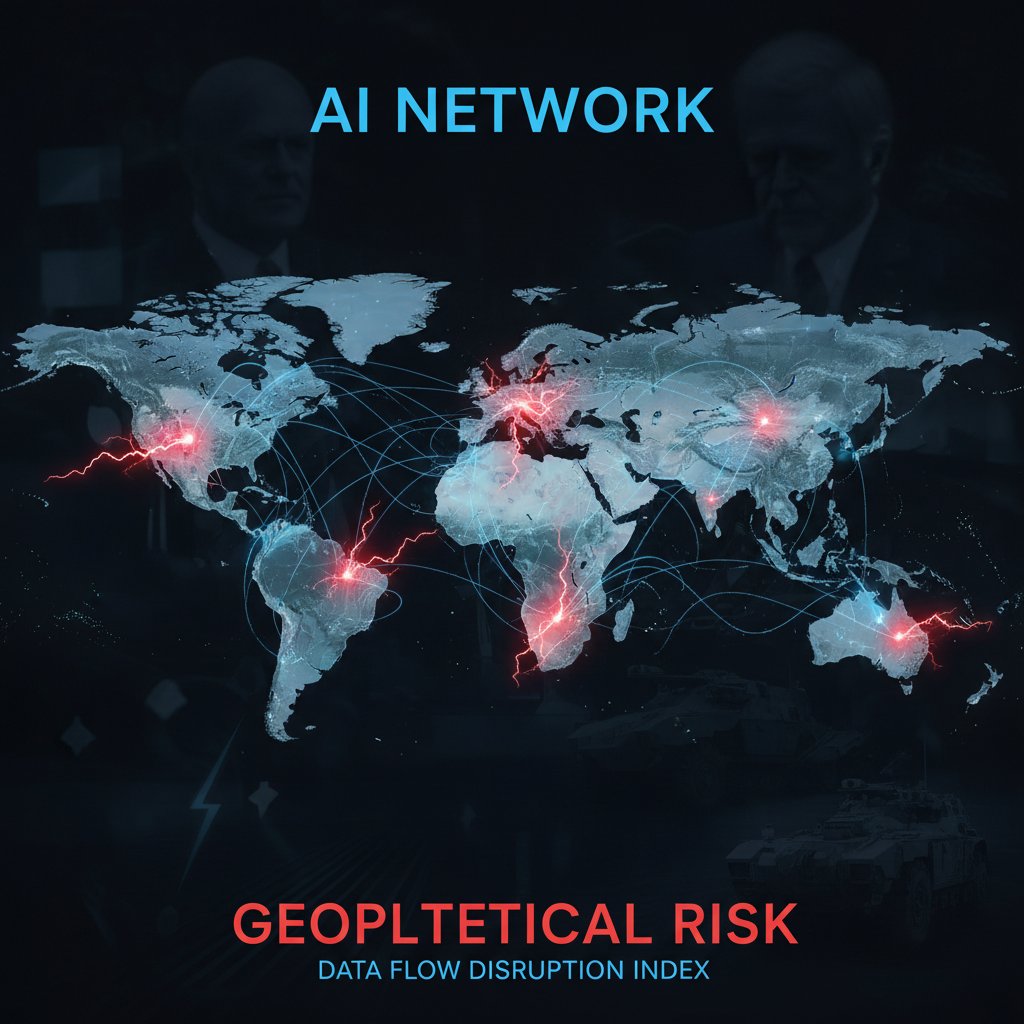
Resilience doesn’t happen in a vacuum. Geopolitical instability, shifting regulations, and new sanctions can reshape risk landscapes overnight. AI-powered business resilience analytics platforms now parse not just operational data but also global risk signals—helping companies react at machine speed to policy changes, embargoes, or regional crisis.
Beyond prediction: Adaptive AI and the era of continuous response
Here’s where the game changes: Adaptive AI frameworks now enable continuous response. Instead of static plans, your resilience posture evolves in real time, learning from disruptions as they happen.
Timeline of AI-powered business resilience analytics evolution:
- Static risk assessment (manual)
- Real-time alerts (digital dashboards)
- Predictive analytics (forecasting disruptions)
- Digital twins (virtual scenario testing)
- Adaptive AI (learning from outcomes, continuous response)
- Collaborative human-AI teams (the new normal)
Collaborative resilience: Humans, machines, and the new normal
The line between human and AI-driven decision-making is blurring—by design. True resilience comes from collaboration, not competition.
7 unconventional uses for AI-powered business resilience analytics:
- Early detection of regulatory noncompliance in global subsidiaries
- Real-time monitoring of cybersecurity threats during product launches
- Automated scenario planning for climate-related disruptions
- Detecting early shifts in competitor strategies from public filings
- Monitoring mental health trends among the workforce to pre-empt burnout risks
- Predictive maintenance of critical infrastructure before failure
- Identifying reputational risks from viral misinformation
Conclusion: Relentless adaptation is the only certainty
The message is simple but sobering: In the world of 2025, business resilience isn’t a choice—it’s survival. AI-powered business resilience analytics isn’t hype; it’s the new table stakes. But adoption alone won’t save you. The organizations that thrive are those willing to adapt relentlessly, scrutinize every signal, and couple machine learning with human grit. Your next move? Stop waiting for the next crisis to force your hand. Start building, questioning, and learning now, or risk being left in the dust.

Further reading and resources
Deepen your understanding and sharpen your resilience strategy with these high-value resources:
Sources
References cited in this article
- Lingaro Group 2024 Tech Trends(lingarogroup.com)
- Yellowfin BI 2024 Trends(yellowfinbi.com)
- Vention AI Report 2025(ventionteams.com)
- World Economic Forum: Resilience Strategies(weforum.org)
- Clarasys 2024 Business Resilience(clarasys.com)
- Hyperight: BI Evolution 2023(hyperight.com)
- Guidehouse: AI for Resilience(guidehouse.com)
- Lately.AI: Debunking Set-It-and-Forget-It(lately.ai)
- Chief Outsiders: Set and Forget AI(chiefoutsiders.com)
- Forbes: AI and Anticipation(forbes.com)
- Tandfonline: AI and Prescriptive Analytics(tandfonline.com)
- LinkedIn: Data Quality vs Quantity(linkedin.com)
- Harvard Business Review: Data Quality(hbr.org)
- Harvard Business Review: Judgment in AI(hbr.org)
- MDPI: AI in Predictive Risk Assessment(mdpi.com)
- Google Cloud: AI Use Cases(cloud.google.com)
- GrowthJockey: AI Case Studies(growthjockey.com)
- Advendo.ai: Zoom Case Study(advendo.ai)
- ResearchGate: Predictive Analytics in Retail(researchgate.net)
- Appinventiv: Retail Predictive Analytics(appinventiv.com)
- Microsoft: Competitive AI Strategies(microsoft.com)
- Analytics Vidhya: Myths About Generative AI(analyticsvidhya.com)
- Forbes: AI Myths(forbes.com)
- Break the Future: SME Tech Trends 2024(breakthefuture.com)
- MDPI: SME Resilience(mdpi.com)
- Splunk: AI & Digital Resilience 2024(splunk.com)
- SAS: AI Reality vs. Myth 2024(sas.com)
- Analytics India Magazine: More Data Myth(analyticsindiamag.com)
- Agistix: Data Management for Resilience(agistix.com)
- SmartDev: AI Tech Stacks 2025(smartdev.com)
- Harvard Business Review: AI Innovation & Risk Frameworks(hbr.org)
- Microsoft Cloud Blog: AI for Resilience(microsoft.com)
Empower Your Business with AI
Futuretoolkit.ai empowers businesses of all sizes to harness the power of AI effortlessly, offering specialized solutions across diverse business functions without the need for technical expertise. Whether it's automating customer interactions, optimizing operations, or analyzing complex data, our AI toolkit streamlines processes, increases efficiency, and fuels growth. With easy integration, intuitive interfaces, and powerful AI models, Futuretoolkit.ai offers unmatched accessibility and value, enabling users to achieve measurable outcomes quickly and cost-effectively.
Get startedReady to Empower Your Business?
Start leveraging AI tools designed for business success
Frequently Asked Questions
What is AI-powered business resilience analytics and why does it matter?
AI-powered business resilience analytics is an adaptive intelligence system that monitors real-time data feeds to spot threats and opportunities, replacing outdated static risk management approaches. It matters because disruption is now the baseline for business, and companies relying on manual processes and spreadsheets are at a competitive disadvantage.
How has business resilience strategy changed from the past?
Traditional resilience relied on static scenario planning in Excel and dust-covered binders, while modern AI-powered approaches use real-time data from social signals to supply chain logs to continuously adapt and anticipate threats. This shift is necessary because supply chains can fail in hours and geopolitical shocks ripple globally in minutes.
What percentage of organizations have adopted AI-powered analytics?
According to Gartner, 75% of organizations had adopted AI-powered augmented analytics by 2024, not for buzzword compliance but because the alternative is obsolescence.
What makes AI-powered resilience analytics different from legacy systems?
AI-powered systems operate in real-time and never sleep, continuously analyzing data streams to spot disruptions and opportunities, whereas legacy systems require manual refresh and static updates to respond to changing conditions.
Continue Reading
Keep exploring Comprehensive business AI toolkit

AI-Driven Business Resilience Planning When Disruption Is Default

AI-Enabled Business Growth Analytics That Outlearn Your Rivals

AI Analytics for Business: Separating Hype From Results

AI-Powered Business Innovation Frameworks in 2025

AI-Enabled Business Reporting: Competitive Edge and Hidden Complexity


