


AI-Powered Business Innovation Frameworks: What Works in Practice
Written with AI assistance under our editorial guidelines
Companies that fully modernize with AI-led processes outperform peers by 2.5x in revenue growth and 2.4x in productivity gains, according to 2024 Accenture research. AI-powered innovation frameworks are no longer optional but essential survival tools for organizations navigating rapid market shifts and competitive pressure in 2025.
There’s a brutal honesty missing from most conversations about AI-powered business innovation frameworks. Behind the glitzy headlines and boardroom bravado, the reality is far messier, riskier, and—if you know where to look—far more rewarding than most leaders dare admit. In 2025, as the world reels from digital acceleration and economic whiplash, frameworks for business innovation aren’t just another management fad. They’re existential survival kits. Whether you run a scrappy startup clawing for relevance or a corporate behemoth terrified of irrelevance, this is the deep-dive you need. We’re cutting through the hype, surfacing the hidden risks and wild rewards, and giving you a blueprint rooted in cold, verified facts. This isn’t about making AI sound sexy. It’s about decoding the real frameworks, the brutal truths, and the bold opportunities waiting for those with the guts to act. Welcome to the no-BS guide to AI-powered business innovation frameworks. Ready to see what’s really happening behind the buzzwords?
Why AI-powered business innovation frameworks matter in 2025
The urgency of reinvention
The corporate graveyard is filled with businesses that couldn’t—or wouldn’t—reinvent themselves fast enough. In 2025, the pace is relentless: supply chains morph overnight, consumer tastes shift with a tweet, and the line between legacy and extinction has never been thinner. AI-powered business innovation frameworks aren’t a luxury anymore—they’re the scaffolding that keeps modern organizations from collapsing under their own inertia. According to research from Accenture (2024), only 16% of companies have fully modernized with AI-led processes, yet those that have are outperforming their peers by a staggering 2.5x in revenue growth and 2.4x in productivity gains. The message is clear: iterate or evaporate.

"If you’re not iterating, you’re evaporating." — Alex, innovation strategist (quote)
The winners understand that frameworks aren’t just about deploying new tech—they’re about rewiring the way organizations think, act, and adapt. Without this scaffolding, even the shiniest AI solution rusts in the face of cultural resistance and strategic drift.
What drives leaders to seek new frameworks
Today’s leaders don’t just face uncertainty. They stare down volatility that makes yesterday’s playbook look like a suicide note. Rapidly shifting regulations, predatory upstarts, and relentless pressure to innovate (or at least look like you are) force decision-makers into uncomfortable territory. Many are haunted by the fear of missing out, but the savviest know that structured frameworks, not ad-hoc experimentation, deliver lasting impact.
Unpacking the hidden benefits of AI-powered business innovation frameworks reveals advantages that most “experts” won’t mention:
- Cultural transformation: They force organizations to confront their sacred cows and shed operational dead weight.
- Data democratization: Even non-tech staff gain access to actionable insights, as highlighted by Forbes’ recent analysis on AI democratization (2024).
- Risk mitigation: Structured frameworks surface ethical, compliance, and cybersecurity risks before they metastasize.
- Scalability: Once proven, frameworks let you go from pilot to enterprise-wide adoption without losing your mind.
- Continuous learning: Embedded feedback loops ensure every experiment teaches you something, even when you fail.
The result? The chasm between digital leaders and laggards widens. According to IDC (2024), AI adoption is still wildly uneven across industries, with retail and finance sprinting ahead while others cling to 20th-century habits. The real divide isn’t about access to tech—it’s about the will and method to use it.
The FOMO factor: is everyone really innovating?
The herd mentality is alive and well. For every headline about AI-powered business transformation, there are a dozen companies quietly floundering behind the scenes. The bandwagon effect is real, but so is the carnage from half-baked implementations. Executives fear being left behind—but many leap before looking, mistaking tools for transformation.
| Industry | 2023 Adoption (%) | 2024 Adoption (%) | Projected 2025 Adoption (%) |
|---|---|---|---|
| Finance | 65 | 82 | 89 |
| Retail | 55 | 75 | 83 |
| Healthcare | 42 | 60 | 73 |
| Manufacturing | 28 | 44 | 60 |
| Education | 15 | 28 | 36 |
| Government | 11 | 19 | 27 |
Table 1: AI-powered framework adoption rates by industry (2023-2025). Source: Original analysis based on Accenture 2024, IDC 2024.
Despite the hype, only a minority have crossed the chasm from pilot to pervasive. The rest? They’re stuck in the shallow end, splashing around with disconnected tools and no framework to tie it all together.
Debunking the myths: what AI-powered frameworks are (and aren’t)
Myth 1: AI frameworks are plug-and-play
It’s seductive to believe you can buy your way to innovation. Vendors promise “turnkey” AI solutions, but here’s the unfiltered truth: software is easy, culture is brutal. The real differentiator isn’t code, it’s conviction. Frameworks only work if leaders are willing to challenge entrenched norms, flatten bureaucratic silos, and get comfortable with discomfort. McKinsey (2024) warns that the toughest barriers are rarely technical—they’re human.
"The hardest part isn’t the algorithms—it’s the ego." — Priya, transformation consultant (quote)
Plug-and-play? Only if your people are already wired for change. Otherwise, you’re just layering digital wallpaper over analog rot.
Myth 2: Only tech giants can use them
Here’s what they don’t tell you at industry conferences: small and mid-sized businesses, as well as supposedly “old school” industries, are quietly leading some of the boldest framework revolutions. Why? They’re less burdened by legacy infrastructure and ossified culture. These underdogs can move fast, experiment cheaply, and pivot without the drag of a thousand committees.
Unconventional uses for AI-powered business innovation frameworks include:
- Non-profit fundraising: AI optimizes donor engagement strategies beyond what any spreadsheet could imagine.
- Supply chain resilience: SMB manufacturers use AI frameworks to predict and counter disruptions that would cripple larger rivals.
- Creative agencies: AI frameworks enable hyper-personalized content at a fraction of traditional costs.
- Rural healthcare: Clinics automate patient triage and scheduling, slashing wait times and administrative overhead.
The lesson? Frameworks democratize innovation far beyond Silicon Valley. It’s about mindset, not muscle.
Myth 3: AI = instant ROI
If you think AI is a slot machine for business value, prepare for disappointment. The road from framework adoption to measurable returns is longer—and bumpier—than most consultants admit. Real-world cases reveal a lag as organizations wrestle with integration, upskilling, and workflow overhaul. According to IBM (2023), only 43% of executives currently use generative AI for strategic decisions, underscoring the patience required.
| Framework Type | Average Time-to-Value (Months) | Notes |
|---|---|---|
| Standard workflow AI | 6-8 | Smoothest for operational tasks |
| Advanced analytics AI | 10-14 | Requires data readiness and buy-in |
| Generative AI integration | 12-18 | Highest risk/reward, steep learning curve |
| Bespoke sector framework | 14-24 | Deep customization, regulatory hurdles |
Table 2: Time-to-value comparison of popular AI innovation frameworks. Source: Original analysis based on IBM 2023, Accenture 2024.
It’s not about quick wins—it’s about sustainable, compounding returns. The impatient get burned. The disciplined, rewarded.
Inside the machine: anatomy of an AI-powered innovation framework
Core components explained
Strip away the jargon and every successful AI-powered business innovation framework has the same beating heart: a set of interconnected building blocks, each critical to delivering value. Let’s break down the essentials:
- Data pipelines: Robust, automated flows that move clean, relevant data from source to analysis. Without this, AI is blind.
- Feedback loops: Continuous cycles for monitoring model performance and learning from outcomes—ensuring the system adapts, not ossifies.
- Decision engines: The logic and algorithms (often using machine learning or generative models) that turn raw data into actionable recommendations.
- Human oversight modules: Guardrails for ethics, compliance, and sanity—because not every “optimal” answer is a good idea.
- Integration layers: Connect disparate systems, breaking down the walls between silos.
- Measurement dashboards: Real-time visibility into KPIs, flagging what’s working and what’s not.
Key terms in AI-powered business innovation frameworks:
The lifeblood of any AI system, responsible for collecting, cleaning, and transporting data from multiple sources to ensure reliability and relevance.
A cyclical process that uses output results to refine and improve both data inputs and model accuracy, critical for continuous improvement.
The analytical core that processes input data through algorithms to generate insights, recommendations, or automated actions.
A safeguard mechanism where critical decisions are reviewed by humans, providing ethical oversight and creative judgment.
Software components that allow AI frameworks to communicate with existing enterprise systems, ensuring seamless adoption.
How frameworks evolve with AI advances
Forget static roadmaps. Today’s best frameworks are living, breathing ecosystems—they morph in real time as new AI techniques emerge, regulations shift, or business priorities pivot. This fluidity is both a feature and a risk: if your framework can’t evolve, it quickly becomes a straitjacket. According to research from SpringerLink (2024), organizations that build adaptive frameworks see faster, more sustainable gains than those chained to rigid plans.

The most advanced organizations now treat their frameworks as platforms—open to plugins, third-party tools, and community-driven innovation. Static is dead; adaptive thrives.
The human factor: where people still matter
No matter how slick your framework, it’s still people who ask the right questions, spot the outliers, and steer the ship through political storms. Judgment, creativity, and context are still stubbornly human qualities. For instance, when a global retailer’s AI flagged a sudden drop in sales as a supply chain issue, it took an eagle-eyed analyst to recognize the true cause: a viral campaign by a competitor. The AI missed the bigger narrative, but human intuition saved the day.
In every AI-powered innovation journey, there’s an inflection point where the algorithm’s tunnel vision collides with the messiness of real-world complexity. It’s here that experienced humans—wielding both data and gut—make the difference between a framework that flails and one that flourishes.
Real-world case studies: frameworks that changed the game—and those that flopped
Industry mashups: unexpected wins
Some of the sharpest breakthroughs happen when industries “borrow” AI-powered frameworks from each other. Retailers adapt healthcare’s patient triage models for customer support. Financial firms use entertainment-industry personalization engines to customize investment products. The results are often as unexpected as they are dramatic.
| Source Sector | Borrowing Sector | Framework Application | Outcome |
|---|---|---|---|
| Healthcare | Retail | Patient triage → Customer support | 40% reduction in wait times |
| Entertainment | Finance | Personalization → Investment | 50% increase in campaign effectiveness |
| Manufacturing | Healthcare | Predictive maintenance → Equipment uptime | 15% cost savings |
| Retail | Marketing | Inventory optimization → Ad targeting | 30% improvement in ROI |
Table 3: Cross-industry outcomes of AI-powered frameworks. Source: Original analysis based on Accenture 2024, Vena 2024.
These mashups prove that fresh eyes—and frameworks—can ignite transformation in places you least expect.
The failures nobody talks about
For every Cinderella story, there’s a cautionary tale of failure. One major multinational (anonymized here) bet big on a “one-size-fits-all” AI innovation framework. They rolled out new tools without aligning the framework to local business realities or upskilling teams. The result? Paralysis, wasted spend, and a mass exodus of top talent.
"We thought the framework would save us. It nearly buried us." — Jordan, COO (quote)
The real lesson: frameworks must be tailored, not templated. Blind faith in process is as dangerous as no process at all.
What success really looks like in 2025
Success isn’t always loud or headline-grabbing. In 2025, the winners are those whose frameworks deliver nuance: subtle shifts in culture, quietly compounding productivity gains, and an uncanny ability to pivot fast when the world lurches sideways.

Look for non-obvious indicators: team morale upticks, customer feedback loops driving new products, or unexpected revenue streams emerging from data insights. It’s rarely about overnight revolutions—it’s about relentless, measurable evolution.
AI frameworks across industries: one size never fits all
Finance: risk vs. innovation
In finance, the tension between risk management and innovation is palpable. On one hand, compliance regimes are unforgiving; on the other, competitive advantage demands experimentation. The smartest firms use AI-powered frameworks to strike a delicate balance—automating risk assessment while piloting algorithmic trading models or hyper-personalized offerings.
Case in point: a leading bank leveraged an AI innovation framework to overhaul its financial forecasting, achieving a 35% increase in accuracy and a significant reduction in risk exposure (Accenture 2024). The framework’s real power? It allowed internal auditors and data scientists to collaborate seamlessly, ensuring neither speed nor safety was sacrificed.
Healthcare: ethics on the front line
Healthcare is where the stakes are highest and the risks most acute. Here, frameworks must navigate a minefield of data privacy, ethical dilemmas, and life-or-death decisions. Yet, breakthrough solutions abound: from predictive patient scheduling to AI-powered diagnostic aids, hospitals are achieving 25% reductions in administrative workloads while enhancing patient satisfaction (Vena 2024).
Red flags to watch out for when adopting AI frameworks in sensitive sectors:
- Opaque algorithms: Black-box models that defy explanation are a liability.
- Data privacy gaps: Weak controls can trigger lawsuits and erode public trust.
- Ethical drift: Without oversight, AI may reinforce bias or automate bad decisions.
- Overreliance: Systems must have human fail-safes for critical decisions.
In healthcare and other regulated domains, frameworks are only as strong as their weakest ethical link.
Creative industries: when AI shakes up the status quo
Creative sectors—advertising, fashion, media—have approached AI frameworks with a mix of suspicion and wild enthusiasm. The boldest experiments have yielded astonishing results: campaigns generated on the fly, hyper-personalized narratives, and artistic collaborations between humans and machines that defy category.

What’s clear? When AI frameworks are designed to augment—not replace—creative talent, the status quo isn’t just challenged. It’s shattered, and something entirely new emerges.
How to choose and implement the right AI-powered framework
Self-assessment: is your organization ready?
Brutal honesty is your friend. Before you buy another “cutting-edge” tool or framework, ask: are we truly ready, or just scared of being left behind? Organizational readiness isn’t about having the latest gadgets—it’s about culture, leadership buy-in, and a willingness to learn from failure.
- Does leadership champion real change, or just check boxes?
- Are your teams empowered to experiment—and fail?
- Is your data infrastructure battle-ready, or built on duct tape?
- Do you have mechanisms for ethical oversight and compliance?
- Can you scale pilots without losing control or context?
- Will you invest in upskilling and cross-functional collaboration?
Priority checklist for AI-powered business innovation frameworks implementation:
- Secure executive sponsorship and clarify your “why.”
- Audit your data infrastructure for readiness and gaps.
- Build cross-functional teams with clear accountability.
- Pilot on high-impact, low-risk use cases first.
- Establish feedback loops for rapid learning and adjustment.
- Ensure robust governance for ethics and compliance.
- Design for scale—but only after proving value in pilots.
Decision matrix: matching frameworks to goals
Every business has unique objectives. The right AI-powered innovation framework aligns its strengths to your real-world needs—not the other way around.
| Use Case | Best-Fit Framework Type | Strengths | Weaknesses |
|---|---|---|---|
| Customer support | Workflow automation | Fast deployment, measurable ROI | Limited to routine tasks |
| Product development | Generative AI platform | Drives innovation, enhances creativity | Steep learning curve |
| Financial planning | Predictive analytics | High accuracy, real-time insights | Needs robust data |
| Marketing personalization | Hybrid recommender systems | Boosts engagement, customizes experience | Privacy compliance |
| Operations optimization | Bespoke sector frameworks | Deep alignment to industry needs | Longer time-to-value |
Table 4: Feature matrix comparing top frameworks by use case. Source: Original analysis based on verified industry reports.
Map your business pain points to framework strengths. Don’t force-fit a solution because it’s trendy—build or buy what gets you to your goals fastest and safest.
Step-by-step guide: from pilot to scale
The temptation is to go big or go home. Resist it. Sustainable adoption means starting small, learning fast, and scaling only when you have the scars to prove it.
- Identify a high-impact, low-risk pilot project.
- Define clear success metrics and desired outcomes.
- Assemble a cross-functional team (IT, business, compliance).
- Deploy the framework in a controlled environment.
- Monitor results in real time—iterate rapidly.
- Capture lessons learned; adjust framework as needed.
- Scale incrementally, expanding scope only as value is proven.
- Institutionalize feedback and continuous governance.
This isn’t a race. It’s an endurance test. Organizations that sprint to scale without learning from pilots almost always regret it.
Risks, pitfalls, and the messy side of AI innovation
When frameworks stifle creativity
The paradox of frameworks: they can become both a catalyst for innovation and a straightjacket. Over-engineered processes often crush creative problem-solving and breed compliance zombies. The antidote? Build “breathing room” into your frameworks—space for chaos, serendipity, and non-linear thinking.
One multinational found that relaxing certain rules unleashed a wave of unexpected breakthroughs: teams hacked together new solutions, cross-pollinated ideas, and delivered value where rigid roadmaps had previously failed. Sometimes, less structure yields bigger breakthroughs.
Data bias and ethical hazards
The AI revolution has a dark side: bias baked into algorithms, data privacy scandals, and unintended consequences that can torpedo trust overnight. According to McKinsey (2024), inaccuracies, cybersecurity threats, and intellectual property infringements are persistent risks. Mitigation strategies include:
- Rigorous bias audits before, during, and after deployment
- Transparent documentation and explainability protocols
- Data minimization and anonymization practices
- Regular, independent ethical reviews

Creativity and compliance must co-exist. Ignore the messy side, and you risk burning down everything you’ve built.
The role of external partners and platforms
Sometimes the smartest move is to admit you don’t have all the answers. External partners—like futuretoolkit.ai—bring expertise, objectivity, and battle-tested frameworks you might never develop in-house. When complexity spikes or speed is of the essence, leveraging an outside platform can mean the difference between success and slow-motion disaster.
"Sometimes the smartest move is admitting what you don’t know." — Morgan, digital strategist (quote)
Carefully vet your partners. Insist on transparency, track record, and alignment with your organization’s values. Outsourcing wisdom isn’t a sign of weakness—it’s a sign you’re playing to win.
The future of business innovation frameworks: trends and predictions
Rising trends: decentralized and open-source frameworks
The old model—single-vendor, locked-down frameworks—is fading. Today’s innovation leaders embrace decentralized, modular, open-source approaches. This fosters rapid experimentation, community contributions, and a level of transparency that proprietary systems rarely match.
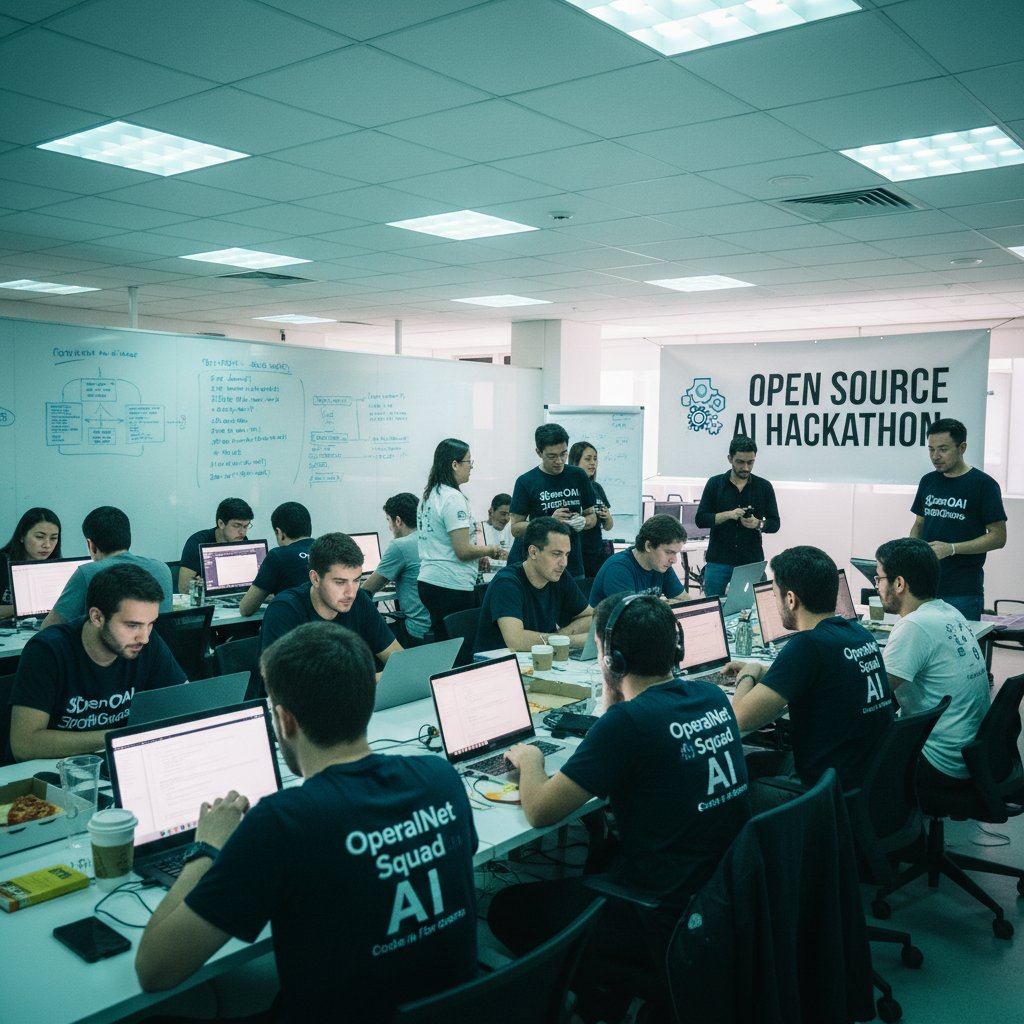
Open innovation isn’t just a buzzword. It’s a competitive weapon.
AI frameworks and the power shift inside organizations
As frameworks become more embedded, the organizational chart starts to warp. Power migrates from traditional silos to cross-functional “framework architects”—hybrid experts who understand both business needs and the nuances of AI. These roles are now essential, bridging the gap between old-guard managers and digital natives.
The winners? Those who empower these architects, flatten hierarchies, and let data-driven experimentation guide big bets.
What’s next: beyond 2025
Speculation about the distant future is a fool’s errand, but certain trajectories are visible now. Expect more frameworks to:
- Blur industry boundaries, enabling “category-jumping” innovation.
- Prioritize ethics and explainability as regulatory pressure mounts.
- Foster radical transparency with open-source governance models.
- Celebrate failure as the essential catalyst for learning.
- Decentralize ownership, giving frontline teams real framework-building power.
Unconventional predictions for the next decade of AI-powered business frameworks:
- Frameworks will be as customizable as playlists.
- Algorithmic bias auditors will become board-level roles.
- “Framework fatigue” will drive minimalist, anti-framework revolutions.
Stay humble, stay flexible, and keep your eyes wide open.
Your AI innovation playbook: actionable tools and next steps
Quick reference: key takeaways from each section
Business innovation frameworks, powered by AI, are not about shiny tools—they’re about brutal honesty, relentless iteration, and a willingness to rethink everything. You need a framework that fits your culture, a commitment to learning from failure, and trusted partners (like futuretoolkit.ai) to give you an edge.
Timeline of AI-powered business innovation frameworks evolution:
- Early 2010s: Rules-based automation
- Mid-2010s: Predictive analytics emerge
- Late 2010s: Data pipelines and feedback loops go mainstream
- Early 2020s: Generative AI and hybrid frameworks accelerate adoption
- Present (2024-2025): Modular, adaptive frameworks dominate
- Future: Radical decentralization and open-source innovation
Interactive readiness checklist
Use this checklist to gauge your organization’s readiness for AI-powered business innovation frameworks. Gather your team, debate each point, and don’t dodge the tough questions.
Is your organization ready for AI-powered business innovation frameworks?
- Leadership is committed to change, not just PR.
- Teams are empowered to experiment and challenge the status quo.
- Data infrastructure is modern, secure, and accessible.
- Ethical guardrails and compliance mechanisms are in place.
- Feedback loops are part of everyday operations.
- Budget and resources are allocated for upskilling and scaling.
- Partners and platforms are vetted and aligned with our values.
If you hesitate on any point, pause and address the gap before diving in.
Where to find expert help and resources
You don’t have to go it alone. Trusted resources—like futuretoolkit.ai—provide up-to-date guides, frameworks, and expert advice for organizations at every stage of the AI-powered business innovation journey. Make it a habit to consult peer-reviewed research, industry whitepapers, and independent case studies before making major moves.
Essential jargon and resources for further exploration:
A structured approach that leverages artificial intelligence to drive, monitor, and scale business innovation across an organization.
AI models that create new content or solutions, rather than simply analyzing existing data.
A self-correcting process where outcomes inform and improve future actions or model performance.
The principle of making data and insights accessible to non-technical users, empowering better decision-making at all levels.
A hybrid role blending technical expertise and business acumen to design, deploy, and evolve innovation frameworks.
In 2025, the only constant is change—and the only way to thrive is to build, break, and rebuild your AI-powered business innovation frameworks with relentless honesty. Choose your path, find your trusted partners, and never stop iterating. The survival of your business depends on it.
Sources
References cited in this article
- Vena 2024(venasolutions.com)
- Accenture 2024(newsroom.accenture.com)
- IDC 2024(blogs.microsoft.com)
- Forbes BI(forbes.com)
- SpringerLink(link.springer.com)
- CIO(cio.com)
- PwC 2025 Predictions(pwc.com)
- IBM 2025 Trends(ibm.com)
- Harvard Business Review(hbr.org)
- Fenergo(resources.fenergo.com)
- McKinsey 2025(mckinsey.com)
- PwC Pulse Survey(pwc.com)
- Forbes Tech Council(forbes.com)
- CompTIA(connect.comptia.org)
- ABI Research(abiresearch.com)
- Innovation Leader(innovationleader.com)
- WEF Davos 2024(weforum.org)
- Forbes Tech Council(forbes.com)
- Full Stack AI(fullstackai.co)
- Fullstory(fullstory.com)
- Abby AI Receptionist(abby.com)
- McKinsey(mckinsey.com)
- BCG(bcg.com)
- WEF AI for Impact(www3.weforum.org)
- EdgeDelta(edgedelta.com)
- Bilderberg Management(bilderbergmanagement.com)
- Forbes(forbes.com)
- MDPI(mdpi.com)
- OECD AI(oecd.ai)
- Appinventiv(appinventiv.com)
- MDPI(mdpi.com)
- Google Cloud(cloud.google.com)
- White & Case(whitecase.com)
- Burrus(burrus.com)
- Exploding Topics(explodingtopics.com)
- Launch Consulting(launchconsulting.com)
- Forbes Advisor(forbes.com)
- Bain AI Survey(bain.com)
- Cisco Readiness(cisco.com)
- ICMA Checklist(icma.org)
- GivingTuesday Report(ai.givingtuesday.org)
- MDPI(mdpi.com)
- Wiley(onlinelibrary.wiley.com)
- Georgetown CSET(cset.georgetown.edu)
- IJRSI(researchgate.net)
- JD Meier(jdmeier.com)
Empower Your Business with AI
Futuretoolkit.ai empowers businesses of all sizes to harness the power of AI effortlessly, offering specialized solutions across diverse business functions without the need for technical expertise. Whether it's automating customer interactions, optimizing operations, or analyzing complex data, our AI toolkit streamlines processes, increases efficiency, and fuels growth. With easy integration, intuitive interfaces, and powerful AI models, Futuretoolkit.ai offers unmatched accessibility and value, enabling users to achieve measurable outcomes quickly and cost-effectively.
Get startedReady to Empower Your Business?
Start leveraging AI tools designed for business success
Frequently Asked Questions
What percentage of companies have fully modernized with AI-led processes according to the article?
According to Accenture research cited in the article, only 16% of companies have fully modernized with AI-led processes as of 2024.
How much better are companies performing after implementing AI-powered innovation frameworks?
Companies that have fully modernized with AI-led processes are outperforming their peers by 2.5x in revenue growth and 2.4x in productivity gains.
Why are AI-powered business innovation frameworks considered essential in 2025?
These frameworks are essential because they serve as scaffolding to keep modern organizations from collapsing under their own inertia amid rapid changes in supply chains, consumer tastes, and market conditions.
What is the main message conveyed by the article regarding business innovation?
The article emphasizes that companies must iterate and reinvent themselves through AI-powered frameworks, or risk evaporation—the line between legacy and extinction has never been thinner.
Continue Reading
Keep exploring Comprehensive business AI toolkit

AI-Driven Business Innovation Strategies: What Delivers Results

AI Toolkit for Accelerated Business Growth: Separating Fact From Hype

AI-Driven Business Insights: 7 Hard Truths Leaders Can’t Dodge

Business AI Tools in 2026: Winners, Wasted Budgets, and What’s Next

AI-Powered Business Resilience Analytics for Nonstop Disruption


