


AI-Powered Customer Experience Analytics That Stop Lying to You
Written with AI assistance under our editorial guidelines
AI-powered customer experience analytics reveal what traditional dashboards hide by processing real-time data across all touchpoints, but most organizations drown in incomplete, legacy data while missing crucial churn signals and sentiment shifts. Effective AI analytics separate actionable insights from vanity metrics, enabling hyper-personalization and omnichannel strategy that competitors already leverage.
There’s a war for customer loyalty raging in 2025, and AI-powered customer experience analytics is both the arsenal and the battlefield. If you think your competition isn’t already using machine learning to dissect every twitch of your customers’ digital journey, think again. Today’s businesses rely on AI not just for data crunching, but for rewriting the very DNA of customer experience—hyper-personalization, real-time prediction, and omnichannel orchestration are table stakes, not the endgame. But here’s the raw truth: beneath the glossy dashboards and AI hype, most organizations are drowning in noise, chasing vanity metrics, and missing the seismic shifts AI analytics actually bring. This deep dive uncovers the uncomfortable truths your rivals hope you’ll ignore. Forget the sugarcoated vendor pitch—what follows is an unvarnished look at AI-powered customer experience analytics: what works, what breaks, and how to leverage the revolution before it swallows you whole.
Why your current customer analytics are lying to you
The legacy data illusion
Most businesses think their customer analytics are robust. Rows upon rows of historical purchase data, web traffic logs, and survey results fill corporate databases like digital fossils. But here’s the uncomfortable reality: traditional analytics are brilliant at explaining yesterday, pitiful at predicting tomorrow. In a world where 15–40% of users block analytics trackers (according to Verint, 2025), your data is already incomplete before you even run your first report. Classic dashboards miss the non-obvious—the quiet churn risk, the subtle sentiment shift, the “micro-moments” where customer loyalty is either cemented or shattered.

Historical data gives you a rearview mirror, not a GPS. The legacy approach can’t capture real-time context—what your customer actually feels, says, or does across digital and physical touchpoints. According to IBM, 2025, the companies stuck with legacy analytics are systematically blindsiding themselves to new behaviors and opportunities. In short: if you think your spreadsheets know your customers, you’re probably already behind.
Data overload and the myth of more
We’ve hit peak data. Organizations are stockpiling customer information—web clicks, support tickets, voice calls, chat logs—assuming that “more” equals “better.” But this is a dangerous illusion. The glut of raw data creates analysis paralysis, not actionable intelligence. Leaders drown in reports, dashboards, and heatmaps, confusing movement for progress.
| Data Volume | Insight Level | Business Impact | Key Bottleneck |
|---|---|---|---|
| Low | Low | Negligible | Insufficient context |
| Medium | Variable | Inconsistent | Manual analysis limits |
| High | Often low | Marginal | Noise, signal lost |
| AI-enabled | High | Transformative | Automated, real-time synthesis |
Table 1: Data volume vs. actionable insight—where most businesses get stuck.
Source: Original analysis based on IBM, 2025, Verint, 2025.
A recent analysis from NICE, 2025 shows that even data-rich enterprises struggle to convert mountains of information into strategies that actually move the needle. The problem isn’t lack of data—it’s the absence of real-time, AI-powered synthesis that prioritizes context over quantity. Without AI-driven insights, your analytics are just another flavor of digital busywork.
The AI awakening: how machine learning is rewriting customer experience
From surveys to sentiment: the journey so far
Not long ago, customer experience measurement meant distributing clunky satisfaction surveys and hoping for honest answers. Fast-forward to today: artificial intelligence listens to every social post, call center recording, and live chat in real time, extracting sentiment, urgency, and intent with ruthless accuracy. The evolution is both technical and cultural.
Timeline of AI-powered customer experience analytics evolution:
- Paper surveys and manual feedback (pre-2000s)
- Web analytics and basic CRM integration (early 2000s)
- Multi-channel reporting and NPS scores (2010–2015)
- Real-time behavioral analytics and sentiment tracking (2016–2020)
- Predictive analytics and autonomous AI agents (2021–2023)
- Omnichannel, hyper-personalized AI analytics (2024–2025)
Societal shifts—rising digital expectations, relentless competition, and the normalization of always-on service—fuel this transformation. According to IBM’s 2025 report, 80% of top-performing companies now treat AI-driven customer experience analytics not as a luxury, but as the foundation of their strategy. The days of one-size-fits-all CX are over.
Machine learning in action: decoding the customer journey
AI-powered customer experience analytics doesn’t just count clicks—it decodes the complete narrative of your customer’s journey. Machine learning algorithms sift through oceans of data—purchase histories, chat transcripts, support tickets—spotting subtle behavioral patterns invisible to the naked human eye.

Consider retail: with AI, companies can identify the “moment of truth” when a hesitant browser becomes a loyal, high-value buyer. In finance, AI-powered journey mapping distinguishes between a confused user and a potential security threat by analyzing real-time voice tone, transaction patterns, and channel hopping. According to NICE, 2025, brands that combine journey analytics with predictive AI see customer retention rates soar by 30% or more.
AI decodes intent. It doesn’t just ask what happened—it answers why, when, and what’s next. That’s the leap from data to true insight.
Myths, mistakes, and the dark side of AI-powered analytics
Debunking the bias myth
There’s a persistent myth that AI-powered customer experience analytics is inherently biased, warping reality to fit the data it’s been fed. But this oversimplifies a complex issue. AI doesn’t create bias—it exposes it. According to industry analyst Alex, “The algorithms reveal patterns humans might otherwise ignore or be blind to. The real risk comes when organizations fail to actively monitor and mitigate those biases.”
"AI doesn’t create bias—it exposes it." — Alex, industry analyst
Bias emerges when input data reflects historical prejudices or structural imbalances. The solution isn’t to avoid AI but to implement transparent oversight, continuous retraining, and diverse data sets. Verint’s 2025 report stresses the importance of “ethical guardrails” and routine audits—an uncomfortable (but necessary) discipline for any brand that claims to care about customer equity.
When AI analytics backfires
AI-powered customer experience analytics isn’t magic. When deployed without proper guardrails, it can fail—publicly and spectacularly. Recent years are littered with examples of AI-powered chatbots going off-script, recommendation engines pushing irrelevant offers, and so-called “smart” analytics escalating customer frustration instead of quelling it.
| Industry | Scenario | Failure Point | Lessons Learned |
|---|---|---|---|
| Retail | Automated returns | Misclassification of intent | Oversight required for contextual nuance |
| Banking | Chatbot escalation | Misunderstood urgency | Human fallback needed in critical scenarios |
| Telecom | Sentiment analysis | Poor handling of sarcasm | Ongoing model retraining essential |
| Travel | Dynamic pricing | Perceived unfairness | Transparent algorithms build trust |
Table 2: Top AI analytics failures—what went wrong and why.
Source: Original analysis based on NICE, 2025, Verint, 2025.
The most common thread in these failures? Over-reliance on automation and underestimation of human context. Responsible brands blend machine efficiency with human oversight, using AI not as a replacement for empathy but as an amplifier of it.
Inside the machine: how AI-powered customer experience analytics really work
The anatomy of an AI analytics engine
Behind every headline-grabbing AI-powered customer experience analytics platform lies a complex technical ecosystem. At its core: data ingestion (collecting structured and unstructured data), model training (using historical and real-time data for pattern recognition), and output generation (delivering insights, recommendations, or automated actions).
AI-powered customer experience analytics terminology:
The core software that processes customer data using algorithms and machine learning models. It transforms raw inputs into actionable insights, often in real time.
AI’s ability to quantify emotional tone from text, speech, or even gesture data. It’s used to gauge customer satisfaction and detect churn risk.
Algorithms that forecast future behaviors—like purchase likelihood or support needs—based on historical and streaming data.
A self-operating AI system (like a chatbot or virtual assistant) that resolves customer queries without human input.
The ability to unify customer data and interactions across all touchpoints—web, mobile, voice, in-person—for a seamless experience.
Modern platforms leverage natural language processing, computer vision, and deep learning to “listen” and “see” how customers behave. Data flows from CRMs, call centers, social media, and IoT devices into these engines, where AI models are constantly retrained for accuracy. The result: a living, breathing source of competitive advantage—if you know how to wield it.
Demystifying the algorithms: black box or open book?
The “black box” reputation haunts AI analytics. Many decision-makers fear AI is impenetrable—churning out recommendations without transparency. Yet, the best platforms are increasingly open about their inner workings, offering explainable AI (XAI) modules that clarify how decisions are made.

Transparency isn’t optional. As Morgan, a leading CX strategist, insists:
"Transparency is non-negotiable if you want trust." — Morgan, CX strategist
Regulations (like GDPR, CCPA, and emerging AI-specific laws) demand it, and so do customers. The organizations that treat transparency as a competitive differentiator—explaining what data is used, for what purpose, and with what oversight—are the ones that win hearts and wallets.
Winning (and losing) with AI: stories from the front lines
Case study: retail revolution and AI-powered customer retention
When a global retail chain embraced AI-powered customer experience analytics, the change was immediate and seismic. Prior to implementation, support teams spent hours triaging complaints, and loyalty programs saw lackluster participation. With AI-driven journey analytics, the retailer identified “friction hotspots”—moments where customers abandoned carts or support tickets went unresolved.

The results? Customer wait times shrank by 40%, loyalty program engagement jumped 35%, and first-contact resolution rates surged. According to NICE, 2025, these metrics aren’t outliers—brands investing in AI-powered customer analytics consistently outperform peers in retention and lifetime value.
Case study: when AI missed the human touch
Not every AI analytics story is a triumph. One major telecom provider automated 90% of its customer service touchpoints—only to face a backlash when customers encountered inflexible bots during high-stress outages. Complaints soared, NPS plummeted, and the brand was forced to reintroduce human agents for complex issues.
The lesson? AI should accelerate, not erase, the human touch. As Jamie, an operations lead, reflects:
"We lost sight of the customer behind the numbers." — Jamie, operations lead
Hybrid models—where AI handles routine queries and escalates nuanced cases to skilled humans—deliver the best of both worlds: efficiency and empathy.
Practical playbook: mastering AI-powered customer experience analytics
Step-by-step guide to getting started
Step-by-step guide to mastering AI-powered customer experience analytics:
- Scope your business needs: Define clear customer experience goals and pain points before diving into technology.
- Audit your current data: Identify gaps, silos, and data sources across all customer touchpoints.
- Choose an AI analytics platform: Prioritize scalability, transparency, and ease of integration (futuretoolkit.ai is a strong example in this arena).
- Secure stakeholder buy-in: Align leadership, IT, and frontline teams around the strategic value of AI-powered CX analytics.
- Start small, iterate fast: Pilot with a focused use case—such as AI-powered chatbots or sentiment analysis—before scaling.
- Monitor for bias and drift: Routinely audit models for accuracy, fairness, and relevance.
- Integrate human oversight: Empower employees to intervene and override AI when needed.
- Measure ROI ruthlessly: Track performance against KPIs—response times, retention, satisfaction—and optimize continuously.
Common pitfalls? Rushing implementation without cultural readiness, ignoring data privacy best practices, and underestimating the need for training. According to Verint, 2025, companies that treat AI as a tool rather than a panacea avoid the biggest missteps.
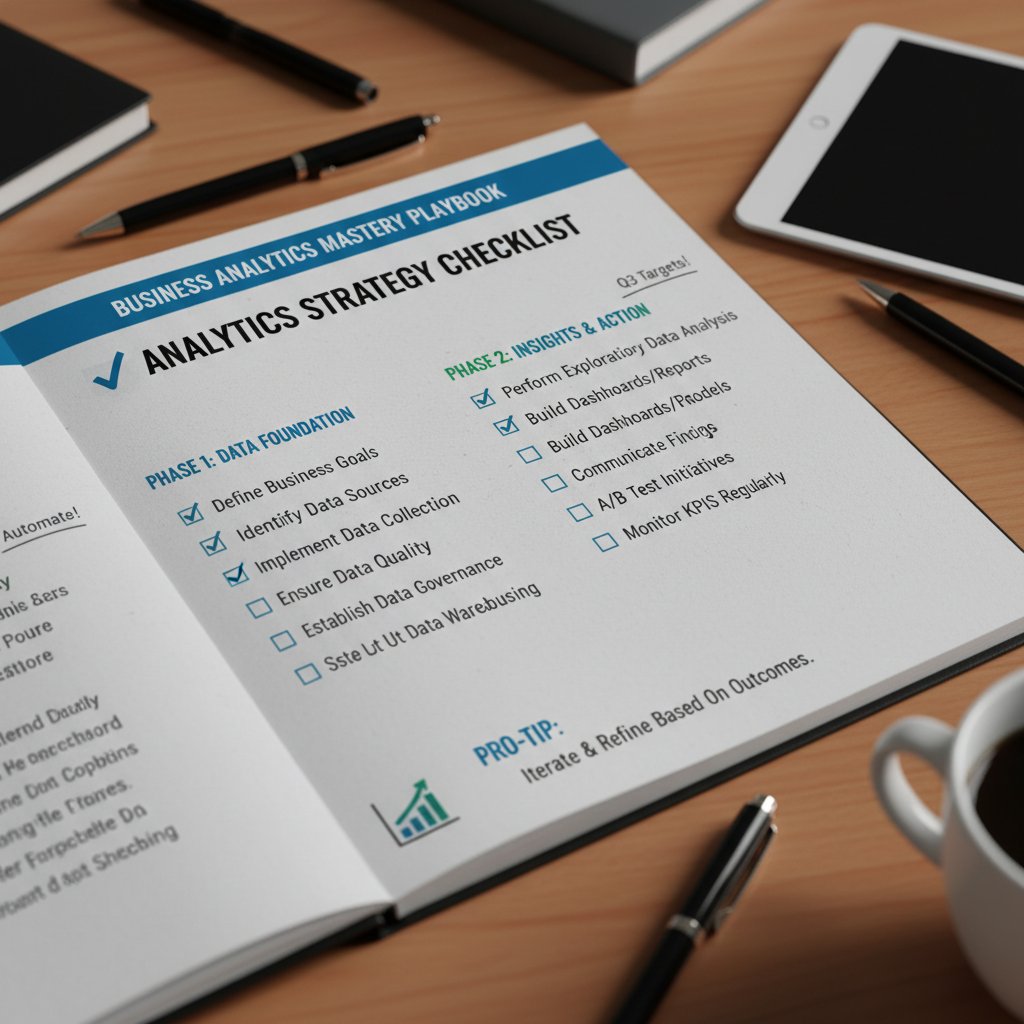
Checklist: are you ready for AI-powered analytics?
Red flags to watch out for when adopting AI-powered customer experience analytics:
- Unstructured, siloed data: If your customer data lives in five disconnected systems, AI’s effectiveness will be throttled.
- Lack of internal expertise: Without digital literacy, teams struggle to interpret AI-driven insights.
- Weak privacy controls: Inadequate consent management or unclear data use is a litigation time bomb.
- Vendor lock-in fears: Platforms that aren’t interoperable can stifle innovation and agility.
- Blind faith in automation: Over-automation breeds customer frustration—balance is key.
- Absence of feedback loops: No process for learning from failures? Expect more of them.
- No clear ROI metrics: If you can’t quantify impact, you’ll lose buy-in and budget.
Assess your readiness by honestly evaluating these pitfalls. Tools like futuretoolkit.ai offer self-assessment resources and best practices to close the gaps before you leap.
Beyond the numbers: cultural, ethical, and societal impacts of AI analytics
AI, privacy, and the new customer contract
AI-driven analytics thrive on personal data—but with great power comes great scrutiny. Customers crave hyper-personalization but recoil at overreach. The contract is being rewritten: brands must offer value in exchange for data, and respect privacy as table stakes.
| Industry | Data Use Case | Trust Score (1-10) | Regulatory Impact |
|---|---|---|---|
| Retail | Personalized promotions | 7 | GDPR, CCPA |
| Banking | Fraud detection | 8 | PSD2, GDPR |
| Healthcare | Appointment reminders | 6 | HIPAA, GDPR |
| Telecom | Call quality monitoring | 5 | FCC, GDPR |
Table 3: Customer trust vs. data personalization: 2025 trends.
Source: Original analysis based on IBM, 2025, Verint, 2025.
Regulators are tightening the screws, demanding transparency, opt-outs, and explainability. Brands that treat privacy as a core value—not just compliance—build durable trust.
The future of customer experience: man, machine, or both?
The AI revolution doesn’t mean humans are obsolete. Instead, the frontier is collaboration: using AI to handle scale and complexity, while humans deliver empathy and nuanced judgment. As Taylor, a product manager, puts it:
"AI is the tool, but empathy is the edge." — Taylor, product manager
So, what’s your play? Are you wielding AI to amplify the human element, or hiding behind dashboards and hoping for the best? The smartest brands don’t just automate—they elevate.
Choosing your arsenal: comparing top AI-powered customer experience analytics solutions
Feature matrix: what to look for in 2025
| Feature | Platform A | Platform B | Platform C | Standout Functionality |
|---|---|---|---|---|
| No-code integration | Yes | No | Yes | Fast deployment |
| Predictive analytics | Advanced | Moderate | Advanced | Deep customer insights |
| Omnichannel support | Full | Partial | Full | Seamless experience |
| Explainable AI | Yes | Yes | No | Transparency, compliance |
| Customizable dashboards | Yes | Limited | Yes | Tailored reporting |
| Cost efficiency | High | Moderate | High | Accessibility for all |
Table 4: AI-powered customer experience analytics platform comparison—2025.
Source: Original analysis based on IBM, 2025, Verint, 2025, NICE, 2025.
Interpret the matrix by matching your business needs with platform strengths. For companies seeking rapid deployment and no-code integration, accessible solutions like futuretoolkit.ai exemplify the new standard—highly customizable, scalable, and designed for non-technical teams.
Hidden benefits and unconventional uses
Hidden benefits of AI-powered customer experience analytics experts won’t tell you:
- Early warning system for brand risk: AI surfaces emerging PR crises or social sentiment dips before they explode.
- Employee performance optimization: Analytics reveal not just customer trends but also agent coaching opportunities.
- Product innovation feedback: AI uncovers unexpected feature requests and pain points straight from customer interactions.
- Fraud and compliance monitoring: Real-time anomaly detection guards against risk without extra headcount.
- Market segmentation on steroids: Micro-segmentation allows ultra-targeted campaigns, not just broad demographics.
- Supply chain insights: Customer complaints about inventory or shipping feed back directly to operations—closing the loop.
Thinking beyond the obvious applications unlocks new competitive moats. The real winners leverage analytics everywhere, not just in customer support.

Your next move: action steps and future-proofing your CX strategy
Priority checklist for implementation
Priority checklist for AI-powered customer experience analytics implementation:
- Conduct a comprehensive data audit.
- Map the complete customer journey across all touchpoints.
- Select an AI analytics platform aligned with your objectives.
- Secure privacy and compliance sign-off before launch.
- Train teams on interpreting and acting on AI insights.
- Pilot with measurable KPIs and iterate quickly.
- Integrate human oversight and escalation workflows.
- Monitor and mitigate bias and model drift.
- Measure ROI and report outcomes to stakeholders.
- Continuously optimize based on feedback and evolving needs.

The core takeaway? AI-powered customer experience analytics is not a one-off project—it's a continuous discipline. Brands that build robust data foundations, institutionalize transparency, and blend automation with empathy position themselves lightyears ahead of competitors still stuck in the dashboard dark ages.
Glossary: demystifying AI & CX jargon
Essential AI-powered customer experience analytics terms explained:
The use of artificial intelligence to collect, analyze, and act on customer data across all touchpoints, delivering actionable insights for immediate and long-term value.
Statistical techniques and machine learning that forecast future customer behaviors or outcomes based on current and historical data—for example, predicting churn or purchase likelihood.
The automated detection and quantification of customer emotions in text, speech, or multimedia data, used for real-time feedback and churn prevention.
The seamless management of customer interactions across multiple platforms (web, mobile, voice) using unified data and AI-driven insights.
A virtual assistant or chatbot that leverages AI to resolve customer inquiries without human intervention, delivering 24/7 support.
The phenomenon where AI models become less accurate over time as data patterns shift, requiring ongoing retraining and monitoring.
AI systems designed with transparency in mind, providing clear logic for decisions and enabling compliance with data privacy and regulatory standards.
Mastering the language of AI-powered customer experience analytics fosters smarter decision-making and demystifies what could otherwise feel like digital alchemy. For deeper dives and peer discussions, the futuretoolkit.ai community is open for your questions and feedback.
Conclusion
The era of AI-powered customer experience analytics is here, and it’s rewriting the rules of engagement for every industry. The days of guesswork and gut-feel are dead—today, genuine competitive advantage comes from leveraging machine learning to anticipate, personalize, and perfect every interaction. But the journey is fraught with pitfalls: from data overload and bias to privacy minefields and the temptation to over-automate. The take-home message? Relentless transparency, continuous human oversight, and an unyielding commitment to customer empathy are non-negotiable. As the research shows, brands that master AI-powered customer experience analytics with discipline and edge don’t just survive—they lead. Ready to start your own revolution? The toolkit is in your hands.
Sources
References cited in this article
- Customer Experience Trends for 2025(ibm.com)
- 2025 State of Customer Experience Report(verint.com)
- AI for CX: Top Strategies to Enhance Customer Experience in 2025(nice.com)
- Google Analytics is Lying to You(rcreative.marketing)
- Why Your Surveys Are Lying To You | Clarabridge(clarabridge.com)
- eWeek: Legacy Systems and Silos Creating Customer Analytics Issues(eweek.com)
- Orbit Analytics: Guide to Legacy Data Reporting(orbitanalytics.com)
- CMSWire: Data Overload—Silent Saboteur(cmswire.com)
- GetThematic: Data-driven Customer Insights(getthematic.com)
- Forbes: Machine Learning Meets Customer Experience(forbes.com)
- CMSWire: AI Rewriting CX Metrics(cmswire.com)
- McKinsey: The Future of Customer Experience(mckinsey.com)
- AlternaCX: Customer Experience Analytics(alternacx.com)
- Think with Google: Machine Learning and Customer Journey(thinkwithgoogle.com)
- CMSWire: ML Improves Customer Journey Mapping(cmswire.com)
- Forbes: Debunking the Myths and Reality of AI(forbes.com)
- CIO: AI Disasters(cio.com)
- Retail Customer Experience: AI Overload(retailcustomerexperience.com)
- EvaluAgent: AI Strategy Missteps(evaluagent.com)
- Kapiche: AI Customer Analytics(kapiche.com)
- Qualtrics: Using AI to Create Unrivaled Customer Experiences(qualtrics.com)
- Ada: Anatomy of an AI Agent(ada.cx)
- Analytics Insight: The Anatomy of AI(analyticsinsight.net)
- EasyLearn: Mastering AI-powered Customer Experience(easylearn.ing)
- Broadvoice: The AI Customer Experience Playbook(broadvoice.com)
- Thomson Reuters: AI Readiness Checklist(thomsonreuters.com)
- Pecan AI: Your AI Checklist(pecan.ai)
Empower Your Business with AI
Futuretoolkit.ai empowers businesses of all sizes to harness the power of AI effortlessly, offering specialized solutions across diverse business functions without the need for technical expertise. Whether it's automating customer interactions, optimizing operations, or analyzing complex data, our AI toolkit streamlines processes, increases efficiency, and fuels growth. With easy integration, intuitive interfaces, and powerful AI models, Futuretoolkit.ai offers unmatched accessibility and value, enabling users to achieve measurable outcomes quickly and cost-effectively.
Get startedReady to Empower Your Business?
Start leveraging AI tools designed for business success
Frequently Asked Questions
Why are traditional customer analytics considered unreliable?
Traditional analytics are brilliant at explaining the past but poor at predicting the future. Additionally, 15-40% of users block analytics trackers, making data incomplete from the start. Legacy dashboards also miss non-obvious signals like quiet churn risk, subtle sentiment shifts, and critical micro-moments that determine customer loyalty.
What does the article mean by 'legacy data illusion'?
The legacy data illusion refers to the false confidence businesses have in their historical customer data. While rows of purchase data, web traffic logs, and surveys fill databases, this historical information provides only a rearview mirror view of customer behavior rather than predictive insights or real-time context across digital and physical touchpoints.
What are the key capabilities that modern AI-powered customer experience analytics should provide?
According to the article, modern AI-powered analytics should enable hyper-personalization, real-time prediction, and omnichannel orchestration. These capabilities help businesses understand what customers actually feel, say, and do across all touchpoints in real time, rather than relying solely on historical data.
Are companies already using AI for customer experience analytics?
Yes, the article states that competition is already using machine learning to analyze every aspect of customers' digital journeys. AI-powered customer experience analytics is now table stakes for businesses competing in 2025, not an optional advantage.
Continue Reading
Keep exploring Comprehensive business AI toolkit

AI-Powered Customer Experience Analytics Software: Reality Vs. Hype

How AI-Powered Customer Journey Analytics Tools Actually Perform

AI-Enabled Customer Relationship Analytics: Opportunities and Risks

AI-Driven Customer Analytics Software: Capabilities and ROI Outcomes

AI-Enabled Customer Experience Optimization Software: Benefits and Pitfalls
