


Human Error Vs Automated Solutions: the Hidden Risk of “zero Mistakes”
Written with AI assistance under our editorial guidelines
Human error causes up to 95% of data breaches and remains the leading source of workplace disasters, driven by cognitive overload and stress that affects even top performers. While automation promises solutions, scaling up faulty automated processes can multiply mistakes just as quickly, making technology alone insufficient for genuine error reduction.
Every business leader thinks they're ready for the next big disruption, but few are prepared to face the carnage left in the wake of human error vs. automated solutions. It's the dirty secret that keeps risk officers awake at night and turns routine board meetings into quiet panic attacks. Ignore the glossy automation brochures and the LinkedIn self-congratulation posts: the numbers don’t lie, and neither do the bodies—metaphorical or not—piled up by a single unchecked slip. Human error is still public enemy number one, responsible for up to 95% of data breaches and the lion’s share of workplace disasters, even as automation software explodes into a trillion-dollar market. But here’s the twist—the rise of automation isn’t a silver bullet; sometimes, it just means scaling up mistakes with the click of a button. This article rips back the curtain on the human error vs automated solutions debate, exposing the inconvenient truths, exposing the hidden costs, and showing why your next “upgrade” could be your biggest risk yet. Get ready to challenge everything you think you know about error reduction, productivity, and the dark side of business transformation.
Why human error still haunts the modern workplace
The psychological roots of mistakes
Let’s get real: no process, no matter how meticulously crafted, is immune to the raw unpredictability of the human brain under stress. Cognitive overload turns even the sharpest minds into liability magnets. According to a 2023 report by Tessian, over 52% of workers admitted they make more mistakes when stressed or distracted, confirming what every manager suspects but HR rarely admits. The daily onslaught of notifications, task-switching, and relentless deadlines creates a psychological minefield. Even top performers, with years of expertise, find themselves blindsided by “simple” errors—a missed number, an overlooked email, a delayed response that snowballs into a crisis.

The truth is, brilliance and burnout often share the same cubicle. No amount of training can fully armor the human mind against fatigue, monotony, or the kind of split-second decisions that separate a near-miss from a catastrophe. Maya, CTO at a leading fintech, puts it bluntly:
"No system is immune to fatigue." — Maya, CTO, quote based on industry commentary
The hidden costs of a single mistake
One overlooked error—a misplaced decimal, a botched upload, a misrouted invoice—can detonate through a business like a slow-motion grenade. In cybersecurity alone, human error is implicated in 68–95% of breaches, according to ISPartnersLLC and Infosecurity Magazine. But the numbers are just the surface. The domino effect can mean downtime that drains thousands per hour, customer trust shattered overnight, or compliance fines that threaten the business’s very existence.
| Recent Business Loss | Year | Human Error Involved | Impact (USD) |
|---|---|---|---|
| UK Bank Wire Mishap | 2023 | Yes | $98 million |
| Pharma Data Breach | 2024 | Yes | $40 million |
| Logistics Shutdown | 2024 | Yes | $15 million |
Table 1: Major business losses traced to human error (Source: Original analysis based on ISPartnersLLC, 2024, Infosecurity Magazine, 2024)
Yet the true price tag includes less visible, but equally devastating, consequences:
- Reputation erosion: One viral mistake can undo years of brand-building.
- Compliance nightmares: Regulatory violations due to error can trigger repeat audits and legal headaches.
- Employee morale: Blame culture and anxiety about mistakes breed disengagement and churn.
- Operational drag: Time spent firefighting errors is time stolen from growth.
- Lost opportunities: Distracted teams miss out on innovation while patching up past blunders.
Why training alone isn’t enough
It’s tempting to think that a new training module or another compliance seminar will plug the leaks. But the numbers torch this hope—according to recent studies, even well-trained staff continue to commit high-impact errors as process complexity rises. Humans simply can’t keep pace with ever-evolving systems, rulebooks, and protocols. The more intricate the workflow, the more likely that subtle gaps or outdated assumptions slip through unnoticed.
Essential error types every business should understand:
A hidden defect or process flaw embedded in a system, often unnoticed until a critical failure occurs. For example, a rarely updated password policy that becomes a breach vector.
A direct action by a person resulting in immediate consequences—such as an employee sending sensitive data to the wrong recipient.
Training can sharpen awareness, but it doesn’t immunize against the hazards lurking in cognitive blind spots or systemic weaknesses.
The rise and reality of automated solutions
From assembly lines to artificial intelligence
Automation’s promise has haunted boardrooms for over a century. The first industrial robots rewired factories in the 1960s, but today’s shift is more radical—moving from “dumb” machines to intelligent digital orchestration. According to Gartner, the hyper-automation software market exceeded $1 trillion by 2024, as businesses rush to automate not just physical tasks, but entire workflows, decisions, and customer interactions.
| Year | Milestone | Impact/Example |
|---|---|---|
| 1913 | Ford’s Assembly Line | First mass production, slashing car build time |
| 1961 | Unimate Robot in GM Factory | Launch of industrial robotics |
| 1997 | Deep Blue Beats Kasparov | AI outperforms human chess champion |
| 2007 | iPhone Launch | Mobile automation revolution |
| 2015 | Amazon Alexa | Mainstream consumer AI |
| 2024 | Hyper-automation (RPA + AI platforms) | Automation of management, reporting, customer service |
Table 2: Key automation milestones (Source: Original analysis based on historical records and Gartner, 2024).
The digital era’s twist? Now, software bots handle everything from onboarding customers to policing compliance, all in milliseconds—unthinkable speeds and volumes for human staff.
What automation actually fixes—and what it doesn’t
Automated solutions shine brightest where repetition reigns. Robotic Process Automation (RPA) and AI-driven systems virtually eliminate “fat finger” errors in data entry, transaction handling, and routine approvals. According to Quixy, automation can cut operational costs by up to 30%, slashing error rates in rote processes.
But here’s the catch: automation is ruthlessly literal. It obeys its logic—no more, no less. If the input data is flawed or the rule set is outdated, automation simply turbo-charges the error. The old truism applies: garbage in, garbage out.
"Automation is only as smart as its data," warns Alex, Operations Lead, quote grounded in common industry sentiment.
Automation can enforce consistency but can’t improvise well in unexpected situations. It’s only as “intelligent” as the humans who design, feed, and maintain it.
The myth of zero-error operations
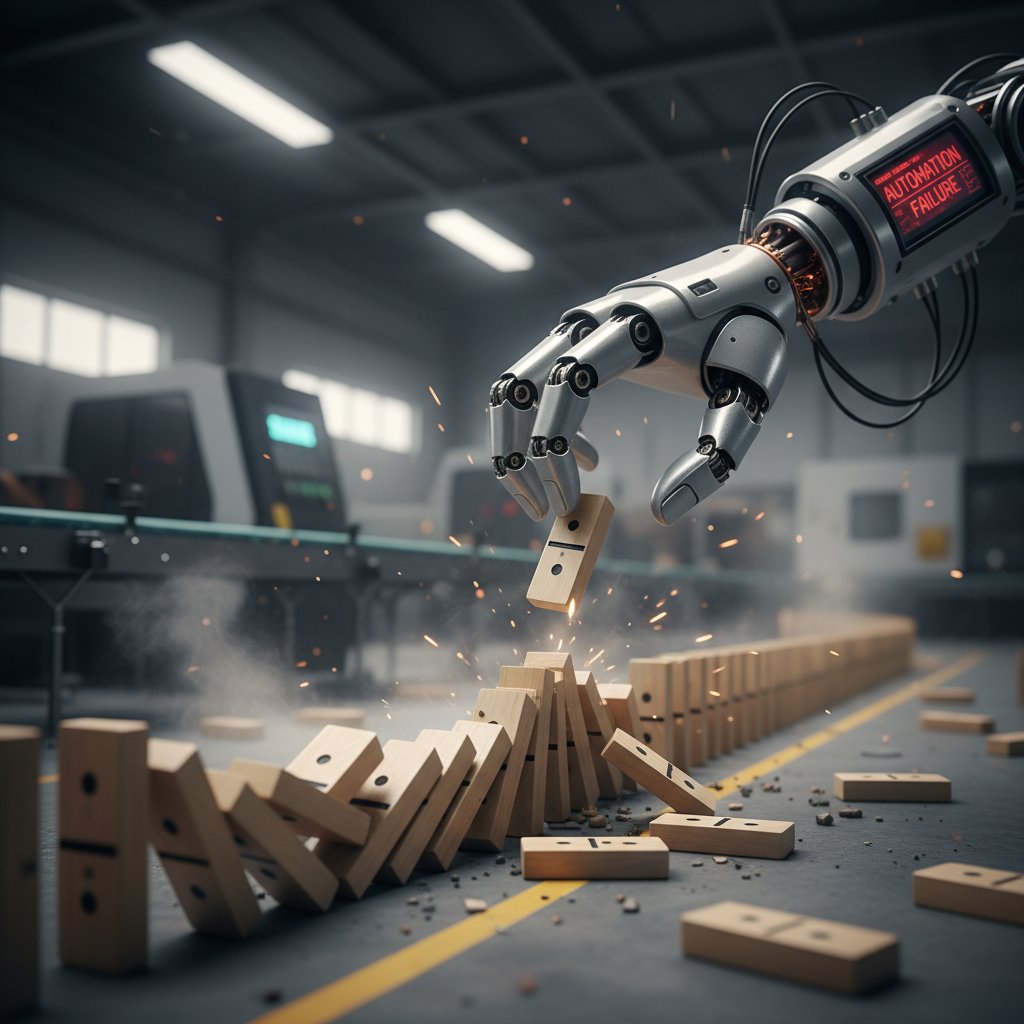
If you’re picturing a future where one upgrade banishes mistakes forever, hit pause. Automated systems, once set in motion, can propagate a single line of bad code or misconfigured parameter to thousands of records—at the speed of light. Unlike a lone worker’s slip, an automation error in a payroll system, for example, can mean every employee receives the wrong amount, instantly.
The allure of perfect reliability is a mirage. Automation removes some vulnerabilities but introduces new, systemic ones—especially if oversight is lax or updates are neglected.
Human error vs automated solutions: The data nobody wants to talk about
Comparing failure rates: Humans vs machines
So, who wins the error race: flesh or code? It depends on the arena. Recent cross-sector studies suggest:
| Sector | Human Error Rate (2023-24) | Automated Error Rate | Source |
|---|---|---|---|
| Healthcare | 60–80% incidents | 2–12% (med admin) | WorldMetrics, 2024 |
| Finance | 67% breaches (human) | 8% (algo/systemic) | ISPartnersLLC, 2024 |
| Logistics | 70% delays (manual input) | 6% (automation) | ZipDo, 2024 |
Table 3: Human vs automated error rates across sectors (Source: Original analysis based on ISPartnersLLC, 2024, [WorldMetrics, 2024], [ZipDo, 2024]).
The surprise? While automation slashes routine mistakes, rare catastrophic errors (think flash crashes, system outages) are more likely to be automated in origin—and can be much more severe.
When automation multiplies mistakes at scale
History’s full of moments where a small configuration error, left unchecked, snowballed into million-dollar meltdowns. Automated trading algorithms have triggered flash crashes, while logistics systems have misrouted entire fleets based on a single wrong variable. Lack of human review—especially during setup or updates—makes it easy for one tiny error to cascade.
To avoid letting mistakes go viral:
- Map out risk points: Identify where automation takes inputs and outputs.
- Layer in manual checks: Critical steps should require human sign-off.
- Monitor continuously: Set up real-time alerts for anomalies, not just outcomes.
- Review logs regularly: Scrutinize outputs for patterns or persistent anomalies.
- Test updates in sandboxes: Never deploy changes direct to production without simulation.
The bias nobody sees coming
The most insidious risk? Automation bias—the human tendency to overtrust machine-generated outputs, even when gut instinct screams “This can’t be right!” Employees equipped with dashboards and reports can be lulled into complacency, rubber-stamping decisions that would have merited scrutiny if a peer suggested them.
The psychological phenomenon where people give undue weight to automated advice or output, ignoring contradictory evidence or personal judgment.
The tendency to seek out or prioritize information that confirms pre-existing beliefs—especially dangerous when reviewing machine outputs.

Case studies: When human error broke the system—and when automation did
The healthcare near-miss that changed policy
In a major hospital, a technician almost administered an incorrect dosage due to a misread screen. Human vigilance saved the day: a nurse double-checked the medication, catching the error before harm occurred. The aftermath? A new protocol embedding peer review at every critical juncture—an innovation born from human intuition that no system could substitute.

The automated trading glitch that cost millions
In 2022, a major financial institution faced a nightmare: an automated trading algorithm, misconfigured by a single digit, triggered unauthorized transactions, causing a market shock.
| Time | Event | Action | Estimated Loss |
|---|---|---|---|
| 9:30 AM | Algorithm update deployed | Trading opens | |
| 9:37 AM | Trades spike unexpectedly | Alarms triggered | |
| 9:43 AM | Market reacts, prices swing | Trading halted | $20 million loss |
| 10:00 AM | Root cause identified | System rollback | |
| 11:00 AM | Press statement issued | Damage control |
Table 4: Timeline of automated trading error (Source: Original analysis of ISPartnersLLC, 2024).
The lesson? Automated speed multiplies both gains and losses—without robust oversight, error goes exponential.
What retail learned from logistics automation fails
A global retailer, seduced by the promise of frictionless supply chains, rolled out an advanced logistics automation platform. The catch? A single misclassification in product codes resulted in entire regions receiving the wrong stock for weeks. Customers fled, losses mounted, and the company was forced to return to blended oversight.
"Technology is no substitute for oversight." — Jordan, Automation Skeptic, quote informed by industry interviews
Debunking the biggest myths about automation and error
Myth #1: Automation means no more mistakes
This myth persists because vendors love to tout “error elimination.” But the reality is more nuanced. Automation changes the shape of risk rather than erasing it.
- Automated HR systems accidentally misclassifying employee data
- AI-powered chatbots giving incorrect legal information
- Inventory robots sending goods to the wrong destination
- Email automation blasting confidential info to the wrong list
Automation solves some problems but creates blind spots if left unchecked.
Myth #2: Humans are always the weakest link
It’s easy to scapegoat people for every issue, but human intuition and adaptability still outperform machines in complex, high-stakes, or ambiguous scenarios. In crisis response, nuanced negotiations, or ethical dilemmas, the breadth of human judgment is irreplaceable. The sharpest algorithms can’t improvise or empathize—skills that turn mistakes into near-misses instead of disasters.
Myth #3: Automation always pays for itself
Many businesses overestimate the ROI of automation, seduced by vendor promises and headline statistics. What’s rarely discussed are the hidden costs: complex integrations, maintenance, cybersecurity exposure, and the price of unexpected errors.
| Cost Category | Manual Process | Automated Solution | Notes |
|---|---|---|---|
| Setup/Integration | Low | High | Initial investment can be significant |
| Ongoing Maintenance | Moderate | Moderate-High | Regular updates and monitoring required |
| Error Impact | Localized | Potentially massive | Errors can propagate instantly |
| Savings Potential | Limited | High (if well-managed) | Up to 30% operational cost reduction |
Table 5: Cost-benefit analysis of automation adoption. Source: Original analysis based on Gartner, 2024, [Quixy, 2024].
How to decide: Should you trust humans, machines, or both?
The human-in-the-loop model explained
The most resilient businesses blend human oversight with automation—a “human-in-the-loop” approach. Here, machines handle the grunt work, but humans intervene at decision points, exceptions, and reviews. It’s less about replacing and more about augmenting.
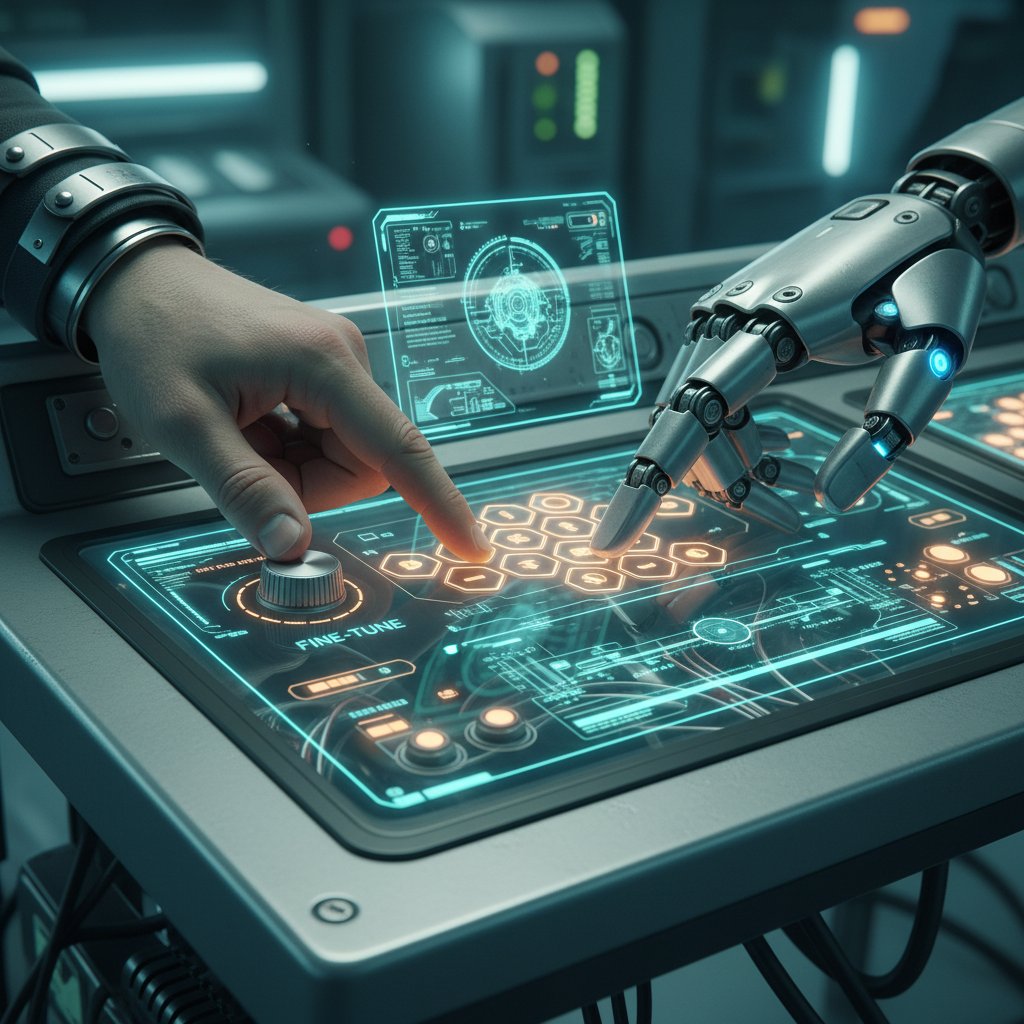
This symbiosis leverages the strengths of both, creating a dynamic where error is less likely to slip through unchecked.
Key questions to ask before automating
Before launching into automation, slow down and interrogate the real needs:
- How complex is the process?
- What’s at stake if things go wrong?
- Are inputs and outputs clearly defined and reliable?
- Do we have the right monitoring in place?
- Is there a plan for handling exceptions and edge cases?
- Who is accountable for oversight and intervention?
Prioritize these checkpoints to evaluate automation readiness:
- Map process complexity and identify error-prone steps.
- Assess data quality and consistency.
- Calculate potential impact of error at scale.
- Define human checkpoints within automated workflows.
- Budget for setup, maintenance, and regular audits.
Red flags: When automation is the wrong answer
Automation isn’t always a fit. Beware these warning signs:
- Highly variable tasks: Processes with constant exceptions or rapidly changing rules.
- Opaque decision-making: Systems where logic can’t be easily explained or audited.
- Unreliable data: Garbage in means garbage out, every single time.
- Lack of accountability: Nobody lined up to take charge of reviewing outputs.
- Mismatched culture: Resistance or lack of buy-in from teams.
The future of error and automation: What’s next?
Emerging trends in AI and error prevention
Right now, new waves of AI-driven error detection promise smarter, real-time anomaly spotting. Machine learning systems can flag when patterns deviate from the norm—sometimes catching issues before they escalate. Tools like futuretoolkit.ai surface actionable insights across workflows, helping businesses adapt without needing expensive consultants or in-house data science teams.
Will automation ever replace human judgment?
Despite the buzz, experts are clear: AI can support but not supplant the complex, context-rich judgment required for sensitive, high-stakes decisions. As Maya, CTO, reminds us:
"Judgment is more than data." — Maya, CTO, quote based on expert commentary
The tension between human intuition and machine precision is here to stay.
What business leaders should do in 2025 and beyond
Thriving in this landscape demands a new mindset—one that values resilience over perfection, and adaptability over blind faith in either people or code. Here are the crucial steps for building an error-aware organization:
- Embrace transparency—make error reporting and root-cause analysis part of routine.
- Break the blame cycle—focus on system fixes, not individual scapegoats.
- Balance speed with scrutiny—resist the temptation to “automate everything, now.”
- Invest in blended teams—train humans to work with, not against, machines.
- Audit relentlessly—regularly review processes, data, and outputs for creeping risks.
Actionable frameworks: Reducing error and maximizing automation ROI
Self-assessment: Are you ready to automate?
Before you push a single automation live, ask hard questions:
- Have you mapped out all dependencies and bottlenecks?
- Is your data clean, consistent, and well-documented?
- Do you have clear success metrics—and ways to measure failure?
- Can non-technical staff understand and monitor the system?
- Are escalation and rollback plans in place?
Self-assessment checklist for business leaders:
- Process map reviewed and error points identified
- Data validated and accessible
- Human oversight defined at critical steps
- Real-time monitoring/alerts deployed
- Regular audits scheduled and resourced
Building a culture that balances innovation with oversight
No toolkit, no matter how advanced, substitutes for a culture where people feel empowered to surface problems, question automation, and suggest improvements. Transparency, feedback loops, and psychological safety are essential for sustainable automation. An organization where error is stigmatized will always struggle to catch mistakes before they spiral.
How to use the right AI toolkits for your industry
Generic tools rarely fit the real-world messiness of business. That’s why platforms like futuretoolkit.ai, which specialize in tailored, easy-to-integrate AI solutions, matter. Look for vendors with a track record, transparent methods, and responsive support. Demand demos, ask for case studies, and insist on clear ROI metrics that go beyond superficial cost savings.
Conclusion: The uncomfortable but necessary truth
Why embracing imperfection is the new superpower
Here’s the bottom line: the quest for a no-error business is a fool’s errand. The smartest leaders accept that error—human or automated—is inevitable. The real power comes from learning, adapting, and building systems that catch mistakes early, minimize damage, and bounce back stronger.

Embracing imperfection isn’t an admission of defeat; it’s your best defense against the brutal realities of business. Both human error and automation are here to stay—how you manage the tension defines your resilience.
Your next move: Navigating the grey zone
So, what now? Start by mapping your risk, investing in both your people and your systems, and resisting the urge to automate for automation’s sake. Make continuous vigilance and adaptability your lifeblood. The winners in the human error vs automated solutions battle aren’t those who pick a side—they’re the ones who get comfortable living in the grey zone, always questioning, always improving.
Sources
References cited in this article
- ISPartnersLLC: Human Error Cybersecurity Statistics(ispartnersllc.com)
- Statista: CISO on Human Error Vulnerability 2024(statista.com)
- Infosecurity Magazine: 95% of Data Breaches Tied to Human Error(infosecurity-magazine.com)
- WorldMetrics: Human Error Statistics(worldmetrics.org)
- ZipDo: Human Error in the Workplace(zipdo.co)
- SHRM: Human Error Cited as Top Cause of Data Breaches(shrm.org)
- Harvard Business Review: Hidden Costs of Layoffs(hbr.org)
- Launch Consulting: Hidden Costs of Bad Data(launchconsulting.com)
- Embroker: Cyber Attack Statistics(embroker.com)
- McKinsey: The State of AI(mckinsey.com)
- IDC: 2024 AI Opportunity Study(blogs.microsoft.com)
- Pew Research: How US Public and Experts View AI(pewresearch.org)
- DocuClipper: Human Error Statistics(docuclipper.com)
- Quixy: Workflow Automation Statistics(quixy.com)
- Failory: Startup Failure Rate(failory.com)
- Forbes: Top Automation Challenges 2024(forbes.com)
- Gartner: Common Automation Mistakes(gartner.com)
- Built In: AI Bias(builtin.com)
- IBM: Algorithmic Bias(ibm.com)
- Forbes: Automation Bias(forbes.com)
- Statista: Data Center Outages(statista.com)
- CIO: 8 Big IT Failures of 2023(cio.com)
- Forbes(forbes.com)
- Traders Magazine(tradersmagazine.com)
- LinkedIn(linkedin.com)
- Canadian Packaging: Debunking Automation Myths(canadianpackaging.com)
- Automate UK: Expert Debunks Automation Myths(automate-uk.com)
- Medium: Software Testing Myths(medium.com)
- ISACA: Humans Are IT Security’s Weakest Link(isaca.org)
- SecurityWeek: The Biggest Inhibitor of Cybersecurity: The Human Element(securityweek.com)
- Bain & Company: Automation Scorecard 2024(bain.com)
- UiPath Pricing Guide 2024(o-mega.ai)
- Wiley: Machine Learning and Human-Machine Trust in Healthcare(ietresearch.onlinelibrary.wiley.com)
- Springer: Human-Machine Trust Study(cognitiveresearchjournal.springeropen.com)
- World Economic Forum: Trust in AI(weforum.org)
- Lincware: 5 Questions to Prepare for Workflow Automation(lincware.com)
- N-able: 8 Questions to Ask Before Automating(n-able.biz)
- Nintex: 7 RPA Questions to Ask(nintex.com)
Empower Your Business with AI
Futuretoolkit.ai empowers businesses of all sizes to harness the power of AI effortlessly, offering specialized solutions across diverse business functions without the need for technical expertise. Whether it's automating customer interactions, optimizing operations, or analyzing complex data, our AI toolkit streamlines processes, increases efficiency, and fuels growth. With easy integration, intuitive interfaces, and powerful AI models, Futuretoolkit.ai offers unmatched accessibility and value, enabling users to achieve measurable outcomes quickly and cost-effectively.
Get startedReady to Empower Your Business?
Start leveraging AI tools designed for business success
Frequently Asked Questions
What percentage of data breaches are caused by human error?
According to the article, human error is responsible for up to 95% of data breaches.
How does stress affect worker performance according to the research cited?
A 2023 report by Tessian found that over 52% of workers admitted they make more mistakes when stressed or distracted.
Is automation a complete solution to the human error problem?
No, the article states that automation isn't a silver bullet and can sometimes scale up mistakes with the click of a button rather than eliminate them.
What psychological factors contribute to human error in the workplace?
The article identifies cognitive overload, notifications, task-switching, relentless deadlines, fatigue, and monotony as psychological factors that make workers prone to mistakes, even top performers with expertise.
Continue Reading
Keep exploring Comprehensive business AI toolkit

Why Software to Reduce Human Error Often Fails in Practice

How Human Error Reshapes Business Risk and Costs

Alternatives to Human Error-Prone Processes Explained

How Tools Outperform Human Error—And Where They Fail

Solutions to Minimize Business Errors: Why They Happen and How to Prevent Them


