


AI-Driven Customer Experience Management Software That Pays Off
Written with AI assistance under our editorial guidelines
AI-driven customer experience management software helps businesses handle customer interactions faster and more personally across multiple channels. According to recent data, AI orchestrates over 75% of customer interactions in certain sectors, with AI agents handling routine tasks while humans manage complex emotional situations. This hybrid approach enables companies to meet modern customer demands for instant, seamless support, though successful implementation requires careful planning beyond technology hype.
Welcome to the collision zone of hype and reality: AI-driven customer experience management software. If you’re reading this, odds are you’re tired of empty buzzwords and craving something grittier—something that doesn’t sugarcoat what AI in CX actually means for your business. The promise is intoxicating: omniscient bots, 24/7 support, customer delight at the push of a button. The reality? It’s messy, expensive, exhilarating, and sometimes brutal. According to Gartner, 2024, AI now orchestrates more than 75% of customer interactions in certain sectors, and the market is on a rocket trajectory, but the devil is in the details. In this deep-dive, we’ll tear into the glossy veneer—unpacking myths, exploring horror stories, surfacing hidden costs, and spotlighting the real game-changers. If you want the unfiltered, no-BS take on AI-driven customer experience management software—with actionable insights, verified facts, and a touch of necessary cynicism—you’re in the right place. Let’s get under the skin of the most disruptive business technology of our time.
Why everyone is suddenly obsessed with AI-driven customer experience
The end of old-school customer service
For decades, customer service meant long waits, repetitive scripts, and a relentless game of human telephone. That’s over. Today’s customers expect answers in seconds, not hours, and their patience for “your call is important to us” is extinct. According to RingCentral, 2024, digital-first consumers now demand seamless, personalized, omnichannel interactions—no matter the industry. This pressure cooker is forcing businesses, from scrappy startups to lumbering enterprises, to abandon old-school support models and embrace the power (and pitfalls) of AI-driven solutions.

The seismic shift isn’t just technological—it’s cultural. Human agents increasingly work side by side with AI, managing exceptions, handling edge cases, and untangling the emotional knots that even the smartest algorithms can’t decode. The result is a hybrid battlefield: bots tackle the routine, humans step in for the extraordinary. Businesses that resist this transformation risk irrelevance, while those who charge in blindly often discover just how easily automation can go sideways.
The numbers fueling the AI CX gold rush
Money talks, and the numbers behind AI-driven customer experience management software scream opportunity and risk in equal measure. In 2023 alone, the chatbot market exploded by 23.9%, with AI CX platforms claiming over a third of market share (Market.us, 2024). The overall market for AI in CX is compounding at roughly 22% annually and is projected to smash through $76.7 billion by 2033.
| Year | AI CX Market Size (USD Billion) | YoY Growth (%) | Key Adoption Sectors |
|---|---|---|---|
| 2020 | 14.2 | — | Retail, Finance |
| 2021 | 18.0 | 26.7 | Retail, Finance, Healthcare |
| 2022 | 22.5 | 25.0 | Retail, Healthcare, Telecom |
| 2023 | 27.9 | 23.9 | Retail, Finance, E-commerce |
| 2024 | 34.2 (est.) | 22.6 (est.) | Retail, Healthcare, SaaS |
| 2025 | 41.3 (proj.) | 20.8 (proj.) | All major verticals |
Table 1: Market growth of AI-driven customer experience management software 2020-2025. Source: Market.us, 2024
These stats aren’t just impressive—they’re a warning shot. As dollars pour in, so do dubious vendors, overblown promises, and mounting pressure on business leaders. Success isn’t about buying the shiniest platform—it’s about understanding the real levers of value and the potholes that can flatten your investment before you see ROI.
What is AI-driven customer experience management software, really?
Unpacking the tech (without the jargon)
Strip away the jargon, and AI-driven customer experience management software is about automating, optimizing, and personalizing how businesses interact with people—across every touchpoint, channel, and journey stage. At its core, AI CX platforms digest mountains of customer data, analyze patterns in real time, and power everything from chatbots and recommendation engines to personalized marketing and hyper-targeted feedback loops.
Key terms, decoded:
- Natural language processing (NLP): The brain behind chatbots and virtual agents, NLP lets software “understand” human language—deciphering intent, tone, and sentiment. For example, when you type “problem with my order” into a live chat, NLP determines if you’re angry, confused, or need a refund.
- Sentiment analysis: AI algorithms that scan texts, emails, or calls to detect if a customer is thrilled, annoyed, or about to churn. Companies use this to prioritize responses and escalate issues to humans when bots sense rising frustration.
- Customer journey mapping: AI tracks every digital breadcrumb—clicks, calls, emails, purchases—to visualize and analyze the end-to-end customer experience. This helps pinpoint friction points and unearth hidden opportunities to delight (or disappoint) your audience.
Demystifying the tech is essential. Non-technical leaders often get seduced by dashboards and “AI magic” demos, only to discover that real value depends on clean data, robust integration, and relentless iteration—not just clever code.
How AI actually improves (and sometimes wrecks) CX
When deployed well, AI-driven customer experience management software can elevate service, speed, and personalization to levels impossible for human teams alone. Chatbots slash response times from hours to seconds. Automated journeys send the right offer to the right person at precisely the right moment. But let’s not kid ourselves: the same tools that delight can also destroy.
"AI can make or break the customer experience in ways most leaders don’t see coming." — Alex, CX Transformation Lead, CMSWire, 2024
Consider a leading retailer that rolled out an AI-powered support bot. When it worked, customers raved about instant answers and 24/7 accessibility. But during a system outage, the same bot spiraled into a “bot loop,” infuriating customers with repetitive, unhelpful responses and no escalation to a human. The fallout: thousands of lost orders, a PR black eye, and months of trust erosion. On the flip side, a healthcare provider used AI-driven journey mapping to proactively nudge patients about missed appointments, resulting in a 30% drop in no-shows and happier patients. The line between hero and horror story is razor-thin—and often invisible until it’s too late.
The ugly truths: What nobody tells you about AI CX
Common myths—and why they’re dangerous
The biggest danger in AI-driven customer experience management software isn’t the tech—it’s the mythology. Too many leaders still believe the marketing:
- “AI delivers instant ROI.”
- “Plug it in; it just works.”
- “Set-and-forget automation.”
Here’s the reality check: achieving meaningful ROI with AI CX platforms requires strategy, robust data, continuous training, and human oversight. According to Forbes, 2023, executives acknowledge AI’s transformative power but stress that it complements, not replaces, human support. The hype around full autonomy is mostly smoke and mirrors.
Hidden pitfalls experts won’t tell you:
- Dirty data, ugly outcomes: If your data is a mess, AI will amplify the chaos, not fix it.
- Integration headaches: Connecting AI tools with legacy systems can take months and blow up budgets.
- Bias in, bias out: AI trained on skewed data can perpetuate discrimination or bad decisions.
- Unrealistic timelines: “Quick wins” are rare—real transformation takes time and iteration.
- Vendor lock-in: Some platforms make it hard (and costly) to switch later.
Ignoring these realities can torpedo even the best-laid plans. The smartest leaders challenge assumptions, ask tough questions, and demand evidence—not just marketing gloss.
Hidden costs and gotchas that wreck budgets
Vendors love to dangle low entry prices and “no-code” promises. The truth? Long-term costs pile up—often far beyond the initial sticker shock. Licensing, custom integrations, ongoing training, data cleaning, and compliance audits all take a bite. According to Zonkafeedback, 2024, hidden costs are among the top reasons CX projects stall or fail.
| Cost Category | Vendor Promise (per year, USD) | Actual Buyer Cost (per year, USD) |
|---|---|---|
| Software licensing | $10,000 | $18,000 |
| Integration | $2,000 | $8,500 |
| Data cleaning | $1,000 | $6,000 |
| Training/support | $500 | $2,500 |
| Compliance/audits | $0 | $3,000 |
| Total | $13,500 | $38,000 |
Table 2: Cost breakdown—vendor promises vs. real buyer spend for AI-driven customer experience management software. Source: Original analysis based on Zonkafeedback, 2024, Market.us, 2024
To avoid financial traps, scrutinize total cost of ownership—over three to five years, not just at sign-up. Insist on transparent pricing, detailed integration roadmaps, and clear SLAs. If a vendor sidesteps tough questions, walk away.
Inside the machine: How AI-driven CX tools really work
From data chaos to actionable insights
AI-driven CX software thrives on data—the more, the better. But that data is rarely neat. The typical journey: raw data floods in from chat logs, emails, website clicks, and phone calls. First, algorithms clean and normalize it (removing duplicates, correcting errors). Next, machine learning models analyze patterns—identifying common pain points, predicting churn risk, or personalizing offers.
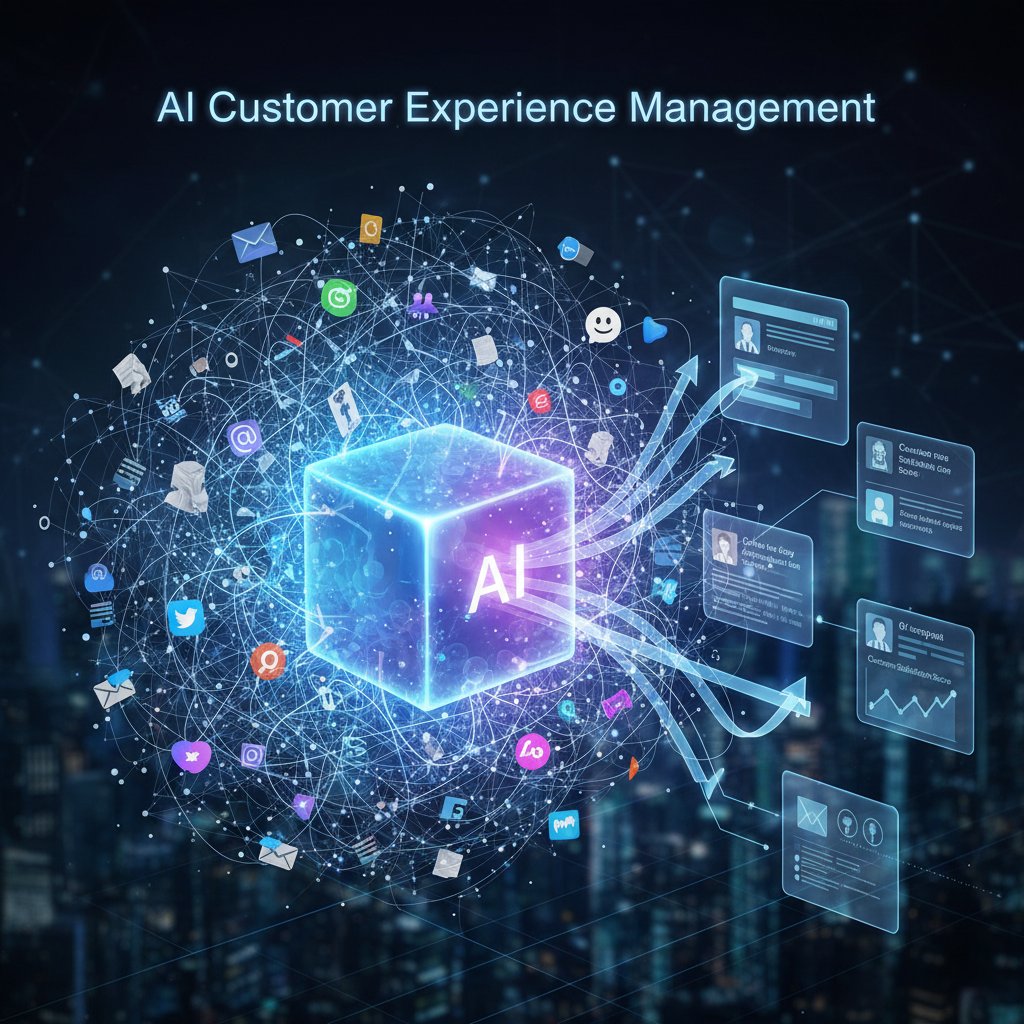
However, the process is never flawless. AI can misinterpret sarcasm, miss cultural nuances, or double down on bias if the training data is skewed. And with the rise of generative AI, complexity skyrockets: algorithms are now synthesizing content, not just analyzing it, requiring even stronger governance and integration, as highlighted by CMSWire, 2024. Smart leaders invest in ongoing monitoring, regular audits, and diverse data sets to keep their AI honest.
The human element: Where AI stumbles
AI can crunch numbers, predict outcomes, and automate responses—but it can’t feel or intuit. Empathy gaps are the Achilles’ heel of AI-driven customer experience management software. When a customer is in crisis, angry, or just needs a little compassion, bots often fall flat.
"There’s no algorithm for truly understanding a customer’s rage." — Priya, Senior Support Supervisor, RingCentral, 2024
A global SaaS provider learned this the hard way. When a critical account suffered a complex outage, their AI bot failed to escalate the issue, missing the client’s mounting fury. Only after the customer’s social media outburst did a human step in—by which time, the damage was done. Lesson: AI is powerful, but for edge cases, empathy, context, and quick-thinking humans remain irreplaceable.
Real-world stories: Successes, failures, and everything in between
Case studies: The good, the bad, the ugly
Real impact happens where AI meets messy reality. Let’s dissect three case studies that lay bare the spectrum of outcomes:
- Success: A large online retailer rolled out AI-powered chatbots for support and order tracking. Result? Customer wait times dropped by 40%, NPS scores surged, and support costs fell by 30%. According to Market.us, 2024, this mirrors sector-wide trends—when AI is implemented with rigorous oversight.
- Failure: A regional bank deployed an AI-based email responder… without adequate training data. The bot misunderstood queries, sent irrelevant responses, and sparked customer defections. Within six months, the project was abandoned.
- Mixed bag: A healthcare provider introduced AI-driven appointment reminders, reducing no-shows but also generating complaints over impersonal, repetitive messaging—forcing a partial return to human-led calls for complex care needs.
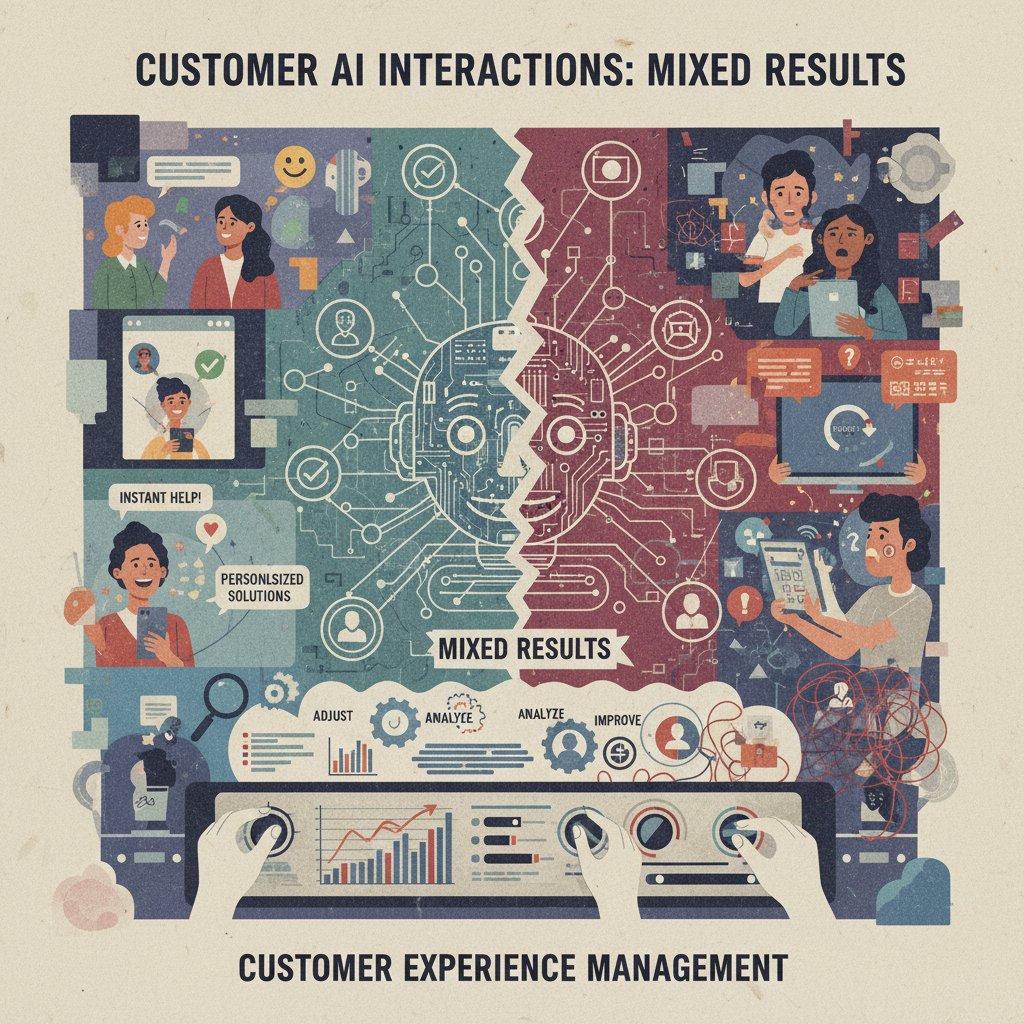
From these stories, the message is clear: AI can be a rocket booster or a land mine. Success hinges on data quality, human oversight, and a willingness to iterate and adapt.
What every industry should learn from these stories
The lessons aren’t confined to one sector: finance, healthcare, retail, and SaaS firms all face similar pitfalls. Cross-industry analysis reveals a few hard truths:
- 2020: Early adopters experiment with simple chatbots—often standalone and limited in scope.
- 2021: Integration accelerates; AI tools start connecting with CRMs and ERPs.
- 2022: Sentiment analysis and journey mapping go mainstream, enabling more nuanced automation.
- 2023: Generative AI and low-code/no-code platforms explode, democratizing access.
- 2024: AI CX becomes a boardroom priority, with governance and compliance in sharp focus.
Timeline: Evolution of AI-driven customer experience management software 2020-2024. Source: [Original analysis based on CMSWire, 2024; Market.us, 2024]
Businesses that learn from early missteps—investing in integration, upskilling teams, and keeping humans in the loop—gain a competitive moat. Those who chase shiny objects or neglect the fundamentals get burned.
How to choose the right AI-driven CX platform (without getting burned)
Cutting through the hype: What really matters
Vendors will pitch you everything: “human-like dialogue,” “insane personalization,” “no technical skills needed.” Here’s what actually counts:
- Integration: Does it play nicely with your existing stack?
- Transparency: Can you audit decisions and trace errors?
- Customization: Can you tailor it, or are you stuck with templates?
- Support: Is there real help when things go sideways?
- Scalability: Will it grow with you—or lock you in?
Priority checklist for AI-driven customer experience management software implementation:
- Map your customer journeys and identify friction points.
- Audit your data quality and integration readiness.
- Define clear KPIs for success (not just “chatbot installed”).
- Pilot with a small segment before scaling.
- Set up monitoring and human-in-the-loop escalation paths.
- Negotiate transparent pricing and SLAs.
- Train staff on AI-human collaboration.
Ask vendors for case studies, request demos with your own data, and never sign on the dotted line until you’ve pressure-tested every claim.
Comparing top platforms: What sets them apart
All platforms are not created equal. Here’s a feature matrix that cuts through the noise:
| Feature | Platform A | Platform B | Platform C | Platform D |
|---|---|---|---|---|
| No technical skill required | ✓ | ✗ | ✓ | ✓ |
| Customizable workflows | ✓ | ✓ | ✗ | ✓ |
| Rapid deployment | ✓ | ✗ | ✓ | ✓ |
| Cost-effectiveness | ✓ | ✓ | ✗ | ✓ |
| High scalability | ✓ | ✗ | ✓ | ✓ |
| Transparent analytics | ✓ | ✓ | ✓ | ✗ |
| Human-in-the-loop escalation | ✓ | ✓ | ✗ | ✓ |
| Seamless integration | ✓ | ✓ | ✓ | ✓ |
Table 3: Feature matrix comparing leading AI-driven customer experience management software solutions. Source: Original analysis based on verified vendor documentation and industry reports.
The best choice aligns with your business’s size, complexity, and risk tolerance. Don’t chase features for their own sake—prioritize fit, flexibility, and long-term value.
Making it work: Practical frameworks and expert advice
Step-by-step guide to AI CX mastery
Ready to go beyond the hype? Here’s a practical, battle-tested roadmap:
- Define your CX vision: What outcomes matter most—speed, personalization, cost savings?
- Map current journeys: Identify gaps, bottlenecks, and customer pain points.
- Assess your data: Clean, organize, and integrate before layering on AI.
- Choose your platform: Pilot with a trusted vendor (consider resources like futuretoolkit.ai for guidance).
- Start small, iterate fast: Launch in one segment, measure, adjust, and scale.
- Empower your people: Train staff to work alongside AI—humans + bots win.
- Monitor and refine: Use analytics to spot issues and optimize continuously.
These steps reflect industry best practices and the hard-won wisdom of leaders who’ve survived the trenches.
What experts wish you knew before you start
There’s no substitute for experience—or for listening to those who’ve been burned.
"Start small, measure everything, and don’t believe the hype." — Jamie, CX Implementation Specialist, Forbes, 2023
The most successful AI CX projects share a few traits: they’re grounded in reality, built on solid data, and backed by a culture that values experimentation over perfection. That means rewarding curiosity, resilience, and humility—and remembering that even the best AI is only as good as the humans who guide it.
Building a culture ready for AI-driven customer experience isn’t about tech prowess—it’s about openness to change, rigorous measurement, and a relentless commitment to customer value.
The future of AI-driven customer experience: Trends and predictions
Emerging tech and the next wave of disruption
While we focus on the present, it’s impossible to ignore the tidal wave of innovation already reshaping the field. Generative AI is no longer science fiction—it’s empowering marketers with low-code tools, enabling hyper-personalization at scale, and raising the bar for what’s possible in real time. Integration into digital experience platforms and content management systems is adding new layers of complexity and capability.

Businesses that invest now in adaptable, data-driven CX architectures are best positioned to weather disruption and capitalize on what’s next—without losing their humanity or agility.
Ethical dilemmas, regulation, and the new rules of engagement
With power comes responsibility. The rise of AI in customer experience is surfacing thorny ethical issues, from privacy to algorithmic bias to regulatory compliance. The EU’s AI Act, US state-level laws, and global standards are putting real teeth behind transparency, fairness, and explainability mandates.
Red flags to watch out for:
- Vague data use policies or hidden third-party sharing
- Black-box algorithms with no audit trails
- Lack of opt-out options for customers
- Overreliance on automation for sensitive or high-stakes interactions
- No clear escalation to human support
To stay compliant and ethical, businesses should build governance into every layer—auditing AI decisions, training on bias mitigation, and empowering customers with transparency and choice.
Your next move: Getting started (and avoiding rookie mistakes)
Are you really ready for AI-driven CX?
Before you leap, take a hard look in the mirror. A self-assessment can save you from rookie mistakes and help accelerate your journey.
Self-assessment checklist:
- Do you have clean, integrated customer data?
- Are your customer journeys mapped and pain points clearly identified?
- Is your leadership team aligned on goals and KPIs?
- Are you prepared to invest in training and change management?
- Is there a plan for ongoing monitoring and human oversight?
- Have you vetted vendors for transparency, support, and flexibility?
- Are you leveraging industry resources like futuretoolkit.ai for guidance?
If you ticked “yes” to most, you’re ready to move. If not, pause, regroup, and close the gaps—before tech debt and cultural resistance derail your plans.
Key takeaways and the last word
AI-driven customer experience management software is both a revolution and a minefield. The brutal truth? There are no shortcuts—just trade-offs, choices, and the need for relentless vigilance. Embrace the power, but don’t buy the fairy tale.
Final glossary: Must-know terms
- AI-driven customer experience management software: Platforms that automate and optimize customer interactions using artificial intelligence. Real-world impact depends on data quality, integration, and oversight.
- Natural language processing: AI that “understands” and responds to human language, powering chatbots and virtual assistants.
- Sentiment analysis: Tools that detect emotional tone in customer communications, guiding escalation and prioritization.
- Customer journey mapping: The visualization and analysis of customer touchpoints to optimize experience.
- Human-in-the-loop: Systems designed for seamless handoff between AI and human agents, crucial for handling complex or sensitive cases.
In the end, those who thrive in the AI CX era will be the ones who challenge assumptions, measure what matters, and never lose sight of the irreducible value of human judgment. If you’re ready to step up, dodge the hype, and lead with clarity, the future is yours to shape. Start now, stay sharp, and remember: in customer experience, the real edge isn’t just in your algorithms—it’s in your willingness to question everything.
Sources
References cited in this article
- Market.us(market.us)
- Forbes(forbes.com)
- Gartner via Zonkafeedback(zonkafeedback.com)
- RingCentral(ringcentral.com)
- CMSWire(cmswire.com)
- Forbes(forbes.com)
- PwC(pwc.com)
- Expert Market Research(expertmarketresearch.com)
- IJSAT(ijsat.org)
- Zendesk(zendesk.com)
- DevRev(devrev.ai)
- ServiceNow(servicenow.com)
- Aisera(aisera.com)
- Qualtrics(qualtrics.com)
- CustomerExperienceDive(customerexperiencedive.com)
- Berkeley CMR(cmr.berkeley.edu)
- Forbes(forbes.com)
- ReviewTrackers(reviewtrackers.com)
- Forethought(forethought.ai)
- Information Age(information-age.com)
- Kayako(kayako.com)
- Forbes(forbes.com)
- OvationCXM(ovationcxm.com)
- Fullstory(fullstory.com)
- Qualtrics(qualtrics.com)
- Zendesks(zendesk.com)
- Tredence(tredence.com)
- Octoparse(cem.octoparse.com)
- Sprinklr(sprinklr.com)
- CMSWire(cmswire.com)
- SuperStaff(superstaff.com)
- Forbes(forbes.com)
- Psico-smart(psico-smart.com)
- SuperOffice(superoffice.com)
- Yellow.ai(yellow.ai)
- Renascence.io(renascence.io)
- KPMG(assets.kpmg.com)
- CustomerThink(customerthink.com)
- TechTarget(techtarget.com)
- Deskubots(deskubots.com)
- TheCSCafe(thecscafe.com)
- KPMG(assets.kpmg.com)
- Forbes(forbes.com)
Empower Your Business with AI
Futuretoolkit.ai empowers businesses of all sizes to harness the power of AI effortlessly, offering specialized solutions across diverse business functions without the need for technical expertise. Whether it's automating customer interactions, optimizing operations, or analyzing complex data, our AI toolkit streamlines processes, increases efficiency, and fuels growth. With easy integration, intuitive interfaces, and powerful AI models, Futuretoolkit.ai offers unmatched accessibility and value, enabling users to achieve measurable outcomes quickly and cost-effectively.
Get startedReady to Empower Your Business?
Start leveraging AI tools designed for business success
Frequently Asked Questions
What percentage of customer interactions are now orchestrated by AI according to the article?
According to Gartner 2024 data cited in the article, AI now orchestrates more than 75% of customer interactions in certain sectors.
What has changed in customer service expectations in recent years?
Modern customers now expect answers in seconds rather than hours and demand seamless, personalized, omnichannel interactions across digital-first platforms, making old-school support models with long waits and repetitive scripts obsolete.
What is the hybrid model of customer support described in the article?
The hybrid model involves AI bots handling routine interactions while human agents manage exceptions, edge cases, and emotionally complex situations that algorithms cannot effectively resolve.
What risks does the article suggest businesses face regarding AI-driven customer experience software?
The article indicates that businesses resisting transformation risk irrelevance, while those who implement AI blindly often discover that automation can easily go wrong, with hidden costs and messy outcomes beyond the initial promises.
Continue Reading
Keep exploring Comprehensive business AI toolkit

AI-Enabled Customer Experience Optimization Software: Benefits and Pitfalls

AI-Driven Customer Experience Optimization: Risks and Real Wins

How AI-Powered Customer Journey Analytics Tools Actually Perform

AI-Driven Customer Interaction Software: What Works and What Fails

AI-Powered Customer Experience Analytics Software: Reality Vs. Hype


