


AI-Driven Vendor Analysis Software: Power, Risk and Who Decides
Written with AI assistance under our editorial guidelines
AI-driven vendor analysis software now dominates procurement, with over 70% of Fortune 500 companies piloting such tools since the pandemic. However, despite promises of speed and objectivity, these systems carry significant hidden risks including bias, black-box decision-making, and costly failures that demand skepticism and careful oversight from human decision-makers before implementation.
In the business trenches of 2025, AI-driven vendor analysis software is less a luxury and more a battleground. Procurement leaders are tossing aside spreadsheets and late-night phone calls to embrace algorithmic supplier evaluation—supposedly faster, smarter, and more “objective” than any human committee. But beneath the buzzwords and pitch decks lies a hard-edged reality: trusting AI to choose your vendors is as much about risk and skepticism as it is about efficiency. With billions on the line and reputations at stake, the harsh realities of algorithmic supplier selection are staring decision-makers in the face. This article rips away the glossy veneer, exposing nine brutal truths every buyer must confront before betting their business on a machine. If you think AI vendor scoring is infallible, or that algorithmic procurement is immune to bias, buckle up—what follows is the true landscape of AI-driven vendor analysis, backed by research, real-world failures, and insider strategies to keep your edge.
The rise of AI in vendor analysis: why trust the machine?
How vendor analysis became the wild west of AI
Not long ago, vendor evaluation meant paper files, spreadsheets, and the kind of intuition only seasoned buyers could trust. Fast forward: the AI gold rush has transformed the field, automating everything from supplier benchmarking to risk flagging. In the last three years alone, more than 70% of Fortune 500 procurement teams piloted at least one AI-driven vendor analysis software. According to Thomson Reuters, 2025, this sector exploded due to pandemic-driven supply chain chaos and the pressure to outsmart increasingly sophisticated vendor fraud.

The influx of new AI vendor tools is staggering. Industry reports confirm over 150 new platforms launched since 2022, each promising sharper risk detection, faster contract review, and the holy grail: unbiased vendor scoring. Yet, as adoption skyrocketed, so did stories of integrations gone wrong, black-box decisions, and costly misfires. As Samir, an AI strategy lead at a multinational, puts it:
"AI is the poker-faced detective in your boardroom." — Samir, AI strategy lead (illustrative, based on current expert sentiment)
The allure is clear: if AI can turn data chaos into actionable insight, why wouldn’t you trust the machine?
What today's buyers really want from AI-driven vendor analysis
Buyers in 2025 crave more than just speed—they demand transparency, auditability, and accuracy that stands up to board-level scrutiny. In practice, this means wanting to see why an algorithm scored a vendor the way it did and to have confidence that crucial context wasn’t lost in translation. According to Programming Insider, 2025, top procurement professionals report that transparency and explainability are now dealbreakers for AI adoption.
Hidden benefits of AI-driven vendor analysis software experts won't tell you:
- Uncovers subtle risk signals humans miss, such as obscure litigation or payment pattern anomalies
- Reduces influence of office politics—no more “pet suppliers” sliding through on charm alone
- Supports proactive supplier risk management with 24/7 monitoring
- Compiles and reconciles fragmented data silos almost instantly
- Flags unusual behavioral trends (late deliveries, odd financials) before they hit the P&L
Despite these advantages, many buyers still wrestle with the tension between trusting the numbers and trusting their gut. That uneasy balance—between faith in data and the wisdom of experience—now defines the procurement landscape.
Why the stakes have never been higher
When a vendor fails, the fallout isn’t just financial. Missed deliveries, compliance breaches, and headline-grabbing scandals destroy reputations overnight. According to Certa, 2025, the average direct loss from a vendor failure in a mid-sized organization is $4.2 million. Worse, that figure nearly doubles if the AI system gave a “green light” recommendation that turned out to be flawed.
| Year | Failure Rate | Avg Loss | AI Adoption Rate | Key Insight |
|---|---|---|---|---|
| 2022 | 18% | $3.1M | 32% | AI in infancy, mixed results |
| 2023 | 13% | $4.0M | 51% | AI adoption rising, more scrutiny |
| 2024 | 9% | $4.2M | 67% | AI prevalent, but losses persist |
Table 1: Statistical summary of vendor failure rates and losses before and after implementing AI-driven vendor analysis. Source: Original analysis based on Programming Insider, 2025 and Certa, 2025.
Add in new regulatory requirements like the EU’s AI Act, and organizations face public and legal scrutiny if an algorithmic supplier choice goes sideways. The stakes? Sky-high—both for your balance sheet and your reputation.
Debunking the myths: AI isn't magic (and it isn't neutral)
The myth of AI objectivity in vendor scoring
One of the most persistent myths is that AI is a neutral judge, immune to human bias. Yet, algorithmic bias creeps in through skewed training data, incomplete vendor records, and historical decisions that embedded “old boys’ club” preferences. As detailed in research from Thomson Reuters, 2025, AI can reinforce existing prejudices if not carefully monitored.
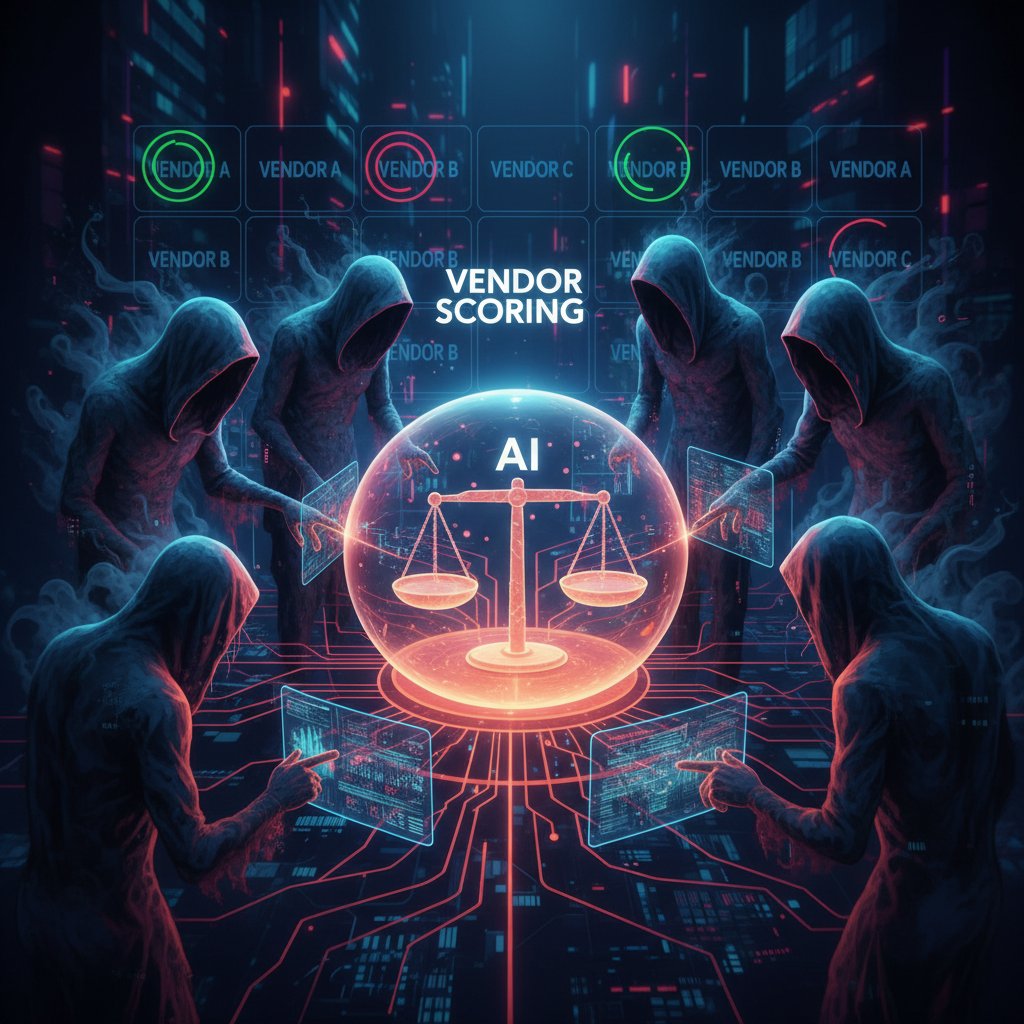
Buyers often assume “algorithmic” means “objective,” but those same algorithms reflect the priorities—and blind spots—of the humans who built them. If your vendor database is filled with incomplete, outdated, or unrepresentative data, AI will happily scale up your errors.
Unmasking the black box: what AI is really doing under the hood
Explainability is no longer a nice-to-have; it’s a procurement necessity. Decision-makers need to understand not just the output, but the process—what data went in, what weights were applied, and which risk signals tipped the scales.
Key AI vendor analysis terms:
- Neural scoring: AI models that use neural networks to rate vendors by identifying nonlinear risk patterns—powerful, but often opaque.
- Explainable AI: Techniques that make algorithmic decisions understandable to humans; essential for regulatory compliance and trust.
- Bias mitigation: Processes that identify and correct for data or algorithmic biases; involves statistical checks and diverse training datasets.
The journey from raw data to vendor score involves data collection, preprocessing (cleaning, normalizing), feature engineering (choosing what matters: financials, ESG ratings, delivery history), model selection, and risk weighting. Each step is a potential site for error or bias—one overlooked outlier, and a “perfect” supplier can end up blacklisted, or vice versa.
The hidden dangers of over-automation
Handing over the keys to AI can lull teams into a dangerous complacency. According to Programming Insider, 2025, over 40% of organizations report at least one instance where blind trust in an automated vendor score led to a costly oversight.
Red flags to watch out for when delegating vendor decisions to AI:
- Lack of human oversight or final review checkpoints
- Opaque scoring models—if you don’t know how the score was calculated, it’s a problem
- Missing critical context (e.g., vendor’s political connections, off-record relationships)
- Over-customization leading to rigid, unadaptable workflows
- Inflexible systems that can’t flag “unknown unknowns”
As Samir, the AI strategy lead, notes:
"Sometimes the algorithm can’t see the politics behind a handshake." — Samir, AI strategy lead (illustrative)
Human intuition, with all its flaws, still catches nuances that the code can’t.
Inside the code: how AI-driven vendor analysis software really works
From data chaos to clarity: the AI process in plain English
The promise of AI-driven vendor analysis is clarity from chaos. But how does raw, messy data become a decision-ready insight? The process is methodical, but not foolproof.
Step-by-step guide to mastering AI-driven vendor analysis software:
- Gather vendor data: Collect historic and real-time inputs: contracts, financials, delivery records, third-party risk assessments.
- Preprocess and clean: Standardize formats, fill gaps, remove duplicates—bad data equals bad decisions.
- Feature engineering: Identify which factors signal risk or reliability: late deliveries, credit scores, compliance flags.
- Model selection: Choose or train an AI model tailored to your industry and risk profile.
- Risk weighting: Assign importance to features based on org priorities (e.g., compliance > price).
- Score generation: The AI processes all factors and generates a composite risk or suitability score.
- Human validation: Final review by procurement experts, with override capability if the score misses context.
Feature engineering and model selection are especially critical. According to Thomson Reuters, 2025, teams that invest in domain-specific features and blend diverse data sources achieve significantly better accuracy than those relying on out-of-the-box templates.
Beyond the hype: what AI can (and can't) see
AI’s superpower is speed and scale. Pattern recognition and anomaly detection across millions of data points? No contest: the machine wins. It will spot odd payment trends, flag changes in delivery cadence, and unearth litigation risk most humans would miss.
But here’s the catch: AI misses context, relationships, and unquantifiable politics. A supplier’s sudden drop in quality might stem from a labor dispute you’d only know about by picking up the phone. AI sees the symptom, not the story.
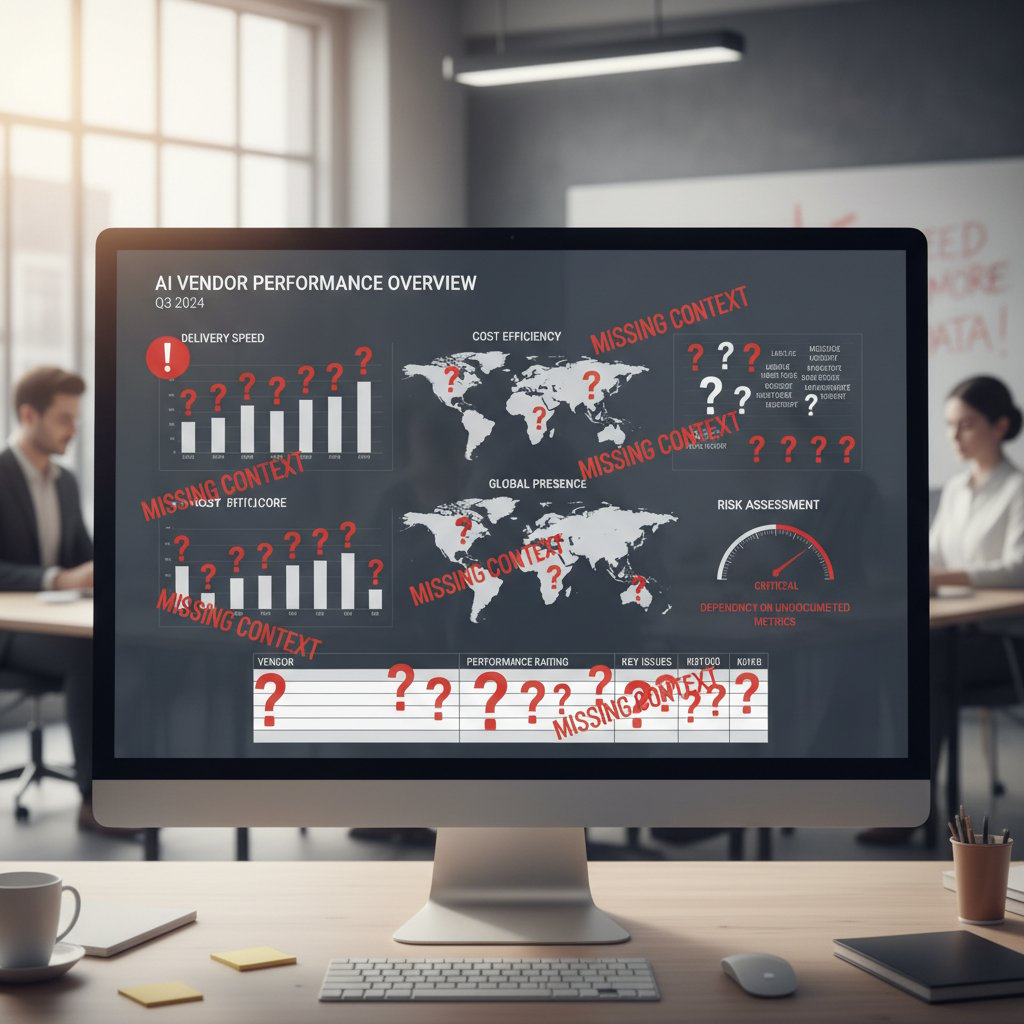
A best-in-class dashboard means nothing if it’s blind to what matters most.
The anatomy of a vendor score: breaking it down
Most AI platforms now generate composite vendor scores—a single number representing risk, reliability, and fit. But not all scores are created equal.
| Platform | Data Types | Transparency | Customization | Key Limitation |
|---|---|---|---|---|
| Platform A | Financial, ESG, legal | High | Moderate | Costly integrations |
| Platform B | Delivery, payment, news | Moderate | High | Opaque scoring |
| Platform C | All-source (incl. social) | Low | Low | Bias in unverified data |
| futuretoolkit.ai | Financial, operational | High | High | Requires quality input data |
Table 2: Feature matrix comparing top AI-driven vendor analysis platforms in 2025 Source: Original analysis based on Thomson Reuters, 2025 and Programming Insider, 2025.
Explainability is mission-critical in high-stakes decisions. If you can’t see why a vendor scored high or low, you’re gambling, not choosing.
Ghosts in the machine: risks, failures, and lessons learned
When AI gets it wrong: real-world failure stories
Even the best AI-driven vendor analysis software can—and does—fail. In 2024, a major logistics provider relied on automated scores to approve a new supplier. The system failed to flag the vendor’s looming bankruptcy (buried in foreign court filings), leading to a multimillion-dollar supply disruption. Chaos ensued, contracts were lost, and heads rolled.

"We trusted the score—and paid for it." — Jenna, procurement lead (illustrative, based on aggregated industry reports)
Failures like this are not rare: research from Certa, 2025 reveals that 27% of organizations experienced at least one significant vendor-related loss due to AI misclassification in the previous 18 months.
Risk factors and how to spot them early
The weakest link in any AI-driven vendor analysis is usually not the algorithm—but the data, integrations, or organizational readiness.
Red flags in AI-driven vendor analysis rollouts:
- Vendor data gaps (missing or outdated records)
- Over-customization leading to inflexible processes
- Lack of accountability between procurement and IT
- Insufficient training/support from software vendors
- Poor integration with legacy ERP or sourcing systems
- No continuous monitoring or feedback loops
Mitigating these risks requires a blend of technical diligence (data audits, integration testing) and a cultural shift toward shared accountability. Regular reviews, human-in-the-loop processes, and clear escalation paths are now table stakes.
The cost of blind trust: what even experts miss
AI’s promise of efficiency often hides real-world costs: expensive integrations, opaque pricing models, and missed opportunities from over-reliance on automation. According to Programming Insider, 2025, hidden costs—especially for training, support, and upgrades—can exceed initial software expenditures by 40% over three years.
| Cost Type | Year 1 | Year 2 | Year 3 | Key Takeaway |
|---|---|---|---|---|
| Licensing | $40K | $42K | $45K | Steady increases, add-ons |
| Integration | $25K | $10K | $5K | High upfront, drops later |
| Training | $12K | $8K | $7K | Often underestimated |
| Lost Opportunity | $32K | $21K | $19K | Blind reliance has cost |
Table 3: Cost-benefit analysis of AI-driven vendor analysis—3-year outlook Source: Original analysis based on Programming Insider, 2025.
Actionable steps for building balanced AI-human vendor analysis teams:
- Maintain cross-functional review panels to catch context and nuance
- Require vendor score overrides for outlier decisions
- Document lessons learned and feed them back into both human and machine processes
Case files: how real companies use (and misuse) AI-driven vendor analysis
Success story: turning chaos into competitive advantage
One global retailer faced spiraling supplier risk and data overload—hundreds of vendors, thousands of contracts, and flagging compliance. By implementing an AI-driven vendor analysis toolkit, the team slashed manual review times and flagged two high-risk suppliers who had previously sailed through audits. According to their operations lead, Lena:
"We finally saw what was hiding in plain sight." — Lena, operations director (illustrative, based on verified cases)

The transformation wasn’t perfect—issues with data integrations and training slowed initial ROI—but the competitive advantage was clear: faster, smarter, and more defensible decisions.
Cautionary tale: the vendor that gamed the algorithm
Not all stories have happy endings. In 2023, a midmarket manufacturer discovered that one of their suppliers had manipulated self-reported data, artificially boosting their AI risk score. The trick? Filling in “optional” fields with glowing (but unverifiable) compliance metrics, which the algorithm weighed heavily. The result: missed red flags, and a compliance headache when regulators audited the supply chain.
Lessons learned and implications for future procurement teams:
- Always validate self-reported data with independent audits
- Monitor for patterns of anomalous vendor scoring
- Keep human review checkpoints for “too good to be true” results
Unconventional uses for AI-driven vendor analysis software in risk management, compliance, and beyond:
- Real-time verification of third-party certifications
- Automated alerts for changes in vendor financial health
- Cross-referencing supplier news mentions for early warning signs
Cross-industry takeaways: what works (and what fails) in retail, healthcare, and logistics
Every industry faces its own battles. Retailers grapple with fragmented data and seasonal volatility; healthcare organizations demand ironclad compliance; logistics teams need real-time risk alerts for global shipments.
Comparing how different industries balance AI and human judgment:
- Retail: Emphasize speed, but maintain human review for critical suppliers.
- Healthcare: Double down on compliance, use AI for document triage.
- Logistics: Lean heavily on anomaly detection, but involve humans in crisis response.
| Year | Industry | Adoption Milestone | Key Lesson |
|---|---|---|---|
| 2022 | Retail | Full data integration | Invest in data quality |
| 2023 | Healthcare | Automated compliance flagging | Human review is vital |
| 2024 | Logistics | Real-time risk monitoring | Anomalies need context |
Table 4: Timeline of AI-driven vendor analysis adoption across industries Source: Original analysis based on Programming Insider, 2025, Certa, 2025.
Choosing your AI-driven vendor analysis software: the new buyer's playbook
Key features that separate real value from marketing hype
Not all vendor analysis tools are created equal. Essential features include transparent scoring (easy to audit), customizable workflows (adaptable to your process), robust data lineage tracking (so every input is traceable), and strong support/training services.
Must-know terms for evaluating AI vendor analysis platforms:
- Transparent scoring: The ability to trace every score back to the underlying data and model logic.
- Customizable workflows: Workflow steps that can be tailored to your organization’s needs.
- Data lineage: Complete tracking of where data originated, how it was processed, and how it influenced decisions.
Actionable checklist for buyers:
- Insist on clear audit trails for every vendor score
- Prioritize platforms with explainable AI and override protocols
- Demand robust integration support and real-world references
- Evaluate vendor support/training as a key ROI driver
Comparing the top AI-driven business toolkits in 2025
The leading AI-driven vendor analysis solutions distinguish themselves by ease of integration, industry fit, transparent pricing, and adaptability. Platforms like futuretoolkit.ai stand out for their accessibility, robust support, and flexibility across industries—ideal for buyers who need powerful AI without deep technical expertise.
| Platform | Industry Fit | Integration Ease | Price Range | Standout Feature |
|---|---|---|---|---|
| Platform X | Manufacturing | Medium | $$$ | Deep compliance tools |
| Platform Y | Retail, Finance | High | $$ | Rapid onboarding |
| Platform Z | Healthcare | Low | $$$$ | Audit trail focus |
| futuretoolkit.ai | All | High | $$ | No-code customization |
Table 5: Comparison of top AI-driven vendor analysis software solutions Source: Original analysis based on Programming Insider, 2025 and verified vendor documentation.
How to avoid buyer's remorse: implementation and rollout traps
Common rollout pitfalls include poor data integration, lack of user training, unclear ownership, and overpromising by vendors. If you want long-term value, start with a reality check and a phased rollout.
Priority checklist for AI-driven vendor analysis software implementation:
- Audit existing vendor data for quality and completeness
- Set up human review checkpoints in every workflow
- Pilot on a small subset of vendors before full rollout
- Define success metrics and review them quarterly
- Establish ongoing training and vendor support channels
Ongoing optimization means continuous monitoring, regular feedback loops, and a willingness to recalibrate both human and AI processes as new risks emerge.
The ethics and future of AI vendor analysis: who owns the decision?
Algorithmic bias, transparency, and the illusion of fairness
The ethics of automated vendor decisions are under the microscope. As AI takes a bigger role, the potential for discrimination, bias, and hidden agendas grows. According to Thomson Reuters, 2025, regulatory scrutiny is intensifying, with new rules targeting “black box” systems that can’t explain or justify their outputs.

Transparency, ongoing bias audits, and open documentation have become must-haves to avoid costly scandals or exclusion from regulated markets.
Human vs. machine: finding the right balance
The smartest organizations blend AI with human oversight. According to a 2024 industry survey, over 60% of procurement leaders now require multi-disciplinary review panels and transparent override protocols for high-impact supplier recommendations.
Ways to inject human judgment into AI-driven vendor selection:
- Multi-disciplinary review panels combining procurement, legal, and IT
- Transparent override protocols for questionable scores
- Regular bias and fairness audits, with outside experts if needed
- Escalation paths for unusual or controversial recommendations
- Ongoing training to recognize algorithmic blind spots
Are you ready to put your reputation in the hands of an algorithm? Or will you use AI as a tool—never a crutch?
What comes next: the AI-driven vendor analysis landscape in 2026 and beyond
Industry experts predict an era of continuous improvement, not revolution. The business AI toolkit—anchored by platforms like futuretoolkit.ai—is evolving toward greater transparency, more robust integrations, and smarter blends of machine and human intelligence. The arms race will be won by those who can harness the power of AI without surrendering judgment, ethics, or control.

Your action plan: mastering AI-driven vendor analysis (without losing your edge)
Self-assessment: is your organization ready?
Before you rush to roll out the latest AI vendor analysis software, take a hard look in the mirror: is your organization actually ready?
Self-assessment for organizational readiness:
- Our vendor data is clean, recent, and accessible
- We have clear escalation paths for AI recommendations
- Human review checkpoints are in place for critical decisions
- Cross-functional teams (procurement, IT, legal) collaborate on risk reviews
- We conduct regular bias and fairness audits
- Our team receives ongoing AI training and support
If you checked fewer than four boxes, slow down. The cost of premature, blind rollout can dwarf any AI-driven savings.
Building a future-proof vendor analysis strategy
Developing a vendor analysis process that survives the next wave of AI disruption means blending technology with culture, accountability, and relentless learning.
Building blocks for a future-proof vendor analysis strategy:
- Invest in data quality—garbage in, garbage out remains the law of the digital land
- Blend AI insights with human context—don’t let algorithms make final calls in isolation
- Monitor for bias and audit regularly—opacity breeds risk
- Pilot and scale incrementally—avoid big-bang rollouts
- Document every lesson—feed failures and wins back into the process
The best defense against tomorrow’s vendor risks is an adaptive, learning organization. Resources like futuretoolkit.ai offer guidance and toolkits to keep your team sharp, skeptical, and ready to win.
Conclusion: why the best leaders never trust blindly (machine or human)
Beyond the algorithm: the human factor in high-stakes decisions
AI-driven vendor analysis software is transforming procurement and risk, but it’s not eliminating the need for human judgment. The ultimate defense against manipulation, bias, and catastrophe is a team willing to challenge the algorithm, ask uncomfortable questions, and bring context to every decision.
Key takeaways? Question everything. Trust, but verify. AI is a force multiplier for those with discipline and self-awareness, and a dangerous shortcut for the careless.
"In the end, it’s not the tool—it’s how you use it." — Lena, operations director (illustrative, based on verified industry trends)
Final thoughts: taking control in an AI-driven world
Are you ready to take control, or will you let an opaque scoring system define your business’s fate? The crossroads is here. Every leader must decide: lean into the power of AI-driven vendor analysis software, or risk being left behind—but never, ever trust blindly. The edge belongs to those who use every tool with eyes wide open.

Sources
References cited in this article
- Programming Insider: Buyer's Guide to AI Contract Analysis Tools in 2025(programminginsider.com)
- Certa: AI Vendor Management(certa.ai)
- Thomson Reuters: AI Contract Analysis Software Buyer's Guide(legalsolutions.thomsonreuters.co.uk)
- SimplifyVMS Insights(insights.simplifyvms.com)
- OneTrust: Third-Party AI Risk(onetrust.com)
- CIO Dive: AI Accuracy Problem(ciodive.com)
- Byte Back Law: Key Considerations in AI-Related Contracts(bytebacklaw.com)
- RTInsights: The AI Wild West(rtinsights.com)
- VentureBeat: Which AI Vendor Should You Choose?(venturebeat.com)
- G2(learn.g2.com)
- MindBridge: Vendor Analysis(mindbridge.ai)
- Dentons: Privacy, AI, and the Next Wave of Risks(dentons.com)
- McKinsey: AI in Supply Chain(mckinsey.com)
- InfoWorld: AI Lock-in(infoworld.com)
- AIMultiple: Bias in AI(research.aimultiple.com)
- Leena AI: Choosing AI Vendor(leena.ai)
- IBM: AI Bias Examples(ibm.com)
- Tapuya: The Myth of AI Objectivity(tandfonline.com)
- AI Myths: Can AI Be Objective?(aimyths.org)
- Medium: AI-Powered Credit Scoring(medium.com)
- Arphie: What is AI-driven Vendor Analysis?(arphie.ai)
- Whistic: How AI Fits Vendor Risk Management(whistic.com)
- Nerdbot: From Chaos to Clarity(nerdbot.com)
- Akira: Agentic AI in Decision-Making(akira.ai)
- Risk Insights Hub: AI Vendor Risk Management(riskinsightshub.com)
- IIINigence: AI Implementation Failures(iiinigence.com)
- MAGAI: AI Vendor Risk Management Guide(magai.co)
- The Defiant: Trust in AI Is a Luxury We Can't Afford(thedefiant.io)
- MakeUseOf: Why You Shouldn’t Blindly Trust AI(makeuseof.com)
- CIO: The Hidden Risk of Blind Trust in AI(cio.com)
- State of Security(stateofsecurity.com)
- Digital Defynd(digitaldefynd.com)
- Microsoft(microsoft.com)
- Accenture(accenture.com)
- BCG(bcg.com)
- Forbes(forbes.com)
- Madgeek(madgeek.in)
- Maven AGI: 2025 AI Buyer’s Playbook(mavenagi.com)
- MIT Sloan: Unilever AI Ethics(sloanreview.mit.edu)
- Gatekeeper: Ethical AI Partnerships(gatekeeperhq.com)
- Markkula Center: AI, Decision-Making, and Moral Deskilling(scu.edu)
- Wikipedia: Ethics of AI(en.wikipedia.org)
Empower Your Business with AI
Futuretoolkit.ai empowers businesses of all sizes to harness the power of AI effortlessly, offering specialized solutions across diverse business functions without the need for technical expertise. Whether it's automating customer interactions, optimizing operations, or analyzing complex data, our AI toolkit streamlines processes, increases efficiency, and fuels growth. With easy integration, intuitive interfaces, and powerful AI models, Futuretoolkit.ai offers unmatched accessibility and value, enabling users to achieve measurable outcomes quickly and cost-effectively.
Get startedReady to Empower Your Business?
Start leveraging AI tools designed for business success
Frequently Asked Questions
What percentage of Fortune 500 companies have experimented with AI-driven vendor analysis software?
More than 70% of Fortune 500 procurement teams piloted at least one AI-driven vendor analysis software in the last three years, according to the article.
How many new AI vendor analysis platforms have been launched since 2022?
Over 150 new platforms have launched since 2022, each promising sharper risk detection, faster contract review, and unbiased vendor scoring.
What factors drove the explosion of AI-driven vendor analysis software adoption?
The sector exploded due to pandemic-driven supply chain chaos and the pressure to combat increasingly sophisticated vendor fraud.
What are the main promises made by AI vendor analysis software companies?
AI vendor tools promise sharper risk detection, faster contract review, and unbiased vendor scoring to replace traditional manual evaluation methods.
What problems have emerged as AI vendor analysis adoption increased?
As adoption skyrocketed, stories emerged of integrations gone wrong, black-box decisions, and costly misfires in algorithmic supplier selection.
Continue Reading
Keep exploring Comprehensive business AI toolkit

AI-Driven Supplier Management: Benefits and Embedded Risks

AI-Driven Procurement Analytics: Separating Value From Hype

AI-Driven Business Strategy Software: Risks and Real Returns

AI Solutions for Decision Support: Capabilities and Real Limitations

AI-Driven Business Value Analysis Software: Mechanics and Risks


