


AI-Powered Customer Experience Analytics Software, Minus the Hype
Written with AI assistance under our editorial guidelines
Over 70% of customer care executives are investing in AI-powered analytics to enable real-time responses and sentiment analysis. The difference between success and failure now depends less on having cutting-edge tools and more on seeing through marketing hype to identify genuine business value that delivers competitive advantage in capturing customer insights.
What if everything you think you know about AI-powered customer experience analytics software is wrong—or at the very least, incomplete? In a digital world where every interaction is tracked, measured, and manipulated, the real story isn’t just about fancy dashboards or predictive models. It’s about the power struggles, the unspoken risks, and the select few who are quietly rewriting the playbook behind closed doors. As the buzz around machine learning for customer experience reaches fever pitch, one brutal truth cuts through the noise: the difference between surviving and thriving isn’t just about having the best CX analytics tools for 2025—it’s about seeing through the hype and unlocking the real value, before your competitors even know what hit them.
Welcome to the edge of customer intelligence. Here, AI isn’t just another widget in your martech stack. It’s the difference between brands that truly understand their customers, and those left scrambling to decode angry tweets after a product launch goes sideways. This guide lays bare the realities of AI-powered customer experience analytics software—the hard numbers, the hidden risks, and the game-changing truths that will shape your business in 2025 and beyond. If you’re ready to challenge your assumptions, dodge the easy lies, and outsmart your industry, read on—your next move starts here.
The AI customer experience revolution: Why everything feels different now
A world addicted to instant feedback
In 2025, patience is extinct. Blame it on smartphone dopamine hits or the relentless acceleration of digital life, but every modern customer expects instant, personalized responses. Real-time customer data is no longer a nice-to-have—it’s the lifeblood of decision-making for any serious business. According to recent research from Master of Code, over 70% of customer care executives have ramped up investments in AI, with bots and user behavior analysis topping their lists. These aren’t vanity projects; they’re survival strategies.
The stakes for ignoring customer sentiment have never been higher. One viral complaint can detonate years of brand-building in hours. Disconnected support teams, slow manual processes, or clunky feedback loops don’t just frustrate customers—they actively drive them to competitors who move faster, listen harder, and respond in real time. In this world, data isn’t just collected; it’s weaponized, shaping every touchpoint from first click to post-sale follow-up. Your next angry review isn’t just a blip—it’s a data point that gets fed into someone’s AI model, somewhere, turning your loss into their competitive edge.

But here’s the kicker: most brands still treat customer feedback like an afterthought, lagging behind the digital-native disruptors who live and breathe by immediate insights. The cost of delay is steep—not just in lost revenue, but in the erosion of trust that takes years to rebuild. Ignore the signals at your peril; the data revolution is already rewriting the rules.
From call centers to neural networks: The evolution of customer analytics
Once upon a time, customer analytics meant endless phone surveys and gut-driven “insights” scribbled on whiteboards. Fast-forward to today, and AI-powered customer experience analytics software has flipped the script: neural networks now hunt for patterns no human could see, mining social feeds, emails, and even voice calls for signals that predict the next meltdown—or the next viral win. But this revolution didn’t happen overnight. Let’s trace how we got here:
| Era | Key Technology | Milestone Event | Impact on CX Analytics |
|---|---|---|---|
| 1990s | Manual data entry | Birth of customer call centers | Reactive, survey-based feedback |
| 2000s | CRM & web analytics | Rise of email/web surveys | Broader but still slow insights |
| 2010s | Big data & cloud | Social listening, mobile apps | Real-time, multi-channel data |
| 2020s | AI & machine learning | NLP, sentiment, live chatbots | Predictive, hyper-personalized CX |
| 2025 | Integrated AI platforms | Voice AI, journey orchestration | Real-time, adaptive automation |
Table 1: Timeline of customer analytics evolution (Source: Original analysis based on NICE, 2025, Master of Code, 2024)
Legacy approaches—slow, static, and siloed—simply can’t keep up. Modern customers don’t wait for quarterly NPS surveys; they abandon ship after a single bad chatbot interaction. The winners are those who pair real-time analytics with relentless iteration, always hunting for the next micro-moment that signals a shift in loyalty or risk.
The numbers nobody wants to talk about
It’s easy to get swept up in the success stories, but the reality is starker: most CX initiatives still fail to move the needle. According to recent industry data, failure rates remain stubbornly high even as spending surges. Let’s put the numbers on the table:
| Year | Pre-AI Adoption: CX Success Rate | Post-AI Adoption: CX Success Rate | Failure Rate (All CX Programs) |
|---|---|---|---|
| 2020 | 36% | 42% | 58% |
| 2023 | 38% | 52% | 48% |
| 2025 | 39% | 61% | 39% |
Table 2: CX program success vs. failure rates with/without AI (Source: Original analysis based on NICE, 2025, AtlasRTX, 2024)
"Half the industry is still guessing. The other half is quietly winning." — Samantha
The ugly truth? Most brands are still playing catch-up—dabbling in AI without overhauling their data culture or workflows. The gap is widening: leaders turn insight into action at warp speed, while laggards drown in dashboards that tell them nothing they didn’t already know.
How AI-powered customer experience analytics software actually works (no BS)
Under the hood: The algorithms behind the magic
Behind every slick AI-powered customer experience analytics platform lies a tangled web of algorithms: natural language processing (NLP) to decode sentiment, machine learning models to predict churn, and pattern recognition engines that surface hidden trends from oceans of unstructured data. But don’t let the buzzwords fool you—this isn’t magic. NLP breaks down words and phrases from emails, chats, and calls, guessing what people really mean. Sentiment analysis sifts through tone and context, tagging conversations as positive, negative, or neutral. Meanwhile, machine learning engines crunch historical behavior to spot which customer is about to bail.

What most marketing materials won’t tell you is that no model is perfect. Even the best-trained AI stumbles on sarcasm, cultural nuance, or messy data inputs. Model drift—when real-world data changes faster than your algorithms can learn—means yesterday’s insights are today’s blind spots. The gold standard is continuous retraining and human supervision, not “set-and-forget” automation.
Data in, insight out: Why quality matters more than quantity
The cliche is true: garbage in, garbage out. AI-powered CX analytics lives and dies by the data it ingests. Poor data hygiene—duplicates, outdated records, or mislabeled feedback—can poison even the most sophisticated models. Bias seeps in quietly, warping recommendations and reinforcing the very blind spots you set out to eliminate.
Hidden data pitfalls in AI-powered CX analytics:
- Incomplete customer profiles due to disconnected data silos.
- Over-reliance on structured feedback, ignoring social signals.
- Sampling bias from focusing on vocal minorities.
- Historical data that no longer reflects current customer behavior.
- Language and cultural nuances lost in translation.
- Automated tagging errors in sentiment analysis.
- Human error in data labeling or model training.
To improve data quality before diving into AI onboarding, start with ruthless data cleansing, cross-checking sources, and integrating feedback loops that catch anomalies. Regular audits, transparent documentation, and human-in-the-loop corrections will safeguard against hidden errors. Don’t chase “big data” at the expense of trustworthy, relevant insights.
Black boxes and broken promises: What AI can’t (and shouldn’t) do
For all its power, AI can’t—and shouldn’t—replace human intuition in customer experience. Algorithms are phenomenal at surfacing patterns, but they don’t grasp context, humor, or the emotional subtext that can turn a complaint into an opportunity. Blindly trusting the machine is a fast-track to disaster.
"If you trust the algorithm blindly, you’re already losing." — Marcus
Vendor hype loves to gloss over these limits, promising all-seeing AI that “just works.” The reality is more nuanced: the best results come from pairing smart tech with sharp human oversight. Question black-box claims, demand transparency, and remember that no algorithm is infallible.
Beyond the buzz: Surprising real-world uses and failures
When AI saved the day (and when it didn’t)
Let’s not sugarcoat it—AI analytics has both redeemed and torpedoed brand reputations in recent years. Consider the widely reported case of a global telecom company facing a social media crisis. Real-time AI sentiment detection flagged a surge in negative tweets within minutes, triggering an automated outreach campaign and live agent intervention. What could have spiraled into a PR disaster flipped into a showcase for responsive, empathetic customer care. Customer churn dropped by 12% in the following quarter, with brand sentiment rebounding rapidly.

Contrast that with a US airline’s notorious chatbot failure, where AI misinterpreted a surge of booking complaints as positive feedback due to poor training data. The result? Automated apologies sent to angry customers, escalating the backlash and making national headlines. The lesson: AI is only as good as the guardrails you build—and the humans who monitor its output.
Unconventional applications you haven’t considered
AI-powered customer experience analytics software isn’t just for e-commerce or banking. Some of the most intriguing applications come from unexpected corners:
- Disaster relief: Analyzing real-time social media feeds to identify urgent needs during natural catastrophes.
- Activism: Measuring public sentiment on policy changes, helping NGOs tweak messaging for impact.
- Healthcare: Mapping patient journeys to optimize scheduling and improve outcomes.
- Education: Tracking student engagement and dropout risks in digital classrooms.
- Public transportation: Predicting service disruptions based on rider feedback and behavior.
- Hospitality: Tailoring guest experiences using voice and facial emotion analytics.
- Retail security: Detecting fraud patterns in customer complaints.
- Municipal services: Pinpointing citizen frustration hotspots to prioritize city improvements.
These outlier cases show that AI-powered CX analytics is more versatile—and disruptive—than most brands realize. The tools are only as limited as your imagination and willingness to experiment.
The underground economy of customer data
There’s a shadow side to the AI CX boom: a gray market of data brokers harvesting and reselling customer information to feed hungry algorithms. Not all data is acquired ethically, and some vendors cut corners in their quest for better models.
| Practice | Ethical Sourcing Example | Questionable Sourcing Example |
|---|---|---|
| Explicit user consent | Opt-in surveys, GDPR-compliant forms | Scraped emails, ambiguous consent |
| Anonymized data | Aggregated, de-identified logs | Personally identifiable info sold |
| Transparent partnerships | Public data exchanges | Covert third-party reselling |
| Regular audits | Annual compliance reviews | No oversight or documentation |
Table 3: Comparison of ethical vs. questionable data sourcing practices (Source: Original analysis based on AtlasRTX, 2024, NICE, 2025)
Vetting your vendors isn’t optional—demand transparency on data sources, audit trails, and privacy compliance. Ask tough questions, insist on proof, and remember: if the data price is too good to be true, you’re probably the product.
The big myths (and brutal truths) of AI-powered CX analytics
Myth-busting: What AI won’t fix for your business
Despite the marketing spin, no AI-powered customer experience analytics software is a magic bullet. The “set and forget” myth—deploy the tool and watch happiness soar—is one of the industry’s most persistent lies. Here’s what to look out for:
- Proprietary black boxes: If a vendor won’t explain its models, walk away.
- One-size-fits-all claims: Every business has unique data, culture, and customer quirks.
- Promises of instant ROI: Real change takes time, iteration, and buy-in.
- Lack of integration support: Hidden costs often lurk here.
- No human-in-the-loop option: Automation without oversight is a recipe for bias.
- Vague privacy policies: Weak compliance means risk—yours, not theirs.
Challenge every claim, peel back the layers, and refuse to settle for vague assurances. The best results come from tough questions and relentless curiosity.
The bias problem nobody wants to talk about
Algorithmic bias isn’t just an academic concern; it has real, sometimes devastating, consequences. AI models trained on skewed or incomplete data can reinforce stereotypes, overlook minorities, or deliver tone-deaf recommendations. One study found that AI-powered chatbots routinely misunderstood complaints from non-native speakers, compounding frustration and undermining trust.

Reducing bias starts with diverse training data, continual monitoring, and transparent escalation channels. Bring in outside auditors, solicit feedback from underrepresented groups, and bake fairness into your evaluation metrics. Bias thrives in darkness—shine a light and don’t look away.
ROI or mirage? The real economics of AI in customer experience
The ROI on AI-powered CX analytics is real—but often wildly misunderstood. While headline numbers promise 53% cost reductions, 92% faster issue resolution, and 94% agent productivity gains (NICE, 2025), the hidden costs of integration, training, and data cleaning can erode the bottom line if left unaccounted for.
| Solution Type | Upfront Cost | Integration Complexity | Typical ROI Timeline | Hidden Costs |
|---|---|---|---|---|
| Basic survey tools (legacy) | Low | Minimal | 12-18 months | Manual labor, slow data |
| AI-powered plug-and-play platforms | Moderate | Medium | 6-12 months | Data prep, retraining |
| Custom AI analytics suites | High | High | 12-24 months | Continuous optimization |
Table 4: Cost-benefit analysis: AI-powered vs. traditional CX analytics (Source: Original analysis based on Master of Code, 2024, NICE, 2025)
"If you can’t measure it, you probably won’t profit from it." — Alex
Bottom line: Tie your investments to clear KPIs. Measure relentlessly, cut what doesn’t work, and don’t confuse dashboard vanity with real value.
Choosing the right AI-powered customer experience analytics software: Beyond the hype
The features that really matter (and those that don’t)
Not all AI-powered CX analytics tools are created equal. Here’s how to separate must-haves from nice-to-haves, whether you’re a lean startup or a sprawling enterprise:
| Feature | Small Business | Mid-Market | Enterprise | Winner for Each Segment |
|---|---|---|---|---|
| No-code setup | Essential | Important | Optional | Small Business |
| Advanced NLP | Optional | Important | Essential | Enterprise |
| Real-time dashboards | Important | Essential | Essential | Mid-Market/Enterprise |
| Predictive analytics | Nice-to-have | Important | Essential | Enterprise |
| Integration APIs | Optional | Essential | Essential | Mid-Market/Enterprise |
| Privacy & compliance modules | Important | Essential | Essential | All |
Table 5: Feature matrix—top AI-powered CX analytics software (Source: Original analysis based on Contentsquare, 2024, Algoworks, 2024)
For businesses seeking a flexible, no-code toolkit to cover a spectrum of analytics needs, futuretoolkit.ai is increasingly referenced as a general resource—helping level the playing field for those without deep technical benches.
Integration nightmares and how to avoid them
Even the sharpest AI can flop if it’s bolted onto a Rube Goldberg machine of legacy systems. Integration headaches—API mismatches, data format conflicts, or user resistance—are the silent killers of CX analytics projects. Here’s your survival checklist:
- Audit current systems for compatibility and data hygiene.
- Involve IT and business teams from the start.
- Prioritize API flexibility over out-of-the-box integrations.
- Map customer journeys before layering in analytics.
- Start with a pilot to expose hidden issues.
- Document everything—no shortcuts.
- Train and support staff on both tech and process.
- Iterate based on feedback—don’t expect perfection at launch.
Cross-departmental buy-in isn’t just helpful—it’s the only way to avoid death by a thousand paper cuts. Make integration a team sport, not an afterthought.
Security, privacy, and compliance: What you can’t afford to ignore
The regulatory screws are tightening. GDPR, CCPA, and the new EU AI Act are more than acronyms—they’re existential threats to brands that don’t take CX data seriously. Violations carry not just fines, but lasting reputational scars.
Key compliance terms for AI-powered analytics:
Explicit, informed permission from customers to collect and process their data.
Stripping identifying details from data to protect privacy.
Collecting only what’s absolutely necessary for the stated purpose.
Complete, tamper-proof records of data access and processing.
The guarantee that customers can request full data deletion.
The ability to explain, in plain English, how models make decisions.
Building trust isn’t optional in this environment. Proactively communicate your policies, empower customers to control their data, and audit your vendors as fiercely as you audit yourself.
Case studies: Transformation (and disaster) in the wild
From friction to loyalty: Brands that nailed the AI-CX equation
One retail giant’s journey captures the stakes. Facing spiraling churn rates, the company overhauled its call center workflow with AI-driven sentiment analytics, flagging at-risk customers in real time and routing them to specialized support agents. Six months in, customer wait times plunged by 40%, and overall satisfaction scores leaped by 25%. The key wasn’t just the tech—it was a relentless focus on clean data, iterative training, and getting buy-in from the frontline staff.

Under the hood, what really made the difference was cross-functional ownership and a willingness to challenge legacy KPIs. The transformation didn’t just “happen”—it was earned, measured, and continuously re-engineered.
Epic fails: Learning from the AI CX disasters
Not every story ends with a redemption arc. Consider the financial institution that deployed an AI-powered assistant to handle loan inquiries—without adequately training it on diverse customer demographics. The bot misunderstood accents, misclassified urgent complaints, and triggered a flood of negative reviews. Recovery took months and cost millions.
7 lessons learned from real-world AI-powered CX analytics disasters:
- Never skip diverse training data—one-size-fits-all fails catastrophically.
- Always test with real users, not just dev teams.
- Monitor live deployments relentlessly, especially post-launch.
- Own mistakes publicly—customers forgive transparency, not silence.
- Document escalation protocols for edge cases.
- Avoid over-automation; keep humans in the loop.
- Make bias audits routine, not one-time checks.
Some companies rebounded by owning their errors and rebuilding trust; others faded, casualties of their own hype.
The futuretoolkit.ai perspective: An industry snapshot
Within the crowded marketplace, futuretoolkit.ai is often cited by analysts as a touchstone for accessible, scalable business AI—especially for organizations seeking to move quickly without armies of data scientists.
"It’s not about the tools—it’s about the questions you dare to ask." — Jamie
As the industry matures, the focus is shifting from flash to substance: real KPIs, ironclad compliance, and relentless transparency. The next chapter isn’t about who has the most AI features—it’s about who wields them with the most clarity and courage.
Practical playbook: How to unlock real value from AI-powered CX analytics
Step-by-step guide to mastering AI-powered customer experience analytics software
Think of this as your roadmap through the chaos—a 10-step process grounded in industry best practices and hard-won lessons:
- Define your customer journey with input from multiple departments.
- Audit existing data for completeness, accuracy, and bias.
- Evaluate vendors with transparent demos and live data trials.
- Prioritize features that match your specific pain points.
- Pilot on a small scale—no big bang rollouts.
- Integrate with legacy systems via robust APIs.
- Train staff early and often on both tech and process changes.
- Set benchmarks and KPIs to measure impact.
- Monitor results in real time and course-correct swiftly.
- Iterate and scale only after proving tangible value.
Common pitfalls at each stage: Rushing selection, neglecting staff buy-in, underestimating integration, ignoring feedback, skipping bias checks, and celebrating “success” based on vanity metrics rather than real outcomes.
Quick reference: Spotting vendor hype vs. real innovation
Don’t let buzzwords blind you. Here’s what’s hype—and what matters:
Often used as a blanket term. Ask for details—what specific algorithms? What data?
Promises to forecast behavior. Ask for accuracy rates and real-world case studies.
Integration across platforms. Check for seamless operation, not just box-ticking.
Decodes tone and emotion. Ask how it handles sarcasm, slang, and multiple languages.
Tailored experiences. Demand to see how it adapts in real time—not just static “segments.”
Skepticism isn’t cynicism. Ask tough questions, demand proof, and always weigh claims against your own data and needs.
Checklist: Are you ready for AI-powered CX analytics?
Before you invest, take this 7-point self-assessment:
- Is your data clean, well-labeled, and accessible?
- Do you have cross-functional buy-in, not just IT enthusiasm?
- Are you prepared to invest in ongoing training?
- Is your compliance documentation rock-solid?
- Can you clearly define success metrics?
- Do you have escalation protocols for AI-driven errors?
- Are you ready to question the tools—and your assumptions?
Address any gaps now, before the first line of code is deployed.
The future of AI-powered customer experience analytics: What’s next?
Emerging trends and technologies to watch
The next wave of AI-driven CX tools is already reshaping the landscape. Generative AI is crafting personalized content at scale, while real-time emotion analysis detects customer moods through voice, text, and even facial cues. These technologies are moving from lab curiosity to frontline utility, making every customer interaction an opportunity to listen—and adapt—smarter and faster.
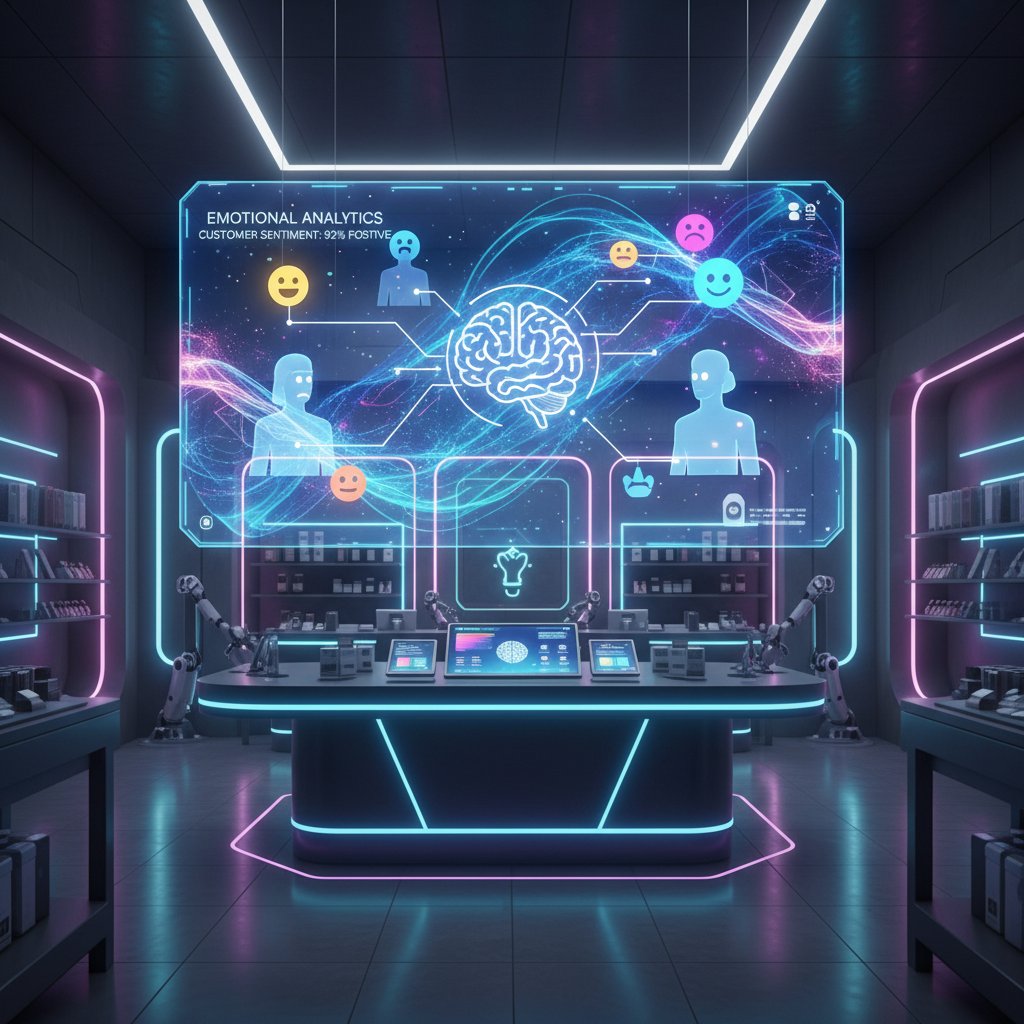
As these innovations become embedded in daily operations, the brands that succeed will be those who keep questioning, experimenting, and holding their vendors accountable.
Cross-industry convergence: Unexpected players enter the game
AI-powered customer experience analytics isn’t confined to the usual suspects. Healthcare systems mine patient feedback for quality improvements, logistics firms optimize routes with predictive complaints, and activists use real-time sentiment mapping to shape campaigns.
| Sector | Innovative Use Case | CX Impact |
|---|---|---|
| Healthcare | Patient journey mapping | Improved outcomes, loyalty |
| Logistics | Real-time delivery issue tracking | Fewer complaints, savings |
| Activism | Sentiment-driven message testing | Greater engagement, support |
Table 6: Cross-industry adoption matrix—AI-powered CX analytics (Source: Original analysis based on Algoworks, 2024, AtlasRTX, 2024)
The lesson? Stay curious. Some of the best ideas come from outside your industry.
The human factor: Will AI ever replace empathy?
Here’s the line in the sand: AI can decode a million signals, but it can’t feel. Empathy—the ability to connect, to listen between the lines, to know when a script won’t cut it—remains stubbornly human.
"Empathy isn’t programmable. But AI can help you listen harder." — Riley
The sharpest businesses treat AI as an amplifier, not a substitute. Use it to listen, to learn, to surface hidden pain points—but never as an excuse to stop caring.
Conclusion: Rethinking customer experience in the age of AI
The challenge to leaders: Are you asking the right questions?
If one lesson rings out from the data, it’s this: Don’t settle for easy answers or glossy dashboards. The real challenge for leaders is to dig beneath the buzzwords and demand substance—from vendors, from teams, and above all, from yourself.

This is the moment to rethink what customer experience means—not just as a metric, but as a lived reality for every person your brand touches. Move fast, ask hard questions, and remember: the sharpest tool in the box is your own curiosity.
Key takeaways and next steps
Let’s land the plane. The landscape of AI-powered customer experience analytics software is crowded, noisy, and full of both promise and peril. Here’s what you need to remember:
- Real-time data is non-negotiable; laggards lose customers.
- AI-powered CX analytics boosts productivity and satisfaction—when paired with clean data.
- No model is foolproof; human oversight is essential.
- Data privacy and compliance are make-or-break issues.
- Integration is as critical as feature set—plan accordingly.
- ROI is real but depends on measurement, not faith.
- Bias is the enemy of good CX—fight it at every turn.
- The best vendors are transparent, not mysterious.
- Curiosity and skepticism are your greatest assets.
Hungry for more? Start with the resources at futuretoolkit.ai, join industry forums, and never stop questioning. The only real risk is standing still while the world moves on.
Sources
References cited in this article
- Master of Code(masterofcode.com)
- NICE(nice.com)
- Algoworks(algoworks.com)
- AtlasRTX(atlasrtx.com)
- Contentsquare(contentsquare.com)
- Capgemini UK(capgemini.com)
- HubSpot(blog.hubspot.com)
- TELUS Digital(telusdigital.com)
- Zoom(zoom.com)
- Sprinklr(sprinklr.com)
- SCIKIQ(scikiq.com)
- Contentstack(contentstack.com)
- Intentsify(intentsify.io)
- Forbes(forbes.com)
- CMSWire(cmswire.com)
- Invoca(invoca.com)
- World Economic Forum(weforum.org)
- Zendesk(zendesk.com)
- Renascence(renascence.io)
- Gainsight(gainsight.com)
- PwC(pwc.com)
- IBM(ibm.com)
- Brookings(brookings.edu)
- Acuity Knowledge Partners(acuitykp.com)
- Zonka Feedback(zonkafeedback.com)
- Forbes(forbes.com)
- Kapiche(kapiche.com)
- Zonkafeedback(zonkafeedback.com)
- Compliance.ai(compliance.ai)
- Aristek Systems(aristeksystems.com)
- IS Partners(ispartnersllc.com)
- Skadden(skadden.com)
Empower Your Business with AI
Futuretoolkit.ai empowers businesses of all sizes to harness the power of AI effortlessly, offering specialized solutions across diverse business functions without the need for technical expertise. Whether it's automating customer interactions, optimizing operations, or analyzing complex data, our AI toolkit streamlines processes, increases efficiency, and fuels growth. With easy integration, intuitive interfaces, and powerful AI models, Futuretoolkit.ai offers unmatched accessibility and value, enabling users to achieve measurable outcomes quickly and cost-effectively.
Get startedReady to Empower Your Business?
Start leveraging AI tools designed for business success
Frequently Asked Questions
What percentage of customer care executives have increased their investments in AI?
According to research from Master of Code cited in the article, over 70% of customer care executives have ramped up investments in AI, with bots and user behavior analysis topping their investment priorities.
Why is real-time customer data considered critical in 2025?
Real-time customer data is described as the lifeblood of decision-making for businesses because modern customers expect instant, personalized responses, and disconnected support teams or slow manual processes actively drive customers to faster competitors.
What are the consequences of ignoring customer sentiment?
According to the article, one viral complaint can damage years of brand-building in hours, and negative feedback gets fed into AI models that competitors can use to gain a competitive edge.
What is the main message of this guide about AI-powered customer experience analytics?
The guide aims to cut through the hype and reveal the real value of AI-powered customer experience analytics software, focusing on the hard numbers, hidden risks, and truths that will shape businesses in 2025 and beyond, rather than just presenting fancy dashboards or predictive models.
Continue Reading
Keep exploring Comprehensive business AI toolkit

How AI-Powered Customer Journey Analytics Tools Actually Perform

AI-Powered Customer Experience Analytics: What Actually Works

AI-Enabled Customer Experience Optimization Software: Benefits and Pitfalls

AI-Driven Customer Analytics Platforms: Benefits and Risks

AI-Enabled Customer Relationship Analytics: Opportunities and Risks
