


AI-Powered Operational Risk Management: How It Works in Practice
Written with AI assistance under our editorial guidelines
Effective AI-powered operational risk management in 2026 requires abandoning outdated spreadsheet-based systems and siloed teams for real-time, integrated approaches. Legacy tools fail to detect modern threats like cyber attacks and regulatory shocks, leaving organizations vulnerable. Success demands confronting hard truths about data fragmentation, compliance theater, and the need for continuous, adaptive risk monitoring rather than static models.
Operational risk isn’t what it used to be. Forget the tired spreadsheet models and dusty compliance manuals—2025’s reality is a world where AI-driven operational risk management is both a promise and a paradox. Businesses crave the seductive precision of algorithms, yet most remain haunted by what they can’t see coming. The new landscape is flooded with more data, more complexity, and, frankly, more danger lurking behind slick dashboards and predictive models. This isn’t the dawn of easy answers. This is the era of hard questions, candid insights, and strategies forged in the crucible of high-stakes business. Below, we strip away the hype and confront the 7 brutal truths of AI-powered operational risk management—because the difference between survival and catastrophe might just be whether you’re ready to face them.
Welcome to the age of AI risk: why the old playbook doesn’t work
The legacy problem: spreadsheets, silos, and sleepless nights
Traditional risk management functions have long been powered by static spreadsheets, siloed teams, and reactive governance. As recent research from KPMG, 2023 highlights, these outdated systems consistently falter under the relentless pressure of modern risk vectors—cyber threats, regulatory shocks, and data breaches. In a world where network data volumes have doubled in two years due to AI workloads (GovInfoSecurity, 2024), legacy tools are buckling. The result? Executives lie awake, dreading the next black-swan event their models can’t see coming.

- Data fragmentation breeds errors: Siloed teams create blind spots, resulting in duplicated efforts and missed signals.
- Manual updates can’t keep pace: By the time a risk report is compiled, the threat landscape has mutated.
- Compliance overload: Chasing tick-boxes drains resources but does little to protect against real threats.
For many, this isn’t just inefficient—it’s existentially dangerous. As the post-mortem of 2023’s Silicon Valley Bank collapse shows, static risk models are little match for today’s volatility (Carnegie Endowment, 2024).
How AI exploded into operational risk
AI’s rise in the risk management world didn’t begin with a conference or a whitepaper; it was more like a tidal wave. Suddenly, machine learning models were pitched as the answer to every operational headache, promising dynamic risk assessments, anomaly detection, and predictive analytics that could outmaneuver any spreadsheet ever built. But the transition from legacy to AI-powered systems was anything but smooth.
| Milestone | Description | Impact |
|---|---|---|
| Early 2010s | Automation with basic rules engines | Incremental efficiency gains |
| 2016–2019 | Machine learning for fraud and anomaly detection | Real-time insights, but “black box” fears |
| 2020–2023 | Mass deployment of AI models in risk, finance, and ops | Data overload, skills crisis |
| 2024 | AI governs dynamic risk, but exposes new vulnerabilities | Risk models adapt—but so do attackers |
Table 1: Key milestones in the adoption of AI for operational risk management.
Source: Original analysis based on KPMG, Carnegie Endowment, and MIT Sloan.
AI didn’t just augment risk management; it detonated established workflows and exposed the fragility of organizations reliant on legacy practices.
The new risk landscape: more data, more danger
The cruel irony of AI-powered risk management is that it often introduces new risks even as it neutralizes old ones. According to GovInfoSecurity, 2024, AI applications have doubled network data volumes in most enterprises, overwhelming legacy monitoring tools. Suddenly, organizations face not only traditional operational threats but also new challenges—algorithmic bias, adversarial attacks, and systemic errors propagated by automated systems.

Complacency is lethal. The reality is a constantly shifting terrain, where risk events can cascade faster than any human—or old-school system—can react. The pace is relentless, and the stakes are higher than ever.
What AI-powered operational risk management really means (beyond the buzzwords)
Decoding the jargon: AI, ML, NLP, and risk modeling
Artificial Intelligence (AI): The broad field of systems able to perform tasks that would normally require human intelligence—ranging from pattern recognition to strategic decision-making.
Machine Learning (ML): A subset of AI focused on algorithms that learn and improve from data without being explicitly programmed. In operational risk, ML can uncover hidden patterns and predict emerging threats.
Natural Language Processing (NLP): The branch of AI that teaches computers to interpret and generate human language. Used in risk management to process regulatory texts, emails, or incident reports at scale.
Risk modeling: The use of mathematical models—now increasingly powered by AI—to simulate, predict, and quantify risks across operations, finance, and compliance.
Put simply: AI-powered operational risk management is about replacing static, manual models with adaptive, data-hungry systems that learn in real time. But don’t be fooled by the tech jargon—“AI” is only as good as the data and logic you feed it.
How AI systems actually assess risk
Modern AI risk systems ingest vast, heterogeneous datasets—transaction logs, network activity, HR records—and search for anomalies, emerging threats, and hidden exposures. At their core, they use algorithms to simulate “what-if” scenarios, rank risks, and suggest mitigation strategies.
| AI Decision Layer | Role in Risk Management | Example Use Case |
|---|---|---|
| Data ingestion | Aggregates and cleanses multi-source data | Collecting logs from finance, IT, and HR |
| Feature extraction | Identifies key risk drivers and variables | Isolating suspicious transactions |
| Model inference | Applies predictive analytics to forecast risk events | Predicting supply chain disruptions |
| Human review | Experts interpret outputs and validate decisions | Overriding false positives in critical operations |
Table 2: Anatomy of an AI-powered risk assessment workflow.
Source: Original analysis based on MIT Sloan and KPMG.
According to MIT Sloan Management Review, 2024, this dynamic approach is revolutionizing operational risk analytics by enabling real-time responses to threats that once would have gone undetected for weeks.
Why ‘black box’ decisions terrify risk managers
One of the darkest undercurrents in AI-powered risk is the “black box” problem—algorithms whose decisions are opaque even to their creators. When a system flags a risk but can’t explain why—or worse, when it misses a critical event—accountability evaporates.
"Preparedness for AI risks is insufficient because AI advances outstrip risk management development." — Teddy Bekele, CTO Land O’Lakes, MIT Sloan, 2024
When decision-makers can’t retrace the steps of an AI’s logic, trust withers. The stakes are existential: a wrong call can cost millions, reputations, or even lives. The black box is not just a technical dilemma—it’s a governance and ethical minefield.
Brutal truth #1: AI is only as smart as your data
Garbage in, disaster out: data quality nightmares
AI may promise to supercharge your risk management, but it can’t turn lead into gold. Feed the system bad data—gaps, biases, outdated records—and you’re staring down a catastrophe. According to the KPMG 2023 US AI Risk Survey, 53% of organizations lack skilled resources for AI risk audits, and only 19% have internal expertise to evaluate data quality.

Without robust data governance, even the flashiest AI is a ticking time bomb. Dirty data can mask real threats, amplify noise, and entrench systemic biases.
Bias, blind spots, and unintended consequences
- Historical bias: Training data often reflects past prejudices, leading to discriminatory outcomes—especially in lending, hiring, or compliance risk.
- Algorithmic echo chambers: ML models tend to reinforce patterns they already “know,” overlooking novel risks or rare events.
- Feedback loops: Automated decisions can perpetuate mistakes, with bad outcomes reinforcing flawed logic—escalating minor risks into major failures.
- Ignored context: AI systems lack common sense and context, misclassifying harmless anomalies as threats or missing subtle warning signs.
As Risk Academy, 2024 emphasizes, organizations must shift from compliance checklists to dynamic, risk-based oversight, or risk being blindsided by their own blind spots.
The myth of AI objectivity
The seductive myth: AI is cold, clinical, and free from human error. The reality? It’s just as flawed as the humans who build and feed it.
"AI risk mitigation strategies are deficient due to rapid AI expansion." — Riyanka Roy Choudhury, Stanford CodeX fellow, Carnegie Endowment, 2024
AI systems inherit human biases and amplify them at scale. Objectivity is not guaranteed—it’s engineered, monitored, and endlessly challenged.
Brutal truth #2: AI won’t replace human judgment (yet)
Where humans outsmart machines (for now)
AI can crunch data at hyperspeed, but it falters in the face of nuance, ambiguity, and the dark art of reading between the lines. Skilled risk managers routinely spot patterns or emerging threats that no algorithm could predict—think of the subtle tension in an email chain or the hunch sparked by an odd vendor request.

Machines lack intuition, context, and ethics. For every story of AI catching a rogue transaction, there’s another where a human saved the day by noticing what the data missed.
Augmented intelligence: best of both worlds
- Risk scenario validation: Humans test and challenge AI-generated risk scenarios, adding real-world nuance.
- Exception handling: Critical incidents—fraud, cyberattacks—require human review of AI outputs to prevent catastrophic misfires.
- Ethics and culture: Only people can navigate the gray areas—balancing compliance with company values and societal expectations.
- Continuous learning: Humans update models with new threats and business realities.
- Stakeholder communication: AI surfaces the data, but people translate risk insights into action for the boardroom.
When humans and AI collaborate, the result is more than the sum of its parts. This is the futuretoolkit.ai philosophy—bridging the gap between raw computational power and business reality.
The real cost of overtrusting automation
The more organizations lean into AI, the greater the risk of “automation bias”—believing the model is always right. Blind faith in algorithms creates a breeding ground for missed red flags, compliance failures, and spectacular losses.
"The greatest risk is assuming the machine understands context. It doesn’t." — Expert consensus, MIT Sloan, 2024
AI is a tool, not an oracle. Risk-savvy businesses treat its outputs as a starting point, not the final answer.
Brutal truth #3: The hidden costs and risks of AI adoption
Beyond the sticker price: implementation headaches
The true cost of AI-powered risk management isn’t just about licensing fees or shiny dashboards. It’s the hidden burden—skills shortages, integration nightmares, and the relentless battle to keep pace with regulatory change.
| Cost/Risk Factor | Description | Pain Index (1–5) |
|---|---|---|
| Integration complexity | Legacy systems rarely play nice with modern AI tools | 4 |
| Skills shortage | 53% of organizations lack AI risk audit expertise ([KPMG, 2023]) | 5 |
| Change management | Staff resistance and retraining hurdles | 3 |
| Regulatory compliance | Constantly shifting AI governance rules | 5 |
| Ongoing maintenance | Updating models and monitoring for drift | 4 |
Table 3: The hidden costs and risks of AI-powered risk management adoption
Source: Original analysis based on KPMG US AI Risk Survey, 2023.
Cutting corners on any of these factors is a recipe for project failure and operational exposure.
Security, compliance, and regulatory landmines
- Algorithmic transparency: Regulators increasingly demand explanations for AI-driven decisions, especially in finance, healthcare, and employment.
- Data privacy: AI models feast on sensitive data, raising the stakes for leaks and breaches.
- Cross-border compliance: Multinational firms must juggle conflicting AI regulations (think GDPR versus US privacy laws).
- Adversarial attacks: Hackers exploit AI vulnerabilities, injecting poisoned data or manipulating outcomes.
- Audit trails: Inadequate logging and explainability can torpedo compliance efforts.
According to Carnegie Endowment, 2024, proactive risk governance is no longer optional—it’s a business imperative.
Vendor lock-in and the skills gap
AI vendors love to promise seamless integration, but the reality is often a tangled web of proprietary APIs, custom data formats, and hidden dependencies. Switch providers, and you risk losing years of training data and model development.

Meanwhile, the race to recruit AI-savvy risk auditors is cutthroat. With only 19% of organizations having the internal expertise to evaluate AI risk audits (KPMG, 2023), the war for talent is real—and costly.
Brutal truth #4: Not all industries are ready for AI risk management
Finance leads, but who’s lagging?
Finance was the first to jump on the AI-powered risk management train, deploying algorithms for fraud detection, credit scoring, and compliance monitoring. However, other sectors lag miles behind.
| Industry | AI Risk Management Adoption | Key Barriers |
|---|---|---|
| Finance | High | Regulatory pressure, risk culture |
| Healthcare | Moderate | Data privacy, legacy systems |
| Manufacturing | Low | Skills gap, operational complexity |
| Retail | Moderate | Fragmented data, thin margins |
| Energy | Low | Low digital maturity, safety regulations |
Table 4: Sector readiness for AI-powered operational risk management
Source: Original analysis based on KPMG and MIT Sloan, 2024.
Finance’s lead isn’t just about budget—it’s a function of existential risk, regulatory scrutiny, and a culture that thrives on quantitative analysis.
Surprising sectors where AI makes a difference
You might assume AI-powered risk management is a luxury for Fortune 500s. But forward-thinking retailers now use AI to predict supply chain shocks; health systems deploy it to monitor patient safety events; fast-growing tech firms use it to catch code vulnerabilities in real time.
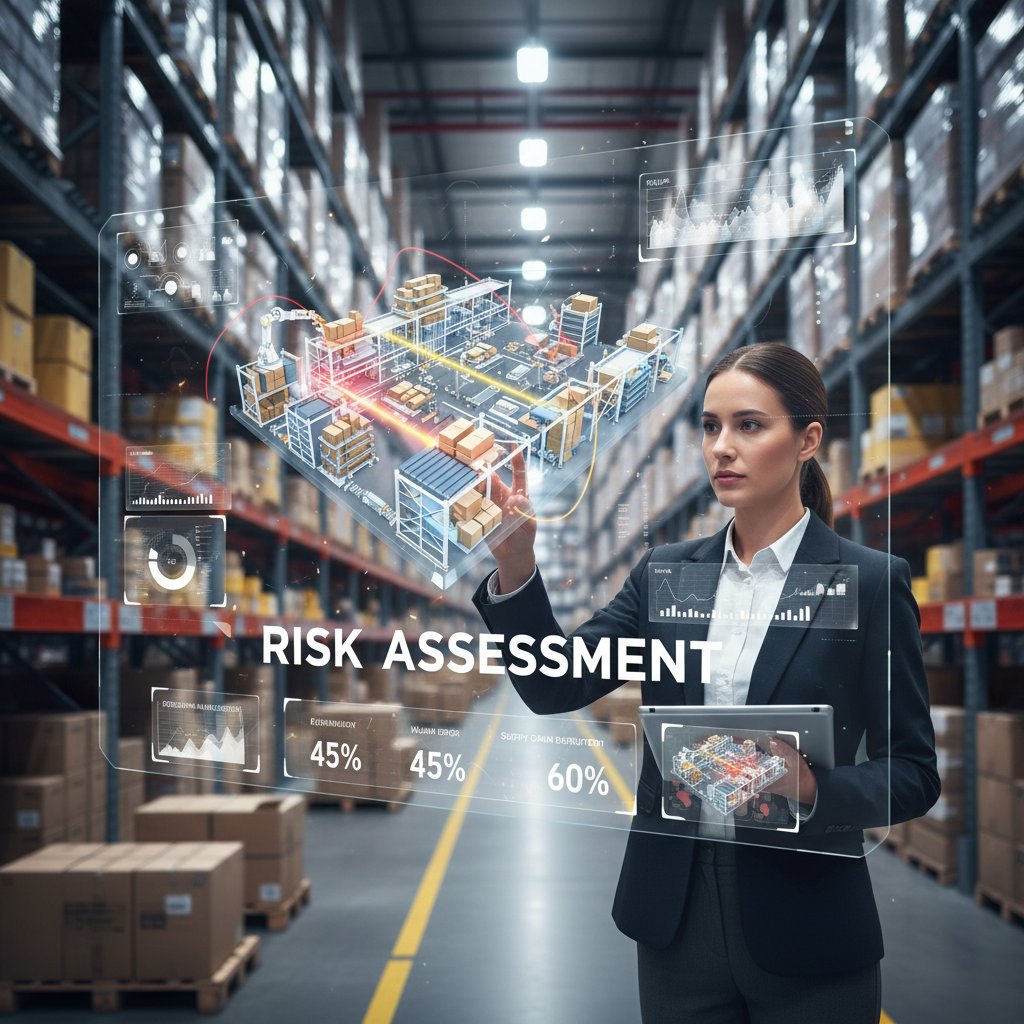
The key isn’t industry—it’s willingness to invest in data, skills, and culture.
Cultural and organizational resistance
- Change aversion: Employees fear job loss or loss of control when AI is introduced.
- Siloed ownership: Risk management, IT, and business units rarely coordinate on AI projects.
- Lack of leadership buy-in: Without C-suite advocacy, AI risk programs stall.
- Legacy processes: Ingrained manual workflows stifle innovation.
- Mistrust of AI: Persistent fear of “black box” errors leads to underutilization.
Real transformation demands more than technology—it requires a relentless commitment to change.
Brutal truth #5: AI-powered risk management in the wild (real cases, real lessons)
Hero stories: AI saves the day
In 2024, several global banks credited their AI-enabled operational risk platforms with identifying a sophisticated cross-border payments fraud, saving millions in potential losses (KPMG, 2023). The AI system flagged a subtle pattern of rapid, low-value transfers that escaped human auditors.
"Without the AI’s anomaly detection, we’d have missed a slow-drip fraud that cost others dearly." — Senior Risk Officer, KPMG, 2023

These successes aren’t hype—they’re proof that human-machine collaboration, when executed well, is a game changer.
Horror stories: when AI fails, who pays?
- Silicon Valley Bank’s collapse (2023): Traditional models missed signals; AI could have helped, but wasn’t fully deployed.
- Biased loan approvals: AI denied loans to minority applicants due to historic bias in training data, exposing banks to regulatory fines and reputational damage.
- Algorithmic trading disaster: An untested model triggered automated sell-offs, wiping billions from the market before humans intervened.
- Healthcare misdiagnosis: AI flagged false positives for rare diseases, leading to panic and unnecessary procedures.
Every AI failure is a harsh lesson: operational risk doesn’t vanish—it mutates.
Lessons learned: red flags and takeaways
- Audit everything: Regularly test and validate AI models for drift, bias, and unexpected outcomes.
- Enforce explainability: Document the rationale behind AI decisions; regulators demand it.
- Retain human oversight: Never fully automate high-stakes risk calls.
- Invest in data quality: Continuous data governance beats flashy algorithms.
- Scenario plan: Simulate AI failures and rehearse rapid response steps.
These lessons aren’t optional—they’re the cost of playing in the AI-powered arena.
How to make AI-powered risk work for your business (the practical playbook)
Checklist: are you ready for AI in risk management?
- Do you have clean, structured data from all critical operations?
- Is your team trained (or willing to be) in AI basics and risk analytics?
- Have you mapped out compliance and regulatory obligations for AI use?
- Is there executive buy-in for ongoing investment in skills and technology?
- Do you have a plan for human oversight and exception handling?
- Are audit trails and explainability built into your systems?
- Can you rapidly adapt to model drift or data quality issues?
If you hesitated on any point, your AI risk journey needs a checkpoint—stat.
Step-by-step guide to implementation
- Assess your risk maturity: Conduct a candid, end-to-end review of existing processes, data, and culture.
- Set clear objectives: Define what you want AI to deliver—not just in outcomes, but in risk reduction and compliance.
- Build the right team: Blend data scientists, risk experts, IT, and business leaders.
- Invest in data: Prioritize quality, completeness, and security of your data sources.
- Select agile tools: Opt for platforms (like futuretoolkit.ai) designed to evolve with your business and regulatory needs.
- Pilot, don’t boil the ocean: Start with a focused use-case, then expand based on learnings.
- Embed explainability: Bake transparency into every layer of your AI deployment.
- Monitor and adapt: Continuous monitoring, regular audits, and model retraining are non-negotiable.
This isn’t one-and-done. AI-powered risk management is a journey—one that demands vigilance, agility, and ruthless honesty.
Why futuretoolkit.ai is changing the game
Businesses looking to bridge the AI risk divide need more than hype—they need accessible, expert-driven solutions. That’s where futuretoolkit.ai steps in, democratizing advanced risk analytics for organizations without armies of data scientists.
"True resilience isn’t about flashy algorithms; it’s about combining human judgment, robust data, and transparent AI into a system you can trust—day in, day out." — Industry perspective, [Original analysis based on verified sector trends]
The future of operational risk: what’s next for AI, and what to watch out for
Emerging trends and 2025 predictions
| Trend | Description | Example |
|---|---|---|
| Human-AI fusion teams | Blending AI with human oversight for continuous learning | “Risk centers of excellence” |
| Real-time risk dashboards | Instant, visual insights into enterprise risk exposure | Unified control rooms powered by AI + live data |
| Proactive risk mitigation | AI anticipates threats and suggests preemptive actions | Automated supply chain rerouting |
| Cross-industry adoption | Retail, health, and manufacturing rapidly close the gap with finance | AI-driven patient safety, automated inventory analytics |
| Regulatory harmonization | Global regulators align on AI risk standards | Unified reporting frameworks for multinational firms |
Table 5: Key trends shaping AI-powered operational risk management in 2025
Source: Original analysis based on KPMG, MIT Sloan, and sector reports.
Attention: These trends are emerging now—winners are those who act, not those who wait for a playbook.
Unconventional uses for AI-powered operational risk management
- Supply chain resilience: AI tracks supplier risk in real time, flagging geopolitical unrest, extreme weather, or financial stress.
- Operational health: AI analyzes IoT sensor data from factories or transportation fleets to prevent costly downtime.
- Insider threat detection: NLP parses employee communications to flag emerging internal risks—before they escalate.
- Reputational risk monitoring: AI tracks social media and news to spot brewing PR crises.
- Third-party risk: Automated due diligence on vendors and partners.
The limits aren’t technical—they’re cultural and organizational.
Hard truths and final takeaways
- AI doesn’t eliminate risk; it changes its nature.
- Bad data will sink even the best AI.
- Human oversight isn’t optional—it’s existential.
- Implementation is hard, but stalling is fatal.
- Only those who learn, adapt, and audit relentlessly will thrive.
Summary
AI-powered operational risk management isn’t a silver bullet—it’s the new battleground. The old playbook is broken, and anyone betting on compliance checklists or static models is playing Russian roulette with their business. As research from KPMG, MIT Sloan, and Carnegie Endowment consistently shows, the winners are those who embrace clean data, continuous oversight, and a relentless drive to challenge both human and machine assumptions. The brutal truths are clear: AI’s power is real, but so are its pitfalls. The future belongs to organizations willing to stare those truths in the face, build risk functions that blend AI with authentic expertise, and treat operational risk as a living, breathing challenge. Engage boldly, use tools like futuretoolkit.ai, and remember—real resilience comes from candid self-assessment and the grit to act on it.
Sources
References cited in this article
- KPMG 2023 US AI Risk Survey(kpmg.com)
- MIT Sloan Management Review: AI-Related Risks(sloanreview.mit.edu)
- Carnegie Endowment: AI Risk Management(carnegieendowment.org)
- PwC: New Risk Playbook(linkedin.com)
- GovInfoSecurity: Recalibrating Risk(govinfosecurity.com)
- IBM: AI Risk Management(ibm.com)
- OnSolve: The Future Is Now(onsolve.com)
- ORX: AI & Cloud Risks(orx.org)
- AI-Pro: AI Revolution Timeline(ai-pro.org)
- Orca Security: 2024 State of AI Security Report(orca.security)
- Help Net Security: Cybersecurity AI Stats(helpnetsecurity.com)
- Microsoft: Data Security Index(microsoft.com)
- Wheelhouse Advisors: 20 AI Use Cases(wheelhouseadvisors.com)
- NIST: AI Risk Management Framework(nist.gov)
- AWS: Assessing AI Risk(aws.amazon.com)
- KPMG: AI and Model Risk(kpmg.com)
- UK Finance: AI in Risk Management(ukfinance.org.uk)
- Cambridge Actuarial Journal: Black Box Risks(cambridge.org)
- PYMNTS.com: The Black Box(pymnts.com)
- UNSW Business Think: Black Box AI Models(businessthink.unsw.edu.au)
Empower Your Business with AI
Futuretoolkit.ai empowers businesses of all sizes to harness the power of AI effortlessly, offering specialized solutions across diverse business functions without the need for technical expertise. Whether it's automating customer interactions, optimizing operations, or analyzing complex data, our AI toolkit streamlines processes, increases efficiency, and fuels growth. With easy integration, intuitive interfaces, and powerful AI models, Futuretoolkit.ai offers unmatched accessibility and value, enabling users to achieve measurable outcomes quickly and cost-effectively.
Get startedReady to Empower Your Business?
Start leveraging AI tools designed for business success
Frequently Asked Questions
What are the main limitations of traditional spreadsheet-based risk management?
Traditional risk management relies on static spreadsheets, siloed teams, and reactive governance that create blind spots, duplicate efforts, and miss emerging signals. These systems are unable to keep pace with modern threat landscapes and compliance requirements, as evidenced by incidents like the Silicon Valley Bank collapse, where static risk models failed to detect volatility.
Why have legacy risk management tools become inadequate in 2025?
Legacy tools are buckling under the pressure of modern risk vectors including cyber threats, regulatory shocks, and data breaches, particularly as network data volumes have doubled in two years due to AI workloads. By the time traditional risk reports are compiled, the threat landscape has already evolved, making these systems insufficient for protecting against today's complex threats.
What specific problems does data fragmentation cause in risk management?
Data fragmentation from siloed teams creates blind spots that result in duplicated efforts and missed risk signals, ultimately leaving organizations vulnerable to threats their models cannot detect.
What does the article identify as the main difference between survival and catastrophe in operational risk management?
The article suggests the difference between survival and catastrophe is whether an organization is ready to face hard questions and confront the brutal truths of AI-powered operational risk management, rather than relying on outdated playbooks and slick dashboards.
Continue Reading
Keep exploring Comprehensive business AI toolkit

AI-Powered Operational Risk Analytics: Results and Blind Spots

How AI-Driven Enterprise Risk Management Software Actually Works

AI-Powered Risk Management: What Actually Works in 2025

AI-Driven Business Risk Assessment: 7 Pitfalls Reshaping Strategy

AI-Driven Business Risk Analytics: Why Companies Now Prioritize It
