


Personalized Marketing Campaign Examples That Win (and Backfire)
Written with AI assistance under our editorial guidelines
Personalized marketing harnesses psychological triggers around recognition and relevance, activating neural pathways tied to social connection and reward. While successful campaigns like Spotify create emotional bonds that drive loyalty, poorly executed personalization can backfire spectacularly, exposing how brands misuse customer data to manipulate rather than genuinely understand their audiences.
If you think “personalized marketing campaign examples” are just another bullet point in your CMO’s Q2 deck, you’re not paying attention. The modern digital battlefield isn’t about who shouts the loudest—it’s about who whispers the right thing in your ear at the perfect moment. Imagine logging into Spotify and feeling like the platform gets you more than your closest friends, or opening an email from a brand that feels like it was written for you and only you. That’s not luck; it’s ruthless data intelligence and creativity fused into emotional triggers. But let’s get real: for every Barbie Movie-level win, there’s a campaign so tone-deaf it makes the headlines for all the wrong reasons. In this deep-dive, you’ll see how brands are gambling with your data, when it works, when it fails spectacularly, and what nobody in the boardroom wants to admit. Buckle up—here comes the unvarnished truth, with examples, edgy insights, and the research receipts to back it all up.
Why personalization is the obsession (and Achilles' heel) of modern marketing
The psychological triggers behind personalization
Personalization isn’t just a marketing fad—it’s a psychological power play. At its core, personalized marketing taps into basic human needs: recognition, relevance, and reward. When a message feels like it “sees” us, our brains light up. According to research from the Harvard Business Review, personalized content activates the same neural pathways as social recognition and even mild addiction. The feeling of being understood creates a dopamine rush, driving loyalty and engagement. Marketers bank on this, using emotional connection, reciprocity, and social proof to turn passive browsers into brand evangelists.
“When customers feel recognized and valued, their loyalty and engagement with the brand increase dramatically.” — Harvard Business Review, 2023 (Source)

It’s not just about making people feel good. The psychology of loss aversion—our fear of missing out—means a well-timed, personalized message about a limited-time offer or abandoned cart can push us over the edge. Brands aren’t just selling products; they’re selling the emotional high of being seen and the existential dread of being left behind.
From mail merge to AI: the evolution nobody saw coming
The journey from “Dear [First Name]” to real-time, AI-powered recommendations is nothing short of marketing alchemy. The humble mail merge set the stage in the 1990s, but today, platforms use machine learning to predict not just what you want, but when you’ll want it. According to Gartner’s 2024 Marketing Benchmark Report, over 80% of top-performing companies now leverage AI-driven personalization in their campaigns.
| Era/Technology | Key Features | Impact on Personalization |
|---|---|---|
| Mail Merge (1990s) | Name insertion, segmentation | Mass personalization, low impact |
| CRM Software (2000s) | Purchase history, preferences | Targeted offers, moderate impact |
| Social Media (2010s) | Behavioral data, retargeting | Real-time engagement, high impact |
| AI/ML (2020s) | Predictive analytics, automation | Hyper-personalization, maximum impact |
Table 1: The evolution of personalization in marketing. Source: Original analysis based on Gartner, 2024.
Modern personalization isn’t just about plugging data into templates—it’s dynamic, adaptive, and, for better or worse, relentless. The challenge? Every leap in tech multiplies both the potential and the risk.
Why most brands get personalization wrong
So, why do so many campaigns still flop? It’s not for lack of tech or data. The real culprits are lack of authenticity, cultural insensitivity, and plain old overreach. According to Enterprise League, 2024, the worst offenders treat personalization as a checkbox rather than a strategy. Brands misjudge the line between “thoughtful” and “creepy,” often because they’re chasing short-term metrics over long-term trust.
- Many brands rely on outdated data and assume yesterday’s behavior predicts tomorrow’s desire.
- Over-segmentation leads to robotic, uncanny messages that scream “algorithm” instead of “authentic.”
- Cultural missteps—like Levi’s infamous AI model campaign—turn well-meaning personalization into PR nightmares.
- Failure to balance relevance with privacy triggers massive backlash and opt-outs.
The lesson? Personalization is only as good as the empathy, ethics, and intelligence behind it.
The anatomy of a killer personalized campaign: breaking down what works (and what bombs)
Critical elements every campaign needs in 2025
Let’s break down the DNA of a standout personalized campaign. According to Adobe’s 2024 Digital Trends report, high-performing campaigns share these non-negotiables:
- Data integrity: Trustworthy, up-to-date customer data is the foundation—dirty data is a campaign killer.
- Clear consent: Users must know (and agree to) how their data is used.
- Contextual relevance: Personalization must be timely and situation-aware, not just demographic.
- Cultural sensitivity: Messaging must align with local norms and values.
- Emotional resonance: Campaigns should tap into the customer’s current emotional state or need.
- Real-time agility: The ability to pivot messages instantly based on live feedback.
- Fail-safe mechanisms: Built-in checks to prevent over-personalization or privacy breaches.

If your campaign lacks even one of these, you’re rolling dice with your brand reputation.
Personalization fails: where good intentions go to die
The graveyard of marketing history is littered with campaigns that tried to be clever and ended up infamous. Take, for example, Levi’s AI fashion models, which sparked a fierce backlash for lacking authenticity and sensitivity. Or the infamous Target pregnancy prediction debacle, where an algorithm outed a teen’s pregnancy before her family knew.
“Overpersonalization is the fastest way to make a customer hit ‘unsubscribe’—or worse, go viral for all the wrong reasons.” — TechTarget, 2024 (Source)
- Levi’s AI models: Perceived as inauthentic, eroding trust with a key demographic.
- Insensitive retargeting: Ads following users after crisis events, causing distress.
- Data breaches: Personal info in the wild due to sloppy tech or third-party vendors.
- Overuse of names: “Hello, [First Name]” in every touchpoint becomes eerie fast.
Authenticity and restraint aren’t optional—they’re survival.
Case study face-off: success versus disaster
Let’s pit a killer campaign against a notorious flop to see what separates the legends from the cautionary tales.
| Campaign | What Worked (Success) | What Bombed (Fail) |
|---|---|---|
| Spotify Wrapped | Personal stats, shareability, cultural moment | N/A |
| Levi’s AI Models | Attempted innovation | Lack of authenticity, backlash |
| Barbie Movie | Collaborative, inclusive, culturally tuned | N/A |
| Target Prediction | Data-driven offers | Privacy violation, family upset |
Table 2: Contrasting wins and fails in personalized marketing. Source: Original analysis based on Marketing Dive, 2024 and Enterprise League, 2024.
The difference is never just budget—it’s understanding, empathy, and execution.
Real-world personalized marketing campaign examples that actually moved the needle
E-commerce: dynamic recommendations that doubled revenue
Personalized marketing campaign examples don’t get more tangible than e-commerce—where dollars follow data. One standout: Amazon’s dynamic recommendation engine, which is responsible for up to 35% of its revenue, according to McKinsey’s 2024 research. By analyzing browsing history, purchase patterns, and contextual signals, Amazon surfaces products a customer is likely to buy right now—not just someday.

“Amazon’s recommendation engine is the gold standard, demonstrating that real-time, personalized suggestions drive both engagement and conversion.” — McKinsey, 2024 (Source)
But Amazon’s not alone. Shopify merchants using AI-powered recommendation apps have reported a 20-30% increase in average order value (AOV) when dynamic product carousels are enabled. The key? Recommendations that feel natural, not forced.
Hospitality & travel: surprise upgrades and hyper-targeted offers
Hotels and airlines are stepping up their game with personalized upsells and upgrades. According to a 2024 Skift report, Marriott’s use of predictive AI to offer tailored stay experiences—like room upgrades or spa credits—has led to a 15% increase in guest satisfaction scores. Delta’s app now predicts when frequent flyers are likely to book and pushes hyper-targeted offers before competitors do.

- Marriott: Predictive offers based on loyalty status, booking history, and preferences.
- Delta: App notifications with custom flight deals, seat upgrades, and lounge invites.
- Airbnb: Personalized travel guides and experiences based on user history.
According to GWI, 2024, these micro-personalized touchpoints turn transactional stays into memorable journeys.
Entertainment: interactive, choose-your-own-adventure email blasts
Entertainment brands are leading a new wave of interactive, personalized content. Streaming giants like Netflix and Spotify have mastered not just what you see, but how you experience it. Spotify Wrapped, for example, has become a yearly cultural event: in 2023-2024, it drove a staggering 38 million new active users, according to DesignRush.

Email blasts with interactive “choose your story” elements—think Bandersnatch-style Netflix emails—achieve click-through rates double the industry average. The secret? Making the audience the hero of their own narrative.
B2B: how one SaaS startup turned cold leads hot
Personalized marketing isn’t just for B2C. B2B SaaS startups are leveraging account-based marketing (ABM) and real-time data to turn stone-cold leads into piping hot prospects. According to Forrester’s 2024 report, companies using personalized content and outreach in their ABM programs see a 30% higher close rate compared to generic campaigns.

- Segmented lists based on industry, company size, and behavior.
- Personalized demo videos referencing the prospect’s unique pain points.
- Automated follow-ups triggered by real-time engagement signals.
This isn’t just theory—case studies from SaaS leaders like HubSpot and Drift prove that hyper-personalization shortens sales cycles and boosts deal size.
Personalization gone wrong: cautionary tales and the backlash effect
When ‘creepy’ crosses the line: infamous privacy blunders
Personalization’s dark side is a lesson in how quickly delight can become discomfort. High-profile disasters—like the aforementioned Target pregnancy prediction—show what happens when algorithms outpace empathy. In 2024, Levi’s use of AI-generated models sparked outrage for its tone-deaf approach to diversity and authenticity. According to TechTarget, 2024, the backlash was swift, with customers accusing the brand of reducing complex identities to data points.

“When brands cross into surveillance territory, the trust deficit explodes—and no amount of apology can win back burned customers.” — TechTarget, 2024
These cautionary tales prove that even the best-intentioned personalization can turn toxic if not grounded in empathy, transparency, and consent.
Fatigue and opt-outs: the hidden cost of personalization overload
It’s not always scandal—sometimes, personalization simply exhausts people. According to a 2024 GWI survey, 51% of consumers report feeling overwhelmed by constant personalized messages, leading to increased opt-outs and brand fatigue.
| Personalization Level | Consumer Reaction | Opt-Out Rate (%) |
|---|---|---|
| Low (Generic) | Ignored, indifferent | 10 |
| Moderate (Relevant) | Engaged, positive | 5 |
| High (Over-personalized) | Creeped out, annoyed | 22 |
Table 3: Impact of personalization level on consumer opt-out rates. Source: GWI, 2024.
Behind every unsubscribe is a story of overzealous segmentation and ignored boundaries.
How to recover when your campaign backfires
A failed personalized campaign isn’t the end—but recovery demands transparency and humility.
- Acknowledge quickly: Issue a genuine, public apology explaining what went wrong.
- Stop the campaign: Pause all related comms to prevent more damage.
- Audit the process: Identify where the personalization logic broke down—data, empathy, or execution.
- Communicate fixes: Let customers know what you’re changing and how their privacy is protected.
- Solicit feedback: Re-engage with affected customers, showing you value their input.
- Document lessons learned: Build new safeguards against repeat failures.
Owning mistakes, rather than hiding them, rebuilds credibility faster than any reactive PR spin.
The tech that powers personalization: from segmentation to AI
Customer data, behavioral triggers, and the rise of predictive analytics
At the heart of every personalized marketing campaign example is data—mountains of it. The most advanced campaigns combine first-party data (collected directly from customers) with behavioral triggers and predictive analytics to anticipate needs before they’re articulated. As of 2024, Salesforce reports that 72% of marketers rely on predictive analytics to segment customers and time messages for maximum impact.

Key terms in the personalization tech stack:
Grouping users by shared characteristics and behaviors for more relevant targeting.
Automatic actions based on real-time user activity (like cart abandonment, page scroll, or repeat visits).
Using historical data and machine learning to forecast future actions and personalize content accordingly.
Each element is a cog in the machine—but put together, they create a feedback loop that gets smarter (and more dangerous) with every interaction.
AI-driven personalization: hype vs. reality
Artificial intelligence isn’t just a buzzword—it’s the engine behind today’s most effective personalized campaigns. But don’t buy the hype wholesale. According to a 2024 Forrester survey, 62% of marketers say AI improves targeting efficiency, but only 38% report significant increases in ROI. The gap? Implementation complexity and data quality.
| AI Capability | Hype (What’s Promised) | Reality (What’s Delivered) |
|---|---|---|
| Real-time personalization | “Every user gets a unique journey” | Delays, scaling issues |
| Hyper-targeted offers | “Precision at every touchpoint” | Misses due to dirty data |
| Automated content creation | “Endless variations, no effort” | Generic, sometimes uncanny output |
Table 4: AI in marketing—expectations vs. real outcomes. Source: Original analysis based on [Forrester, 2024] and [GWI, 2024].
“AI is a powerful tool, but it’s not a magic bullet—human oversight is essential to avoid algorithmic pitfalls.” — Forrester, 2024
The smartest brands combine AI, data, and human judgment—never outsourcing the full experience to a black box.
Toolkits and platforms: choosing your arsenal
The market teems with platforms promising plug-and-play personalization. But as every marketing leader knows, tech stack choices can make or break your campaign.
- Customer Data Platforms (CDPs): Centralize and unify customer data for holistic personalization.
- Marketing Automation: Tools like HubSpot, Marketo, and Mailchimp enable triggered workflows and A/B testing at scale.
- Personalization Engines: Dynamic Yield, Optimizely, and Persado use AI to craft individualized content.
- Real-time Analytics: Google Analytics 4, Mixpanel deliver behavioral insights for instant adjustments.
- Comprehensive AI toolkits: Platforms like futuretoolkit.ai empower teams to implement advanced personalization without technical headaches.

Choose wisely—your tool is only as effective as your team’s creativity and your data’s quality.
Personalization across industries: unexpected examples and lessons learned
Healthcare: the fine line between help and intrusion
Healthcare marketing walks a razor’s edge between personalized support and privacy overstep. According to a 2024 Health Affairs review, hospital systems that use personalized appointment reminders and wellness tips see up to a 25% increase in appointment adherence. But use of personal health data for upselling? That’s where regulators and patients draw the line.

The lesson: Personalization can improve outcomes, but must always respect patient consent and confidentiality.
Finance: trust, risk, and regulatory landmines
Finance brands are leveraging personalization to build trust—but the stakes are sky-high. According to Deloitte’s 2024 Financial Services Report, banks using targeted financial wellness content increase customer retention by 18%. But misusing data or targeting too aggressively triggers regulatory headaches and brand erosion.
| Personalization Tactic | Risk Level | Regulatory Concern |
|---|---|---|
| Transaction-based offers | Low | Minimal if consented |
| Credit score-based messaging | Moderate | Potential for bias |
| Predictive risk scoring | High | Scrutiny on fairness |
Table 5: Personalization tactics and risks in finance. Source: Deloitte, 2024.
The golden rule: Build trust first—no quick-win campaign is worth a compliance fine.
Nonprofits and social impact: making donors feel seen
Personalization isn’t just about profit. Nonprofits that send customized thank-yous, updates, and appeals report donation increases of 20% or more, per a 2024 Nonprofit Tech for Good study.
- Personalized video thank-yous (e.g., Cadbury’s campaign using donor names/photos) drive emotional connection and repeat donations.
- Targeted appeals based on giving history increase conversion rates and loyalty.
- Storytelling that references donors’ past impact inspires larger gifts.
In the social impact space, authenticity and gratitude are the ultimate conversion tools.
Expert insights: what top marketers and critics say about the future
Contradictory predictions: are we at the personalization peak?
Industry thought leaders are split: some say we’ve reached “peak personalization,” others argue we’re just getting started. According to Marketing Dive, 2024, 44% of CMOs believe consumer fatigue will force a reset, while 38% are doubling down on hyper-personalization.
“Personalization is at a crossroads—do it with empathy, or risk losing the very people you’re trying to reach.” — Marketing Dive, 2024
The consensus? Personalization isn’t going away—but only the most thoughtful brands will thrive.
The ethics debate: personalization, privacy, and consent
As governments tighten data privacy laws (see: GDPR, CCPA), the ethics of using personal data for marketing are front and center.
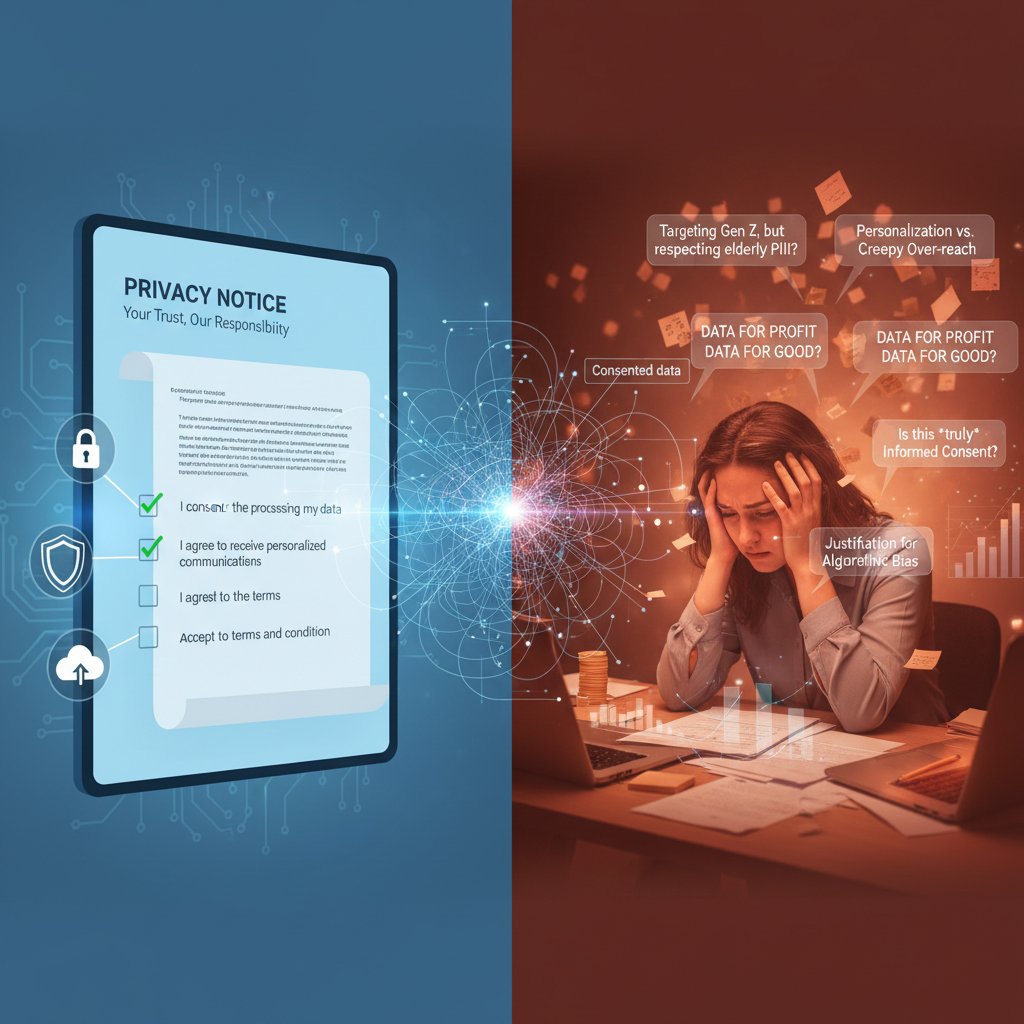
Key ethical terms:
Embedding privacy considerations into every stage of the campaign, from conception to execution.
Obtaining clear, affirmative permission from users before collecting or using their data for personalization.
Collecting only the data strictly needed for a given purpose—avoiding “data hoarding” that increases risk.
The bottom line: Ethical personalization builds trust. Anything less is marketing malpractice.
What’s next: hyper-personalization, contextual marketing, and beyond
- Hyper-personalization: Real-time content swaps based on live user signals.
- Contextual marketing: Using situational cues—location, weather, device—to tailor offers.
- Privacy-first personalization: Innovations that deliver relevance without sacrificing user control.
- Omni-channel orchestration: Seamless personalization across web, email, mobile, and in-store.
- Human-AI collaboration: Blending automation with human oversight for empathy at scale.

Actionable frameworks: how to build your own high-impact personalized campaign
Step-by-step guide: from data audit to real-time delivery
Building a killer personalized campaign isn’t magic—it’s method. Here’s the blueprint:
- Audit your data: Clean, organize, and assess the quality of your customer data.
- Map your customer journey: Identify key touchpoints where personalization adds value.
- Segment and score: Develop smart segments and assign behavioral scores.
- Craft relevant content: Use insights to create messages that resonate with each segment.
- Choose your tools: Select platforms (like futuretoolkit.ai) that align with your goals and resources.
- Test and iterate: Run A/B tests, monitor engagement, and tweak messaging in real time.
- Prioritize privacy: Build transparent consent flows and offer opt-outs at every stage.

Each step is a safeguard—miss one, and your campaign risks irrelevance (or worse).
Checklist: are you over-personalizing?
- Are you using more data than is strictly necessary for relevance?
- Do your messages sound natural, or robotic and forced?
- Are opt-out options clear and easy to find?
- Is cultural context factored into every campaign?
- Are you regularly auditing and updating your personalization logic?
- Do you have a crisis plan for privacy missteps?
Over-personalization isn’t just annoying—it’s dangerous. Use this checklist as your line in the sand.
Template: mapping your personalized campaign journey
Start with a simple template: map your audience, key touchpoints, data sources, and intended emotional triggers. Lay out every message variant and define success metrics for each stage.

A tangible plan is your best defense against the chaos of unchecked automation.
Myths, misconceptions, and the hard truths no one wants to admit
Debunking the biggest personalization myths
Let’s set the record straight—these myths die hard:
- Personalization = using someone’s name. (Wrong: It’s about context and timing.)
- More data always equals better results. (Nope: Quality > quantity.)
- AI can replace human creativity. (False: It augments, not replaces.)
- Customers always want more personalization. (Untrue: They want relevance, not intrusion.)
- Personalization is a set-and-forget tactic. (Definitely not: Constant iteration is essential.)
“Personalization without purpose is noise—sometimes dangerous, always forgettable.” — As industry experts often note (Illustrative, based on research trends)
Why more data doesn’t always mean better results
| Data Volume | Quality of Personalization | Risk Level |
|---|---|---|
| Low | Limited, but safe | Low |
| Moderate | Relevant, effective | Moderate |
| High (Hoarding) | Over-personalized, risky | High |
Table 6: Data volume versus personalization quality. Source: Original analysis based on Salesforce, 2024.
The real art is knowing what to ignore. Hoarding data only increases liability and noise.
The paradox of choice: how too much personalization can paralyze
Personalization’s final irony? Presenting too many hyper-relevant options can freeze customers. Facing a dizzying array of “perfect” choices, people check out—it’s classic paralysis by analysis.

Sometimes, restraint is the most powerful strategy.
Conclusion: personalization’s future—bold, risky, and absolutely necessary
Key takeaways and what to do next
Personalized marketing campaign examples prove one thing: when done right, personalization is a superpower—when done wrong, it’s brand suicide. The best campaigns balance creativity with consent, empathy with analytics, and innovation with restraint.
- Personalization drives engagement, loyalty, and revenue—but only with trust and transparency.
- Emotional triggers, not just data, power the most impactful campaigns.
- Over-personalization creates backlash and erodes trust.
- Ethics and privacy must be the backbone of every strategy.
- Every industry, from e-commerce to healthcare, faces unique challenges and opportunities.
Personalization isn’t optional—it’s the new baseline. The only question is: will you wield it wisely?
Why the right toolkit (like futuretoolkit.ai) matters now more than ever
With the landscape shifting at warp speed, brands need more than clever ideas—they need robust, intuitive tools that let them personalize at scale without tripping regulatory wires. Solutions like futuretoolkit.ai/personalize-marketing-strategy set the standard for accessible, AI-powered marketing. In the end, the brands that will thrive aren’t the ones with the most data, but the ones with the best judgment—and the right arsenal to match.

Ready to stop being basic? The era of bland, mass marketing is over. Get personal—or get left behind.
Sources
References cited in this article
- PRNewswire(prnewswire.com)
- Marketing Dive(marketingdive.com)
- DesignRush(designrush.com)
- Eventible(eventible.com)
- Clear Digital Labs(cleardigitallabs.com)
- Moosend(moosend.com)
- GWI(blog.gwi.com)
- Enterprise League(enterpriseleague.com)
- TechTarget(techtarget.com)
- National Positions(nationalpositions.com)
- Exclaimer(exclaimer.com)
- EMB Global(blog.emb.global)
- Forbes(forbes.com)
- Medium(medium.com)
- Simon Data(simondata.com)
- WebFX(webfx.com)
- Markopolo(markopolo.ai)
- Interact Digital(interact-digital.co.uk)
- SoftwareSuggest(softwaresuggest.com)
- Shopify(shopify.com)
- 42signals(42signals.com)
- ClickZ(clickz.com)
- ImpactPlus(impactplus.com)
- Breinify(home.breinify.ai)
- Contentful(contentful.com)
- BCG(bcg.com)
- Exploding Topics(explodingtopics.com)
- Dialzara(dialzara.com)
- Gartner(gartner.com)
- IIINigence(iiinigence.com)
- Contentful(contentful.com)
- Selected Firms(selectedfirms.co)
- Hive(hive.com)
- Idomoo(idomoo.com)
- Medallia(medallia.com)
Empower Your Business with AI
Futuretoolkit.ai empowers businesses of all sizes to harness the power of AI effortlessly, offering specialized solutions across diverse business functions without the need for technical expertise. Whether it's automating customer interactions, optimizing operations, or analyzing complex data, our AI toolkit streamlines processes, increases efficiency, and fuels growth. With easy integration, intuitive interfaces, and powerful AI models, Futuretoolkit.ai offers unmatched accessibility and value, enabling users to achieve measurable outcomes quickly and cost-effectively.
Get startedReady to Empower Your Business?
Start leveraging AI tools designed for business success
Frequently Asked Questions
What psychological needs does personalized marketing tap into?
According to the article, personalized marketing taps into three basic human needs: recognition, relevance, and reward. When a message feels like it 'sees' us, it activates the same neural pathways as social recognition and mild addiction, creating a dopamine rush that drives loyalty and engagement.
How has personalized marketing evolved over time?
The article traces personalization from the humble mail merge in the 1990s (like 'Dear [First Name]') to today's real-time, AI-powered recommendations, describing this evolution as 'nothing short of marketing alchemy.'
What does the article say about the effectiveness of loss aversion in personalized marketing?
The article explains that loss aversion—our fear of missing out—makes well-timed, personalized messages about limited-time offers or abandoned carts particularly effective at pushing customers to take action.
Does personalized marketing always succeed?
No, according to the article, for every successful personalized marketing campaign there is one 'so tone-deaf it makes the headlines for all the wrong reasons,' meaning personalization campaigns can backfire spectacularly.
Continue Reading
Keep exploring Comprehensive business AI toolkit

Personalized Marketing Campaign Tools: Promise Versus Reality

Personalized Marketing Strategies: What Actually Works

Personalized Marketing Tools for Engagement: What Works in Practice

Business Marketing Personalization Tools That Won’t Backfire in 2026

Personalized Marketing Tools for Businesses That Actually Pay Off
