


AI-Driven Business Analytics Solutions: Power, Pitfalls, Payoff
Written with AI assistance under our editorial guidelines
AI-driven business analytics has evolved from manual, rule-based systems to sophisticated machine learning approaches capable of processing vast data volumes in real time. While these tools promise predictive foresight rather than retrospective insights, the field suffers from inflated expectations, vendor overselling, and widespread "AI-washing" that creates confusion and budget waste for unprepared organizations.
In 2025, the phrase "AI-driven business analytics solutions" is everywhere—from boardroom presentations to startup pitch decks, from buttoned-up annual reports to late-night Reddit think pieces. But what’s really hiding behind the jargon and glossy dashboards? Has artificial intelligence truly redefined business intelligence, or are we just watching another tech hype cycle play out in slow motion? This isn’t just an academic debate. The stakes are existential for businesses of all sizes: the right analytics toolkit can mean the difference between a quantum leap forward and a catastrophic misstep. In this investigation, we rip the veneer off AI analytics, exploring the truths, risks, and the transformative—sometimes brutal—realities shaping the business landscape. Whether you’re a data skeptic, a C-suite decision-maker, or a startup founder trying to future-proof your strategy, buckle up. It’s time to separate substance from snake oil, expose hidden costs, and spotlight the frameworks that actually work. Welcome to the new era of business intelligence—no sugarcoating, just hard-earned insight.
The AI analytics revolution: hype, hope, and harsh truths
How we got here: the rise and reinvention of business analytics
Business analytics didn't always conjure images of neural networks and predictive dashboards. In the early days, analytics was a painstaking, manual affair—think fluorescent-lit back rooms filled with paper reports, gut instinct, and reams of Excel spreadsheets. The rise of digitalization in the 2000s saw a slow but steady shift towards software-assisted analytics, but these tools were still rule-based, reactive, and, frankly, pretty uninspiring.
The real break came with the advent of machine learning and the mainstreaming of big data. Suddenly, companies could process staggering volumes of data in real time, extracting patterns and making predictions at a scale no human analyst could match. Traditional analytics provided rearview insights; today’s AI-powered approaches promise headlights for the road ahead—offering foresight rather than hindsight, and uncovering opportunities and risks buried deep in the noise.

But with every new gold rush, there’s a rush of pitfalls. Hype inflates expectations, vendors oversell, and companies race to “AI-wash” every dashboard. The result? Confusion, wasted budgets, and, for the unlucky, very public failures. The promise of AI analytics is seductive—faster insights, automated decision-making, competitive advantage—but as countless organizations have learned, it’s not plug-and-play magic. According to McKinsey, 2024, 72–78% of organizations globally now use AI in at least one business function, but only about half of data leaders feel fully able to drive innovation with these tools. This gap between ambition and reality is where the real story of AI analytics is unfolding.
Is AI analytics just another tech fad?
From "big data" to "digital transformation," the tech world churns out buzzwords like an over-caffeinated startup. The result? Cynicism and skepticism—often justified. It’s tempting to lump AI analytics into the same bucket. After all, the industry is flush with overblown claims: “plug-and-play intelligence,” “instant ROI,” “set-and-forget decision-making.” The reality is far more nuanced.
“We've seen buzzwords come and go, but AI analytics has teeth—if you know where to bite.” — Emily, industry expert
According to recent stats from Statista, 2024, 75% of organizations now deploy AI-powered augmented analytics, a sharp climb from just 55% the year before. Unlike previous tech fads, AI analytics has permeated not just tech giants but sectors as diverse as automotive (79% adoption), healthcare (70%), and retail. The caveat? Not all implementations deliver. Many businesses are lulled by the promise but miss the messy, human-driven reality: AI isn’t a magic bullet—it’s a tool that demands grit, rigor, and a relentless focus on fundamentals.
The real challenge is separating signal from noise. How do you distinguish vendors peddling smoke and mirrors from those delivering measurable value? That’s where a critical eye—and a willingness to ask uncomfortable questions—becomes your sharpest asset.
The business stakes: why this matters now
Why does all this matter? Because in 2025, competitive advantage is built—and lost—on the back of data-driven decisions. Companies that master AI analytics are outpacing their peers, making smarter bets, and pivoting faster in a turbulent world. The flip side: those who misjudge or underinvest are being left behind, sometimes spectacularly.
Take, for instance, a legacy retailer that bet big on AI-driven inventory optimization. After a brutal quarter marred by stockouts and customer churn, an internal review revealed the culprit: an undercooked AI model deployed on dirty, incomplete data. The result? Millions lost, a public relations fiasco, and a cautionary tale for the ages.

These high-stakes moments aren’t just for Fortune 500s. Whether you’re a small business owner juggling resource constraints or a marketing manager under pressure to deliver ROI, the quality of your analytics toolkit could mean the difference between a breakout year and a blind stumble into irrelevance. The pressure is real, the risks are huge, and the upside—when things go right—is game-changing.
What really powers AI-driven business analytics solutions?
Inside the black box: machine learning, data pipelines, and more
It’s tempting to imagine AI analytics as a kind of digital oracle—a black box that swallows raw data and spits out actionable truth. But under the hood, it’s a web of interconnected components: machine learning models, data pipelines, and a relentless demand for clean, well-integrated information.
The real heavy lifting is done by statistical learning algorithms—random forests, neural networks, gradient boosting machines—trained on mountains of historical data to recognize patterns and forecast outcomes. These models are only as good as their inputs, which is why robust data pipelines are essential. Bad data in, bad insights out: there’s no magic here, just hard science and ruthless attention to detail.
Key terms in AI-driven business analytics:
Describes AI systems whose internal workings are opaque. In analytics, this means decisions may be accurate but not always explainable—a major risk in regulated industries.
AI whose decision-making can be understood by humans. Critical for trust, compliance, and effective oversight—especially as AI analytics influences high-stakes business moves.
Combines machine intelligence with human expertise to automate data preparation, insight generation, and the explanation of findings—bridging the gap between raw data and business action.
The automated flow of data from collection, through cleansing and transformation, to storage and analysis. The backbone of reliable AI analytics.
A gradual decline in AI model accuracy as real-world data evolves. Without regular retraining and validation, analytics solutions become stale and misleading.
None of this works without relentless integration. According to Gartner, 2024, data governance and integration remain the top barriers to successful AI analytics adoption—underscoring that tech alone is never enough.

AI vs. traditional analytics: a side-by-side comparison
If you’re still relying solely on legacy analytics, you’re playing chess with half the pieces. Traditional methods—think descriptive reporting, spreadsheets, and static dashboards—excel at telling you what happened. AI-driven analytics, on the other hand, uncovers “why” and, crucially, “what’s next.” It learns, adapts, predicts.
But this leap comes with its own risks: explainability can be lost, model drift creeps in, and over-automation can strip out critical human judgment. Sometimes, old-school analytics is the right tool—especially when transparency and control outweigh the need for speed.
| Feature/Outcome | Traditional Analytics | AI-Driven Analytics |
|---|---|---|
| Data processing speed | Manual, slow | Real-time, automated |
| Insight type | Descriptive (what happened) | Predictive & prescriptive (what will/could) |
| Transparency | High—clear logic, easy to audit | Often opaque (“black box”) |
| Human oversight | Required for interpretation | Can automate end-to-end |
| Risk of bias | Lower, but slower to adapt | Higher if not managed, but fast learning |
| Cost | Lower upfront, higher labor | Investment upfront, scalable savings |
| Adaptability | Limited | Highly adaptive with quality data |
Table 1: Original analysis based on McKinsey, 2024, Gartner, 2024, Statista, 2024
The smart play? Use both. AI analytics shines for pattern recognition and forecasting, while traditional tools provide transparency and a gut-check when the stakes are too high to leave to algorithms alone. Many organizations stumble by expecting AI analytics to fix bad processes or make sense of garbage data. As futuretoolkit.ai/comparison emphasizes, context and customization are everything—a one-size-fits-all approach is a fast track to mediocrity.
The myth of plug-and-play AI analytics
If a vendor promises “AI in a box,” grab your wallet and run. The myth of instant, out-of-the-box AI analytics is persistent—and dangerous. Real-world success demands more than slick interfaces. You need clean, well-labeled data, thoughtfully chosen models, regular retraining, and a feedback loop for continuous improvement.
“If someone tells you AI analytics is magic, run.” — Raj, data scientist
Here’s what the glossy brochures won’t tell you: quality takes work. Without rigorous customization and ongoing tuning, even the best AI solution will decay into irrelevance.
Red flags when evaluating AI analytics vendors:
- Vague claims about “proprietary AI” with no details on methodology
- Lack of explainability or transparency in how models make decisions
- Overreliance on automated features, with little room for customization
- Absence of robust data governance, security, or compliance frameworks
- Minimal support or unclear onboarding processes
- High upfront implementation fees with fuzzy ROI timelines
- Promises of “instant results” without discussing data preparation
If you spot two or more, dig deeper—or walk away.
Case files: AI analytics in action (and disaster)
Industry wins: when AI analytics delivers
In retail, AI analytics has rewritten the playbook. Look at how a global retailer leveraged predictive analytics to optimize inventory and staffing. By analyzing real-time sales, foot traffic, and external variables like weather, the company slashed stockouts by 30% and reduced excess inventory by 25%. The result? A decisive jump in profitability, happier customers, and a new gold standard for operational efficiency.

These gains weren’t the product of technology alone. Leadership played a crucial role—investing in staff training, fostering a culture of experimentation, and refusing to treat AI as a set-it-and-forget-it solution. According to Forbes, 2024, the difference between winners and also-rans isn’t just software; it’s a relentless focus on data quality, cross-functional teamwork, and a willingness to interrogate the results AI provides.
Epic fails: learning from AI analytics disasters
Of course, not every story is a victory lap. One infamous example: a financial institution rolled out an AI-powered credit scoring system, only to discover baked-in bias against minority applicants. The fallout included regulatory scrutiny, lawsuits, and a PR nightmare. The root cause? Rushed deployment, lack of oversight, and blind faith in algorithmic “objectivity.”
| Year | Organization | Failure Type | Lesson Learned |
|---|---|---|---|
| 2023 | Major retailer | Inventory chaos | Data integration overlooked |
| 2024 | Fintech firm | Biased AI scoring | Forgot to audit training data |
| 2024 | Hospital network | Predictive error | Lacked subject-matter validation |
| 2025 | Energy provider | Model drift | No retraining, results degraded |
Table 2: Timeline of notable AI analytics project failures and core lessons. Source: Original analysis based on Forbes, 2024, Tellius, 2024
“We trusted the algorithm, but forgot to ask the right questions.” — Samantha, manager
The common thread? Not technical incompetence, but organizational blind spots—skipping due diligence, sidelining domain experts, and treating AI as infallible. These failures are brutal reminders: AI is only as good as the systems and people around it.
Surprising sectors embracing AI analytics
If you think AI-driven business analytics solutions are only for tech giants and white-collar firms, think again. Agriculture has embraced AI for crop yield optimization and supply chain management. Nonprofits wield analytics to maximize donor engagement and target interventions. In the creative arts, AI is used for audience segmentation and trend forecasting.
Unconventional uses for AI-driven business analytics solutions:
- Farms using AI to predict pest outbreaks and optimize irrigation
- Nonprofits modeling donor behavior to fine-tune fundraising campaigns
- Museums using AI to manage collections and forecast visitor interest
- Independent filmmakers analyzing streaming data to guide distribution
- Environmental groups tracking pollutant sources in real time
- Event organizers optimizing ticket sales with dynamic pricing algorithms
- Universities using AI to improve resource allocation and student outcomes
What do these sectors have in common? They’re nimble, willing to experiment, and unburdened by legacy IT systems. Their wins are instructive for anyone struggling to move the AI analytics needle.

Hidden costs, real risks, and how to dodge them
The price of ambition: what vendors won’t tell you
Let’s talk about the real bill. AI analytics is often pitched as a cost-saver, but beneath the surface lie integration headaches, data cleansing bills, and expensive change management initiatives. Vendors may tout “easy onboarding,” but the reality involves weeks (or months) of wrangling legacy systems, retraining staff, and retrofitting processes.
| Cost Area | Typical Range (USD) | Frequency | Hidden Gotchas |
|---|---|---|---|
| Software/license fees | $10,000–$100,000+ | Annual | Add-ons for extra users/models |
| Data integration | $5,000–$50,000 | One-off/recurring | Custom connectors, API limits |
| Data cleansing/prep | $20,000–$80,000 | Per project | Manual labor, third-party fees |
| Training/onboarding | $5,000–$30,000 | One-off/annual | Staff turnover, retraining costs |
| Change management | $10,000–$60,000 | Per rollout | Resistance, process redesign |
Table 3: Cost-benefit analysis of typical AI analytics implementation in 2025. Source: Original analysis based on Gartner, 2024, Forbes, 2024
The antidote? Plan for the long haul. Budget realistically, demand full lifecycle cost breakdowns, and lean on independent resources like futuretoolkit.ai/costs for unvarnished advice.
Data bias, privacy, and the illusion of objectivity
AI analytics is only as objective as the data it’s trained on. In practice, this means bias creeps in at every turn—from historical hiring practices encoded in HR data to subtle market distortions in sales records. Recent privacy controversies have also exposed how easily sensitive information can be mishandled by automated systems.
Key terms explained:
Systematic distortion in data that skews analytics results. In business, this can mean missed opportunities—or worse, discriminatory outcomes.
A gradual loss of model accuracy as underlying data changes. Without ongoing monitoring, even the best AI solution will go stale.
The degree to which AI decisions can be traced and understood. Essential for compliance, trust, and correcting errors.
Privacy regulations like GDPR and CCPA now demand robust data governance. Companies face fines, lost trust, and legal action if their AI analytics solutions mishandle personal data. Staying compliant isn’t optional—it’s existential.

How to fail-proof your next AI analytics rollout
Learning from other’s mistakes is the cheapest insurance money can buy. Here’s what the pros do:
- Assess readiness: Evaluate data quality, integration points, and organizational appetite for change.
- Establish clear goals: Define what success looks like—measurable, actionable, realistic.
- Engage stakeholders: Involve business, technical, and frontline teams from day one.
- Prioritize data governance: Audit data sources, ensure compliance, and document every step.
- Choose vendors with transparency: Demand evidence of explainability and accountability.
- Run pilot projects: Start small, validate outcomes, and iterate.
- Invest in training: Upskill staff to work alongside AI, not under it.
- Monitor and retrain: Regularly review model performance and adjust as needed.
- Foster a culture of healthy skepticism: Encourage questions, challenge assumptions.
- Plan for change management: Recognize resistance, communicate benefits, and provide support.
Cross-functional teams and ongoing evaluation are your best defense against “black box” disasters. Above all, maintain a skeptical eye—ask hard questions before, not after, deployment.
Who’s steering the ship? People, culture, and the new analytics power dynamic
AI as a teammate, not a replacement
The myth of AI as a job killer misses the point. In practice, AI-driven business analytics solutions shift roles and responsibilities, freeing people from spreadsheet drudgery to focus on strategy, creativity, and judgment. But this new landscape demands a new breed of professional: the “bilingual” talent who can bridge business acumen and data literacy.
“The future belongs to those who can ask the right questions, not just code.” — Emily, industry expert
Culture is the real battleground. Collaboration, upskilling, and a willingness to challenge AI outputs are essential. Organizations that treat AI as a teammate, not a threat, unlock its full potential—and keep humans firmly in the loop.
The boardroom battleground: who really controls AI analytics decisions?
Who owns AI analytics—the IT department, the data team, or the business leaders who fund them? Power struggles are common, and alignment rare. Without shared vision and governance, even the slickest tech will flop. The most successful companies foster cross-functional “analytics councils,” ensuring that every voice—from coder to CMO—is at the table.

Poor alignment can doom even the best AI tech, spawning turf wars, project delays, and, ultimately, half-baked solutions. The way forward? Transparent leadership, clear roles, and a relentless focus on business value.
Workplace impacts: anxiety, empowerment, and the human factor
AI analytics isn’t just a technical shift—it’s a cultural earthquake. For some, it’s empowering: routine drudgery vanishes, and new opportunities emerge. For others, it’s a source of anxiety: Will I be replaced? Can I keep up?
Hidden benefits of AI-driven business analytics solutions:
- Frees staff for higher-value, creative work
- Reduces burnout by automating repetitive tasks
- Spurs cross-training and interdisciplinary collaboration
- Surfaces hidden opportunities and “unknown unknowns”
- Boosts transparency when paired with explainable AI
- Increases organizational agility—decisions happen faster
- Levels the playing field for smaller firms, democratizing insight
Transparent communication and committed change management are essential. The smartest companies treat analytics rollouts as cultural projects, not just IT upgrades.

Choosing your toolkit: what to demand (and what to avoid)
Decoding vendor claims: how to spot the real deal
The AI analytics marketplace is littered with jargon—“next-gen,” “seamless,” “cognitive,” “autonomous.” Most of it is fluff. Savvy buyers cut through the noise by demanding substance over style.
Priority checklist for evaluating AI-driven business analytics solutions:
- Is the solution explainable and transparent?
- Does it integrate with your current data infrastructure?
- Is there robust support for compliance and data governance?
- Can you customize models to your business needs?
- What’s the total cost of ownership—including hidden fees?
- How often are models retrained or updated?
- Is user training and onboarding comprehensive?
- Are there references from similar organizations?
- What’s the vendor’s track record with change management?
- Is there a clear exit strategy if things go wrong?
Pilot projects and real user feedback matter far more than shiny demos. For regularly updated, unbiased reviews, consult independent hubs like futuretoolkit.ai/reviews.
Comparing the leaders: a feature matrix for 2025
Not all AI analytics solutions are created equal. Here’s how the top contenders stack up:
| Feature | Leading AI Suite | DIY Analytics | Legacy BI Tools |
|---|---|---|---|
| Ease of use | High | Moderate | Low |
| Integration | Seamless | Manual | Patchy |
| Support & onboarding | Dedicated | Limited | Slow |
| Explainability | Strong (XAI) | Variable | Clear |
| Customization | High | High | Low |
| Cost-effectiveness | Moderate-High | Low | Moderate |
| Scalability | Very high | Moderate | Limited |
Table 4: Comparative feature matrix for business analytics solutions in 2025. Source: Original analysis based on Gartner, 2024, Forbes, 2024, futuretoolkit.ai/comparison
For small businesses, ease of use and support trump exotic features. Enterprises may prioritize integration and scalability. Don’t get blinded by hype or sticker price—focus on fit and proven outcomes.
Beyond the buzz: what future-ready businesses are investing in now
Emerging trends in 2025 aren’t about who has the flashiest dashboard—they’re about explainability, ethical AI, and human-in-the-loop systems. Businesses are doubling down on solutions that are transparent, auditable, and adaptable. Explainable AI isn’t just a compliance checkbox—it’s the new baseline for trust.

Forward-thinking organizations are investing in continuous learning, hybrid decision models, and robust feedback loops. The winners aren’t those who buy the fanciest AI—they’re the ones who build resilient, adaptable cultures around it.
Actionable frameworks: self-assessment and next steps
Is your business ready for AI-driven analytics?
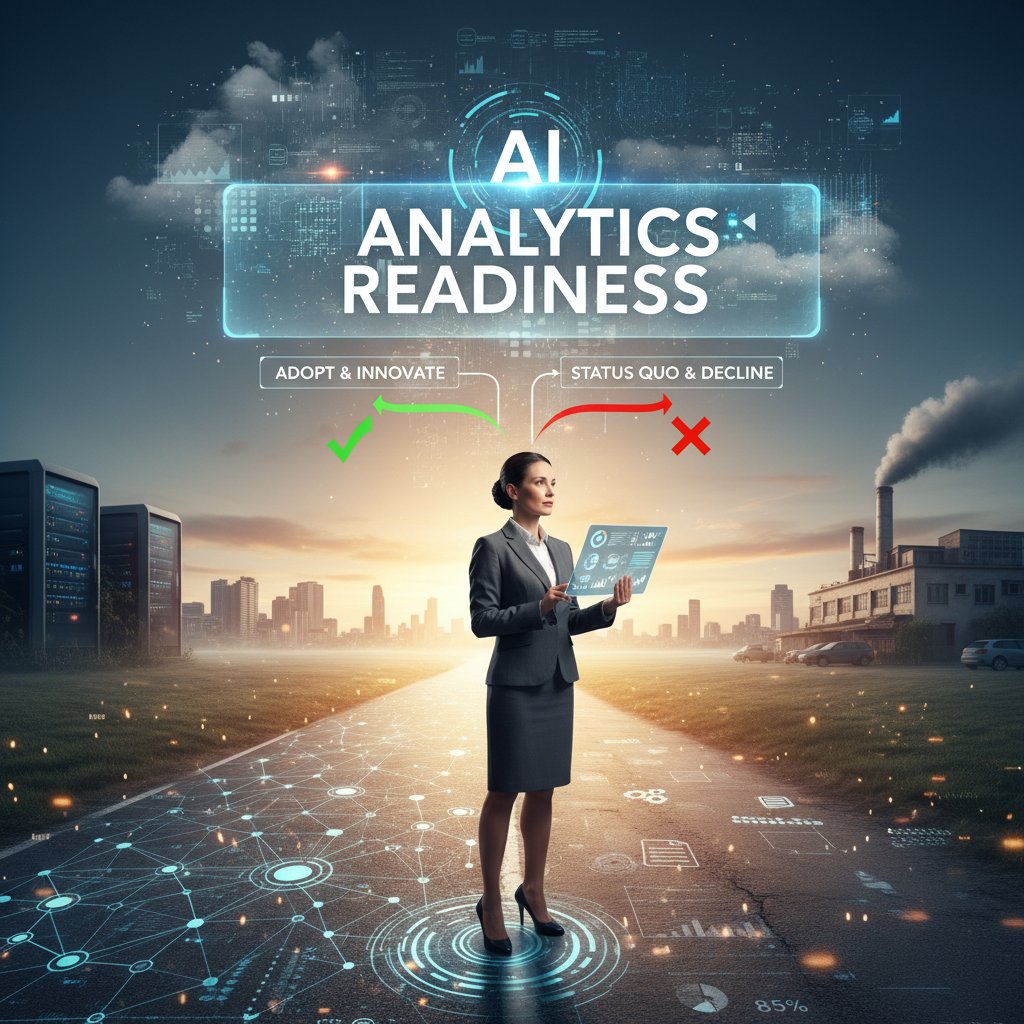
Before you jump in, take a hard look in the mirror. Here’s a readiness self-assessment:
- Is your data clean, consistent, and accessible?
- Do you have cross-functional buy-in from IT and business units?
- Are compliance and privacy policies up to date?
- Do you have resources for ongoing model monitoring?
- Is there a clear business case for AI analytics?
- Are training and change management plans in place?
- Have you identified pilot projects to test the waters?
- Is leadership committed to transparent, data-driven decisions?
- Do frontline teams understand and trust analytics outputs?
If you can’t honestly answer “yes” to at least seven of these, slow down and fill the gaps. Staged adoption beats reckless deployment every time.
Quick-reference guide: making smarter analytics decisions
For the time-pressed, here’s your condensed guide to choosing and rolling out AI analytics:
- What business problem are we solving, and is AI analytics the right tool?
- How will we validate and monitor model performance?
- Who owns data governance and compliance?
- What’s our plan for staff training and change management?
- How transparent and explainable is the solution?
- What’s the total cost (including hidden fees)?
- Can we run a pilot before full rollout?
Ongoing education and advocacy are your insurance policy. For up-to-date checklists and guides, bookmark futuretoolkit.ai/guides.
Avoiding common implementation traps
Don’t let your AI analytics journey become a cautionary tale. Here’s how to sidestep the most common traps:
- Skipping data prep: Leads to garbage-in, garbage-out analytics.
- Ignoring change management: Staff pushback can sink even the best solution.
- Failing to pilot: Small-scale trials uncover issues before they become disasters.
- Overpromising ROI: Set realistic benchmarks, measure obsessively.
- Neglecting ongoing monitoring: Models degrade—constant vigilance is required.
- Treating vendors as oracles: Ask hard questions, demand proof.
- Underestimating hidden costs: Budget for the full lifecycle, not just deployment.
“Success in AI analytics isn’t about tech—it’s about trust and tenacity.” — Raj, data scientist
Transparency, feedback, and relentless course correction are your best friends.
The future of AI-driven business analytics: what’s next?
2025 and beyond: trends shaping the next decade
AI analytics is no longer the stuff of science fiction. It’s the engine room of modern business, converging with IoT and real-time data to create a world where decisions happen at the speed of thought. Cities are pulsing with data streams, supply chains morph in real time, and leaders are waking up to the new reality: transparency, ethics, and explainability aren’t just nice-to-haves—they’re survival skills.

Will AI analytics replace human intuition—or turbocharge it?
The debate is over: AI won’t replace humans, but it is already amplifying our judgment, freeing us to think bigger and move faster. Evidence points to a hybrid future—machines for pattern recognition, humans for context, ethics, and creativity.
Seven ways to keep the human edge with AI analytics:
- Ask better questions—don’t just take AI outputs at face value
- Pair analytics with real-world expertise
- Interrogate unexpected results—dig for root causes
- Foster a culture of experimentation, not blind automation
- Prioritize ethics and transparency at every stage
- Invest in ongoing education and upskilling
- Embrace diversity—different perspectives surface better insights
Challenge your biases: the real risk isn’t AI outsmarting us—it’s us abdicating responsibility.
Key takeaways for business leaders and practitioners
AI-driven business analytics solutions are rewriting the rules of the game. But winning isn’t about chasing every shiny new tool—it’s about building robust, adaptable systems fueled by clean data, smart talent, and a relentless focus on outcomes. The next chapter belongs to those who blend skepticism with ambition, rigor with creativity, and intuition with evidence.

Don’t go it alone—lean on independent resources, stay relentlessly curious, and keep the conversation going. Whether you’re a skeptic or a true believer, the future of analytics is already here. The question isn’t if you’ll adapt—it’s how well.
Sources
References cited in this article
- McKinsey: The state of AI(mckinsey.com)
- Gartner: Data & Analytics Trends 2024(gartner.com)
- Statista: AI adoption 2024(statista.com)
- Forbes: AI Revolution—Separating Hype from Reality(forbes.com)
- Tellius: Demystifying AI-Powered Analytics(tellius.com)
- ASM IBMR: History of Business Analytics(asmibmr.edu.in)
- TutorialsPoint: Business Analytics History(tutorialspoint.com)
- Lingaro Group: AI & Sustainability(lingarogroup.com)
- IDC: Sustainable AI(blogs.idc.com)
- PwC: 2025 AI Business Predictions(pwc.com)
- ZebraBI: AI-Driven Business Intelligence Trends for 2025(zebrabi.com)
- Tellius: 10 AI Analytics Myths(tellius.com)
- Suvit.io: Beyond Plug and Play(suvit.io)
- CIO: 12 Famous AI Disasters(cio.com)
- LinkedIn: AI in Action Case Studies(linkedin.com)
- Medium: 13 AI Disasters of 2024(medium.com)
- KPMG: 2023 AI Risk Survey(kpmg.com)
- IBM: 2024 Cost of Data Breach(bigid.com)
- Dentons: Evaluating Vendor Contracts(dentons.com)
- Gartner: Magic Quadrant BI & Analytics(thoughtspot.com)
- ResearchGate: Ethical Considerations in AI Analytics(researchgate.net)
- Cloud Security Alliance: AI and Privacy(cloudsecurityalliance.org)
- Forbes: AI Organizational Revolutions(forbes.com)
- Microsoft: Building a Foundation for AI Success(microsoft.com)
Empower Your Business with AI
Futuretoolkit.ai empowers businesses of all sizes to harness the power of AI effortlessly, offering specialized solutions across diverse business functions without the need for technical expertise. Whether it's automating customer interactions, optimizing operations, or analyzing complex data, our AI toolkit streamlines processes, increases efficiency, and fuels growth. With easy integration, intuitive interfaces, and powerful AI models, Futuretoolkit.ai offers unmatched accessibility and value, enabling users to achieve measurable outcomes quickly and cost-effectively.
Get startedReady to Empower Your Business?
Start leveraging AI tools designed for business success
Frequently Asked Questions
What is the main difference between traditional business analytics and AI-driven analytics?
Traditional analytics provided rearview insights based on manual processes and rule-based software, while AI-powered analytics processes large volumes of data in real time to extract patterns and make predictions, offering foresight and uncovering opportunities buried in the data rather than just hindsight.
What are the main risks or pitfalls associated with AI-driven business analytics solutions?
The article identifies hype inflation, vendor overselling, and companies attempting to "AI-wash" dashboards as key pitfalls, which have resulted in confusion, wasted budgets, and public failures for some organizations.
When did the real transformation in business analytics begin?
The real break came with the advent of machine learning and the mainstreaming of big data, which enabled companies to process large volumes of data in real time and extract patterns at a scale no human analyst could match.
Why is choosing the right AI analytics toolkit important for businesses?
According to the article, the right analytics toolkit can mean the difference between a quantum leap forward and a catastrophic misstep for businesses of all sizes.
Continue Reading
Keep exploring Comprehensive business AI toolkit

AI-Driven Business Intelligence Analytics: Impact and Risks

AI Business Analytics: What the Hype Obscures

AI Analytics: Where Implementations Fail and What Actually Works

AI-Driven Business Analytics and Reporting That Actually Works

AI-Driven Strategic Business Analytics: Separating Innovation From Hype


