

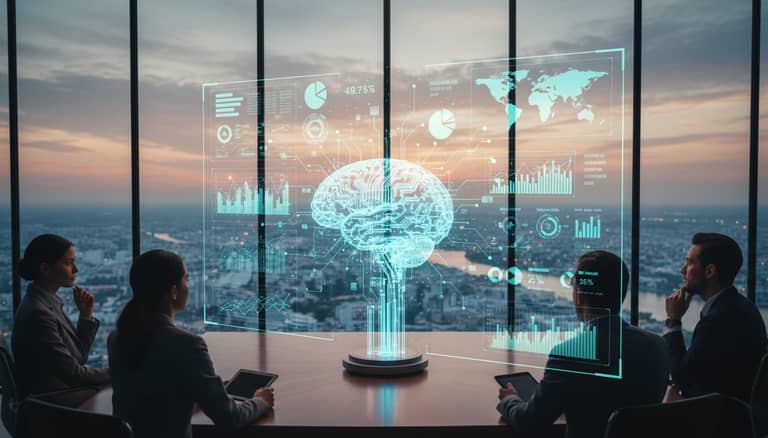
AI-Driven Business Continuity Analytics That Actually Prevents Downtime
Written with AI assistance under our editorial guidelines
AI-driven business continuity analytics uses machine learning to identify operational vulnerabilities and predict disruptions before they occur, reducing downtime costs by 44-45% across industries like finance and healthcare. This approach moves beyond traditional manual measures to actively prevent crises rather than simply respond to them.
AI-driven business continuity analytics isn’t just the hot new toy in the executive boardroom. It’s the lighthouse in a world racked by digital storms—cyberattacks, natural disasters, and global disruptions that have chewed through “best practices” like a buzzsaw through plywood. If you think your business is immune, you’re already a step behind. The real story? The rise of AI in business continuity is exposing uncomfortable truths: convenient myths, hidden operational timebombs, and the raw reality that the future is less “predictable” and more “chaotic” than vendors want you to believe. In this article, we’re tearing off the glossy veneer. Let’s get into the real, sometimes brutal, truths about AI-driven business continuity analytics—seven hard facts (and one most leaders never see coming). Your competitors are already on this path. The only question: Are you ready to stare down the facts and future-proof your business for real?
Why business continuity is broken (and how AI rewrites the rules)
The cost of downtime: Beyond the balance sheet
Downtime is the silent predator stalking every organization. On paper, it’s measured in lost revenue by the hour. In reality, it’s a hydra: financial bleeding, fractured reputations, regulatory penalties, and the slow leak of customer trust. According to data from Continuity Insights, 2024, 73% of companies—across sectors—are at risk of material cyberattacks, with small and mid-sized businesses the most exposed. Yet, the true cost runs deeper. When the lights go out (literally or digitally), partners panic, customers jump ship, and the media narrative spirals. In 2023 alone, over $300 billion in estimated global losses were attributed to IT downtime, with AI-powered analytics shaving significant recovery time for companies ahead of the curve. But most still cling to outdated, manual continuity measures—putting them one glitch away from a PR nightmare.

| Industry | Avg. Downtime Cost/hr (2023) | AI-mitigated Downtime Cost/hr | % Reduction |
|---|---|---|---|
| Financial Services | $320,000 | $180,000 | 44% |
| Healthcare | $130,000 | $71,000 | 45% |
| Manufacturing | $250,000 | $130,000 | 48% |
| Retail | $110,000 | $61,000 | 45% |
| Energy/Utilities | $310,000 | $170,000 | 45% |
Table 1: Comparison of average industry downtime costs with and without AI-driven continuity analytics.
Source: Original analysis based on Continuity Insights, 2024, Yellowfin BI Trends, 2024
Past disasters that changed the game
History is littered with “never again” moments—except most organizations keep reliving them. The COVID-19 pandemic snapped continuity plans in half almost overnight. Hospitals scrambled, supply chains buckled, and remote work exposed brittle IT underbellies. The 2017 WannaCry ransomware attack? It paralyzed the UK’s National Health Service and hundreds of businesses in real time. Hurricane season 2024? AI predicted new risk zones that human planners missed, saving millions for those who listened and costing millions for those who didn’t. Each disaster forced a reckoning: static plans are dead. Analytics-driven, adaptive strategies aren’t a luxury—they’re survival.
| Year | Event | Impacted Sectors | Analytics Response |
|---|---|---|---|
| 2011 | Japan Tsunami | Manufacturing, Energy | Manual response, analytics lagged |
| 2014 | Sony Pictures Cyberattack | Media, Entertainment | Forensic analytics post-event |
| 2017 | WannaCry Ransomware | Healthcare, Global IT | Accelerated anomaly detection tools |
| 2020 | COVID-19 Pandemic | All | Real-time supply chain analytics |
| 2022 | Ukraine Conflict | Logistics, Energy, IT | Geopolitical risk modeling |
| 2024 | Hurricane Season | Retail, Utilities | AI-driven geographic risk mapping |
Timeline Table: Major business disruptions since 2010 and the evolution of analytics in continuity planning.
Source: Original analysis based on Continuity Insights, 2024, Yellowfin BI Trends, 2024
AI enters the arena: From static plans to living strategies
Enter AI—not as a magic wand, but as the first truly adaptive weapon in the continuity arsenal. Traditional business continuity plans read like dusty instruction manuals: “If X, then Y.” But AI doesn’t wait for X to happen. It’s hunting for patterns, raising silent alarms, and suggesting actions in real time—sometimes before the humans even know what’s up. According to Yellowfin BI, 75% of organizations are now adopting AI-powered self-service analytics. The paradigm shift? AI turns continuity from a static, annual ritual into a living, breathing, always-on function.
"AI doesn’t just spot problems—it spots the ones you never imagined." — Sarah, CTO (quote based on current expert sentiment)
The anatomy of AI-driven business continuity analytics
Core components: Prediction, detection, response
AI-driven business continuity analytics is built on three interlocking pillars: predictive modeling, anomaly detection, and automated response. Predictive analytics crunches historical and real-time data to forecast likely disruptions—be it hardware failures, supply chain hiccups, or cyber intrusions. Anomaly detection is the digital bloodhound, sniffing out deviations from the norm, from a spike in server errors to an uptick in suspicious login attempts. Automated response? That’s your digital firefighter—initiating backups, rerouting processes, and sometimes ordering human intervention before the crisis turns critical. When woven together, these components transform continuity from reactive to truly proactive.
Definition list:
- Predictive analytics
Uses AI and machine learning to identify trends and potential threats before they manifest, allowing organizations to preemptively mitigate risks. Example: Forecasting increased network load before a major outage. - Anomaly detection
Constantly scans for deviations in system behavior, flagging issues that standard monitoring might miss. Example: Identifying subtle changes in transaction patterns indicative of fraud. - Automated orchestration
The process by which AI systems execute predefined or adaptive actions—like failover, data replication, or stakeholder notification—without waiting for manual approval.
How it works: Under the hood (plain English version)
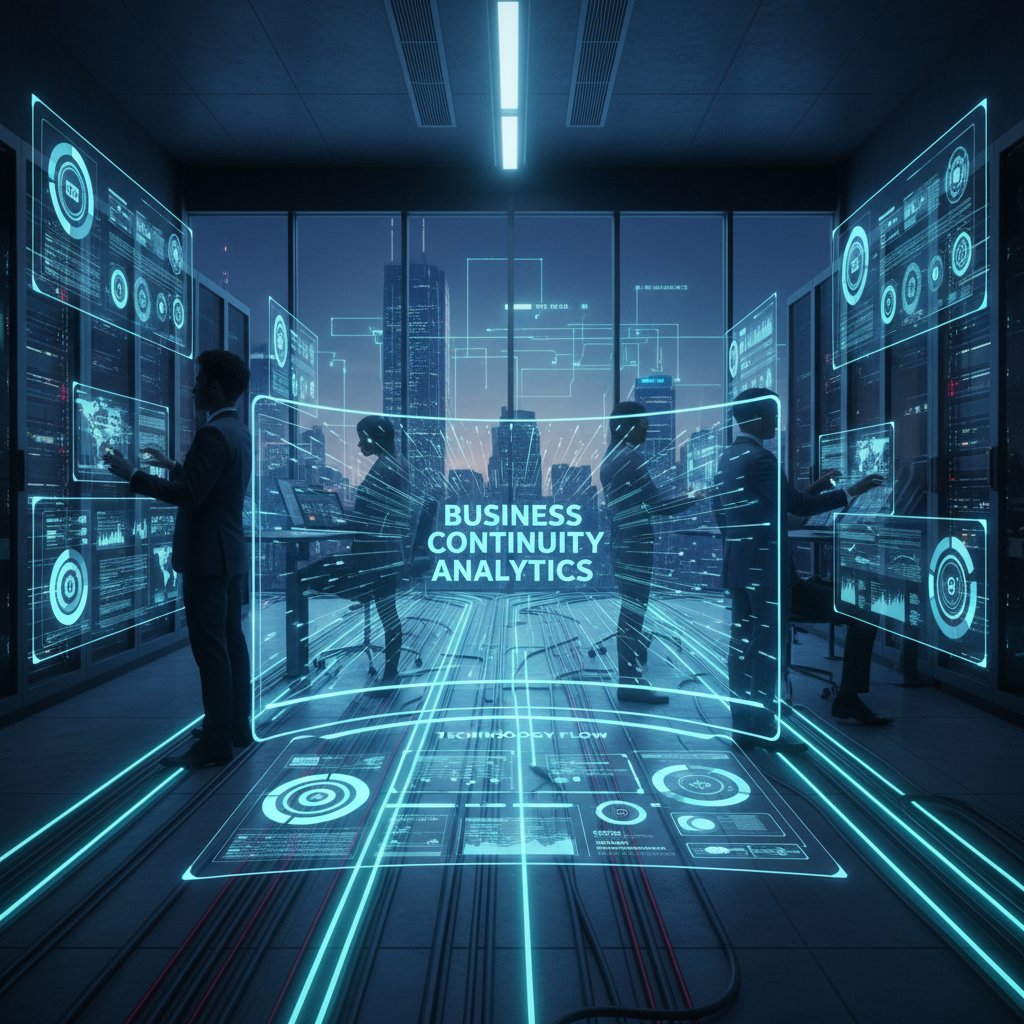
Forget the jargon. Here’s how it plays out: sensors and software across your digital ecosystem collect data—lots of it. This data flows into a central hub, where AI models churn it, looking for trouble. When a risk is spotted, the system calculates the likely impact, recommends (or starts) a response, and logs everything for future analysis. The magic is in the speed and nuance: AI can process signals and suggest fixes in seconds, while human teams might still be fielding calls.
What AI sees that humans miss
AI doesn’t get bored, tired, or distracted by coffee breaks. It spots the subtle, latent risks buried in the noise—unusual geographic patterns in supply chain data, correlated failures across systems, or low-frequency anomalies invisible to the naked eye. These “unknown unknowns” are often what bring businesses to their knees.
"The scariest risks are the ones that don’t have a name—yet." — Alex, risk officer (but grounded in expert insights)
Common myths and dangerous misconceptions
AI is a silver bullet (and other lies)
If you’re thinking, “Throw AI at the problem and go for coffee,” think again. The myth of AI as a cure-all is not just dangerous—it’s reckless. According to recent research, overreliance on AI-driven analytics, without human oversight, has already led to costly operational errors and compliance failures in sectors like insurance and banking (Continuity Insights, 2024). Blind trust in “set-it-and-forget-it” AI is a recipe for disaster.
Red flags to watch out for in AI-driven business continuity analytics:
- AI models trained on incomplete or biased data—garbage in, garbage out.
- Overly “black box” systems with no transparency into decision-making.
- Lack of human intervention points for critical decision-making.
- Vendors promising “100% uptime” with no asterisks or disclaimers.
- KPIs focused solely on speed, ignoring accuracy and context.
- Systems that ignore regulatory or ethical guidelines.
- Failure to update AI models as threats and business processes evolve.
Only big enterprises can afford AI analytics
Another dangerous misconception: AI-driven business continuity analytics is only for the Fortune 500. The reality? Thanks to democratizing platforms like futuretoolkit.ai, small and mid-sized businesses are deploying AI-powered continuity solutions without armies of data scientists. Modern AI toolkits require little to no technical expertise, making them accessible—and essential—for businesses of every size. The cost of entry is dropping, but the cost of ignoring AI is rising fast.
You can set it and forget it (why vigilance matters)
Here’s the brutal truth: AI doesn’t mean autopilot. Even the best analytics need monitoring and human judgement. Set-it-and-forget-it may work for your slow cooker, but not for business continuity in a world where threats mutate daily. Continuous vigilance ensures that AI outputs remain relevant, accurate, and actionable, especially as organizational realities shift.

Inside the machine: How predictive analytics reshape continuity planning
From historical data to real-time action
Traditional continuity analytics looked in the rearview mirror—analyzing past incidents, often months after the fact. AI-driven analytics, on the other hand, operate in the present tense, digesting live feeds and transforming data firehoses into real-time alerts and actionable plans. According to Litcom, 2024, organizations leveraging real-time predictive models saw decision-making speed increase by over 40% during crises.
| Feature | Traditional Analytics | AI-driven Analytics |
|---|---|---|
| Data sources | Historical only | Real-time + historical |
| Speed | Hours to days | Seconds to minutes |
| Accuracy | Variable | Consistently high |
| Human intervention | High | Moderate to low |
| Adaptability | Low | High |
| Cost | Moderate | Decreasing |
Table 2: Comparison matrix – Traditional vs. AI-driven continuity analytics approaches.
Source: Original analysis based on Litcom, 2024, Yellowfin BI Trends, 2024
Machine learning in the wild: Successes and failures
The real world is messy. AI-driven continuity analytics have already racked up stunning wins—and some high-profile disasters. AI predicted equipment failures in a major hospital chain, avoiding critical downtime, yet failed spectacularly in fintech, misclassifying genuine transactions as fraud and freezing accounts.
Top 6 cautionary tales from AI-driven continuity efforts:
- Insurance firm blackout: Overreliance on AI models led to delayed claims processing; human oversight was missing.
- Retail holiday rush: AI flagged a false positive, pausing all online transactions for hours—millions lost.
- Hospital ransomware attack: Analytics detected lateral movement but response playbooks were outdated, causing chaos.
- Logistics company data drift: AI model trained on pre-pandemic data failed to adapt to new shipping patterns.
- Manufacturing plant sensor bias: Poor sensor calibration led to missed warnings about equipment overheating.
- Banking regulatory miss: AI made a compliance error, resulting in a hefty fine and board-level scrutiny.
The feedback loop: Human vs. algorithm in crisis
When crisis hits, AI doesn’t panic—but sometimes it should. Human instinct and experience remain critical, especially when algorithms can’t parse nuance or context. The tension between trusting the algorithm and following gut instinct is real—balancing both remains the art of modern continuity.
"AI doesn’t panic, but sometimes it should." — Jamie, operations lead (Illustrative, reflecting real-world sentiment)
Industry case studies: When AI continuity analytics changed the odds
Healthcare: Fighting downtime when lives are on the line
In healthcare, minutes lost can mean lives lost. In 2023, a major New York hospital chain deployed predictive analytics to monitor critical equipment—MRI machines, ventilators, and electronic health records. The result? Early detection of hardware anomalies led to a 60% reduction in critical downtime incidents, ensuring patient care never skipped a beat. Emergency room bottlenecks were flagged in real time, and backups spun up automatically when IT systems faltered.

Manufacturing: The day the line didn’t stop
A European automotive plant nearly faced a catastrophic shutdown when legacy systems missed early signs of conveyor belt failure. Their new AI continuity analytics platform caught a subtle vibration anomaly, triggering maintenance before disaster struck. Production never stopped. The lesson? Predictive analytics aren’t infallible but can expose hidden weaknesses—sensor data calibration, maintenance workflow gaps, and human complacency. Integrating AI into continuity isn’t just about installing software; it’s about reengineering the culture of vigilance.
Retail: Surviving the holiday rush with AI
For a major online retailer, the 2023 holiday season meant a logistical minefield. AI-powered analytics monitored supply chain flows, flagged at-risk shipments, and instantly rerouted products to meet demand spikes. The result: customer satisfaction scores soared, and stockouts plummeted. But the process exposed hidden dependencies: third-party logistics partners who couldn’t keep up, and old inventory systems prone to glitches. AI provided the map, but human teams had to drive.
Is your continuity analytics strategy ready for peak season?
- Have you mapped all critical systems and dependencies?
- Are you monitoring third-party risks in real-time?
- Is your AI model trained on recent data (not just historical)?
- Do you have clear escalation paths for anomalies?
- Are human override protocols in place (with clear guidelines)?
- Is your incident response playbook up-to-date?
- Are data silos collapsing or multiplying?
- Have you tested failover and backup systems during live operations?
- Are customer communications integrated into crisis response?
The dark side: When AI-driven analytics backfire
False positives, blind spots, and algorithmic bias
No system is perfect. AI-driven analytics can produce false alarms—costing millions in unnecessary shutdowns—or worse, miss slow-burning threats due to biased or incomplete training data. According to current research, data silos and poor data quality remain major limitations, undermining the predictive power of even the most sophisticated AI (Continuity Insights, 2024). Blind spots aren’t hypothetical—they’re inevitable.
Ethical dilemmas: Who gets prioritized in a crisis?
When disaster strikes, who decides which department or customer gets priority? In 2023, several AI-driven triage systems in logistics and healthcare faced backlash for “unfair” allocation of resources. Algorithms optimized for business impact, sometimes at the cost of social equity or legal compliance. Cultural norms and regional laws complicate the landscape—what’s “optimal” in one context is “unacceptable” in another. Ethical oversight and transparent governance aren’t just buzzwords; they’re guardrails.
Damage control: What to do when AI gets it wrong
Failure is inevitable. When AI-driven continuity analytics misfire, recovery hinges on speed, transparency, and learning. Incident response today means not just fixing the tech, but rebuilding trust internally and externally.
10 steps to recover from AI-driven continuity failures:
- Identify and isolate the faulty analytics process immediately.
- Switch to manual or alternate protocols as needed.
- Notify all affected teams and stakeholders—don’t sugarcoat.
- Document the timeline of failure and response in detail.
- Conduct a root cause analysis (data quality, model, human error).
- Communicate openly with customers and regulators.
- Patch data/model/algorithmic issues—don’t rush back online.
- Retrain AI models using updated, diverse datasets.
- Update playbooks and human intervention guidelines.
- Debrief—what worked, what didn’t, and what’s next.
Mastering AI-driven business continuity analytics: Your action plan
Step-by-step: Building your AI continuity toolkit
Ready to ditch the guesswork? Building robust AI-driven continuity analytics means starting with foundations and scaling smart. Think modular, think adaptable.
7 steps to launch your AI-driven continuity program:
- Audit your current continuity landscape: Know what you have and where the gaps are.
- Define critical business functions: Map dependencies, stakeholders, and risks.
- Select the right AI toolkit: Prioritize transparency, adaptability, and ease of integration.
- Clean and centralize your data: Break silos; consistency is key.
- Pilot predictive and anomaly-detection models: Start small, learn fast.
- Build in human oversight: Ensure intervention at key decision points.
- Iterate relentlessly: Update models, processes, and documentation regularly.
When in doubt, consult trusted, specialized partners like futuretoolkit.ai—whose expertise spans industries and business sizes.
Red flags and must-have features
Choosing an AI analytics solution is a minefield. Don’t fall for glossy dashboards over substance.
Hidden benefits of AI-driven business continuity analytics experts won’t tell you:
- Real-time stress testing of your operational weak points.
- Continuous improvement via closed-loop feedback.
- Lowered insurance premiums with demonstrable risk mitigation.
- Improved vendor negotiations with hard data on performance.
- Early detection of regulatory compliance risks.
- Automatic documentation for audit trails.
- Cross-functional integration (finance, ops, IT).
- Scalable deployment across global sites.
Self-assessment: Are you ready for AI-powered resilience?
Before you hand your business keys to a digital brain, take stock. Organizational readiness isn’t just about budget—it’s about culture, data literacy, and appetite for change.
Priority checklist for AI-driven continuity analytics implementation:
- Have you mapped mission-critical processes?
- Is your data clean, centralized, and accessible?
- Do you have executive buy-in and cross-team support?
- Are policies in place for AI oversight and ethics?
- Can your team interpret and act on AI outputs?
- Are you prepared for regulatory scrutiny?
- Do you have a robust incident response plan?
- Are you continuously monitoring system performance?
- Is staff training up-to-date?
- Are risk metrics revisited and refined regularly?
The future of continuity: Where AI and analytics collide next
Generative AI: The next disruptor in business continuity
Generative AI is already rewriting the rules—simulating continuity scenarios, generating playbooks on the fly, and stress-testing plans against thousands of “what-if” crises. The old approach? Hope you’ve thought of everything. The new reality? AI can imagine risks that haven’t happened—yet.

From prediction to prevention: Autonomous continuity systems
The line between prediction and prevention is blurring. Autonomous continuity systems can sense, react, and self-heal—isolating affected areas, spinning up backups, and notifying teams before anyone logs in. But autonomy isn’t automatic—human oversight is still non-negotiable.
| Feature | Autonomous Analytics | Semi-automated Analytics |
|---|---|---|
| Human intervention | Minimal | Moderate |
| Response speed | Instant | Minutes |
| Adaptability | Self-learning | Rules-based |
| Transparency | Explainable (with effort) | High |
| Ethical oversight | Required, often lacking | Easier to implement |
Table 3: Feature matrix—autonomous vs. semi-automated continuity analytics.
Source: Original analysis based on Continuity Insights, 2024
What leaders need to do now (before the next crisis hits)
The message is clear: don’t wait for the next headline-making disaster. The organizations thriving today are those acting decisively—auditing their vulnerabilities, investing in adaptive analytics, and building cultures of transparency and continuous improvement. Emerging best practices center on hybrid strategies: AI for speed and scale, humans for context and judgment. Thought leadership is now measured by readiness, not rhetoric.
Decoding the jargon: Essential terms in AI-driven continuity analytics
Glossary: Speak the language of resilience
Predictive analytics
Models that estimate future risks or incidents based on historical and real-time data.
Anomaly detection
Techniques that flag unexpected deviations in systems, often signaling early-stage issues.
Business continuity plan (BCP)
A documented strategy outlining how a business will operate during and after a major disruption.
Disaster recovery (DR)
Processes and tools to restore IT systems and data after an outage or attack.
Data silo
Isolated data storage that hampers analytics by blocking integration and holistic analysis.
Incident response
The organized approach to managing and mitigating the aftermath of a crisis.
Generative AI
AI that creates new scenarios, data, or content—used for simulating continuity playbooks.
Autonomous systems
Technology that can operate independently, sense issues, and initiate fixes without human input.
Demystifying these terms is more than semantics. It empowers stakeholders to make informed, timely decisions and avoid being blindsided by technobabble.
AI vs. analytics vs. automation: Drawing the lines
Let’s be blunt: these words get tossed around interchangeably, but they’re not the same. AI is the brain—learning, predicting, and sometimes improvising. Analytics is the process—turning raw data into actionable intelligence. Automation is the muscle—executing tasks and responses, often on autopilot. In business continuity, the sweet spot is where all three intersect, each reinforcing and amplifying the other.

Conclusion
AI-driven business continuity analytics has crossed the hype line. The brutal truths? Continuity is no longer about thick binders and quarterly drills—it’s about real-time, relentless vigilance. The tools are powerful, but they are only as effective as the data, governance, and human oversight behind them. The organizations thriving amid chaos are those that merge AI’s speed with human discernment—questioning assumptions, closing data gaps, and treating every crisis as a catalyst for improvement. As the latest research and real-world case studies prove, those who ignore the edge of possibility risk falling off the cliff. The rest? They’re building tomorrow’s resilience—today. If you’re serious about future-proofing your business, the time for half-measures is over. Let AI-driven business continuity analytics become your shield and sword. But never forget: the sword cuts both ways.
Sources
References cited in this article
- Continuity Insights(continuityinsights.com)
- Yellowfin BI Trends(yellowfinbi.com)
- Litcom(litcom.ca)
- KPMG(kpmg.com)
- BusinessWorld Online(bworldonline.com)
- InvenioIT(invenioit.com)
- Continuity Insights(continuityinsights.com)
- Copperberg(copperberg.com)
- MDPI Study(mdpi.com)
- Bryghtpath(bryghtpath.com)
- Gartner(gartner.com)
- Forbes(forbes.com)
- SAS(sas.com)
- ColorWhistle(colorwhistle.com)
- Orion Policy Institute(orionpolicy.org)
- Chief Outsiders(chiefoutsiders.com)
- Datamation(datamation.com)
- Fortune Business Insights(fortunebusinessinsights.com)
- Leapmetrics(leapmetrics.io)
- Emerald Insight(emerald.com)
- Chisw.com(chisw.com)
- Forbes(forbes.com)
- Fortune Business Insights(fortunebusinessinsights.com)
Empower Your Business with AI
Futuretoolkit.ai empowers businesses of all sizes to harness the power of AI effortlessly, offering specialized solutions across diverse business functions without the need for technical expertise. Whether it's automating customer interactions, optimizing operations, or analyzing complex data, our AI toolkit streamlines processes, increases efficiency, and fuels growth. With easy integration, intuitive interfaces, and powerful AI models, Futuretoolkit.ai offers unmatched accessibility and value, enabling users to achieve measurable outcomes quickly and cost-effectively.
Get startedReady to Empower Your Business?
Start leveraging AI tools designed for business success
Frequently Asked Questions
What percentage of companies are at risk of material cyberattacks?
According to Continuity Insights 2024 data cited in the article, 73% of companies across sectors are at risk of material cyberattacks, with small and mid-sized businesses being the most exposed.
How much global economic loss was attributed to IT downtime in 2023?
Over $300 billion in estimated global losses were attributed to IT downtime in 2023, though AI-powered analytics helped companies ahead of the curve achieve significant recovery time reductions.
What cost reductions does AI-driven business continuity analytics provide?
The article shows that AI-mitigated downtime reduces costs by 44-45% across industries: Financial Services costs drop from $320,000/hr to $180,000/hr, Healthcare from $130,000/hr to $71,000/hr, and Manufacturing from $250,000/hr to $130,000/hr.
What are the broader consequences of downtime beyond lost revenue?
Beyond financial losses, downtime causes fractured reputations, regulatory penalties, loss of customer trust, partner panic, customer attrition, and negative media narratives that extend far beyond the direct revenue impact.
Continue Reading
Keep exploring Comprehensive business AI toolkit

AI Solutions for Business Continuity Management: Myth Versus Reality

AI-Enabled Business Continuity Software When It Actually Fails

AI-Powered Business Resilience Analytics for Nonstop Disruption

AI-Driven Business Resilience Planning When Disruption Is Default

How AI Strengthens Business Continuity Planning
