


AI-Driven Customer Relationship Management Solutions in 2025
Written with AI assistance under Comprehensive business AI toolkit's editorial guidelines. Editorial guidelines
AI-driven customer relationship management solutions have become a competitive necessity in 2025, offering significant productivity gains, personalized customer journeys, and data-driven decision-making. However, the technology carries hidden costs and implementation challenges beneath vendor promises. Success depends on careful evaluation of whether AI CRM genuinely transforms your business or merely represents another budget expense.
In 2025, the business playbook has been rewritten: AI-driven customer relationship management solutions are no longer a luxury reserved for Silicon Valley giants, but a ruthless competitive necessity for everyone from scrappy startups to global behemoths. The shift is stark. Companies that once survived on manual spreadsheets and gut-driven hunches are now locked in an arms race—where the weapon of choice is a CRM that thinks, learns, and, yes, sometimes outsmarts its own users. But here’s the unvarnished truth: AI CRM is an untamed double-edged sword. It promises record-shattering productivity (think sales pros saving hours a day), hyper-personalized customer journeys, and data-driven decisions that leave competitors in the dust. Yet beneath the glossy dashboards lies a labyrinth of hype, hidden costs, and failures that don’t make it into vendor brochures. This is your front-row seat to the revolution—backed by hard numbers, real stories, and the insights no vendor wants you to read. Ready to find out if your CRM is a game-changer or just another buzzword on your IT budget? Buckle up.
From rolodex to algorithms: How we got to AI-driven CRM
The rise and fall of early CRM systems
Picture a vintage office in the 1950s: rows of desks, a haze of cigarette smoke, and a Rolodex spinning on every secretary’s table. Customer relationship management, before the software age, was as manual as it gets—names scribbled on index cards, meetings tracked by memory, and every relationship managed with a handshake and hope. This was the era when customer data was more likely to be found in a battered file cabinet than in the cloud.

As the pace of business accelerated in the late 20th century, the Rolodex gave way to digital contact tools. In 1987, ACT! emerged as the first digital CRM, essentially a digital Rolodex. By 1993, Siebel Systems launched a more comprehensive CRM platform, promising to organize contacts, pipeline, and revenue. But here’s where reality bit: these early systems were clunky, expensive, and hostile to user adoption. According to a Clarify: CRM Stats 2024, many organizations found traditional CRM platforms a graveyard of neglected data—good intentions lost in a sea of bad interfaces and manual data entry.
The digital era brought scale, but also new headaches. As business globalized, companies needed to track customer journeys across continents, channels, and touchpoints. The static CRM of the 1990s was simply outgunned. Spreadsheets and legacy software became bottlenecks, unable to handle the flood of unstructured data or the speed of digital engagement. It was only a matter of time before something had to give.
The AI revolution nobody saw coming
Enter the disruptor: artificial intelligence. What started as a trickle—basic automation, rudimentary chatbots—became a tidal wave by the late 2010s. The inflection point? In 2018, Adobe’s acquisition of Marketo and the race to build AI-driven personalization into mainstream CRM platforms. Suddenly, CRM was no longer just a system of record; it was a system of prediction and action.
| Era | Key Milestone | Description |
|---|---|---|
| Paper Era (1950s) | Rolodex | Manual contact management, localized relationship tracking |
| Digital (1987-2000s) | ACT!, Siebel Systems | Digital contact platforms, pipeline management, early databases |
| Cloud (2010s) | Salesforce | Always-on access, SaaS, real-time collaboration |
| Social (late 2000s) | Social CRM | Integration with social media, multi-channel engagement |
| AI-driven (2018+) | AI/ML, automation, personalization | Predictive insights, chatbots, generative AI, hyper-personalization |
Table 1: Evolution of CRM technology and the rise of AI-powered solutions
Source: Original analysis based on Clarify: CRM Stats 2024, InsightAceAnalytic, 2024
The true revolution began when businesses realized that AI wasn’t just about automating grunt work. It was about surfacing hidden opportunities, predicting customer churn before it happened, and recommending next-best actions so sales teams could close deals with surgical precision. According to InsightAceAnalytic, 2024, the AI CRM market is now valued at $14.8B (2023) and is rocketing toward $138.6B by 2031, growing at a meteoric 32.5% CAGR. This isn’t incremental change—it’s a paradigm shift, separating the fast from the forgotten.
What really makes a CRM ‘AI-driven’ (and what’s just hype)
Decoding AI jargon: What matters, what’s marketing
Let’s cut through the noise. “AI-powered” has become the most abused phrase in business software, slapped onto everything from autocorrect features to predictive lead scoring. The reality? Not all AI CRMs are created equal. Some are little more than glorified rules engines; others are genuine, self-learning platforms.
What’s the difference? It starts with understanding the jargon:
Definition list:
- Machine learning (ML): Algorithms that “learn” from historical data to improve predictions or automate processes, such as forecasting sales or scoring leads. True ML adapts over time, reducing manual effort.
- Natural language processing (NLP): The ability for computers to understand and interpret human language—key for chatbots, sentiment analysis, and recognizing intent in emails or support tickets.
- Predictive analytics: Using statistical models to forecast outcomes, like which customers are likely to churn or what products to recommend.
- Generative AI: Systems that can generate original content—emails, proposals, even code—based on context and prompts.
But here’s the kicker: Vendors often tout “AI” when they’re really offering glorified automation or hard-coded rules. If your CRM’s “AI” can’t adapt, learn from mistakes, or improve with more data, you’re not buying AI—you’re buying marketing.
Many organizations get seduced by the promise of instant intelligence, only to find themselves with a dashboard full of guesses masquerading as insights. As WPForms CRM Stats notes, 78% of companies report using “AI” in CRM, but less than half achieve meaningful, adaptive automation.
The anatomy of a true AI-powered CRM
A real AI-driven customer relationship management solution is built on more than just a fancy UI and a few automation scripts. At its core are several deep technologies:
- NLP engines that extract meaning from customer emails, chat logs, and support queries.
- Predictive models that analyze behavior to recommend actions.
- Automated workflows that trigger personalized responses, offers, or alerts—without human intervention.
- Seamless integrations that connect CRM data with marketing, ERP, and support systems, creating a unified customer view.

Superficial AI features look impressive in demos—“smart” reminders, canned responses, basic automation. But only a true AI CRM continuously learns from every customer touchpoint, adapts to new data, and makes recommendations that actually improve results. As MasterOfCode AI in Customer Service highlights, 61% of customer service professionals plan deeper AI integration not for vanity, but for concrete productivity gains.
The dark side: Myths, failures, and cautionary tales
Why most AI CRM projects crash and burn
Here’s what rarely makes the glossy case studies: AI CRM projects fail. A lot. The reasons are as damning as they are familiar: dirty data, lack of user buy-in, and Frankenstein integrations that leave teams cursing rather than celebrating.
As one contrarian voice, Jules, puts it:
“AI CRM isn’t a silver bullet—it’s a loaded gun. Beautiful when it hits the target, catastrophic when it doesn’t.” — Jules, CRM Implementation Specialist (Quote)
The path to failure is paved with good intentions: managers dreaming of plug-and-play miracles, users resisting change, and IT teams overwhelmed by spaghetti-code integrations. According to Salesforce, 2024, the top failure points include poor data hygiene, unclear objectives, and resistance from frontline teams.
Organizational inertia is the silent killer. No matter how advanced, an AI CRM can’t compensate for outdated processes, lack of executive sponsorship, or teams that see automation as a threat rather than a tool. The result? Abandoned projects, wasted budgets, and lessons learned the hard way.
Debunking the biggest AI CRM myths
Let’s set the record straight on some enduring myths:
- Myth: AI CRM delivers instant results. Reality: Most systems require months of data, tuning, and user training before magic happens.
- Myth: Total automation is possible. Reality: Human insight and oversight remain essential, especially for nuanced customer interactions.
- Myth: AI eliminates all errors. Reality: Garbage in, garbage out—poor data leads to bad recommendations, no matter the algorithm.
- Myth: More features mean better outcomes. Reality: Feature overload can overwhelm users and dilute ROI.
Unordered list: Red flags when evaluating AI CRM vendors
- Overuse of vague buzzwords (“smart,” “intelligent,” “revolutionary”) without technical detail.
- Lack of transparent documentation on algorithms or data handling.
- Promises of “plug-and-play” results with no mention of training or change management.
- Minimal security or privacy controls for sensitive customer data.
- No clear roadmap for ongoing support, updates, or integrations.
The most successful companies treat AI CRM as an orchestra—AI handles the repetitive, high-volume notes, while humans play lead on strategic, complex, or emotionally charged interactions. According to HubSpot, 2024, sales professionals save up to two hours a day on admin tasks, but human expertise still seals the deal.
Inside the black box: How AI really predicts your customers
Under the hood: Algorithms, data, and real-world outcomes
At its heart, AI CRM is less about magic and more about relentless pattern recognition. Every action—every email, click, purchase, and complaint—is raw material for the machine. Sophisticated algorithms churn through this data, looking for patterns that humans would miss. The result? Actionable insights that can pinpoint churn risks, predict upsell opportunities, and trigger personalized outreach at exactly the right moment.
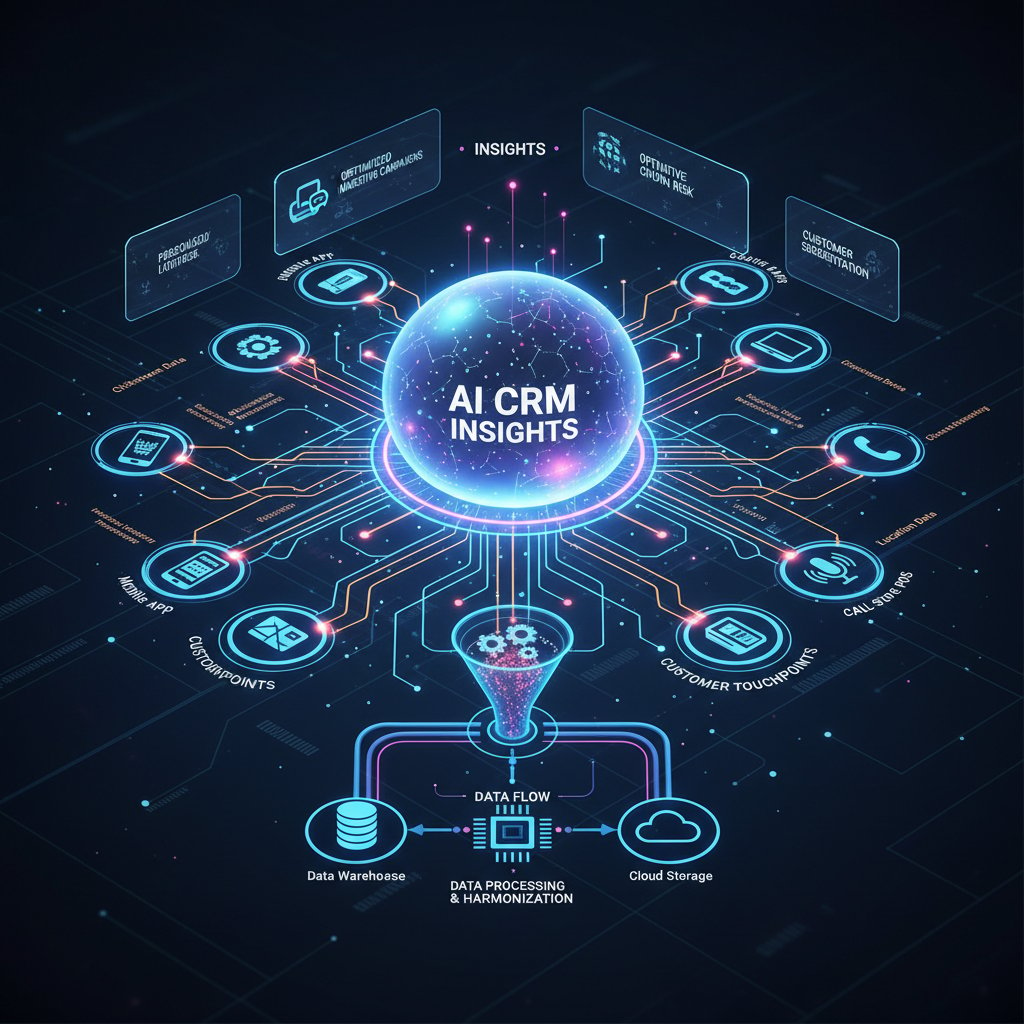
But there’s a cost. The power of AI is only as good as the data it consumes. Incomplete, siloed, or out-of-date information can lead to catastrophic misfires—a promotional email to a churned customer, or a missed upsell with a ready buyer. Data privacy is another hot button. According to current MasterOfCode, 2024, organizations must navigate a minefield of regulations (GDPR, CCPA) while still extracting value from their data. The stakes? Not just lost sales, but legal liability and brand reputation on the line.
Transparency and trust: Can you really understand your AI?
One dirty secret of AI CRM: Even the architects sometimes don’t fully understand why the algorithm makes a given decision. This “black box” effect breeds mistrust, especially when recommendations conflict with frontline experience.
As Maya, a data ethics consultant, states:
"Transparency isn’t a nicety anymore; it’s the new currency in customer relationships. If you can’t explain your AI, you risk losing loyalty—fast." — Maya, Data Ethics Consultant (Quote)
Black box decisions have real consequences: Customers denied promotions, reps flagged for “low performance” by inscrutable models, or entire segments left out due to historical bias baked into the data. The smartest organizations demand “explainable AI”—tools that can justify every decision, flag anomalies, and allow humans to audit the machine. When trust is at stake, opacity is the enemy.
Show me the money: Real-world ROI and hidden costs
The ROI math: When AI CRM pays off (and when it doesn’t)
For all the hype, here’s the naked math: AI CRM delivers, but only under the right conditions. For SMBs, the promise is stark—automated workflows slash costs, sales teams close more deals, and customer support runs 24/7 without burnout. But the road to ROI isn’t paved solely with subscription fees.
| Industry | Average ROI (%) | AI CRM Adoption Rate (%) | Typical Payback Time (months) |
|---|---|---|---|
| Retail | 42 | 68 | 8 |
| Finance | 56 | 81 | 10 |
| Healthcare | 37 | 59 | 12 |
| Marketing | 65 | 72 | 7 |
| Nonprofit | 28 | 44 | 14 |
Table 2: Statistical summary of AI CRM ROI and adoption (2023-2025)
Source: Original analysis based on MasterOfCode, 2024, WPForms, 2024
The hidden costs? Training employees who are wary of new tech, cleaning decades of dirty data, and integrating with legacy systems that fight back every step of the way. According to InsightAceAnalytic, 2024, financial institutions alone poured $35B into AI in 2023, with a significant chunk earmarked for CRM integration and compliance.
Case study: When AI CRM changed the game
Consider a mid-market retailer facing stagnant growth and overwhelmed call centers. By rolling out an AI CRM with predictive analytics and chatbot support, the company reduced customer wait times by 40% and boosted inventory accuracy by 30%. The key? Training frontline staff, maintaining data hygiene, and iterating the system based on real feedback.

Lessons learned: Rushing AI CRM adoption invites chaos. The winners pilot new features, measure relentlessly, and listen to users on the ground. Pitfalls avoided? Ignoring user feedback, underinvesting in change management, and treating AI as a one-time project rather than an ongoing evolution.
Not just for tech titans: Surprising industries using AI CRM
Nonprofits, creatives, and unlikely adopters
You’d expect banks or SaaS giants to jump on the AI CRM bandwagon. But the quiet revolution is happening in unexpected corners—nonprofits using AI to segment donors, creative agencies automating client proposals, even small law firms using sentiment analysis to gauge client satisfaction. The democratization of AI CRM means even organizations with modest budgets can play.
Unordered list: Unconventional uses for AI CRM
- Nonprofits: Automating donor follow-up and predicting giving patterns to maximize fundraising impact.
- Creative agencies: Using AI to personalize pitch materials and streamline client onboarding.
- Healthcare clinics: Reducing no-show rates with AI-powered appointment reminders and satisfaction surveys.
- Small law firms: Analyzing conversational tone in client emails to identify at-risk cases.
- Educational institutions: Monitoring student engagement and proactively reaching out to improve retention.
For smaller organizations, platforms like futuretoolkit.ai make AI CRM accessible without the technical overhead or budget blowouts of legacy vendors. The bottom line: In 2025, AI isn’t just for the Fortune 500; it’s for anyone willing to think smarter.
Cross-industry innovations: What you can steal
The bleeding edge of AI CRM doesn’t respect industry boundaries. Tactics honed in retail—like real-time personalization—are showing up in healthcare and finance. The most inventive organizations are magpies, stealing best practices wherever they find them.

Actionable takeaways for every reader:
- Benchmark outside your industry—what’s driving engagement in retail could unlock new revenue in finance.
- Push vendors for use cases and references beyond your vertical.
- Pair AI CRM investments with deep process audits—often, workflow tweaks deliver bigger gains than new features alone.
The implementation minefield: How to not get burned
The brutal checklist: What to do before you buy
AI CRM implementation isn’t a weekend project—it’s a minefield for the unprepared. Here’s the bare-knuckle checklist:
- Define success in brutal detail. What metrics will prove value? Revenue? Churn? CSAT?
- Audit your data. Clean it, map it, and kill the duplicates.
- Involve the frontline. If users aren’t bought in, expect sabotage.
- Vet vendors ruthlessly. Demand technical transparency, security, and support.
- Start small, scale fast. Pilot in one department, then expand.
Ordered list: AI CRM implementation priorities
- Set clear, measurable objectives tied to business outcomes—not just technology milestones.
- Conduct a comprehensive data audit to ensure quality and relevance.
- Secure buy-in from all stakeholders, including sales, support, and IT.
- Choose a vendor with a proven track record and transparent technology stack.
- Pilot the system with a focused team before scaling organization-wide.
- Invest in training and ongoing support for users.
- Monitor and iterate based on real-world feedback and evolving business needs.
Stakeholder alignment and data hygiene aren’t optional—they’re survival skills. According to Clarify: CRM Stats 2024, phased adoption and continuous training are best practices for maximizing ROI and user satisfaction.
Integration nightmares and how to wake up from them
Integrating AI CRM with legacy systems is where many projects go to die. Data silos, incompatible APIs, and shadow IT lurk around every corner. The difference between unicorn success and flaming failure? Planning for integration up front—and choosing solutions built for interoperability.
| Solution | Integration Ease | Support Quality | Scalability |
|---|---|---|---|
| futuretoolkit.ai | High | Excellent | Highly scalable |
| Competitor A | Moderate | Good | Moderate |
| Competitor B | Low | Fair | Limited |
Table 3: Original feature matrix comparing AI CRM integration, support, and scalability
Source: Original analysis based on vendor documentation and customer reviews
For businesses seeking a shortcut through the maze, futuretoolkit.ai offers a curated toolkit for evaluating and integrating business AI solutions with minimal friction. The right toolkit isn’t just about features—it’s about reducing risk, accelerating adoption, and making sure your AI CRM doesn’t become tomorrow’s legacy problem.
Future shock: The next wave of AI CRM in 2025 and beyond
Emerging trends that will define the next era
Even as AI CRM becomes mainstream, the next wave is building. Generative AI is creating hyper-personalized content at scale—think real-time product recommendations tailored to each customer’s mood and context. Regulatory scrutiny is tightening, with governments demanding algorithmic transparency and fair treatment. And businesses are pushing for CRM/ERP synergy, connecting customer insights directly to supply chain, finance, and operations.

These trends are reshaping competition. The companies that win aren’t the ones with the biggest budgets, but those that can adapt, iterate, and explain their AI. The customer experience bar is rising—personalization is expected, delays are punished, and privacy missteps are unforgivable.
What to watch out for: Risks and opportunities ahead
Every leap comes with landmines. Rapid AI adoption risks amplifying bias, automating bad decisions, or violating new privacy regs. The opportunity? Building transparency, ethics, and explainability into every layer of your AI CRM.
Ordered list: Timeline of AI CRM evolution
- 1950s: Manual rolodex and paper-based tracking.
- 1987: First digital CRM (ACT!).
- 1993: Comprehensive platforms like Siebel Systems.
- Late 2000s: Social CRM bridges digital and social data.
- 2010s: Cloud-based CRM (Salesforce).
- 2018: AI-driven personalization (Adobe, Marketo).
- 2023-now: Generative AI, hyper-personalization, regulatory focus.
Balancing innovation with responsibility is the new frontier. Companies that get it right will own customer trust and outpace the laggards.
Expert voices: What insiders wish you knew
What the sales team won’t say out loud
On the front lines, sales pros have a love-hate relationship with AI CRM. The upside? Reps save up to two hours daily on admin work, according to HubSpot, 2024. But implementation brings headaches—glitches, false positives, and the gnawing fear of being replaced by bots.
As Sam, a senior sales exec, confides:
“AI CRM does the boring stuff so I can sell—but when it spits out nonsense, I’m the one on the hook.” — Sam, Senior Sales Executive (Quote)
Organizational culture is the secret sauce. Teams that treat AI as a partner—not a threat—see bigger gains, fewer screw-ups, and a culture of relentless improvement. The best leaders build trust, celebrate wins, and make AI a badge of pride, not a scapegoat.
Pro tips from those who’ve lived through it
Industry insiders all echo one hard-won lesson: Success is less about the tech, more about the people. Train ruthlessly. Celebrate small wins. Iterate fast. And never, ever trust an AI without checking its math.
Definition list: AI CRM vs. traditional CRM
- AI CRM: Learns from every interaction, predicts next best actions, automates routine, and adapts to new data.
- Traditional CRM: Static record-keeping, manual updates, limited analytics, reliant on user input.
The real change? Teams spend less time entering data, more time building relationships—and the CRM becomes a living, breathing asset, not a digital graveyard. For those seeking specialized, accessible business AI tools that don’t require a PhD to deploy, futuretoolkit.ai is a credible starting point.
Ready or not: Self-assessment and your next move
Quick reference guide: How to assess your AI CRM readiness
Not sure if you’re ready to make the leap? Here’s a rapid self-assessment:
Unordered list: Hidden benefits of AI CRM solutions experts won’t tell you
- AI frees up time for strategic thinking, not just transactional grunt work.
- Predictive analytics help spot revenue leaks before they turn into losses.
- Automated reporting keeps everyone honest—no more “creative” forecasting.
- Sentiment analysis uncovers deeper customer insights than surveys alone.
- Real-time alerts ensure you never miss a critical customer moment.
If you’re nodding along, you’re closer to AI CRM success than most.
Key takeaways and final call to reimagine your CRM
In 2025, AI-driven customer relationship management solutions aren’t just another line item—they’re the difference between thriving and surviving. The evidence is overwhelming: AI CRM can slash costs, skyrocket productivity, and deliver customer experiences that turn casual buyers into lifelong advocates. But the road is littered with the wreckage of half-baked projects and overhyped promises.

So here’s your challenge: Will your business cross the bridge to next-generation CRM, or get left behind with the Rolodex crowd? The bold truth is clear—AI CRM is the new normal. The only question left: What will you do about it?
Sources
References cited in this article
- Clarify: CRM Stats 2024(clarify.ai)
- InsightAceAnalytic(insightaceanalytic.com)
- WPForms CRM Stats(wpforms.com)
- MasterOfCode AI in Customer Service(masterofcode.com)
- LocalCRM: History & Evolution(localcrm.com)
- CustomerThink: Evolution of CRM(customerthink.com)
- Insightly: History of CRM(insightly.com)
- Bitrix24 AI Impact(bitrix24.com)
- Microsoft Dynamics AI Trends(microsoft.com)
- Forbes: Future of CRM(forbes.com)
- IBM: AI in CRM(ibm.com)
- Salesmate: AI Use Cases(salesmate.io)
- PixelCrayons: AI CRM(pixelcrayons.com)
- CRM Switch: CRM AI(crmswitch.com)
- Tuck Ross: AI Marketing Glossary(tuckross.medium.com)
- Jennergy: AI Marketing Fails(jennergy.com)
- CIO: IT Failures 2023(cio.com)
- Medium: AI Disasters 2024(medium.com)
- Plan b: Why 85% of AI Projects Fail(myplanb.ai)
- Informatica: AI Project Failures(informatica.com)
- CyberStreams: AI Project Failure Rates(cyberstreams.com)
- SalesMind: AI CRM Use Cases(sales-mind.ai)
- RapidInnovation: AI Customer Trends(rapidinnovation.io)
- Ascendix: AI CRM Tools(ascendix.com)
- Solzit: AI CRM Integration(solzit.com)
- ISACA: AI in CRM Security(isaca.org)
- Market.us: AI in CRM Market(market.us)
- McKinsey: Building Trust in AI(mckinsey.com)
- Salesforce: Building Customer Trust(salesforce.com)
- KPMG: AI in Finance Report 2024(kpmg.com)
- Granica.ai: AI Cost Analysis(granica.ai)
- WiFiTalents: AI in CRM Stats(wifitalents.com)
- eWeek: AI CRM Use Cases(eweek.com)
- Freshworks: CRM Stats 2024(freshworks.com)
- Intech Systems: AI Trends(intech-systems.com)
- SoftwareSuggest: CRM Trends 2024(softwaresuggest.com)
Empower Your Business with AI
Futuretoolkit.ai empowers businesses of all sizes to harness the power of AI effortlessly, offering specialized solutions across diverse business functions without the need for technical expertise. Whether it's automating customer interactions, optimizing operations, or analyzing complex data, our AI toolkit streamlines processes, increases efficiency, and fuels growth. With easy integration, intuitive interfaces, and powerful AI models, Futuretoolkit.ai offers unmatched accessibility and value, enabling users to achieve measurable outcomes quickly and cost-effectively.
Get startedReady to Empower Your Business?
Start leveraging AI tools designed for business success
Frequently Asked Questions
Why is AI-driven CRM considered a competitive necessity in 2025?
According to the article, companies are now in an arms race where AI CRM has become essential for survival, as it enables sales professionals to save hours daily, create hyper-personalized customer journeys, and make data-driven decisions that leave competitors behind—transforming CRM from a luxury for tech giants into a necessity for all business sizes.
What were the earliest forms of customer relationship management before software?
In the 1950s and earlier, customer relationship management was entirely manual, relying on Rolodexes, index cards, file cabinets, and memory to track customer names, meetings, and relationships through handshakes and personal recollection.
When did digital CRM systems first emerge?
ACT! launched in 1987 as the first digital CRM (essentially a digital Rolodex), followed by Siebel Systems in 1993, which offered a more comprehensive platform for organizing contacts, pipeline, and revenue.
What problems did early CRM systems face?
Early CRM platforms were clunky, expensive, and had poor user adoption rates, with many organizations ending up with neglected data due to bad interfaces and the burden of manual data entry.
Continue Reading
Keep exploring Comprehensive business AI toolkit

AI Software for Customer Relationship Management: What Works in Practice

AI-Driven Customer Relationship Analytics Software’s Real Cost

How AI-Driven Customer Success Management Is Reshaping CX

AI-Enabled Customer Relationship Analytics: Opportunities and Risks

AI-Powered Customer Lifecycle Management: Real Risks and Measurable Returns
