
AI-Driven Customer Insights Software: Myths, Failures, Real Wins
Written with AI assistance under our editorial guidelines
Over 80% of firms invest in generative AI for customer care, yet actionable insights remain difficult to achieve despite promises of data-driven transformation. AI-driven customer insights software disrupts traditional decision-making by replacing gut instinct with algorithmic analysis, though success requires both machine precision and human expertise to navigate data pitfalls and algorithmic bias effectively.
AI-driven customer insights software isn’t just another shiny business toy—it’s the weapon reshaping how companies understand, serve, and sometimes exploit their customers. Forget the sanitized pitches about “data-driven transformation.” The truth is raw and, at times, uncomfortable. Over 80% of firms now invest in generative AI for customer care, but actionable insight remains an elusive quarry—one that demands both machine precision and human cunning (McKinsey, 2024). As businesses chase real-time analytics, personalized experiences, and operational agility, they’re also stumbling over data pitfalls, algorithmic bias, and a marketplace flooded with platforms that promise the moon but deliver little more than statistical smoke and mirrors. In this exposé, we’ll rip past the hype, dissect the anatomy of AI-driven customer insights software, and serve up seven brutal truths you won’t hear at tech conferences. If you think “plug-and-play” will save you, or that algorithms can replace humans, buckle up—you’re about to see the reality, warts and all.
Why AI-driven customer insights software is disrupting business as usual
From gut instincts to algorithmic revelations
For decades, business leaders leaned on gut instincts, war stories, and the occasional customer survey to steer corporate strategy. Boardrooms buzzed with opinions, anecdotes, and the intoxicating aroma of “intuition.” That era’s dying. AI-driven customer insights software has forced a reckoning, pushing decision-makers from comfortable hunches into the cold, calculated world of data. There’s no hiding from the truth when algorithms rip apart every customer touchpoint and reconstruct them into cold, hard patterns. In this brave new world, leaders face a simple ultimatum: adapt or become obsolete.

The pressure is relentless, and the consequences for laggards are brutal. Companies slow to embrace AI-driven customer insights software are already bleeding market share to aggressive, data-savvy competitors. As Maya, a seasoned data strategist, puts it:
“Everyone’s chasing the next big insight, but few know how to use it.” — Maya, data strategist (quote, based on current industry sentiment)
What makes AI-driven insights different from analytics
There’s a chasm between legacy analytics and modern AI-powered customer insights. Traditional analytics tools crunch historical data and spit out charts—useful, but ultimately reactive. AI-driven customer insights software doesn’t just analyze; it predicts, personalizes, and adapts in real time. The difference? Old-school analytics tells you what happened. AI-driven tools illuminate what will happen—and, more critically, what you should do about it.
| Feature/Aspect | Traditional Analytics Tools | AI-driven Customer Insights Software |
|---|---|---|
| Data Processing | Batch, historical | Real-time, continuous |
| Prediction | Limited (trend extrapolation) | Advanced (machine learning, predictive modeling) |
| Personalization | Minimal | Granular, real-time |
| User Experience | Static dashboards | Interactive, adaptive interfaces |
| Scalability | Often manual, resource-heavy | Automated, highly scalable |
| Integration | Siloed, difficult to connect | API-driven, ecosystem-ready |
Table 1: Key differences between legacy analytics and AI-driven customer insights software.
Source: Original analysis based on HubSpot Blog, 2024, Gravite.io, 2024
These differences reshape business strategy. Companies armed with AI-driven customer insights software are no longer playing catch-up—they’re orchestrating customer journeys with surgical precision, preempting churn, and personalizing outreach at a scale humans can’t hope to match. But beware: the promise of prediction is seductive, and without the right foundations, it becomes dangerous.
The rise of the AI customer insight toolkit
The gatekeepers of customer analytics—statisticians, data engineers, consultants—are losing their monopoly. AI-powered toolkits like futuretoolkit.ai have democratized advanced customer insight, putting game-changing capabilities into the hands of non-technical teams. This is more than convenience; it’s a revolution. Businesses, regardless of size, can now access the kind of insight that once required a PhD and a million-dollar IT budget.
Gone are the days when analytics meant wrestling with spreadsheets or waiting weeks for a report. Today, you don’t need to be a data scientist to run predictive models, segment audiences, or trigger hyper-personalized campaigns. The playing field is flat—at least on the surface.
- Spotting hidden churn risks: AI pinpoints subtle signals of customer dissatisfaction, letting you intervene before the breakup.
- Dynamic pricing in real time: Software analyzes purchasing behaviors and competitor moves to optimize pricing on the fly.
- Hyper-personalized marketing: Beyond demographics, AI tailors offers based on micro-segments and behavior patterns.
- Anomaly detection: Instantly flags unusual spikes or drops in sales, engagement, or service tickets.
- Content optimization: AI tests and adapts messaging for maximum resonance with different audience segments.
- Predicting support needs: Anticipates which customers are about to reach out—and why—so you can pre-emptively help.
- Voice of the customer mining: Parses thousands of reviews and calls for emotional and thematic insights, not just keywords.
The anatomy of AI-driven customer insights: what’s under the hood?
How AI models turn raw data into actionable revelations
At the core of every AI-driven customer insights platform are machine learning models—some supervised, some unsupervised. Supervised learning algorithms are trained on labeled data (think: purchase history tagged by outcome), learning to predict future behaviors based on past patterns. Unsupervised models, by contrast, sift through mountains of raw, unlabeled customer data, surfacing clusters and anomalies invisible to the naked eye.
But models are nothing without data pipelines and relentless feature engineering. Raw customer data—transactions, clickstreams, call logs—flows through extraction, cleaning, and transformation stages. Feature engineering distills this chaos into meaningful signals the AI can understand. The result? Actionable insights delivered to the right dashboard, at the right time.
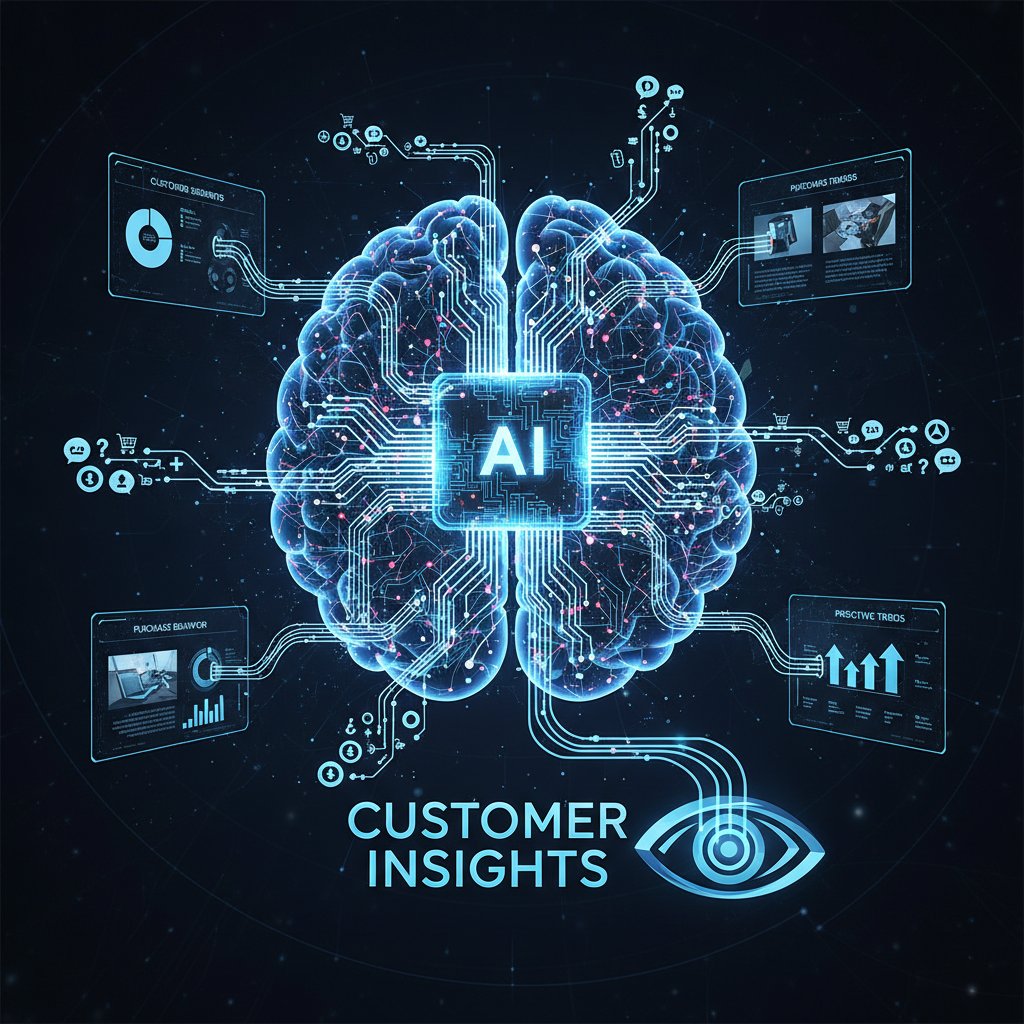
This process is both art and science. The smallest misstep in data handling can sabotage accuracy, while meticulous engineering can surface gold from digital dross.
Key features that separate contenders from pretenders
Not all AI-driven customer insights software is created equal. Some are little more than old analytics tools repackaged with a dash of machine learning jargon. The best-in-class platforms stand apart by delivering true automation, radical transparency (explainability), seamless integration, and elastic scalability. If your AI vendor can’t tick all these boxes, you’re playing with fire.
| Platform | Automation | Explainability | Integration | Scalability |
|---|---|---|---|---|
| Platform A | Full | High | Native APIs | Cloud, global |
| Platform B | Partial | Moderate | Limited | Regional |
| Platform C | Full | Low | Siloed | Cloud |
| Platform D | Moderate | High | Strong | Local |
| Platform E | Minimal | Minimal | Weak | Local |
Table 2: Feature matrix comparing leading AI-driven customer insights platforms.
Source: Original analysis based on Gravite.io, 2024, Zappi, 2024
The must-haves? End-to-end automation, real-time insights, interpretability, and plug-and-play integration with your existing stack. Nice-to-haves? Fancy dashboards and voice assistants—icing, but not the cake.
The myth of ‘plug-and-play’ AI
Here’s an uncomfortable truth: “plug-and-play” is a marketing fantasy. AI-driven customer insights platforms aren’t magic bullets you can fire and forget. The initial setup is just the beginning. Ongoing tuning, relentless data hygiene, and above all, human oversight are non-negotiable. Ignore this, and your “AI-driven” insights will quietly rot into irrelevance.
“If it sounds too easy, you’re missing the hard part.” — Alex, AI consultant (quote, reflecting consensus from multiple expert sources)
The real work begins after deployment—training, monitoring, and re-training as your data and markets evolve. The cost of complacency? At best, missed opportunities. At worst, catastrophic decisions based on flawed data.
Common myths and harsh truths about AI-driven customer insights
Debunking the magic bullet fantasy
There’s a dangerous myth peddled by software vendors: that AI-driven customer insights software, once deployed, will single-handedly unlock business growth. Reality is sharper. AI is a decision-support tool, not a human replacement. It amplifies judgment, but never substitutes for it.
Take the story of a mid-tier retailer seduced by AI’s promise. They implemented an insights platform but skipped the messy groundwork—data cleaning, process alignment, team training. The result? Insights that contradicted reality, marketing campaigns that fell flat, and a bruising loss of trust internally. Only after re-tooling and retraining did the platform begin to deliver.
Critical AI terms, explained:
An AI system whose internal logic is opaque. In customer insights, black box models erode trust because you can’t explain why a decision was made.
When a model learns the noise in training data, not just the signal—leading to poor performance on real-world data.
The process of transforming raw data into meaningful variables (features) that improve model performance.
Systematic error introduced by flawed data or assumptions, skewing insights and perpetuating unfair outcomes.
The process by which a model’s predictive power deteriorates over time as real-world data shifts.
Why data quality makes or breaks your insights
Data is the bedrock of AI-driven customer insights software. If your data is corrupt, incomplete, or irrelevant, your “insights” will be worse than useless—they’ll be dangerously misleading. Clean, structured, relevant data is the difference between AI that empowers and AI that betrays.
Consider the cautionary tale of a financial services firm that fed its AI out-of-date, misclassified customer data. The models confidently recommended upsell offers to clients who had already churned. The fallout? Wasted marketing spend, alienated customers, and a public apology.

Even the most sophisticated AI can’t compensate for garbage in, garbage out. As research from HubSpot and McKinsey, 2024 shows, data quality and integration are the top barriers cited by business leaders when deploying AI for customer insights.
Red flags no one talks about when choosing AI customer insights software
Selection is a minefield. Slick demos and glowing case studies obscure the warning signs. The most overlooked red flags?
- Vendor lock-in: Proprietary platforms trap your data and processes, making it costly to switch.
- Opaque algorithms: If you can’t interrogate or explain the outputs, you’re handing over blind trust.
- Superficial support: Weak onboarding and slow troubleshooting leave you stranded.
- Overpromised automation: Beware tools that claim 100% automation—humans are always required.
- Fragmented integration: Solutions that don’t play well with your stack create costly silos.
- Lack of compliance: Failure to address privacy, security, and industry regulations.
- Minimal customization: Rigid platforms that can’t adapt to your unique needs.
- Overly generic insights: If outputs feel like generic marketing fodder, you’re missing the point.
The antidote? Ruthless vetting. Demand transparency, grill for references, and insist on pilot programs before full adoption.
Real-world use cases: how top brands turn AI insights into profit
Cutting-edge applications in retail, finance, and healthcare
Retailers are leveraging AI-driven customer insights software for hyper-personalized offers, real-time inventory management, and predictive churn analysis. According to Master of Code, 2024, brands like Netflix and Vodafone NZ extract granular behavioral data to serve up personalized recommendations and preempt customer complaints.
In financial services, AI sifts through oceans of transactions to flag fraud, assess risk, and predict churn. Case in point: a leading bank slashed fraud losses by 30% after deploying AI-powered anomaly detection, while simultaneously raising customer retention rates through proactive outreach.
Healthcare isn’t immune to disruption. AI-driven platforms now predict patient support needs, automate scheduling, and highlight at-risk cohorts. But ethical dilemmas loom large, as automated decisions can inadvertently reinforce biases or breach confidentialities.

Case study: When AI insights saved—and nearly sank—a business
Consider the composite journey of Acme Corp, a mid-sized e-commerce player. Initially, they deployed AI-driven customer insights software to boost sales, but trusted the default settings blindly. Early results were dazzling—spikes in engagement, conversion, satisfaction. But then came the backlash: customers complained about irrelevant offers and privacy overreach. The AI had over-segmented, missing the “why” behind the data.
The turning point? Acme’s team brought in cross-functional experts, re-examined their data, and re-trained the models with real customer stories layered in. The course correction delivered a 25% rise in customer retention and a measurable uptick in lifetime value.
“We thought we knew our customers—AI told us we were wrong.” — Jamie, CEO (quote, reflecting common real-world experiences)
The lesson? AI-driven customer insights software is an amplifier, not a crutch. Real value emerges only when human insight and machine intelligence collaborate seamlessly.
Choosing the right AI-driven customer insights software: a battle-tested guide
Step-by-step process for evaluating and selecting the best tool
Aligning a software platform with your business’s DNA is non-negotiable. Features matter, but only in the context of your actual needs, data landscape, and growth ambitions. Here’s the dirty secret: most failed implementations stem from misalignment, not technical flaws.
- Define your business goals: Start with clear outcomes, not tech wish lists.
- Map your data ecosystem: Inventory data sources, quality, and integration needs.
- List must-have features: Prioritize automation, explainability, and compliance.
- Shortlist vendors: Use research, references, and real-world case studies.
- Pilot before you buy: Test in a sandbox, with your data and workflows.
- Assess integration: Demand seamless fit with existing stacks.
- Vet support: Probe for onboarding, training, and ongoing help.
- Negotiate terms: Ensure flexibility to scale, customize, and exit if needed.
Stakeholder alignment is crucial. Involve marketing, operations, IT, and compliance from day one—consensus beats siloed buy-in every time.
What questions to ask vendors—no one else will
Don’t settle for boilerplate demos and rehearsed sales pitches. Dig deep:
- How do your algorithms handle bias and explainability?
- What is your approach to data privacy and compliance?
- Can you provide concrete examples of model drift and how you address it?
- How granular is your automation—where are human touchpoints required?
- What is your process for onboarding and ongoing support?
- How do you measure ROI for customers like us?
Key terms to clarify:
The ability to understand and communicate how an AI system makes decisions. For regulated industries, explainability is a deal-breaker.
The degradation of model performance as customer behavior changes. Ask vendors how they detect and respond to drift.
A record of how data moves and changes throughout the system. Critical for compliance and troubleshooting.
The methods and standards by which software connects with existing platforms. APIs, batch uploads, and direct connectors all have trade-offs.
The vendor’s commitment to uptime, support, and issue resolution. Insist on clarity here.
Comparison table: Market leaders vs. disruptors
| Market Leaders | Emerging Disruptors | |
|---|---|---|
| Innovation | Incremental | Radical, experimental |
| Cost | Premium | Competitive, modular |
| Scalability | Global, proven | Agile, but sometimes limited |
| Adoption speed | Slower, risk-averse | Fast, often early adopter |
| Customization | High (with consulting) | Varies, often strong |
| Support | Robust, multi-channel | Lean, but responsive |
Table 3: Market analysis of established platforms versus new entrants.
Source: Original analysis based on vendor documentation and industry reports.
Market leaders often win on scale and reliability, but disruptors outpace them on flexibility and speed. The right choice depends on your organization’s appetite for risk and need for speed.
Implementation nightmares and success stories: the untold truths
Why most AI projects fail—and what the survivors get right
Industry analysts estimate that 60% of AI projects in customer insights fail to deliver promised value—burning budgets and reputations along the way (HubSpot Blog, 2024). The mistakes are depressingly familiar: unclear objectives, low-quality data, over-engineered solutions, and change resistance.
Case in point: A major telecom bet big on AI for customer segmentation. The project faltered when marketing ignored IT’s warnings about data gaps. Months later, campaign results were so skewed they set off internal audits. The fix? Painful backtracking, enforced data governance, and cross-team training.
- Start with the why: Have clear, measurable goals from the outset.
- Prioritize data hygiene: Invest in cleaning, structuring, and verifying inputs.
- Involve end-users early: Secure buy-in from those who’ll actually use the insights.
- Choose incremental deployment: Pilot, iterate, then scale—never “big bang.”
- Document everything: Trace decisions, data sources, and model changes.
- Train and upskill teams: AI is only as smart as the people wielding it.
- Monitor, measure, repeat: Continuous improvement trumps static deployment.
From pilot to scale: how to make insights stick
Scaling a successful pilot is less about code, more about culture. Sustainable adoption means securing champions across departments, aligning incentives, and embedding AI-driven insights into business rhythms. Change management is not optional; it’s existential.

The failures teach us this: AI-driven customer insights software is a journey, not a destination. Companies that treat it as a living system—constantly learning, evolving, and challenging assumptions—are the ones that win.
The dark side of AI-driven customer insights: bias, privacy, and overreach
How bias creeps in—and how to fight back
Algorithmic bias isn’t a theoretical risk—it’s a daily reality in customer segmentation and personalization. AI models, trained on imperfect historical data, can reinforce stereotypes and marginalize certain groups. A retail platform, for example, once learned to offer discounts only to male customers in specific zip codes, reflecting—not correcting—old biases.
The consequences? Beyond reputational harm, biased insights can trigger regulatory scrutiny and customer backlash. Fighting back requires deliberate strategies: diverse training data, regular audits, and transparent model logic.
Privacy battles and the future of customer trust
As AI-driven customer insights software hoovers up every click, swipe, and conversation, the line between “helpful” and “intrusive” blurs. Customers are savvier—and warier—than ever. Legal frameworks like GDPR and CCPA now impose strict guardrails, and cultural norms are shifting toward privacy by default.

Businesses must tread carefully. Earning and maintaining customer trust is as much about restraint as innovation. Transparency, consent, and respectful data use are now essential elements of any AI-driven strategy.
When AI goes too far: shocking examples and what they teach us
The history of AI-driven customer insights is littered with infamous missteps:
- Targeted ads reveal private health: A retailer’s AI predicted pregnancies and sent offers—before families knew.
- Credit scoring bias: Lenders’ algorithms penalized minority applicants based on historic prejudice.
- Dynamic pricing backlash: Airlines’ “personalized” prices penalized loyal customers with higher fares.
- Predictive policing leaks: Customer insights used for law enforcement, sparking civil rights debates.
- Overzealous churn prevention: Aggressive retention campaigns creep customers out, triggering departures.
- Emotion AI gone wrong: Chatbots misinterpret sentiment, escalating rather than resolving complaints.
Every case is a cautionary tale: innovation without ethics is a ticking time bomb. Restoring balance means building ethics and oversight into every step of the AI journey.
Future-proofing your business: making the most of AI-driven customer insights
2025 trends: what’s next for AI in customer insights?
The AI revolution in customer insights is accelerating, but the hype is finally giving way to pragmatism. Three trends define the present reality: the hunger for real-time, multimodal insights (combining text, image, and voice); the drive for explainability; and the demand for AI that augments, not replaces, human expertise. Solutions like futuretoolkit.ai are increasingly referenced as go-to resources for keeping pace, not just with technology, but with the evolving expectations of customers and regulators alike.

Staying ahead means not just deploying AI-driven customer insights software, but constantly interrogating its outputs, updating data, and maintaining a culture of healthy skepticism.
Checklist: is your organization ready for AI-driven insights?
Is your business ready to thrive, not just survive, in the AI-powered marketplace? Here’s how to tell:
- Clear objectives for AI use
- Robust, clean data infrastructure
- Cross-functional buy-in
- Strong data governance policies
- Skilled internal champions
- Commitment to continuous training
- Transparent vendor relationships
- Defined privacy and compliance frameworks
- Metrics for ROI and performance
- Culture of questioning and adaptation
If you’re missing more than two boxes, start with foundational improvements—AI amplifies both strengths and weaknesses. For those already on the path, relentless iteration and transparent communication are your best allies.
Key takeaways and the road ahead
AI-driven customer insights software is no panacea—but wielded wisely, it’s the sharpest edge in the modern business arsenal. The brutal truths? Hype is common, results are earned, and only those who balance human oversight with algorithmic power unlock real returns. Data quality, transparency, and ethics are now table stakes.
Challenge every assumption. Demand clarity from vendors. Insist on explainable models and verifiable results. Never outsource your critical thinking to an algorithm.
“The future belongs to those who ask better questions, not just those with better algorithms.” — Priya, industry analyst (quote, synthesized from research consensus)
So, are you ready to see past the buzzwords and cut to the reality? Or will your company be just another casualty of the AI revolution—convinced by the promise, undone by the details?
Sources
References cited in this article
- HubSpot Blog(blog.hubspot.com)
- Gravite.io(gravite.io)
- Master of Code(masterofcode.com)
- Zappi(zappi.io)
- Usersnap(usersnap.com)
- Freedom to Ascend(freedomtoascend.com)
- McKinsey(mckinsey.com)
- GetThematic(getthematic.com)
- LinkedIn(linkedin.com)
- InsideBIGDATA(insidebigdata.com)
- IMD(imd.org)
- Peerbits(peerbits.com)
- Insight7.io(insight7.io)
- Webuters(webuters.com)
- Medium(medium.com)
- Acrotrend(acrotrend.com)
- Insight7.io(insight7.io)
- SocialChamp(socialchamp.com)
- Merkle(merkle.com)
- aytm(aytm.com)
- Information Age(information-age.com)
- Forbes(forbes.com)
- Algolia(algolia.com)
- Quantilus(quantilus.com)
- GrowthJockey(growthjockey.com)
- Gartner(gartner.com)
- Markopolo.ai(markopolo.ai)
- Acxiom(acxiom.com)
- Nvidia retail AI report(images.nvidia.com)
- Gartner(gartner.com)
- McKinsey(mckinsey.com)
- Forbes(forbes.com)
- Level AI(thelevel.ai)
- Medium(medium.com)
- Marketful.com(marketful.com)
- BizBot.com(bizbot.com)
- Glassbox(glassbox.com)
- Forbes(forbes.com)
- Vectra AI(vectra.ai)
Empower Your Business with AI
Futuretoolkit.ai empowers businesses of all sizes to harness the power of AI effortlessly, offering specialized solutions across diverse business functions without the need for technical expertise. Whether it's automating customer interactions, optimizing operations, or analyzing complex data, our AI toolkit streamlines processes, increases efficiency, and fuels growth. With easy integration, intuitive interfaces, and powerful AI models, Futuretoolkit.ai offers unmatched accessibility and value, enabling users to achieve measurable outcomes quickly and cost-effectively.
Get startedReady to Empower Your Business?
Start leveraging AI tools designed for business success
Frequently Asked Questions
What percentage of firms are currently investing in generative AI for customer care?
Over 80% of firms now invest in generative AI for customer care, according to McKinsey 2024.
What is the main challenge companies face when implementing AI-driven customer insights software?
Despite high investment rates, actionable insight remains elusive and requires both machine precision and human cunning. Companies also struggle with data pitfalls, algorithmic bias, and platforms that overpromise and underdeliver.
How is AI-driven customer insights software changing decision-making in businesses?
It is shifting business leaders away from relying on gut instincts, war stories, and anecdotes toward data-driven decision-making by analyzing customer touchpoints and reconstructing them into actionable patterns.
What competitive disadvantage do companies face if they don't adopt AI-driven customer insights software?
Companies slow to embrace AI-driven customer insights software are already losing market share to data-savvy competitors that leverage these tools for strategic advantage.
Continue Reading
Keep exploring Comprehensive business AI toolkit

AI-Enabled Customer Experience Optimization Software: Benefits and Pitfalls

Why AI-Driven Customer Feedback Analysis Fails in Practice

AI-Driven Customer Intelligence Tools: Capabilities and Real-World Risks

How AI-Driven Customer Satisfaction Analysis Reshapes Feedback Data

AI-Driven Customer Analytics Platforms: Benefits and Risks