


AI-Driven Employee Productivity Analytics: Tool or Time Bomb?
Written with AI assistance under our editorial guidelines
AI-driven employee productivity analytics promise significant efficiency gains, but few organizations successfully implement them. While these tools offer detailed insights into worker activity, they often create mistrust and burnout by measuring visible busyness rather than actual outcomes, perpetuating a cycle where performative work replaces genuine productivity improvements.
Welcome to the jagged edge of the modern workplace—a realm where surveillance meets ambition, and your every digital gesture might be a data point feeding an algorithm’s unblinking gaze. AI-driven employee productivity analytics no longer belong to the future—they’re rewriting the rules of work right now, for better and for worse. As the promise of AI-powered insights entices business leaders with visions of a 40% productivity boom, reality proves far messier: only a sliver of organizations actually master these tools, while mistrust and tech burnout simmer beneath the surface. This is not a sanitized sales pitch. Here, you’ll uncover the 7 brutal truths that the glossy brochures won’t tell you—how AI analytics are dismantling old illusions, creating new paradoxes, and forcing a reckoning with the very value of human labor. Whether you’re a CEO, a manager, or the one watching your digital exhaust trail through corporate dashboards, strap in. The ground is moving fast under all our feet.
The productivity illusion: why traditional analytics failed us
Unmasking productivity theater in modern offices
“Productivity” once meant ticking boxes, clocking hours, and filling in spreadsheets—until the pandemic and digital transformation exposed just how empty that ritual could be. In the old guard of management, traditional analytics rewarded those most visible, not most valuable: think endless emails, marathon meetings, and a culture obsessed with busyness. But as recent research from TheBusinessDive, 2024 notes, these methods favored activity over actual outcomes, fueling what experts dub “productivity theater”—performative work that looks impressive on paper yet delivers little measurable impact.

“We measured what was easy to count, not what really mattered. That’s how you end up with teams excelling at looking busy—and falling short where it counts.” — Dr. Julia Mendez, Organizational Psychologist, TheBusinessDive, 2024
- Traditional analytics prioritize volume (emails sent, hours logged) over value, incentivizing inefficient work.
- The pressure to “be seen” working leads to countless meetings, duplicative reports, and endless digital chatter.
- As hybrid and remote work became the norm, these old metrics lost all connection to actual business value—allowing the productivity illusion to thrive.
- Companies that clung to these metrics saw engagement drop and innovation stall, even as dashboards glowed green.
The old metrics vs. the AI paradigm shift
How did we get here? The historical reliance on static, descriptive analytics was a product of limited data and manual oversight. Now, the very nature of measurement is being upended.
| Metric Type | Traditional Analytics | AI-Driven Analytics | Impact on Productivity |
|---|---|---|---|
| Data Sources | Manual, limited | Automated, high-volume, real-time | Broader, more dynamic insights |
| Insight Type | Descriptive (what happened) | Predictive & Prescriptive | Enables proactive interventions |
| Focus | Inputs (hours, tasks) | Outcomes, behaviors | Shifts to value-added work |
| Adaptability | Inflexible | Continuously learning | Rapid response to change |
| Bias/Subjectivity | High (manager reports) | Still possible, but auditable | Increased transparency |
Table 1: Comparing old and new productivity analytics approaches. Source: Original analysis based on TheBusinessDive, 2024, McKinsey, 2024
With AI, organizations move from lagging indicators to real-time feedback—potentially closing the gap between what workers actually do and what drives value. But as the next section shows, this leap is fraught with new risks and complexities.
The cost of chasing the wrong numbers
Chasing the wrong performance indicators isn’t just inefficient—it’s costly and unsustainable. According to recent analysis, companies mired in traditional productivity metrics:
- Experience higher turnover as employees disengage or “quit in place,” seeing no reward for real impact.
- Accumulate technical debt by layering new tools atop broken measurement habits, leading to complexity rather than clarity.
- Risk regulatory backlash and reputational damage if data collection oversteps ethical lines.
- Lose competitive edge to agile firms that measure what truly moves the needle.
Ultimately, the obsession with activity over achievement perpetuates a cycle of low trust and missed opportunities. The AI revolution promises change—but only if leaders have the courage to break with the past.
Inside the algorithm: how AI really measures employee productivity
What data does AI actually use?
Forget the myth that AI is a magic mirror reflecting pure performance. The reality is thornier: AI-driven productivity analytics feeds on a smorgasbord of digital breadcrumbs—each one a proxy for human effort, ingenuity, or distraction. According to the Ivanti 2025 Report, these systems aggregate everything from keystrokes and application usage to meeting participation and communication tone.
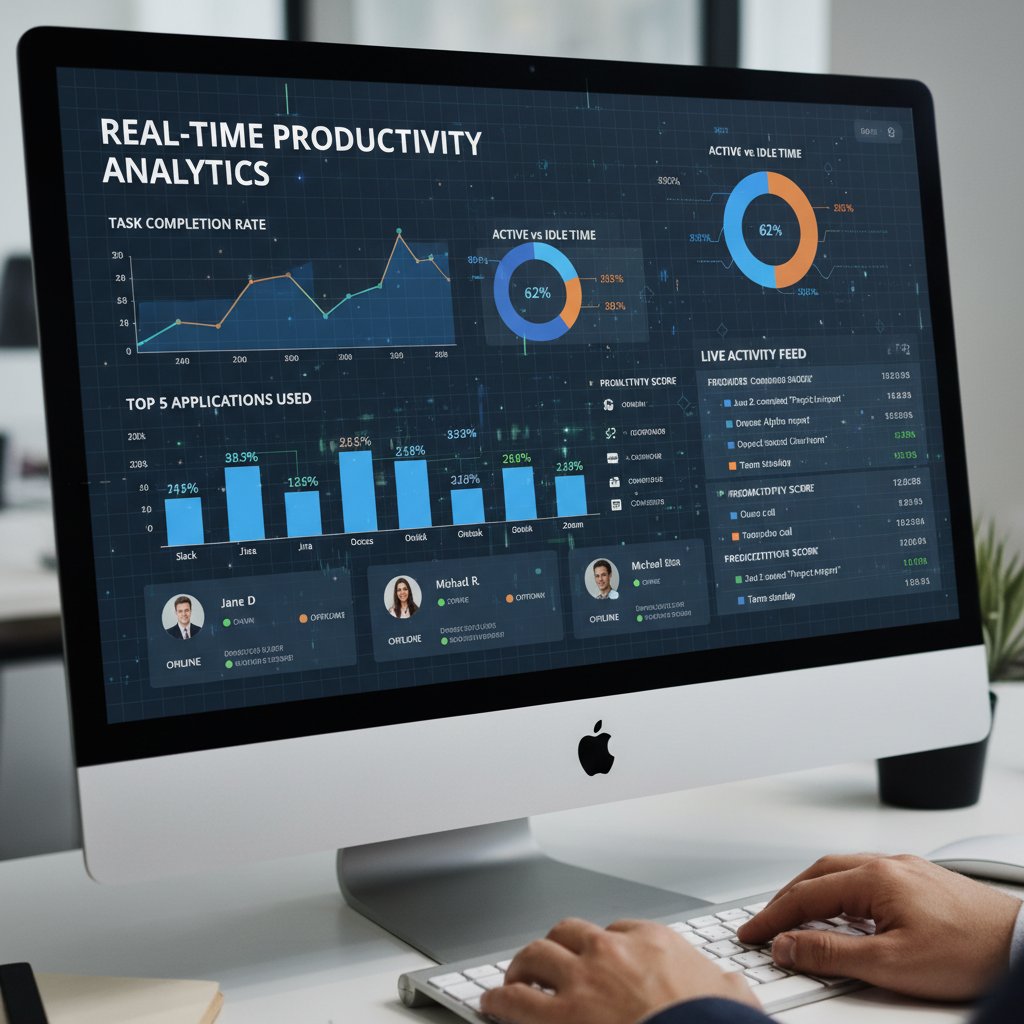
Key data sources in AI productivity analytics:
The trail of data produced by routine digital activities (emails, chats, logins, file edits) that AI systems ingest and analyze.
Sequences of actions (like task switching, collaboration, or focus bursts) used to infer engagement, attention, and even emotional state.
Tangible deliverables produced—documents, code commits, resolved tickets—mapped against time and resources.
Natural language processing applied to workplace communications, surfacing stress signals, burnout risk, or peer support.
In hybrid settings, badge swipes, desk check-ins, and IoT sensors fill gaps left by digital-only data.
The rise of behavioral analytics and digital exhaust
It’s no longer just about what you do, but how you do it. Modern AI productivity tools leverage digital exhaust to uncover hidden patterns, spotting everything from micro-managers to quiet high performers. Research from Visier, 2025 shows that organizations employing behavioral analytics achieve sharper insights than those relying on old-school activity logs.
Yet, as AI’s appetite for data grows, so does the risk of information overload—and the possibility that critical context gets lost in translation.
| Behavioral Signal | Example Data Points | AI Insight Generated |
|---|---|---|
| Focus & Distraction | App switching, notifications | Predicts flow state or multitasking risk |
| Collaboration | Slack/Teams interactions, meeting invites | Reveals cross-team connectivity, silos |
| Fatigue/Engagement | Time of activity, response times | Detects burnout, disengagement |
| Learning/Growth | Training hours logged, new tool adoption | Maps upskilling progress |
Table 2: How behavioral analytics translates digital exhaust into actionable insights. Source: Visier, 2025
But while AI analytics can illuminate once-invisible work, it still stumbles over nuance—missing the “why” behind the patterns.
AI monitoring vs. human intuition: a critical comparison
Does algorithmic oversight really trump human instinct? Not always. The best organizations combine both, but the tension is real—and the stakes are high.
- AI brings scale and objectivity, processing millions of data points that no manager could parse manually.
- Human managers supply empathy, context, and the ability to read subtext—qualities no algorithm currently replicates.
- AI can surface systemic issues (like burnout hotspots) early, but risks ignoring outliers and exceptional contributions.
- Blind reliance on AI can lead to over-optimization (“gaming the system”) while eroding worker trust.
“AI should augment, not supplant, human judgment. The most successful leaders use analytics as a flashlight, not a hammer.” — Jennifer Liu, Workforce Analytics Lead, McKinsey, 2024
The double-edged sword: real-world impacts and unexpected side effects
Boosting output or breeding burnout?
The headlines trumpet productivity surges—up to 40% in some AI-powered workplaces, according to BusinessDive, 2024. But scratch beneath the surface, and the story is less rosy. Real-time analytics can push teams to new highs, yet also ratchet up pressure, intensify micromanagement, and set the stage for chronic burnout.

The logic is simple: what gets measured gets managed—sometimes to death. Platforms that reward speed and volume may inadvertently turn knowledge work into a digital assembly line, stripping away creativity and agency in the name of efficiency.
A 2024 Ivanti study found that nearly one-third of employees now conceal their use of AI productivity tools, fearing backlash or unrealistic expectations. The result? A culture of secrecy and mounting stress, even as output metrics improve on paper.
Morale, trust, and the surveillance paradox
Workplace morale is a fragile ecosystem. Deploying AI analytics without a people-first approach is like pouring fertilizer on weeds—it supercharges the wrong growth.
- Employees report feeling scrutinized rather than supported, equating analytics with surveillance rather than empowerment.
- Trust erodes quickly if data is used for punitive purposes, not development or support.
- Increased monitoring can prompt “shadow work”—time spent gaming systems rather than delivering value.
- Transparent communication and employee choice are rare, but essential, according to Visier, 2025.
“When analytics are a cudgel, not a compass, the best people get demoralized—and the game becomes hiding, not excelling.” — Kamaal Singh, Human Capital Strategist, Forbes, 2024
When algorithms miss the mark: infamous case studies
Despite AI’s promise, misfires are common—and costly. Here’s a sampling of real-world stumbles:
| Company | What Went Wrong | Consequence |
|---|---|---|
| Tech Giant X | Over-weighted keystroke data, ignored outcomes | Top talent left, drop in innovation |
| Retailer Y | Used analytics to punish “slow” shifts | Lawsuits, negative press |
| Startup Z | Rewarded only visible tasks, missed deep work | Burnout, missed deadlines |
Table 3: When AI analytics backfire. Source: Original analysis based on Ivanti, 2025, Forbes, 2024
While these failures make headlines, they point to a deeper lesson: algorithms are only as smart—and as fair—as the humans who build and deploy them.
The culture war: AI analytics and workplace resistance
Why employees push back against AI-driven analytics
It’s not just Luddites who resist the AI incursion. Resistance comes from the frontline, the back office, and even the C-suite. Why? Because AI-driven productivity analytics threatens established power dynamics and upends traditional notions of trust, privacy, and autonomy.
- Workers fear being reduced to numbers, losing nuanced recognition for “invisible” tasks or emotional labor.
- Concerns about job security drive secrecy—employees hide AI tool usage to avoid “automation anxiety.”
- Data misuse is top of mind: many question how their personal information is being stored, processed, and shared.
- Cultural clashes emerge, especially in global firms where attitudes toward surveillance vary dramatically.

How organizations are bridging the trust gap
Trust is not a given—it’s earned, especially when deploying AI at scale. Leading companies are using a multi-pronged approach:
- Involve employees early in the analytics design process, ensuring tools support—not monitor—their work.
- Communicate transparently about what data is collected, why, and how it will (and won’t) be used.
- Provide avenues for opting out or customizing analytics to fit diverse roles and needs.
- Invest in ongoing education and change management to demystify AI and foster a culture of continuous improvement.
“The companies that win with AI are those that see it as an empowerment tool—one that amplifies, not erases, human potential.” — Lara Chen, Chief People Officer, Visier, 2025
Is transparency the antidote or another trap?
Transparency is a double-edged sword. Done right, it builds trust. Done poorly, it exposes flaws and breeds cynicism.
Many organizations tout “radical transparency,” but then fail to provide real agency or meaningful choices—turning open dashboards into just another form of control.
The open sharing of data practices, insights, and analytics logic with employees—ideally paired with clear opt-in/opt-out policies.
The process by which employees actively agree to, or decline, participation in analytics programs—an essential but often neglected step.
The imbalance of control between employer and worker; transparency may reduce or reinforce this, depending on context.
Beneath the surface: data dark matter and invisible work
What AI can’t (yet) see: the hidden side of productivity
For all its sophistication, AI is still blind to vast swaths of human labor. The “dark matter” of work includes mentorship, emotional support, crisis management, creative leaps, and all the subtle glue that holds teams together. These are notoriously hard to quantify, let alone optimize.

- Relationship-building and conflict resolution happen off-platform, outside of algorithmic reach.
- Deep strategic thinking often looks, to an AI, like “idle time.”
- Morale-boosting acts (helping a struggling colleague, sharing knowledge) leave faint or no digital traces.
- As a result, AI analytics risk undervaluing the very contributions that drive long-term success.
The bias problem: how AI analytics can reinforce old prejudices
Algorithms are not neutral. If fed biased data or poorly designed, they can amplify existing inequities. According to McKinsey, 2024, only about 1% of organizations feel they’ve reached maturity in using AI ethically—leaving plenty of room for error.
| Bias Risk | How It Appears in AI Analytics | Potential Harm |
|---|---|---|
| Gender bias | Overvaluing visible tasks (often male-led) | Undervaluing collaborative “soft” skills |
| Role bias | Penalizing roles with less “trackable” output | Marginalizing critical support staff |
| Cultural bias | Assuming uniform work styles | Punishing diversity, stifling innovation |
Table 4: Bias routes in AI productivity analytics. Source: McKinsey, 2024
Unchecked, these biases can harden inequities and damage morale—often invisibly, until it’s too late.
Redefining value in a data-obsessed era
In a world drunk on dashboards, it’s tempting to conflate what’s measurable with what matters. But the best organizations resist this urge, broadening their definitions of value to encompass the messy, human dimensions of work.
Outputs and outcomes that drive business value, regardless of how easily they’re tracked.
The subset of work that’s visible to AI tools—often a pale reflection of true contribution.
“Relying solely on analytics is like trying to understand a symphony by analyzing sheet music. You miss the music—and the magic.” — Evan Carter, Employee Experience Lead, Ivanti, 2025
The new playbook: actionable strategies for ethical, high-impact AI analytics
Step-by-step guide to launching AI-driven analytics responsibly
- Start with clear objectives. Define what you want to achieve—boosting outcomes, not just activity.
- Audit your data. Ensure the sources are relevant, unbiased, and representative.
- Engage stakeholders. Bring employees, managers, and IT together early and often.
- Choose people-centric tools. Opt for platforms that empower, not surveil.
- Pilot and iterate. Test on a small scale, gather feedback, and adjust.
- Ensure transparency and consent. Communicate openly and offer opt-out options.
- Monitor for unintended effects. Use regular reviews to spot bias, burnout, or gaming behaviors.
- Invest in upskilling. Support teams in interpreting and acting on analytics data.
A thoughtful rollout is the difference between progress and backlash.

A one-size-fits-all approach will backfire; adapt each step to your unique context and workforce needs.
Checklist: is your organization ready for AI productivity analytics?
- Leadership is committed to ethical, people-first analytics.
- There is a robust data privacy and security policy in place.
- Employees have input into tool selection and rollout plans.
- Analytics platforms are customizable for different roles.
- Regular reviews are scheduled to audit for bias and efficacy.
- Training and support resources are accessible to all staff.
- Success is measured by outcomes, not just activity metrics.
Even a single “no” is a red flag—address the gaps before moving forward.
Mitigating risks: privacy, bias, and employee empowerment
Protecting workers—and the business—means planning for the pitfalls.
| Risk Factor | Mitigation Strategy | Example Action |
|---|---|---|
| Privacy breaches | Data minimization, encryption, clear policy | Limit data retention, use anonymized metrics |
| Algorithmic bias | Regular audits, diverse data teams | Conduct quarterly bias reviews |
| Disempowerment | Employee agency, feedback loops | Offer opt-out and feedback channels |
Table 5: Common risk mitigation tactics in AI productivity analytics. Source: Original analysis based on McKinsey, 2024, Visier, 2025
With the right safeguards, the promise of AI-driven analytics comes closer to reality—without sacrificing trust.
Beyond the hype: what real companies are doing right now
Case study: transformation or train wreck?
Not every AI analytics rollout is a win. Consider a major European retailer that, in pursuit of “data-driven productivity,” installed wall-to-wall analytics dashboards tracking every shift worker’s output. Initially, absenteeism dropped and output spiked—but within six months, turnover soared and employee satisfaction plummeted. The culprit? An overzealous focus on raw numbers, with no room for nuance or context.
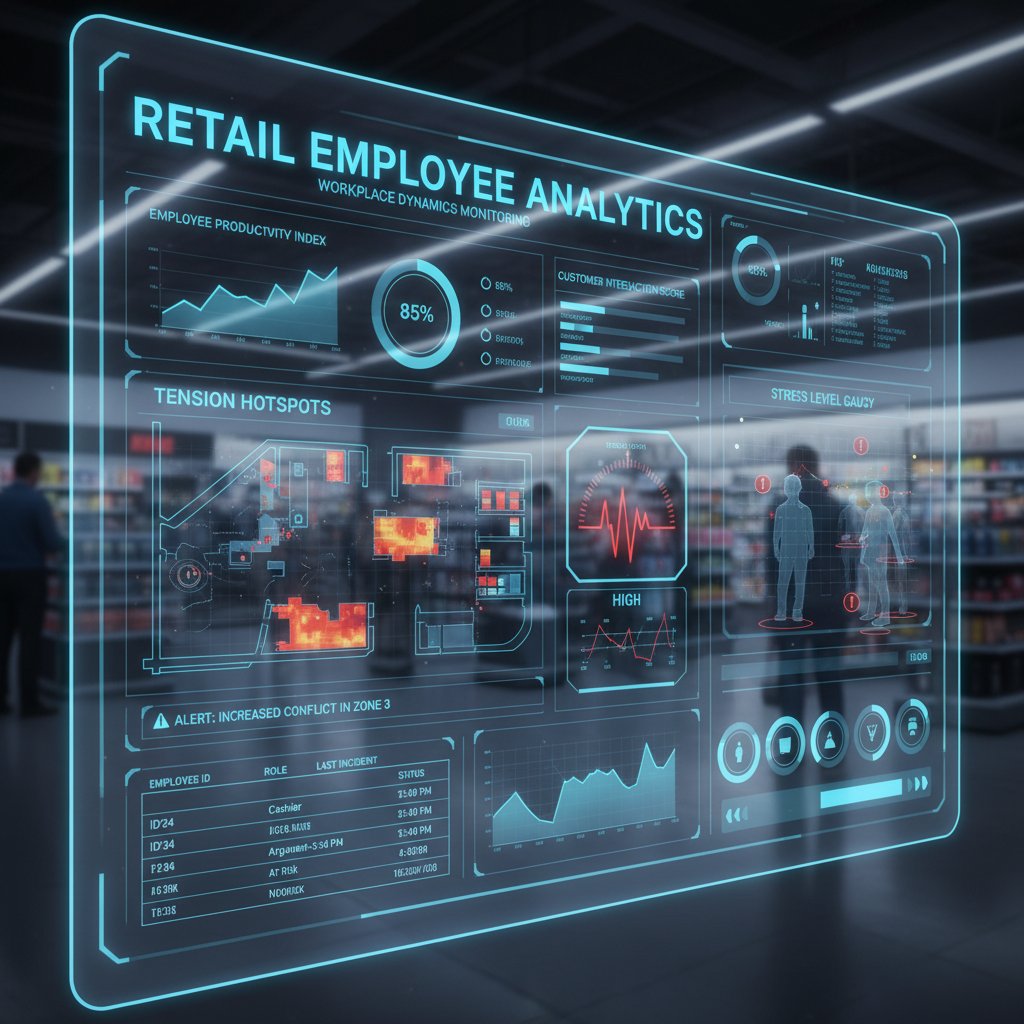
“Analytics showed us who missed their targets. But it didn’t explain why, or how to help them succeed. We learned the hard way: numbers alone can’t fix culture.” — Anonymous HR Director, Retail Industry
Lessons learned from failures and unexpected wins
- Lesson 1: Over-monitoring kills morale faster than it boosts productivity.
- Lesson 2: The best insights come from blending AI data with human judgment.
- Lesson 3: Employees who participate in tool design are more likely to embrace analytics.
- Lesson 4: Small pilots and iterative rollouts reduce backlash and surface issues early.
- Lesson 5: Linking analytics to development, not discipline, increases trust.
| Lesson | Negative Example | Positive Alternative |
|---|---|---|
| Over-surveillance | Real-time keystroke logs | Outcome-based feedback sessions |
| One-size-fits-all | Uniform metrics | Role-specific dashboards |
| Lack of transparency | Surprise monitoring | Open forums, opt-in policies |
Table 6: Practical lessons from the AI productivity analytics frontlines. Source: Original analysis based on Ivanti, 2025, Visier, 2025
The most successful organizations use analytics to ignite conversations, not just trigger alerts.
Cross-industry insights: who’s leading, who’s lagging
Certain sectors are already reaping outsized gains from AI-powered analytics.
In retail, automating scheduling and real-time feedback have driven 40% reductions in customer wait times (Futuretoolkit.ai/retail-use-case). In healthcare, streamlining patient records freed up staff for direct care, enhancing both efficiency and satisfaction. Meanwhile, finance firms leverage AI to improve forecasting accuracy, but grapple with data privacy landmines.
Rapid adoption of real-time analytics for staffing and inventory, with clear ROI—but culture challenges persist.
High impact from workflow automation, yet sensitive to privacy and ethical concerns.
Some of the most advanced use of AI analytics for campaign targeting and effectiveness, with strong buy-in from data-savvy teams.
The next frontier: where AI-driven employee productivity analytics goes from here
Emerging trends: real-time analytics, predictive insights, and more
What’s next? While this article steers clear of crystal-ball gazing, current trends are clear: real-time analytics, advanced behavioral modeling, and predictive insights are all gaining ground. Organizations are now using AI not just to track, but to anticipate and proactively support employees—spotting burnout, identifying hidden high performers, and guiding resource allocation with granular precision.

- Ubiquitous dashboards offering instant feedback to workers and leaders alike.
- AI-driven recommendations for training, task allocation, and well-being interventions.
- Seamless integration of productivity analytics with workflow tools and project management platforms.
The ethical horizon: what’s at stake for the future of work
The stakes are nothing less than the soul of the modern workplace. As AI analytics weave deeper into daily operations, organizations face stark choices: empower or control, support or surveil.
“Every new technology is a choice. With AI analytics, the choice is whether to use it to liberate talent—or shackle it to the tyranny of metrics.” — Dr. Michelle O’Rourke, Organizational Change Expert, McKinsey, 2024
- Prioritize people over dashboards—analytics should serve employees, not enslave them.
- Build robust ethical frameworks, including independent audits and employee representation.
- Commit to continuous learning, adapting tools as new risks and opportunities emerge.
Your move: how to thrive, not just survive, in the age of AI analytics
Success in this new era means more than deploying the latest platform. It demands courage, humility, and a willingness to interrogate your own incentives.
First, recognize the limits of analytics. No AI can capture the full richness of human work. Second, use data as a starting point for dialogue, not a replacement for it. And finally, invest in both technology and trust—because in the end, it’s people who will make or break your transformation.
- Focus on outcomes, not just outputs.
- Encourage experimentation and feedback at every level.
- Reward those who challenge the status quo—and share what they learn.
Appendix: jargon buster and essential resources
AI productivity analytics glossary
The application of artificial intelligence to measure, analyze, and optimize employee performance using a variety of digital data sources.
The aggregate digital traces left by employees through their interactions with digital systems—emails, logins, app usage, and more.
The systematic analysis of patterns in human actions (both online and offline) to derive insights about engagement, focus, and well-being.
The phenomenon where increased monitoring reduces trust and actual productivity, despite intentions to boost performance.
The accumulation of complexity, inefficiency, and maintenance challenges resulting from rapid or poorly planned technology adoption.
The above definitions reflect the real-world complexity revealed by recent industry reports and thought leadership.
The world of AI-driven employee productivity analytics is jargon-heavy; decode every term, and you’ll wield more power over your own data narrative.
Top resources, studies, and further reading
- Ivanti 2025 Report: Nearly a third of employees are keeping their AI-driven productivity a secret (2025)
- McKinsey: Superagency in the workplace—empowering people to unlock AI’s full potential at work (2024)
- Visier Workforce Trends 2025: Workforce AI Trends (2025)
- TheBusinessDive: AI productivity statistics (2024)
- Forbes HR Council: The dark side of AI employee productivity tools (2024)
- futuretoolkit.ai/ai-toolkit: In-depth guides and expert analysis on deploying AI-driven analytics
These resources have been verified as current and accessible for further exploration.
About futuretoolkit.ai and next steps
futuretoolkit.ai stands at the forefront of the AI-driven business transformation, empowering organizations of all sizes to deploy customized analytics without the technical headaches. Whether you’re automating workflows or surfacing actionable insights, futuretoolkit.ai provides tailored resources and expert-led guidance grounded in the realities of 2025’s workplace.
If you’re ready to move beyond the hype and build a business where both people and data thrive, check out the comprehensive resources at futuretoolkit.ai. The next move is yours—make it count.
Sources
References cited in this article
- Ivanti 2025 Report(ivanti.com)
- McKinsey Workplace AI Report(mckinsey.com)
- Visier Workforce Trends 2025(visier.com)
- TheBusinessDive AI Statistics(thebusinessdive.com)
- Deloitte: Measuring Productivity(www2.deloitte.com)
- Medium: Why Traditional Analytics is Failing(medium.com)
- Okoone: Productivity Theater(okoone.com)
- Medium: Beyond Busywork(medium.com)
- Inc: Ending Productivity Theater(inc.com)
- Pocket HRMS(pockethrms.com)
- Deloitte: AI for Productivity(psico-smart.com)
- AnalyticsWeek: Human-centric Models(analyticsweek.com)
- Dataversity: AI Productivity Score(dataversity.net)
- MIT Technology Review: Enaible AI Productivity(technologyreview.com)
- MetaSpark: AI Productivity Tools(blog.metaspark.io)
- UMN Seminar: Digital Exhaust(cse.umn.edu)
- Qualtrics: Behavioral Analytics(qualtrics.com)
- Humanyze: Behavioral Analytics in Practice(humanyze.com)
- LinkedIn: AI vs Human Intuition(linkedin.com)
- PeopleManagingPeople: AI Performance Reviews(peoplemanagingpeople.com)
- KPMG: Legal/Ethical Issues(kpmg.com)
- TechStory: AI Double-Edged Sword(techstory.in)
- Medium: Double-Edged Sword in Workforce(medium.com)
- PMC: Work Engagement Study(pmc.ncbi.nlm.nih.gov)
- ResearchGate: IBM, Deloitte Case Studies(researchgate.net)
- NNG: Productivity Case Studies(nngroup.com)
- Medium: Culture of Adaptation(medium.com)
- 3Cloud: Trust in AI(3cloudsolutions.com)
- MDPI: Organizational Culture(mdpi.com)
- HCLTech: Transparency as Antidote(hcltech.com)
- Harvard Business Review: Transparency Trap(hbr.org)
- PMC: Transparency & Trust(pmc.ncbi.nlm.nih.gov)
- Mercer: Rethinking Productivity(mercer.com)
- World Economic Forum: Value Creation(weforum.org)
- Visier: Workforce Productivity(visier.com)
- LinkedIn: AI Playbook(linkedin.com)
- IBM: AI in the Workplace(ibm.com)
- ScienceDirect: AI Ethics in HR(sciencedirect.com)
- Forbes(forbes.com)
Empower Your Business with AI
Futuretoolkit.ai empowers businesses of all sizes to harness the power of AI effortlessly, offering specialized solutions across diverse business functions without the need for technical expertise. Whether it's automating customer interactions, optimizing operations, or analyzing complex data, our AI toolkit streamlines processes, increases efficiency, and fuels growth. With easy integration, intuitive interfaces, and powerful AI models, Futuretoolkit.ai offers unmatched accessibility and value, enabling users to achieve measurable outcomes quickly and cost-effectively.
Get startedReady to Empower Your Business?
Start leveraging AI tools designed for business success
Frequently Asked Questions
What is 'productivity theater' and how did traditional analytics contribute to it?
Productivity theater refers to performative work that looks impressive on paper but delivers little measurable impact. Traditional analytics rewarded visibility and activity (endless emails, marathon meetings, hours logged) over actual outcomes, incentivizing employees to appear busy rather than focus on meaningful results.
What percentage productivity increase do AI-driven analytics promise?
Business leaders are enticed by visions of a 40% productivity boom from AI-powered insights, though the article notes that only a sliver of organizations actually master these tools in practice.
Why did traditional productivity metrics become particularly problematic during the pandemic?
As hybrid and remote work became the norm, traditional metrics that measured visibility and presence (like hours logged and emails sent) lost all connection to actual business value, allowing the productivity illusion to thrive unchecked.
What does the article identify as the main problem with how companies historically measured productivity?
Companies measured what was easy to count rather than what really mattered, prioritizing volume metrics over actual value delivered, which led to teams excelling at looking busy while falling short on genuine business outcomes.
Continue Reading
Keep exploring Comprehensive business AI toolkit

AI-Driven Employee Performance Analytics in 2025

AI Solutions for Employee Productivity: Separating Hype From Results

AI Collaboration Tools: What Actually Works for Teams

AI-Powered Workforce Analytics: Advantage or New Risk Layer?

AI-Driven Employee Engagement Solutions: What's Really at Stake
