


AI-Powered Organizational Analytics and the Real Power Shifts Ahead
Written with AI assistance under our editorial guidelines
AI-powered organizational analytics uses predictive models, natural language processing, and real-time adaptive systems to transform how organizations make decisions. However, success requires navigating data chaos, skills gaps, and ethical challenges—not just deploying technology. Only organizations that are bold, informed, and adaptable will truly gain competitive advantage.
Peek behind the curtain of AI-powered organizational analytics in 2025, and what you find isn’t your standard tech-utopia narrative. Sure, every headline screams about AI’s power to transform, disrupt, and “revolutionize” business. But scratch the surface and you’ll discover a landscape where hype collides with harsh reality, where promises of AI-driven super-intelligence are undermined by data chaos, skills gaps, and ethical landmines. This isn’t a story of plug-and-play magic; it’s a gritty, high-stakes journey where only the bold, informed, and relentlessly adaptive survive. Whether you’re a CEO, a data skeptic, or the analyst on the front line, this is your deep dive into what organizational analytics powered by AI really means right now. Expect hard truths, hidden dangers, and the kind of next-level strategies that separate true leaders from the pack. Welcome to the edge.
What is AI-powered organizational analytics—beyond the hype
Defining the new era of analytics
AI-powered organizational analytics isn’t just legacy business intelligence with a new interface. It’s the collision of advanced algorithms, deep data, and business decision-making—on steroids. Old-school BI tools aggregated and visualized past data, but AI analytics harness predictive models, natural language processing, and even real-time adaptive systems. Think human intuition, scaled and sharpened by machine speed and pattern detection, accessible not just to data scientists, but to leaders across every business function.

Here’s a breakdown of the new analytics lexicon:
Uses historical and current data with machine learning to forecast future trends, behaviors, or outcomes. For example, predicting which customers will churn or when supply bottlenecks will occur. Unlike classic “rearview mirror” BI, predictive analytics drives proactive business moves.
AI’s way of turning messy, unstructured human language (emails, support tickets, voice notes) into actionable analytics. Imagine an algorithm that reads thousands of employee surveys and extracts actionable sentiment trends for HR in minutes.
Centralized repository storing massive volumes of raw, structured and unstructured data. Unlike rigid data warehouses, lakes empower AI models to draw from a vast, messy sea of information, essential for deep learning and advanced analytics.
With AI organizational analytics, the promise is actionable insights delivered in the time it takes to grab a coffee. But this is just the theory—reality is more complicated.
The hype vs. the hard reality
Vendors love painting a picture where AI analytics is plug-and-play, requiring zero technical skill and promising instant ROI. “Just connect your data, and the magic happens!” The reality? Most organizations hit a wall when messy or ungoverned data, legacy systems, or a lack of analytics culture sabotage even the best-intentioned AI projects. As Gartner reports, 60% of AI projects fail because the underlying data is unfit or ungoverned. The technical debt from rushed implementation or overpromised benefits can linger for years.
"Everyone’s selling the AI dream—few talk about the technical debt."
— Jordan, Senior Data Architect (quote based on industry findings)
The bottom line: AI-powered analytics isn’t a button you press. It’s a discipline you build.
How AI is reshaping the analytics landscape
The shift from static dashboards to dynamic, learning analytics has upended how organizations perceive data’s value. AI-driven analytics leverages deep learning to uncover patterns invisible to humans, enables natural language queries (“Show me sales risks by region”), and automates workflows previously chained to spreadsheets. This isn’t just an upgrade—it’s a paradigm shift.
| Year | Technology Focus | Organizational Impact | Source |
|---|---|---|---|
| 2000s | Legacy BI tools, SQL reporting | Historical data, static dashboards | [Original analysis, 2025] |
| 2010-2015 | Visualization, cloud BI | Democratized dashboards, data silos | [Original analysis, 2025] |
| 2016-2019 | Machine learning pilots | Predictive use cases emerge | [Original analysis, 2025] |
| 2020-2022 | NLP, automation, data lakes | Real-time analytics, process automation | [Original analysis, 2025] |
| 2023-2025 | Full-stack AI analytics, explainable AI | Organization-wide transformation, ethics & compliance | [Original analysis, 2025] |
Table 1: Evolution of AI-powered organizational analytics
Source: Original analysis based on Gartner, Alteryx, and PwC reports (2025)
The dark side: Myths, failures, and what no one tells you
Top myths debunked
There’s no shortage of fairy tales swirling around AI-powered organizational analytics. Here’s the reality check.
- AI is plug-and-play. In truth, AI implementation is a marathon, not a sprint. Expect months spent cleaning data and refining processes.
- Instant ROI. While some organizations see quick wins, most require significant iteration before AI analytics pays off.
- AI eliminates jobs. More often, AI shifts jobs—routine, manual roles may disappear, but demand for data-savvy, critical thinkers explodes.
- All-in-one AI solutions exist. No two organizations have the same data DNA. Off-the-shelf rarely means out-of-the-box success.
- Bias-free by design. Algorithms inherit bias from data and design choices. Without vigilance, bias multiplies.
- Compliance is automatic. Regulatory frameworks (GDPR, CCPA) demand rigorous governance—no AI tool can guarantee compliance alone.
- Legacy systems don’t matter. Integration headaches abound. Ignoring legacy tech is the fastest route to failure.
Red flags to watch out for when buying AI analytics:
- Vague claims of “AI-powered” with no details
- Lack of transparency in algorithms or data sources
- No clear path for integration with existing systems
- One-size-fits-all pricing or functionality
- Minimal support for upskilling or training
- No mention of bias mitigation or ethical safeguards
- Absence of real-world, case-based references
Epic fails and hard lessons
Not every organization emerges as an AI analytics hero. Many have poured millions into failed pilots that never scaled. According to a Gartner study, 60% of AI projects are abandoned due to lack of AI-ready data or failure to integrate with existing business processes. The casualties aren’t just financial; they’re cultural and emotional as well.
"We lost six months chasing an AI solution that never fit our culture."
— Casey, Change Management Lead (quote, reflecting common pitfalls cited in CDO Magazine, 2025)
One company’s quest to automate HR analytics collapsed when it turned out their data was scattered across disconnected spreadsheets, with no common language or standards. Another saw predictive sales models flop because frontline managers distrusted the “black box” logic and defaulted to gut decisions. These stories offer a caution: without foundational investment in data quality, culture, and process, AI is just another expensive experiment.
Hidden risks and ethical minefields
AI analytics promises insight, but it comes with new dangers. Bias can hide in training data—intensifying discrimination. Algorithmic opacity makes it difficult for non-technical leaders to challenge results. Data privacy stakes have never been higher, with regulatory scrutiny intensifying worldwide. Overreliance on automation can blindside organizations to human nuance and context.

| Risk Category | AI-powered Analytics | Traditional Analytics |
|---|---|---|
| Data bias | High (model-dependent) | Medium (human/report bias) |
| Algorithmic opacity | Significant | Low |
| Compliance risk | High (GDPR, CCPA, etc.) | Medium |
| Integration complexity | Significant | Medium |
| Human error | Lower (automation) | High (manual steps) |
| Innovation potential | High (adaptive models) | Low (static reports) |
Table 2: Risk comparison—AI-powered vs. traditional analytics
Source: Original analysis based on Gartner, Alteryx, and PwC reports (2025)
Inside the machine: How AI analytics really works
The tech under the hood
What truly powers organizational analytics in the AI era? It’s not magic—it’s a mesh of machine learning, natural language processing, data pipelines, and ongoing model training. Machine learning models digest vast volumes of data, learning to spot patterns and anomalies. NLP engines convert unstructured text into variables for analysis. Robust data pipelines ensure that data flows cleanly from source to insight, while model training cycles continuously refine outputs.
Algorithms that “learn” from historical and real-time data to make predictions, classifications, or recommendations. Example: Predicting which invoices will be paid late based on transaction patterns.
The infrastructure that moves, transforms, and cleanses data from various systems into the AI’s analytical engine. Without clean pipelines, even the smartest models fail.
The iterative process of feeding data into algorithms, tweaking parameters, and validating outputs. Essential for moving from pilot to production.
Understanding these technical elements gives business leaders a reality check: you don’t need to code, but you do need to ask the right questions.
Why data quality still decides everything
Here’s the brutal truth: AI is only as powerful as the data you feed it. Dirty, inconsistent, or incomplete data will sabotage outcomes no matter how sophisticated the model. According to Gartner, 60% of AI projects are abandoned because the data isn’t AI-ready—unstructured, siloed, or plagued by “dark data” (information collected but never used). The message? Data governance isn’t glamourous, but it’s the linchpin of real success.
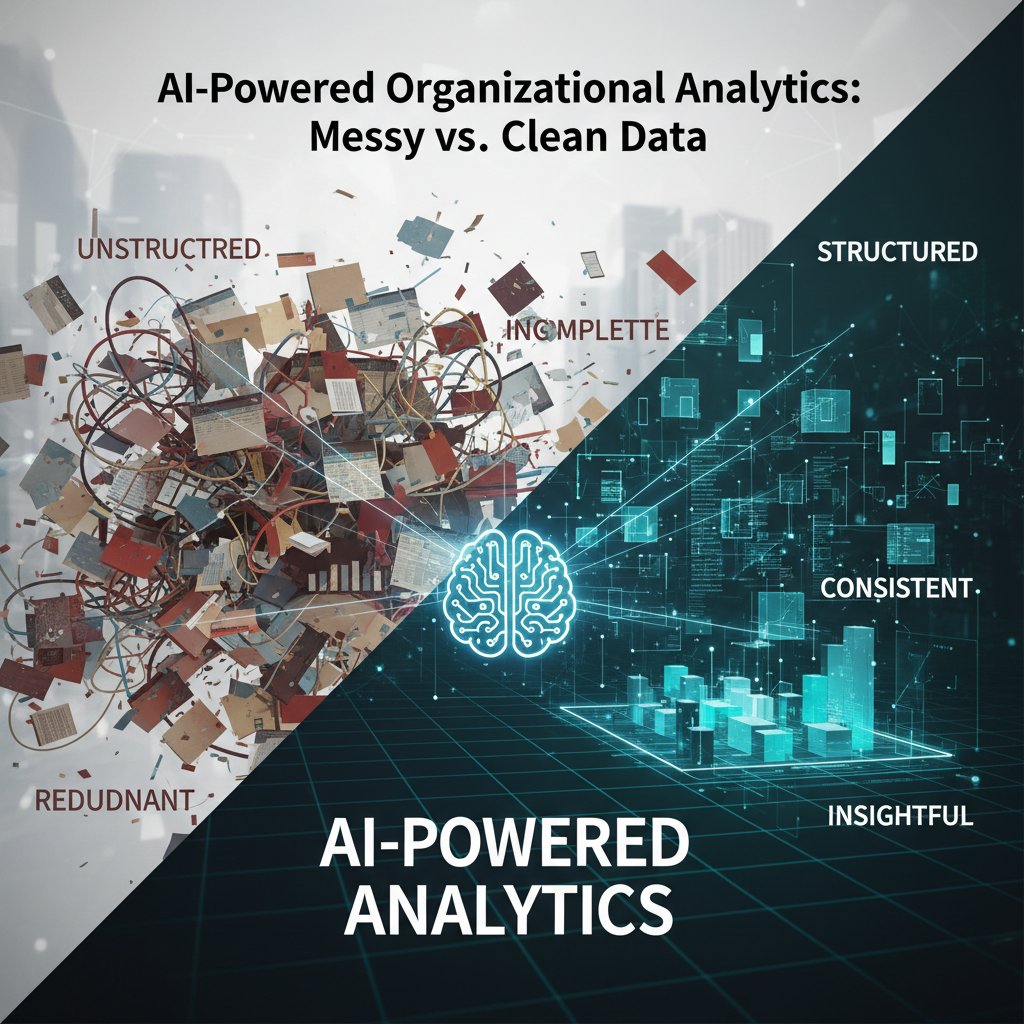
Organizations that treat data as a strategic asset—investing in classification, access control, and ongoing quality checks—are the ones whose AI initiatives actually deliver.
Feature showdown: AI toolkits vs. legacy analytics
Modern AI toolkits like futuretoolkit.ai are designed to streamline the AI analytics journey: no technical gatekeeping, rapid deployment, and native support for messy, real-world data. Legacy analytics may still have a role for historical reporting, but when it comes to predictive, adaptive decision-making, the edge is clear.
| Feature | AI-powered Toolkits (e.g., futuretoolkit.ai) | Legacy Analytics Tools |
|---|---|---|
| Technical skill required | None to low | Moderate to high |
| Data integration | Rapid, flexible | Rigid, slow |
| Real-time insights | Yes | Rare |
| Natural language interface | Common | Rare |
| Predictive/prescriptive analytics | Yes | Limited |
| Scalability | High | Limited |
| Transparency of AI/ML | Increasingly standard | Not applicable |
| Ongoing self-improvement | Yes (learning models) | No |
Table 3: Feature comparison—AI toolkits vs. legacy analytics
Source: Original analysis based on solution documentation (2025)
Real-world impact: Case studies and surprising applications
Cross-industry breakthroughs
AI-powered organizational analytics isn’t confined to tech giants or big finance. Today, creative agencies use AI to analyze campaign performance and client sentiment in real time, adapting strategies mid-flight. Nonprofits leverage predictive analytics to optimize fundraising and volunteer engagement, while manufacturing firms deploy AI models to detect equipment failures before costly breakdowns. Even local governments are using AI analytics to streamline service delivery and measure community impact.

This cross-industry adoption underscores a key lesson: AI analytics is no longer exclusive or experimental—it’s becoming a core business competency.
The ugly, the bad, and the good: Outcome stories
Let’s get brutally honest about the spectrum of outcomes.
- The ugly: A regional retailer rushed into AI analytics, believing it would instantly boost revenue. Their customer data was riddled with duplicates and gaps. The models failed, and trust in analytics plummeted.
- The bad: A global nonprofit piloted AI for donor targeting but underestimated the cultural shift required. Old habits died hard, and only modest improvements followed.
- The good: A mid-sized healthcare provider invested in data readiness and staff upskilling before deploying AI analytics. The result: 25% drop in administrative workload and measurable improvements in patient satisfaction (see CDO Magazine, 2025).
"AI analytics finally showed us what we were missing—but it didn’t fix broken processes."
— Taylor, Transformation Lead (testimonial reflecting industry reality)
The takeaway? Tools matter, but culture, data, and process are what make or break outcomes.
How the workplace is changing
AI-powered analytics is fundamentally reshaping the workplace. The skills gap is real: demand surges for data literacy, critical thinking, and algorithmic skepticism. Power dynamics shift, with decision-making democratized (and sometimes decentralized) as line managers get direct access to insights once hoarded by IT. Above all, the culture of experimentation—testing, learning, and adapting—becomes the new normal.
Hidden benefits of AI-powered organizational analytics experts won’t tell you:
- Frees up humans for creative, strategic tasks instead of grunt work
- Surfaces silent trends hiding in mountains of unstructured data
- Strengthens cross-functional collaboration by breaking down data silos
- Improves employee engagement through data-driven transparency
- Accelerates response to emerging risks and opportunities
- Reduces political bias in decision-making
- Drives continuous process improvement via real-time feedback loops
- Creates a culture where questions (not just answers) drive progress
The edge: Strategies, hacks, and next-level moves
How to spot real value (and avoid AI-washing)
Let’s get tactical: separating real innovation from marketing smoke and mirrors. The best organizations interrogate vendors, demand transparency, and pilot relentlessly before scaling. They prioritize platforms with documented outcomes, robust support, and a commitment to upskilling.
Step-by-step guide to mastering AI-powered organizational analytics:
- Assess your data landscape. Inventory what you have and where it lives.
- Define clear, measurable business outcomes. Don’t chase AI for AI’s sake.
- Vet vendors for transparency and proven track record.
- Invest in foundational data governance.
- Start with a pilot—then iterate and expand.
- Upskill your teams, not just IT.
- Monitor for bias, compliance, and unintended consequences.
- Set up continuous feedback and improvement cycles.
- Scale only when you see real, measurable value.
- Keep challenging assumptions and adapting to change.
These steps aren’t just best practices—they’re survival strategies in a world of rapid change.
Unconventional uses that actually work
Think outside the box. AI analytics is being used to:
- Detect signs of employee burnout in internal chat logs
- Optimize office layouts based on badge swipe data
- Predict project bottlenecks from task management tools
- Analyze sentiment in customer support transcripts
- Uncover informal influencers in organizational networks
- Optimize resource allocation for hybrid/remote workforces
- Identify compliance risks from unstructured policy documents
Each use case underscores the adaptability—and unpredictability—of AI organizational analytics.
Checklist: Is your organization really ready?
Readiness isn’t just technical. It’s cultural, strategic, and operational.
Priority checklist for AI-powered organizational analytics implementation:
- Is your data accessible and clean?
- Do you have leadership buy-in and clear vision?
- Are compliance and security frameworks in place?
- Have you allocated resources for upskilling?
- Is there a plan for transparent communication across teams?
- Do you have champions to drive adoption?
- Are feedback loops embedded for learning and adjustment?
- Is there a contingency plan for failure?
If you can’t tick these boxes, pause before writing that next AI check.
Controversies, debates, and the future of trust in analytics
Algorithmic transparency and accountability
Algorithmic transparency isn’t just a buzzword—it’s a boardroom imperative. As organizations embed AI deeper into decision-making, the ability to interrogate AI logic, audit decision paths, and explain why a recommendation was made becomes a competitive advantage (and a compliance mandate). Current industry debates rage over standards for “explainability”—how much is enough, and who decides?

The winners? Organizations that demand clarity from their vendors and empower internal stakeholders to challenge AI-driven decisions.
Who owns the outcome? Power shifts and ethical dilemmas
Ownership and responsibility are blurring in the AI analytics age. When an algorithm flags a candidate as high-risk or automates a compliance process, who’s accountable for errors or bias? The human designer, the AI vendor, the executive who signed off? As AI augments or even replaces certain decision points, ethical dilemmas multiply.
"When AI makes the call, who carries the fallout?"
— Morgan, Organizational Ethicist (quote reflecting current debates)
Organizations must define clear lines of accountability—before a crisis hits.
The next frontier: Predictive org design and autonomous strategy
Today’s AI-powered analytics does more than inform dashboards—it shapes the very structure and strategy of organizations. Predictive org design tools crunch HR, market, and operational data to recommend new team configurations or resource allocations in real time. Autonomous strategy systems can adapt pricing, supply chains, or project priorities without waiting for quarterly reviews.

The promise is agility at machine speed. The challenge? Keeping human judgment and ethics front and center.
Implementation: Getting started without losing your mind (or your job)
The real cost of adoption (and how to sell it)
Adopting AI-powered organizational analytics is not just about buying software. Costs—visible and hidden—span technology, culture, compliance, and talent. The best organizations build a business case grounded in both risk mitigation and upside, measuring not just savings, but resilience and adaptability.
| Industry | Average Adoption Cost (USD) | Average ROI Year 1 (%) | Main Cost Drivers |
|---|---|---|---|
| Retail | $200,000 | 15 | Data integration, training |
| Healthcare | $350,000 | 20 | Compliance, data quality |
| Finance | $500,000 | 25 | Security, upskilling |
| Marketing | $150,000 | 18 | Campaign integration, analytics |
Table 4: Statistical summary of AI analytics adoption costs and ROI by industry (2025 data)
Source: Original analysis based on CDO Magazine, Gartner, and Forbes data (2025)
Building your AI analytics dream team
Forget the lone “data wizard” myth. Real success demands a cross-functional team: data scientists to build models, translators to bridge business and tech, skeptics to challenge assumptions, and change champions to drive adoption.

The most effective teams foster psychological safety, encourage dissent, and blend analytical rigor with a deep understanding of business context.
Pitfalls to dodge when rolling out AI analytics
Rollouts stumble on more than just technology. Common mistakes include underestimating data cleanup, ignoring change management, and overrelying on vendor promises.
Red flags to watch for:
- No clear data ownership or stewardship
- Skipping pilot testing phases
- Overlooking compliance or ethical reviews
- Insufficient training for end users
- Lack of ongoing monitoring and improvement cycles
- Failing to document and learn from mistakes
The toolkit: Must-have resources and how to pick the right one
How to choose your AI analytics stack
Selecting the right AI analytics stack is about more than bells and whistles. It’s about finding solutions that scale, offer transparency, and provide robust support.
Timeline of AI-powered organizational analytics evolution:
- Data warehouse adoption (2000s)
- Introduction of real-time dashboards (2010)
- First machine learning pilots (2015)
- Rise of NLP and unstructured data analytics (2017)
- Cloud-based, platform-centric AI tools (2020)
- Organizational-wide AI analytics rollouts (2023)
- Mainstreaming of explainable, responsible AI (2025)
Each milestone marks a leap in both potential and complexity.
Quick-reference: Questions to grill your vendor
Don’t get burned. Before signing, ask potential vendors:
- What is the source and lineage of your training data?
- How do you ensure algorithmic transparency?
- How is bias detected and mitigated?
- What are the integration requirements for our existing systems?
- What upskilling or onboarding support do you provide?
- How do you handle compliance with data privacy regulations?
- What is your policy on model evolution and version control?
- Can you share real-world case studies (with contacts) for similar organizations?
If the answers are vague, walk away.
Why futuretoolkit.ai is getting noticed
For organizations navigating the crowded, hype-prone world of AI-powered organizational analytics, futuretoolkit.ai stands out as a credible resource. Its focus on accessibility, robust AI models, and tailored business solutions—without demanding technical expertise—makes it a valuable starting point for leaders seeking real impact.
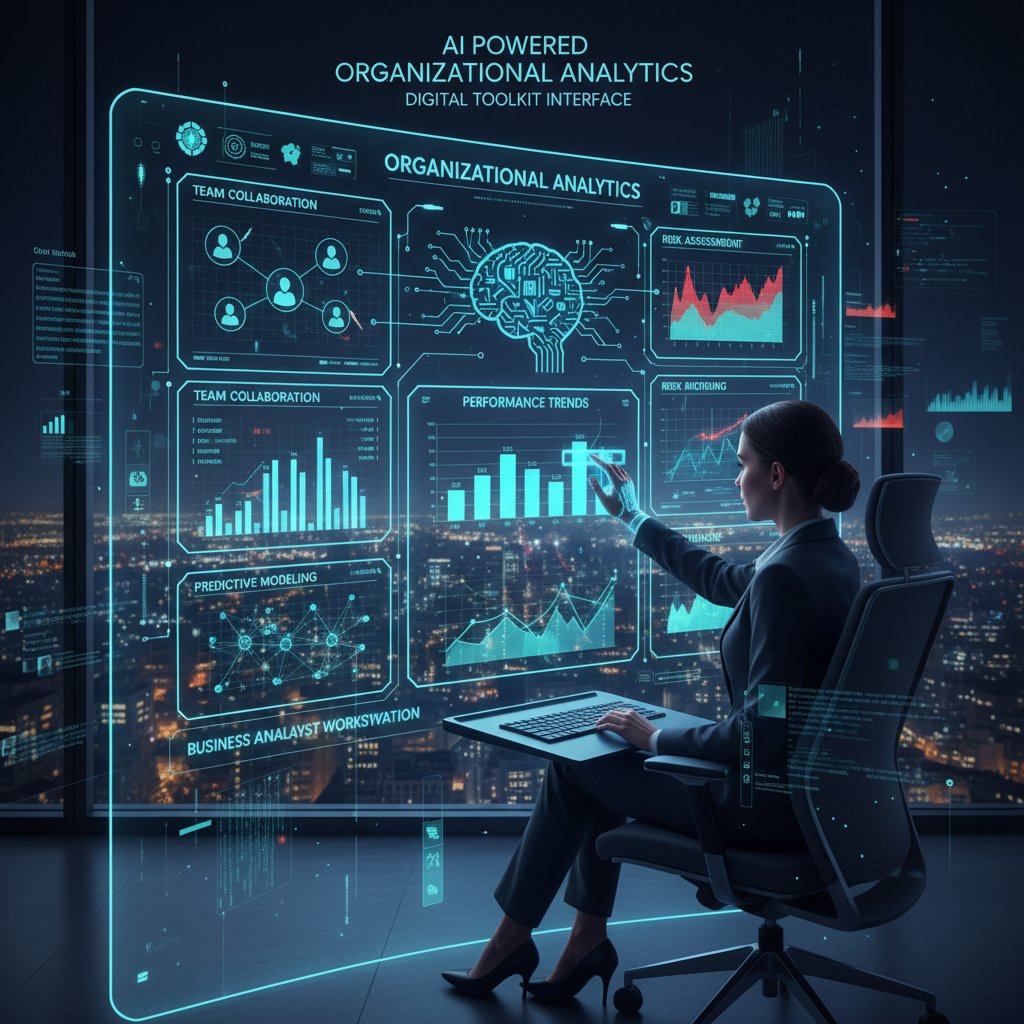
The platform’s emphasis on measurable outcomes, seamless integration, and continuous improvement resonates across industries. For those ready to move beyond pilots and into transformative analytics, futuretoolkit.ai is increasingly on the radar.
The final reckoning: What AI-powered organizational analytics really means for your future
Key takeaways from the front lines
Synthesizing lessons from across this journey, here’s what to remember:
- Data quality still decides everything.
- Hype is everywhere—substance is rare.
- AI analytics transforms organizations only when paired with cultural change.
- Skills gaps and power shifts demand active leadership.
- Responsible AI isn’t optional—it’s non-negotiable.
- Failures teach more than successes—embrace them.
- The edge goes to those who learn, adapt, and experiment continuously.
Stay vigilant. This isn’t just about technology—it’s about reimagining how your organization creates and captures value.
Why it’s time to challenge your assumptions
If you think AI-powered organizational analytics is a silver bullet, think again. The path is fraught with complexity, from technical hurdles to cultural inertia. But therein lies the opportunity: for those willing to interrogate their own assumptions and outgrow old habits, the payoff is unprecedented agility and insight.
The challenge: Don’t just adopt AI analytics—use it to ask better, braver questions about your business.
Where do we go from here?
In the AI analytics era, trust isn’t something you inherit—it’s something you build, day by day, through transparent practices, relentless learning, and shared accountability. As bold moves and brutal truths collide, one thing is clear: the future belongs to those who never stop questioning.
"The future belongs to those who ask better questions of their algorithms."
— Alex, Futurist (quote inspired by industry consensus)
Now, the only real question: Are you ready to challenge everything you know about organizational analytics?
Sources
References cited in this article
- Alteryx(prnewswire.com)
- PwC(pwc.com)
- CDO Magazine(cdomagazine.tech)
- LinkedIn(linkedin.com)
- Forbes(forbes.com)
- Capgemini(capgemini.com)
- McKinsey(mckinsey.com)
- Forbes(forbes.com)
- Data Leadership Collaborative(dataleadershipcollaborative.com)
- Forbes(forbes.com)
- SAS(sas.com)
- CIO(cio.com)
- Medium(medium.com)
- Orca Security(orca.security)
- ISACA(isaca.org)
- Merkle(merkle.com)
- Carlson School(carlsonschool.umn.edu)
- PwC(pwc.com)
- Gartner(gartner.com)
- Forbes(forbes.com)
- Analytics Insight(analyticsinsight.net)
- SDG Group(sdggroup.com)
- Harvard Business Review(hbr.org)
- Seer Interactive(seerinteractive.com)
- Aventiq(aventiq.ai)
- Appinventiv(appinventiv.com)
- DigitalDefynd(digitaldefynd.com)
- Google Cloud(cloud.google.com)
- Device42(device42.com)
- Futurist.com(futurist.com)
- Springboard(springboard.com)
- eLearning Industry(elearningindustry.com)
- Analytics8(analytics8.com)
- MIT Sloan Management Review(sloanreview.mit.edu)
- Analytics Vidhya(analyticsvidhya.com)
- World Economic Forum(weforum.org)
- McKinsey(mckinsey.com)
- ScienceDirect(sciencedirect.com)
- AIMultiple(research.aimultiple.com)
- Hyperight(hyperight.com)
- Bilderberg Management(bilderbergmanagement.com)
- AI Demand(ai-demand.com)
- Forbes(forbes.com)
- PMI(pmi.org)
- Insight7(insight7.io)
- OriginStamp(originstamp.com)
- BusinessWire(businesswire.com)
Empower Your Business with AI
Futuretoolkit.ai empowers businesses of all sizes to harness the power of AI effortlessly, offering specialized solutions across diverse business functions without the need for technical expertise. Whether it's automating customer interactions, optimizing operations, or analyzing complex data, our AI toolkit streamlines processes, increases efficiency, and fuels growth. With easy integration, intuitive interfaces, and powerful AI models, Futuretoolkit.ai offers unmatched accessibility and value, enabling users to achieve measurable outcomes quickly and cost-effectively.
Get startedReady to Empower Your Business?
Start leveraging AI tools designed for business success
Frequently Asked Questions
How is AI-powered organizational analytics different from traditional business intelligence tools?
AI-powered organizational analytics goes beyond legacy BI tools by harnessing predictive models, natural language processing, and real-time adaptive systems, rather than just aggregating and visualizing past data. It scales human intuition with machine speed and pattern detection, making advanced analytics accessible to leaders across business functions, not just data scientists.
What are the main challenges with implementing AI organizational analytics in 2025?
According to the article, the landscape is marked by data chaos, skills gaps, and ethical landmines that undermine promises of AI-driven intelligence. The article emphasizes that AI-powered analytics is not plug-and-play magic but rather a high-stakes journey requiring organizations to be bold, informed, and relentlessly adaptive.
What is predictive analytics and how does it differ from traditional business intelligence?
Predictive analytics uses historical and current data with machine learning to forecast future trends, behaviors, or outcomes—such as customer churn or supply bottlenecks. Unlike traditional BI's "rearview mirror" approach, predictive analytics enables proactive business decisions rather than reactive ones.
How does natural language processing contribute to organizational analytics?
Natural language processing turns unstructured human language like emails, support tickets, and voice notes into actionable analytics. For example, an NLP algorithm can read thousands of employee surveys and extract actionable sentiment trends for HR in minutes.
Continue Reading
Keep exploring Comprehensive business AI toolkit

AI-Powered Enterprise Analytics Solutions That Outsmart Legacy BI

AI-Driven Business Analytics Solutions: Capabilities and Limitations

AI-Powered Competitive Intelligence Analytics and Competitive Advantage

AI-Driven Business Analytics Platforms: Separating Reality From Hype

AI-Enabled Business Operations Analytics: Hype, Hazards, Real ROI


