


AI-Powered Predictive Analytics Software: Hedge or Hidden Risk?
Written with AI assistance under our editorial guidelines
AI-powered predictive analytics software enables companies to anticipate market shifts and make faster, more accurate decisions than competitors relying on intuition. However, the technology carries hidden risks beyond its promotional appeal, requiring careful evaluation rather than treating it as a guaranteed solution for business success.
Welcome to the business battlefield of 2025, where the victors aren’t just the bold—they’re the predictive. The promise of AI-powered predictive analytics software isn’t just a shiny tech fad; it’s the engine driving today’s high-stakes game of wins and wipeouts. Forget business as usual. Decisions based on “gut feeling” are liabilities now, not assets, as industries are being re-wired by data-driven algorithms ruthless in their objectivity and relentless in their scope. Yet behind every dashboard, every AI-powered forecast, and every triumphant case study, there’s a reality more complex—and sometimes more brutal—than the hype suggests. If you think predictive analytics is a silver bullet, it’s time for a wake-up call. This deep-dive exposes not just the cutting-edge tech, but also the dirty secrets, overlooked risks, and the real-world rewards transforming how business is done. Are you ready to face the unfiltered truth about AI-powered predictive analytics software? Let’s peel back the glossy veneer and see what truly powers the future of business intelligence.
Why predictive analytics is the new survival skill
How today’s business world runs on prediction
The era of instinct-driven leadership is over. Today’s business landscape is a chessboard where every move is scrutinized, simulated, and scored by AI-powered predictive analytics software. Companies no longer just react—they anticipate. Boardrooms once ruled by the loudest voice now pulse with the glow of real-time dashboards, each metric a harbinger of what’s next. According to Forbes, 2024, organizations that harness predictive analytics report significantly faster response times to market shifts, and a marked increase in decision accuracy.
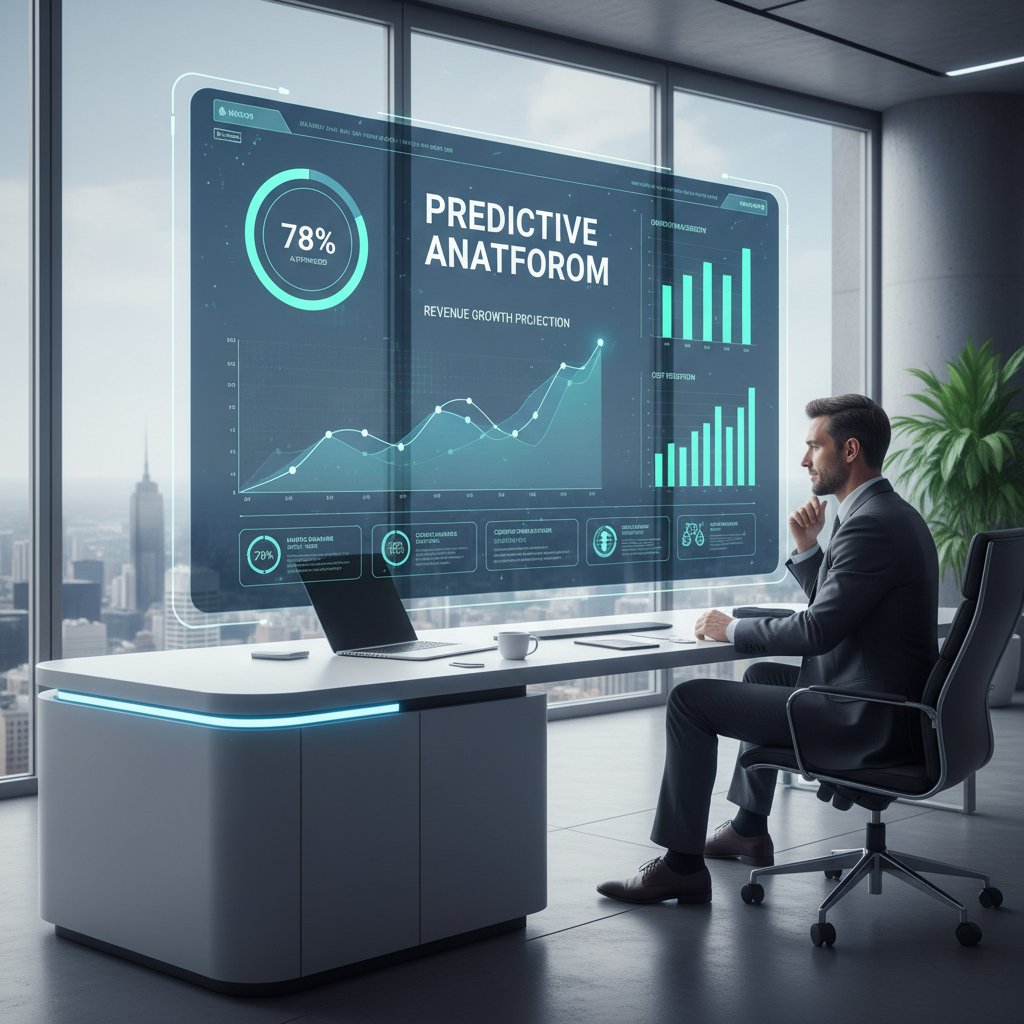
What’s changed? In a volatile economy, competitive edge hinges on the ability to spot threats before they materialize and to seize opportunities at the speed of data. Businesses that ignore this advantage are, bluntly put, writing their own obituaries.
"If you’re not predicting, you’re already behind." — Alex, AI strategist (illustrative)
The cost of ignoring predictive analytics
The graveyard of failed businesses is littered with companies that clung to “the way things have always been done.” According to research by TechRepublic, 2024, over 40% of AI projects fail, often due to poor data quality or organizational resistance. The consequences? Outdated KPIs, missed market shifts, and catastrophic blind spots that spiral into lost market share—or worse.
Red flags to watch out for when your business ignores predictive analytics:
- Lagging behind on market trends while competitors surge ahead with data-driven campaigns.
- Outdated KPIs leading to misaligned strategies and wasted resources.
- Over-reliance on intuition (aka guessing) instead of actionable insights.
- Failure to adapt to changing customer behaviors and demand patterns.
- Missed early warnings on supply chain or financial risks.
The ripple effects are unforgiving—especially in fast-moving sectors like retail, logistics, and finance. Ignoring predictive analytics doesn’t just mean missing out on optimization; it means setting your business up for an avoidable fall.
What users really want from AI analytics
Cut through the marketing noise, and most users want the same thing: clarity. Simplicity, transparency, actionable insights, and above all, trust. The reality, as confirmed by G2, 2024, is that even the best AI-powered predictive analytics software can overwhelm users with complexity or black-box mysteries. Many tools promise plug-and-play insights but deliver cryptic outputs that baffle non-data-scientists.
The demand is clear: users want analytics that don’t just spit out numbers, but tell a story—one they can understand, challenge, and act upon. Anything less is just tech theater.
Demystifying AI-powered predictive analytics software
What is AI-powered predictive analytics (and what it’s not)
Let’s clear the fog. “AI-powered predictive analytics software” isn’t some mystical oracle—it’s the next evolutionary step in business intelligence, merging historical data, machine learning, and statistical modeling to forecast future outcomes. Unlike traditional BI tools that simply describe what happened, these platforms aim to predict what will happen next, and even prescribe optimal actions.
Key terms, demystified:
The process of using statistical techniques and algorithms to make informed guesses about future events. Think of it as building a data-fueled crystal ball—one that’s only as good as the information you feed it.
Algorithms that “learn” from data, improving their predictions as they process more examples. In predictive analytics, this means models can adapt to changing patterns over time—if monitored and retrained properly.
When the statistical properties of input data change over time, eroding model accuracy. This is a silent killer for predictive models, requiring constant vigilance and recalibration.
The degree to which a model’s inner workings and predictions can be understood by humans. In business, explainability is the line between trust and chaos—especially when high-stakes decisions ride on AI outputs.
How these tools actually forecast the future
AI-powered predictive analytics software follows a rigorous workflow: data ingestion (capturing structured and unstructured data from across your ecosystem), followed by model training where algorithms detect patterns. Once trained, models make predictions—like forecasting sales or identifying churn risks. Finally, real-world outcomes are fed back into the system to fine-tune future predictions.
Accuracy and reliability aren’t just buzzwords—they’re measured by metrics like root mean square error (RMSE), precision, and recall, each tracking how well predictions match reality. Yet, as noted in the Forbes, 2024 article, “even the best models are probabilistic, not prophetic.” Uncertainty remains.
| Feature | Platform A | Platform B | Platform C | Ease of use | Transparency | Industry fit |
|---|---|---|---|---|---|---|
| Data integration | Yes | Limited | Yes | High | Moderate | Retail, Finance |
| AutoML support | Yes | Yes | No | Moderate | High | Marketing, Health |
| Real-time analytics | Yes | No | Yes | High | High | Logistics |
| Explainable AI | High | Moderate | Low | Moderate | High | Compliance |
| Customization | High | Low | Moderate | Low | Moderate | All sectors |
Table 1: Feature matrix comparing top AI-powered predictive analytics software platforms as of 2025. Source: Original analysis based on TechRepublic, 2024, G2, 2024, Forbes, 2024.
Breaking the ‘black box’ myth
There’s a persistent belief that AI-powered predictive analytics software is too opaque—decisions vanish into a black box, never to be questioned. The reality is less mystical, more practical: explainability varies wildly by tool and application. Some platforms have made strides in generating “reason codes” and visual explanations, while others still hide behind complexity.
"Transparency isn’t just a checkbox—it’s the difference between trust and chaos." — Maya, data ethicist (illustrative)
Efforts to make AI predictions understandable include interactive dashboards, natural language summaries, and drill-downs that let users trace decisions back to their roots. Yet, many organizations fail to ask the right questions before putting blind faith in predictions.
Step-by-step guide to asking the right questions before trusting an AI prediction:
- What data was used to train this model? Is it recent and representative?
- How does the model handle outliers or rare events?
- Can the model’s reasoning be explained in plain English?
- What’s the error margin, and how is it tracked over time?
- How often is the model retrained or updated?
- Who monitors outcomes and intervenes when things go off the rails?
- What ethical and privacy safeguards are in place?
Hidden costs, epic fails, and the dark side of prediction
When predictive analytics goes wrong
AI-powered predictive analytics software can be a double-edged sword. There are countless stories where the promise turned sour—like the retailer whose overzealous demand forecasts led to costly overstocking, or the healthcare system that misclassified patients due to hidden data bias. According to TechRepublic, 2024, over 40% of projects fail, often for reasons that were visible in hindsight.
| Year | Industry | Outcome | Lesson learned |
|---|---|---|---|
| 2022 | Retail | $50M in unsold inventory | Beware data silos |
| 2023 | Healthcare | Patient misclassification | Address hidden data bias |
| 2024 | Finance | Undetected fraud | Human oversight is irreplaceable |
| 2024 | Marketing | Campaign flop | Validate before scaling |
Table 2: Timeline of major predictive analytics failures and their causes. Source: Original analysis based on TechRepublic, 2024, Forbes, 2024.
Root causes are as old as human error: incomplete data, unaddressed bias, overfitting models that latch onto noise instead of signal, and a lack of proper oversight. When left unchecked, these issues can snowball into legal, financial, or reputational disasters.
The price of data: privacy, ethics, and what’s swept under the rug
AI-powered predictive analytics thrives on data—but data isn’t free. There are hidden costs: privacy risks, surveillance creep, and regulatory minefields. Mishandling personal information can lead to lawsuits or brand damage. According to industry research, ethical breaches aren’t just theoretical—they happen when consent is murky or data is repurposed without transparency.
Hidden benefits of AI-powered predictive analytics software experts won’t tell you:
- Unexpected process efficiency from streamlining decision chains.
- Early detection of market or operational risks, allowing for pre-emptive action.
- Automation of tedious or error-prone analysis, freeing up human creativity.
- Discovery of new customer segments or revenue streams previously invisible in raw data.

Debunking common myths about AI-powered analytics
Let’s be blunt: AI-powered predictive analytics doesn’t predict everything, doesn’t eliminate human error, and isn’t immune to manipulation. Believing otherwise is how businesses get burned.
Top 7 myths about predictive analytics—and the uncomfortable truths behind them:
- AI can predict everything.
Truth: Even the best models fail with unprecedented events or poor data. - AI eliminates human error.
Truth: AI shifts the risks—now human errors in data or model logic can scale faster than ever. - More data always means better predictions.
Truth: Quality trumps quantity; garbage in, garbage out. - AI makes businesses more impartial.
Truth: Bias in training data can reinforce existing inequities. - AI is plug-and-play.
Truth: Integration, training, and change management are critical to success. - All vendors offer explainable AI.
Truth: Explainability remains inconsistent across platforms. - Predictive analytics delivers ROI instantly.
Truth: 35% of businesses are unsure about ROI in the first year (G2, 2024).
"Sometimes, the best prediction is knowing when to ignore the algorithm." — Jordan, veteran operations lead (illustrative)
Real-world success stories and cautionary tales
Industries quietly transformed by AI analytics
It’s not just the tech giants or finance behemoths riding the AI wave. Predictive analytics is quietly revolutionizing agriculture (crop yield optimization), logistics (dynamic routing), and even creative industries (audience targeting for content). According to Allied Market Research, 2024, adoption rates have surged as costs drop and usability rises.
| Industry | 2025 Adoption Rate | Key Impact |
|---|---|---|
| Retail | 68% | Inventory optimization, demand forecasting |
| Healthcare | 59% | Patient outcome prediction, resource planning |
| Finance | 71% | Risk assessment, fraud detection |
| Logistics | 54% | Route optimization, supply chain visibility |
| Agriculture | 46% | Crop yield prediction, resource allocation |
| Marketing | 77% | Campaign targeting, customer segmentation |
Table 3: Current market adoption rates of AI-powered predictive analytics by industry. Source: Original analysis based on Allied Market Research, 2024, G2, 2024.

Case study: The company that saw the future—and won
Consider a mid-size retailer drowning in data but starved for insight. By deploying AI-powered predictive analytics software, the company slashed inventory by 25%, boosted customer satisfaction, and beat competitors to new trends. What set them apart? Relentless curiosity, a culture of experimentation, and willingness to invest in ongoing model training—not just one-time setup.
Unconventional uses discovered during their journey:
- Predicting store traffic to optimize staffing schedules.
- Forecasting not just sales, but supplier delays and returns.
- Personalizing promotions based on micro-trends emerging from social media analytics.
Case study: How it all went sideways—a lesson in hubris
On the flip side, a global logistics firm rolled out predictive software with little human oversight. When a data input error went unchecked, the system rerouted shipments across continents, resulting in millions lost. The aftermath? Lawsuits, a battered reputation, and a hard reset on their approach. The warning signs—ignored error messages, staff voicing concerns, incomplete data—were all there.

How to choose the right AI-powered predictive analytics software
What to look for (and what to avoid)
Choosing your AI-powered predictive analytics software is a high-stakes decision. Beware of glossy demos and empty “AI-powered” labels.
Key buying considerations:
- Transparency: Can you see how predictions are made, or is it all smoke and mirrors?
- Scalability: Will the tool grow with your business, or lock you into rigid workflows?
- Integration: Does it plug into your existing data and systems without a costly overhaul?
- Vendor credibility: Are they recognized by industry analysts and trusted by peers?
- Ongoing support: Is there a real team behind the product, or just a chatbot and a FAQ page?
Priority checklist for AI-powered predictive analytics software implementation:
- Assess data quality and readiness before buying.
- Demand clear documentation and explainable models.
- Check integration capabilities—don’t get trapped by legacy systems.
- Validate vendor’s track record in your industry.
- Establish support and training resources up front.
- Plan for continuous monitoring, not just one-time deployment.
- Align software investment with clear business KPIs.
Partner ecosystems and ongoing support are critical. Platforms like futuretoolkit.ai offer not just tools but guidance for navigating the vendor selection minefield.
Critical questions for your vendor
You need more than sales patter—dig deeper with your questions:
- How is data bias managed and reported?
- What’s the process for retraining models as business conditions change?
- How are predictions validated before being rolled out?
- Can non-technical users easily extract actionable insights?
- What are the terms around data ownership and portability?
Key definitions:
The gradual degradation of model accuracy as real-world data changes. It’s essential to detect and address it promptly.
The ability to process and analyze data instantly, supporting rapid decision-making—a must for fast-moving industries.
How well a platform can describe its predictions in user-friendly language, building trust and accountability.
Resources like futuretoolkit.ai can be valuable guides in this due diligence process.
DIY vs. out-of-the-box: What fits your business?
Should you build your own predictive analytics stack, or opt for a turnkey, out-of-the-box solution? It’s a tradeoff between flexibility, speed, cost, and expertise.
| Criteria | DIY Build | Turnkey Solution |
|---|---|---|
| Cost | High upfront | Subscription/usage fees |
| Time to value | Slow (months-years) | Fast (days-weeks) |
| Expertise | Data science, IT | Minimal required |
| Flexibility | Maximum | Moderate |
| Support | In-house or external | Vendor-provided |
| Scalability | Customizable | Variable |
Table 4: Comparison of DIY vs turnkey AI-powered predictive analytics approaches. Source: Original analysis based on industry best practices.
Modern solutions—especially those designed for business users—now allow non-technical teams to leverage AI-powered predictive analytics software without writing a single line of code.
Implementation: From pilot to game-changer
Building your AI analytics team (without a PhD)
Success doesn’t demand a battalion of data scientists. The most effective predictive analytics teams are cross-functional: business leads, data wranglers, IT facilitators, and frontline users.
Key traits of effective predictive analytics teams:
- Curiosity: Always asking why, not just what.
- Communication: Translating complex insights for diverse audiences.
- Adaptability: Willingness to pivot as data or objectives change.
- Accountability: Taking responsibility for outcomes, not just inputs.
- Empathy: Understanding the business pain points analytics is meant to solve.

Step-by-step guide to a successful deployment
Deploying AI-powered predictive analytics software isn’t a one-off IT project—it’s an ongoing evolution.
Step-by-step guide to mastering AI-powered predictive analytics software in your organization:
- Define clear business objectives and KPIs for your analytics initiative.
- Conduct a thorough data audit—clean, integrate, and fill gaps.
- Assemble a cross-functional team with both technical and business expertise.
- Select and configure your predictive analytics platform, ensuring integration and explainability.
- Launch a pilot phase focused on a single use case—measure, learn, iterate.
- Expand deployment gradually, retraining models and refining workflows.
- Establish feedback loops with end users to ensure adoption and continuous improvement.
Regularly measure progress, celebrate quick wins, and be ruthless about iterating based on user feedback.
Red flags and pitfalls to avoid
Common traps sink even the best-intentioned initiatives: overpromising instant ROI, neglecting training, or failing to involve key stakeholders. Don’t ignore the warning signs.
Red flags to watch for during implementation:
- Unclear or shifting KPIs that muddle the definition of “success.”
- Lack of executive buy-in or visible sponsorship.
- Data silos that prevent full integration and insight.
- Overreliance on “off-the-shelf” settings without tuning for business context.
- Ignoring frontline feedback, leading to adoption failures.
"The biggest risk isn’t the software—it’s pretending culture doesn’t matter." — Sam, transformation lead (illustrative)
The human factor: Intuition, bias, and the algorithm’s limits
Where human judgment still beats the machine
There are moments where AI-powered predictive analytics software falls flat—unique events (pandemics, regulatory shocks), cultural nuances, or ethical dilemmas where the algorithm can’t see the full picture. Human intuition, context, and ethical reasoning remain irreplaceable.
Situations where human input is irreplaceable in predictive analytics:
- Navigating unprecedented market shocks or black swan events.
- Understanding local customs or consumer quirks that defy pattern recognition.
- Making judgment calls where stakes or ethics outweigh mere probability.
- Deciding when to override a model’s recommendation based on deeper insight.
- Resolving conflicts between conflicting data sources or objectives.
The synergy between machine precision and human intuition is where the real magic happens—provided both are respected.
Recognizing and managing bias in AI predictions
Bias creeps in through every crack: historical inequities, poorly labeled data, or feedback loops. Unchecked, it can lead to unfair or even illegal outcomes.

To combat bias, organizations must implement active monitoring, regular audits, and open communication about model limitations.
Steps to audit and improve fairness in predictive analytics:
- Identify potential sources of bias in data collection and labeling.
- Apply statistical tests to measure disparate impact across groups.
- Regularly retrain models with fresh, representative data.
- Solicit feedback from diverse stakeholders and domain experts.
- Document and disclose model assumptions and limitations.
- Adjust decision thresholds to minimize adverse effects.
- Monitor outcomes continuously and act swiftly on red flags.
The psychology of trust: Why people resist AI predictions
Even perfect predictions can fail if nobody believes them. Resistance is rooted in emotion, culture, and the persistent myth that numbers can’t capture “what really matters.” Building trust means more than technical accuracy—it’s about telling stories, not just pushing probabilities.
Change management experts recommend:
- Transparent communication about how predictions are made.
- Involving end users early and often in model validation.
- Using visualizations and plain language to demystify outputs.
- Sharing success stories—and failures—openly.
"People trust stories, not just numbers." — Priya, change management consultant (illustrative)
Beyond business: The cultural and societal impact of predictive analytics
How AI-powered analytics is changing the rules of society
Predictive analytics isn’t just rewriting business playbooks—it’s altering the very fabric of society. Automated predictions shape everything from policing and credit to media recommendations and healthcare triage.
| Sector | Societal change driven by predictive analytics | Impacts | Controversies |
|---|---|---|---|
| Education | Adaptive testing, early dropout detection | Personalization | Equity, privacy |
| Healthcare | Predictive patient risk assessment | Outcomes, resource | Data misuse, consent |
| Justice | Sentencing, parole risk scoring | Efficiency | Bias, accountability |
| Media | Content curation, fake news detection | Engagement | Echo chambers, manipulation |
| Urban planning | Traffic, crime, infrastructure forecasts | Efficiency, safety | Surveillance, transparency |
Table 5: Major societal changes driven by predictive analytics. Source: Original analysis based on Forbes, 2024, Allied Market Research, 2024.

The ethics debate: Who’s really accountable?
When an algorithm makes a bad call—who’s left holding the bag? The debate around algorithmic accountability, data stewardship, and responsible AI is heating up. Regulations in 2025 demand transparency and documentation for high-stakes predictions, but enforcement is still evolving.
Key definitions:
The principle that organizations must be able to explain, justify, and take responsibility for algorithmic decisions.
A commitment to ethical, secure, and transparent management of data throughout its lifecycle.
The ongoing effort to build, deploy, and monitor AI systems that are fair, ethical, and aligned with human values.
The regulatory landscape is patchwork, but the direction is clear: businesses must treat predictive analytics as both a privilege and a responsibility.
The future: Predictive analytics in a world run by algorithms
Let’s not sugarcoat it—AI-powered predictive analytics software is redrawing the boundaries of power, opportunity, and control. Trends like hyper-personalization, algorithmic governance, and automated decision-making are already visible. The line between empowerment and manipulation is razor-thin, demanding vigilance from organizations and citizens alike.

Conclusion: The new rules for thriving in the age of AI-powered prediction
Key takeaways and next steps
Business as usual is a relic. To thrive in the era of AI-powered predictive analytics software, companies must confront hard truths, embrace both the power and the peril of prediction, and invest in the messy, human side of digital transformation. The most enduring organizations will be those that wield prediction as both shield and sword—balancing insight with oversight, innovation with ethics.
7 new rules for leveraging AI-powered predictive analytics software for sustainable success:
- Treat data as a strategic asset—quality beats quantity.
- Insist on transparency and explainability from all vendors.
- Monitor for bias relentlessly; don’t assume “AI knows best.”
- Prioritize cross-functional teams and continuous learning.
- Start small—pilot, learn, iterate, then scale.
- Anchor analytics initiatives to real, measurable business outcomes.
- Use resources like futuretoolkit.ai to navigate the evolving landscape.
Staying ahead isn’t just about deploying the flashiest tool—it’s about building a culture that questions, adapts, and refuses to be blindsided.
Reflection: Are you ready to face the future?
It’s time for an honest reckoning. Is your business running on the fumes of intuition, or are you harnessing the relentless logic of AI-powered predictive analytics software? The winners of 2025 won’t be those who buy the most “AI,” but those who master it—who challenge their algorithms, learn from their failures, and never stop asking hard questions. Are you ready to face the future, with eyes wide open and data at your back?
Sources
References cited in this article
- TechRepublic: Best Predictive Analytics Tools(techrepublic.com)
- G2: Predictive Analytics Software(g2.com)
- Forbes: Transforming Predictive Analytics(forbes.com)
- Allied Market Research(alliedmarketresearch.com)
- Dovetail Guide(dovetail.com)
- Deloitte: Workforce Analytics(cdotimes.com)
- SIFT Analytics: Cost of Ignoring Data Analytics(sift-ag.com)
- Capgemini: Data Optimization(capgemini.com)
- TechTarget: Healthcare Use Cases(techtarget.com)
- SAS: AI Reality vs. Myth(sas.com)
- TechDogs: Top Predictive Analytics Software(techdogs.com)
- NielsenIQ: AI Forecasting(nielseniq.com)
- Datamation: Top Predictive Analytics Tools(datamation.com)
- TechCrunch: Beware AI’s Hidden Costs(techcrunch.com)
- Forbes: The Dark Side of AI(forbes.com)
- CompTIA: Top AI Statistics(connect.comptia.org)
- DigitalOcean: AI and Privacy(digitalocean.com)
- Enzuzo: Data Privacy Statistics(enzuzo.com)
- Sofigate: AI Myths Busted(sofigate.com)
- Yellowfin: Top Analytics Trends(yellowfinbi.com)
- Data4Energy: Turbine Case Studies(data4energy.com)
- IHRIM: Predictive Analytics for Business Growth(ihrim.org)
- MoldStud: Predictive Maintenance Case Studies(moldstud.com)
- MDPI: AI in Business Continuity(mdpi.com)
- Plat.AI: Best Predictive Analytics Software(plat.ai)
- GeeksforGeeks: AI Tools(geeksforgeeks.org)
- TechTarget: Predictive Analytics Pros and Cons(techtarget.com)
Empower Your Business with AI
Futuretoolkit.ai empowers businesses of all sizes to harness the power of AI effortlessly, offering specialized solutions across diverse business functions without the need for technical expertise. Whether it's automating customer interactions, optimizing operations, or analyzing complex data, our AI toolkit streamlines processes, increases efficiency, and fuels growth. With easy integration, intuitive interfaces, and powerful AI models, Futuretoolkit.ai offers unmatched accessibility and value, enabling users to achieve measurable outcomes quickly and cost-effectively.
Get startedReady to Empower Your Business?
Start leveraging AI tools designed for business success
Frequently Asked Questions
What is AI-powered predictive analytics software and why is it important for businesses?
AI-powered predictive analytics software uses data-driven algorithms to anticipate market shifts and business outcomes rather than relying on intuition. According to Forbes 2024, organizations using predictive analytics report significantly faster response times to market changes and improved decision accuracy, making it essential for maintaining competitive advantage in today's volatile economy.
Is AI-powered predictive analytics a guaranteed solution for business success?
No. The article warns that predictive analytics is not a silver bullet and cautions against viewing it as a simple solution. While it offers significant advantages, the article emphasizes that the reality behind AI forecasts is more complex than the hype suggests, with overlooked risks and hidden dangers that businesses must understand.
What has changed in how businesses make decisions?
The era of instinct-driven or intuition-based leadership has ended. Modern boardrooms now rely on real-time dashboards powered by AI-driven metrics rather than decisions made by the loudest voice, fundamentally transforming how companies respond to business challenges and opportunities.
What is the consequence of businesses ignoring predictive analytics?
The article suggests that companies failing to adopt predictive analytics are at a severe disadvantage, implying they risk obsolescence. In a competitive and volatile economy, ignoring this technology puts businesses at risk of failure compared to those leveraging data-driven forecasting.
Continue Reading
Keep exploring Comprehensive business AI toolkit

AI-Driven Business Risk Analytics: Why Companies Now Prioritize It

AI-Powered Strategic Analytics Solutions: Separating Hype From ROI

AI-Driven Business Performance Analysis and Hidden ROI

AI-Enabled Business Forecasting Software: Limits and Practical Realities

AI-Powered Predictive Analytics Platforms: What Actually Delivers ROI
