


Why Automate Data Analysis: the Benefits, Risks, and Competitive Necessity
Written with AI assistance under our editorial guidelines
Manual data analysis causes significant business disruption through human error, with studies showing error rates increase by up to 30% and decision-making delays reach 40%. One retailer lost $2 million quarterly due to manual reporting mistakes before automation reduced reporting time by 70%. As data volumes grow, overlooked patterns and accidental deletions accumulate, undermining competitive advantage. Organizations that automate data analysis before 2026 gain critical efficiency and accuracy gains that manual processes cannot sustain.
If you’ve ever stared down a mountain of spreadsheets at 2 a.m., jaw clenched and coffee gone cold, you know the dirty secret businesses rarely admit: manual data analysis is a productivity killer. The world’s best strategies, investments, and campaigns crumble under the weight of human error, bottlenecks, and burnout. In 2025, the question isn’t “should you automate data analysis?”—it’s how long you can afford not to. This isn’t about a tech upgrade or chasing the latest buzzword. It’s about survival, competitive edge, and facing the uncomfortable realities that most leaders dodge until it’s too late. In this deep dive, we’ll cut through the hype, expose automation’s underbelly, and unmask the brutal truths every business must face—or risk becoming obsolete. From hidden costs to game-changing ROI, from ethical nightmares to culture wins, let’s decode why automating data analysis isn't just smart—it's existential.
The inconvenient truth: why manual data analysis breaks business
The hidden cost of human error
Manual data analysis is a minefield where one missed cell, one misread column can cost a fortune. According to recent research by Datamaker (2024), errors stemming from manual processes can increase error rates by up to 30% and cause decision-making delays of nearly 40% (Datamaker, 2024). These aren’t just numbers—they’re millions in lost revenue, credibility, and morale. Take the infamous case from Dataversity (2024), where a major retailer lost $2 million in a single quarter due to delays and mistakes in manual reporting. After implementing automation, reporting time dropped by 70%, and the bleeding stopped almost overnight. But most businesses don’t get that lucky—they keep paying for invisible mistakes until they hit a wall.

Overlooked patterns, accidental deletions, and duplicated entries become daily landmines as data grows. The pressure mounts, and so does the fallout. Human error isn’t just an inconvenience—it’s often the difference between winning and losing in hyper-competitive markets. According to a 2023-24 report by Datamaker, “Automating data analysis helps organizations achieve greater efficiencies and accuracy in their data operations.” When accuracy is king and speed is its ruthless right hand, relying on error-prone manual processes simply doesn’t cut it.
Bottlenecks and burnout: when teams can't keep up
The romantic notion of the data “hero” burning the midnight oil is dead. Today’s market punishes laggards and rewards speed. When teams are chained to manual workflows, both business and people pay the price. Financially, slow data pipelines mean missed opportunities and slow pivots. Emotionally, teams on the front lines—analysts, managers, even C-level execs—burn out fast.
“Every week we spent wrangling spreadsheets was a week lost to our competitors.” — Sam, data scientist
That’s not just hyperbole. Xerox’s 2023 study found 66% of accounting firms saw higher profits and better staff retention after automating routine analysis (Xerox, 2023). Time freed from repetitive work was reinvested in innovation, customer service, and strategic projects. But for those still stuck in the manual swamp, the best talent leaves, and the company stagnates.
Why gut instinct isn’t enough in 2025
There was a time when the sharpest gut in the room could sniff out opportunity from a mile away. But in 2025, the volume, velocity, and complexity of business data make “instinct” a liability. According to MIT Sloan’s Piyanka Jain (2024), “Data literacy and automation are critical to avoid human error and speed insights” (MIT Sloan, 2024). The cost of intuition-led decision-making is too high when competitors harness real-time analytics and automated insight generation. In a world where milliseconds count, relying on your gut is like bringing a knife to a gunfight. The leaders who win are those who know how to blend human judgment with machine precision—never one without the other.
From drudgery to disruption: what automation really means
A brief (and brutal) history of data automation
It started with tally marks on ledgers, moved to punch cards, then spreadsheets, and now neural networks. Each era thought they’d cracked the code, but every step left something broken: ledgers broke under scale, punch cards snapped under complexity, spreadsheets choked on volume. The real revolution began when automation shifted from batch processing to real-time AI-driven analytics. According to DOIT Software (2024), the augmented analytics market shot to $8.95 billion in 2023 and is projected to hit $11.66 billion in 2024 (DOIT, 2024). That growth isn’t accidental—it’s a direct result of businesses finally realizing that human hands alone can’t keep up. Every leap exposed the same flaw: as data grows, humans alone can’t handle the load. Only automation, woven deep into business DNA, breaks the cycle.
The myth of ‘set it and forget it’
Automation isn’t some magical self-driving car for your data. The biggest myth is that you can “set it and forget it.” In reality, poorly implemented automation can speed up your mistakes, amplifying errors at scale. Real-world case studies show that businesses who skipped proper data hygiene or oversight ended up with faster, more expensive failures. But when done right, automation unlocks benefits no one talks about:
- Compounded insights: Automated systems surface patterns across millions of data points that humans can’t see.
- Bias reduction: Properly configured automation can flag and even correct for unconscious human biases in analysis.
- Scalability: Growth no longer means hiring armies of analysts. Automation scales without burnout.
- Increased transparency: Automated logs and audit trails make every decision traceable—if you build them in.
- Continuous learning: AI-driven automation evolves with new data, improving accuracy over time.
The fine print? You need constant maintenance, vigilant oversight, and a culture of data literacy. Automation is a tool, not a savior.
Humans + AI: a new partnership
Here’s the uncomfortable truth: automation doesn’t make analysts obsolete—it makes them dangerous, in the best possible way. Freed from drudgery, analysts become strategic architects, storytellers, and innovators. They shift from data janitors to data curators, spending their time asking better questions, not fighting with Excel. According to McKinsey’s 2024 report, businesses using advanced analytics in finance achieved over 20% revenue increases in just three years (McKinsey, 2024). The secret? Letting machines do the heavy lifting, while humans focus on high-value interpretation and action.

The best results don’t come from man or machine—they come from both. This symbiosis is the real competitive advantage in the age of automation.
The real ROI: what businesses gain (and sometimes lose)
Time saved, opportunities gained
Let’s get specific: what’s the ROI of automating data analysis? According to research by Insightvity (2024), automation can cut manual processing time by over 70%, reduce costs by up to 40%, and speed up decision cycles (Insightvity, 2024). In the retail sector, a $2 million loss from slow manual reporting was reversed by automation in under a quarter (Dataversity, 2024). These aren’t outliers—they’re the new normal.
| Industry | Time Saved (%) | Cost Savings (%) | Revenue Impact (%) |
|---|---|---|---|
| Finance | 60 | 35 | +20 |
| Accounting | 55 | 30 | +18 |
| Retail | 70 | 40 | +22 |
| SaaS | 50 | 25 | +16 |
Table 1: Average time and cost savings after automation, with revenue impact measured over three years
Source: Original analysis based on McKinsey, 2024, Datamaker, 2024, Insightvity, 2024
When the mundane disappears, time and talent rush back into innovation, customer engagement, and growth strategies.
When automation goes wrong: cautionary tales
But let’s not sugarcoat it—automation gone wrong can be disastrous. Consider Jordan, a business strategist whose company rolled out an analytics automation tool without cleansing their historical data:
“Automation amplified our mistakes because we trusted it blindly.” — Jordan, business strategist
Errors in legacy data led to skewed forecasts and costly missteps. The lesson? Automation multiplies whatever you feed it—good or bad. If your foundation is rotten, automation just makes the cracks bigger and faster.
The invisible wins: culture, morale, and creativity
Not every win shows up on a balance sheet. According to a 2023-24 Datamaker survey, teams reported a 25% boost in job satisfaction when repetitive analysis was automated (Datamaker, 2024). Freed from tedium, employees contributed new ideas, experimented with bold strategies, and reclaimed a sense of purpose. In the SaaS industry, for example, automation unlocked time for creative growth hacks, leading to faster cycles of product innovation.
The cultural dividend is real: automation, when done right, builds morale, loyalty, and creativity. When done wrong, it creates resentment and fear. The difference is all in the execution.
What nobody tells you: automation's hidden risks and how to dodge them
Garbage in, garbage out: the data quality dilemma
You can’t automate your way out of bad data. Automation turbocharges whatever it ingests, so if your data is riddled with inconsistencies, duplicates, or missing fields, you’re just scaling up the chaos. According to Datamaker (2024), “Automating data analysis helps organizations achieve greater efficiencies and accuracy,” but only if the data pipeline is clean and robust (Datamaker, 2024). Building data pipelines that enforce validation, consistency, and regular audits is non-negotiable.

The companies that win aren’t the ones with the fanciest automation—they’re the ones obsessed with data quality at every stage.
Bias, black boxes, and ethical nightmares
Automation isn’t neutral. Algorithmic bias and opaque “black box” systems create new risks. A recent MIT Sloan article highlights how unchecked automation can reinforce bias, discriminate against certain groups, and make decisions no one can explain (MIT Sloan, 2024). The fallout? Lawsuits, reputational damage, and regulatory smackdowns.
- Lack of explainability: If you can’t explain your automated decisions, you can’t defend them.
- Embedded bias: Algorithms trained on biased data will perpetuate (or even amplify) those biases.
- Overfitting to past patterns: Automation can “lock in” decisions that made sense yesterday but hurt you tomorrow.
- Blind trust in outputs: Automated doesn’t mean infallible—always question the results.
Recognizing these red flags is the first step to building not just smart automation, but responsible automation.
The compliance trap: when automation breaks the rules
GDPR, CCPA, and a patchwork of global data privacy laws mean the stakes for compliance have never been higher. Automated pipelines that mishandle sensitive data can expose your business to fines, lawsuits, and public shaming. According to a 2024 analysis by Insightvity, the most common compliance failures resulted from automated workflows that bypassed manual checks—highlighting the need for built-in controls and transparent audit trails (Insightvity, 2024). Businesses must embed compliance at every step, from data collection to analysis to reporting.
Beyond buzzwords: decoding automation technology for real people
RPA, ML, and more: what actually matters
Automation is a jungle of acronyms—RPA, ML, AI, ETL, and more. But what really matters for business outcomes? Robotic Process Automation (RPA) handles structured, rule-based tasks with robotic accuracy. Machine Learning (ML) analyzes complex patterns, adapts over time, and makes predictions. Traditional automation tools excel at repetitive tasks but fall short for nuanced analysis or unstructured data.
Key automation terms every non-tech leader should know:
Software robots that mimic human actions to automate repetitive, rules-based tasks in business processes. Best for well-defined, structured workflows.
Subset of AI where algorithms learn patterns from data and improve over time without explicit programming. Ideal for forecasting, classification, and insight generation.
The process of collecting data from multiple sources, cleaning and transforming it, and loading it into a centralized system for analysis.
The use of AI and ML to enhance data preparation, insight discovery, and sharing—making analytics accessible to non-experts.
Understanding these terms isn’t about impressing in the boardroom—it’s about choosing the right tool for the right problem.
Choosing the right tool: a no-nonsense buyer’s guide
With dozens of vendors promising the world, cutting through the noise is tough. To make the right call, focus on these criteria:
| Tool/Platform | Technical Skill Needed | Customization | Deployment Speed | Cost-Effectiveness | Scalability |
|---|---|---|---|---|---|
| Futuretoolkit.ai | No | Full support | Rapid | High | Highly scalable |
| Generic Platform A | Yes | Limited | Slow | Moderate | Limited |
| Generic Platform B | Yes | Moderate | Moderate | Moderate | Moderate |
Table 2: Feature matrix comparing top data analysis automation solutions
Source: Original analysis based on futuretoolkit.ai, DOIT, 2024
Prioritize platforms that require minimal technical skills, offer rapid deployment, and scale as you grow.
How futuretoolkit.ai fits into the modern automation landscape
Platforms like futuretoolkit.ai lower the barrier to entry, allowing non-technical users to automate complex business data analysis without armies of developers. By prioritizing accessibility and ease of integration, they empower businesses of all sizes to harness AI-driven insights and streamline operations—making automation genuinely democratic. If you’re looking to move beyond manual drudgery and unlock the real potential of your data, resources like futuretoolkit.ai offer a credible starting point.
Human vs machine: what should (and shouldn’t) be automated?
The limits of automation: where humans still win
Not everything should be handed over to the machines. There are critical scenarios where creative judgment, ethical consideration, and context beat speed or scale. Human oversight is essential in ambiguous situations, strategic pivots, and nuanced negotiations. Automation works best when it amplifies, not replaces, the human touch.
- Artistic marketing campaigns: Data can inform, but only humans can create emotion-driven narratives.
- Crisis management: In chaotic scenarios, intuition and lived experience trump algorithms.
- Relationship building: Automated insights can tell you who to target, but only humans build lasting partnerships.
Unconventional uses for automating data analysis:
- Identifying employee burnout patterns through sentiment analysis of internal communications.
- Surfacing untapped intellectual property by scanning project documentation.
- Predicting market shifts through anomaly detection in consumer behavior data.
Step-by-step: how to identify automation opportunities in your business
Automating wisely means knowing where to start, what to skip, and how to measure success.
- Map your workflows: Identify all repetitive, high-volume data processes.
- Assess pain points: Where are errors frequent? Where do bottlenecks form?
- Estimate impact: Calculate time, cost, and risk savings from automation.
- Clean your data: Ensure quality before automating any process.
- Pilot and scale: Start small, monitor outcomes, then scale up.
Priority checklist for why automate data analysis implementation:
- Audit current data processes for manual bottlenecks.
- Evaluate data quality and integrity.
- Identify compliance and regulatory needs.
- Select automation tools matching your technical capabilities.
- Launch pilot projects and measure impact rigorously.
The rise of the data curator: new roles in the automated age
The age of automation is creating hybrid roles—data curators, automation architects, and insight strategists. These professionals blend domain expertise with technical acumen, ensuring that automated systems reflect business goals and ethical standards. Their mission: to orchestrate data flows, validate outputs, and continuously improve automated processes. In the war for business advantage, the data curator is the new MVP.
Industry spotlight: automation in action across sectors
Retail: from inventory chaos to insight-driven selling
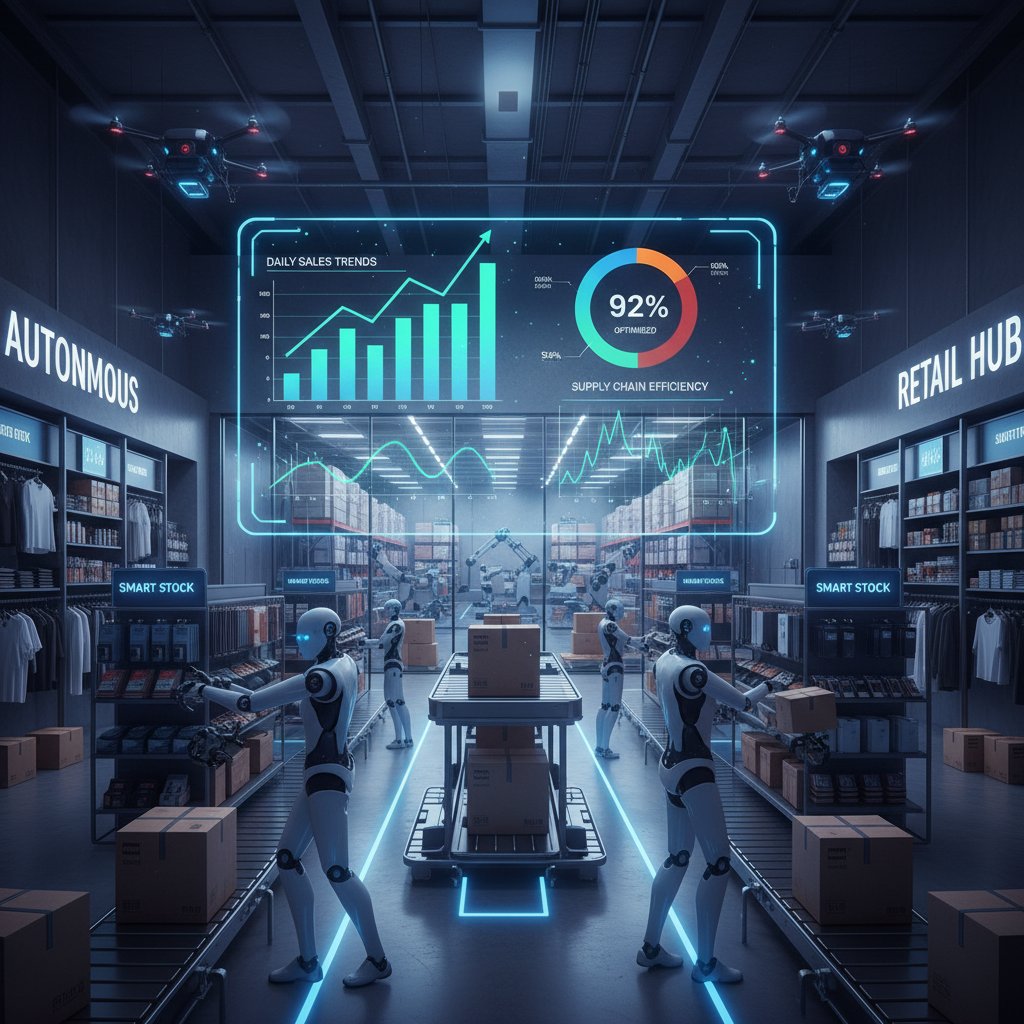
A national retailer was drowning in inventory errors, stockouts, and missed sales. Manual tracking led to $2 million in quarterly losses and burned-out staff. By automating inventory analysis and integrating real-time sales data, they slashed reporting time by 70% and improved inventory accuracy by 30%. The result? Higher profits, happier staff, and fewer “where’s my product?” complaints from customers.
Healthcare: life-and-death decisions powered by algorithms
In healthcare, automation isn’t just about efficiency—it’s about survival. Automated data analysis now drives patient record management, streamlines appointment scheduling, and enhances diagnostic accuracy. According to industry case studies, hospitals that automated recordkeeping reduced administrative workload by 25% and improved patient satisfaction scores (McKinsey, 2024). Automated analytics help healthcare professionals spot dangerous trends faster, ensuring timely, life-saving interventions.
Non-profits and NGOs: doing more with less
Non-profits wrestle with limited budgets and overwhelming data needs. One international NGO automated donor data analysis, freeing up staff to focus on mission-critical work. The outcome? More efficient fundraising, sharper campaign targeting, and greater impact per dollar spent. Automation doesn’t just help big business—it enables organizations with tight margins to punch above their weight, stretching every resource further.
Ready or not? Self-assessment and next steps
Are you ready to automate? A brutally honest checklist
Before diving in, ask yourself the tough questions. Is your team ready for change? Are your data pipelines clean? Do you have buy-in from leadership?
- Assess your current manual processes.
- Audit data quality and completeness.
- Evaluate regulatory and compliance requirements.
- Research automation tools (start with trusted sources like futuretoolkit.ai).
- Pilot, measure, and iterate—don’t expect perfection on day one.
Step-by-step guide to mastering why automate data analysis:
- Identify manual pain points with high error or delay rates.
- Ensure data quality before automating.
- Select verified automation platforms and tools.
- Implement pilot programs and monitor for unintended consequences.
- Scale solutions and continuously optimize for quality, ethics, and compliance.
Common myths busted: what automation won’t do for you
Let’s clear the air—automation isn’t a silver bullet. It won’t fix underlying data quality issues, transform toxic cultures, or replace the need for strategic oversight.
“We thought automation would fix everything—it didn’t.” — Morgan, operations manager
Even the best systems are only as good as the people, processes, and data they work with. Expecting miracles leads to disappointment. Instead, focus on building strong foundations, realistic timelines, and metrics for success.
Where to learn more and connect with the right resources
Want to go deeper? Look to industry reports, academic publications, and neutral resources. Platforms like futuretoolkit.ai offer accessible paths for non-technical users exploring data automation. For additional reading, check vetted sources such as:
- Datamaker Blog
- DOIT Software Data Analytics Trends
- McKinsey Insights on Data Analytics
- Insightvity Data Automation ROI
Stay skeptical, ask tough questions, and seek partners who back up promises with proof.
The future is now: how automation is rewriting business DNA
What’s next: predictions for automated analytics in 2025 and beyond
While this article avoids speculation, one thing is clear: the automation wave is recoding business DNA at every level. The next big leaps on the horizon are about explainable AI, self-healing data pipelines, and democratized access to powerful analytics.
| Year | Innovation | Impact |
|---|---|---|
| 2010-2015 | ETL & workflow automation | Basic time saving, error reduction |
| 2016-2020 | RPA & early ML adoption | Process automation, simple predictions |
| 2021-2023 | Augmented analytics surge | Real-time insights, accessible to non-tech |
| 2024-Present | Explainable AI | Transparent, auditable decision-making |
Table 3: Timeline of key innovations in automated data analysis (past, present, future)
Source: Original analysis based on DOIT, 2024, Datamaker, 2024
Final thoughts: why the real revolution is human
At the end of the day, automation isn’t about replacing people—it’s about empowering them. The real revolution lies in humans who ask better questions, design smarter systems, and challenge machines to deliver meaningful, ethical, and impactful results. Automation is the engine, but we are the drivers.
So ask yourself: Are you using your data, or is your data using you? In business, as in life, those who automate wisely don’t just survive—they lead the charge.
Sources
References cited in this article
- Datamaker(datamaker.app)
- DOIT Software(doit.software)
- McKinsey(coherentsolutions.com)
- Insightvity(insightvity.com)
- MIT Sloan(mitsloan.mit.edu)
- Dataversity(dataversity.net)
- Statista(statista.com)
- Forbes(forbes.com)
- Forbes(forbes.com)
- FleekBiz(fleekbiz.com)
- Datrics AI(datrics.ai)
- Statology(statology.org)
- Firgelli Automations(firgelliauto.com)
- Fanruan(fanruan.com)
- LinkedIn(linkedin.com)
- Medium(medium.com)
- SEMrush(semrush.com)
- Entytle(entytle.com)
- Financesonline(financesonline.com)
- Carpediem Partners(carpediempartners.com)
- Stepwise(stepwise.pl)
- Resolve.io(resolve.io)
- Forbes(forbes.com)
- CIO.com(cio.com)
- Fortune Business Insights(research.aimultiple.com)
- IS Partners(ispartnersllc.com)
- SmartCompliance(smartcompliance.co)
- Jessup University(jessup.edu)
- Mindinventory(mindinventory.com)
- Grand View Research(grandviewresearch.com)
Empower Your Business with AI
Futuretoolkit.ai empowers businesses of all sizes to harness the power of AI effortlessly, offering specialized solutions across diverse business functions without the need for technical expertise. Whether it's automating customer interactions, optimizing operations, or analyzing complex data, our AI toolkit streamlines processes, increases efficiency, and fuels growth. With easy integration, intuitive interfaces, and powerful AI models, Futuretoolkit.ai offers unmatched accessibility and value, enabling users to achieve measurable outcomes quickly and cost-effectively.
Get startedReady to Empower Your Business?
Start leveraging AI tools designed for business success
Frequently Asked Questions
What percentage increase in error rates can manual data analysis processes cause?
According to recent research by Datamaker (2024), errors stemming from manual processes can increase error rates by up to 30%.
What happened to the major retailer mentioned in the article due to manual data analysis mistakes?
A major retailer lost $2 million in a single quarter due to delays and mistakes in manual reporting, but after implementing automation, reporting time dropped by 70%.
How much decision-making delay can manual data analysis cause?
According to Datamaker (2024), manual data analysis can cause decision-making delays of nearly 40%.
Why does the article suggest automating data analysis before 2026 is critical?
The article frames automation as essential for business survival and competitive edge, arguing that the question in 2025 is not whether to automate but how long a business can afford not to automate.
Continue Reading
Keep exploring Comprehensive business AI toolkit

Manual Data Analysis Replacement Solutions and Their ROI Impact

Manual Data Analysis: Why Automation Is Reshaping Business

Ways to Automate Data Management Tasks Effectively

How AI and Automation Replace Manual Data Analysis

Manual Data Analysis: Why It Costs More Than You Think


