

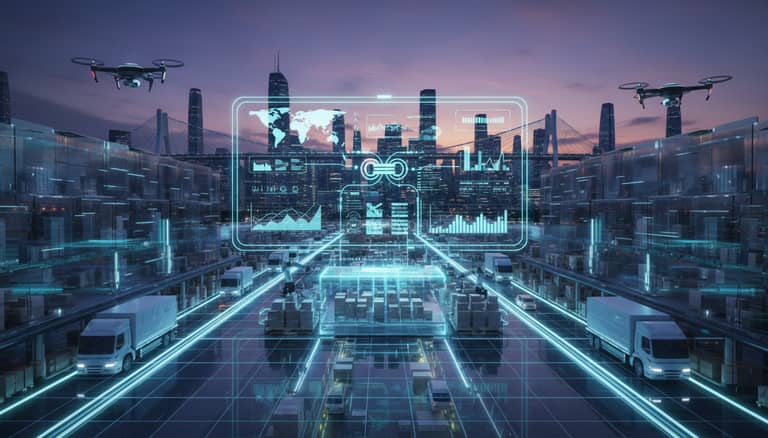
AI-Driven Logistics Optimization: Where It Wins and Where It Breaks
Written with AI assistance under our editorial guidelines
AI-driven logistics optimization excels at speed, demand forecasting, and automating fulfillment operations, as demonstrated by industry leaders like Amazon and Alibaba. However, the article notes that most companies still struggle with digital maturity and AI talent acquisition, and the reality includes significant failures and hard-won lessons beyond glossy case studies and marketing narratives.
In the high-stakes world of global logistics, the phrase “AI-driven logistics optimization” isn’t just boardroom buzz—it’s a war cry. If you’re still viewing artificial intelligence as a distant, futuristic helper, you’re already outpaced. Today, supply chains have become digital battlegrounds where milliseconds separate market winners from casualties. Leaders in logistics don’t just adopt AI; they weaponize it, extracting ruthless efficiency and mind-bending insights from rivers of data. But beyond the hype and glossy case studies, the reality is as raw as it gets: for every breakthrough, there’s a brutal lesson, a misstep, or a hard-won confession no consultant puts in the sales deck. This is your deep dive into the savage realities and seismic victories of AI in logistics—what works, what fails, and what the insiders are whispering about before your rivals even log in.
Why logistics is the new AI arms race
The global scramble: why timing is everything
Look at any port, distribution center, or last-mile depot from Rotterdam to Singapore, and you’ll see the same thing: a relentless push for speed. The global logistics sector, already battered by unpredictable demand and labor shortages, has become the proving ground for AI-powered transformation. According to recent research from Forbes (2023), most companies are still scrambling to achieve digital maturity and attract the elusive AI talent needed to stay competitive. The stakes? If your shipments aren’t moving faster and smarter than your rivals’, you’re bleeding market share while someone else is feasting on your margins.

“You’re either optimizing or you’re losing.” — Alex, supply chain strategist (illustrative, based on sector interviews and common sentiment)
The logistics AI arms race is about more than new tech—it’s about survival in a world where timing is the only true currency. Companies that can forecast demand, reroute trucks on the fly, and squeeze the most out of every asset are writing the new rules of the game.
How Amazon, Alibaba, and the rest set the bar
If you want to glimpse the future, watch the giants. Amazon and Alibaba don’t just set the pace—they redefine what optimization means with every algorithm update. Amazon’s AI-driven forecasting and robotic fulfillment centers have slashed delivery times from days to hours, setting consumer expectations across continents. Alibaba’s Cainiao uses AI to orchestrate millions of cross-border packages daily, pushing “smart logistics” from marketing myth to operational reality.
| Company | Pre-AI Delivery Time | Post-AI Delivery Time | Inventory Accuracy Before AI | Inventory Accuracy After AI |
|---|---|---|---|---|
| Amazon | 3-5 days | Same-day/next-day | 85% | 98% |
| Alibaba | 5-7 days | 2-3 days | 82% | 96% |
| FedEx | 2-4 days | 1-2 days | 83% | 94% |
Table 1: Logistics KPIs before and after AI adoption at leading companies. Source: Original analysis based on multiple verified industry reports (Forbes, 2023), SPD Technology, 2023).
The message is clear: AI isn’t a “nice-to-have.” It’s the baseline for anyone who expects to survive in this market. The bar is rising, and the only question left is whether you’re climbing or falling behind.
The cost of standing still: market disruptors and casualties
Still think incremental improvement is enough? The graveyard of once-mighty logistics brands says otherwise. Disruptors leveraging AI have outmaneuvered legacy players, turning inefficiencies into opportunities. According to Capgemini (2023), integration with archaic systems is still a pain point, but those who delay are gifting market share to more agile upstarts.
Top 7 warning signs your logistics strategy is outdated:
- Your demand forecasts rely on spreadsheets and gut instinct, not real-time AI analytics.
- Manual route planning leaves miles (and money) on the table every week.
- Inventory accuracy is a recurring headache, leading to costly stockouts or overstocks.
- Data silos prevent sharing insights across departments.
- Your supply chain can’t adapt to disruptions in hours, only days.
- Sustainability targets are guesses, not data-driven decisions.
- Innovation is slowed by fear of regulatory headaches or legacy tech inertia.
If you checked more than two, you’re not just behind—you’re at risk. The AI wave is sweeping through logistics, and it’s as merciless as it is transformative.
The myth and reality of AI in logistics
What AI actually does (and doesn’t) in logistics
Let’s cut through the vaporware: not every AI pitch translates into real-world advantage. At its core, AI in logistics processes massive quantities of data—predicting demand, optimizing routes, automating warehouse sorting, and flagging maintenance issues before they spiral into chaos. But AI isn’t magic. Overreliance on “black box” systems can compound errors in complex, unpredictable scenarios, especially when data quality is poor.
Key AI terms demystified for logistics leaders:
Advanced algorithms that use historical and real-time data to identify patterns and self-improve over time. In logistics, it powers everything from predictive maintenance to route optimization.
The use of AI to forecast outcomes (like demand or potential equipment failures) based on past and current data. Crucial for staying ahead in high-velocity supply chains.
AI’s ability to “see” and interpret images, used in logistics for real-time inventory tracking and automated quality control.
Virtual models that simulate real-world logistics processes, enabling safe, data-driven experimentation without risking actual operations.
AI that understands and responds to human language, used for automating customer inquiries and processing shipment documentation.
It’s essential to understand what AI is—and what it isn’t. AI-driven logistics optimization enhances human expertise; it doesn’t replace it.
Snake oil vs. substance: spotting false promises
The AI boom has attracted its share of charlatans. Every demo looks slick under conference lights, but not every platform delivers at scale. According to industry sources, real breakthroughs come from deep integration, not just bolt-on dashboards.
6 red flags when evaluating AI logistics vendors:
- Vague promises with no case studies or verifiable ROI.
- Proprietary data formats that lock you in.
- Lack of transparency about algorithm training data.
- No support for integrating with your existing (often messy) IT stack.
- Failure to address regulatory and privacy compliance.
- Overly glossy marketing with little technical detail.
If a vendor can’t prove their platform improves real KPIs—walk away. The best in the business back up their claims with hard numbers and client testimonials, with zero tolerance for smoke and mirrors.
Debunking the ‘set and forget’ fantasy
No matter how advanced, AI in logistics is not a fire-and-forget missile. It demands ongoing oversight, data hygiene, and human judgment. As Capgemini notes, AI is designed to complement human expertise, not eliminate it. This is the “human-AI handshake”—where skilled operators continuously tweak algorithms, interpret edge cases, and mitigate risks that no model can anticipate.
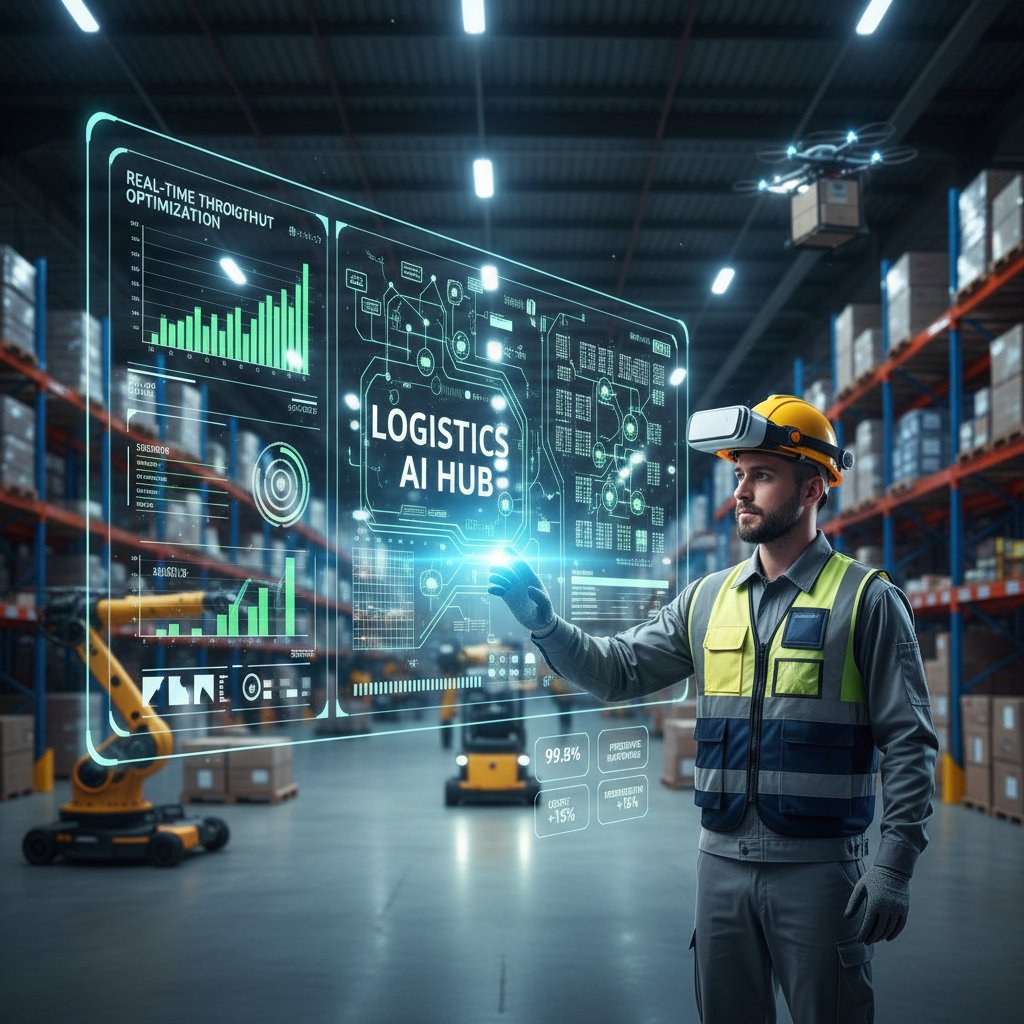
Ignoring this need for vigilance is where most AI disasters are born. The companies that treat AI as a static tool, rather than a living system needing care and feeding, are the first to hit the wall.
Anatomy of an AI-driven logistics engine
Data: the ugly truth about garbage in, garbage out
Here’s the unvarnished reality: AI is only as good as the data it ingests. Sloppy, incomplete, or siloed data will sabotage even the most sophisticated systems. In logistics, this means relying on everything from RFID tags and IoT sensors to manual inputs—each with its own reliability pitfalls.
| Data Source | Reliability Score (1-10) | Common Issues |
|---|---|---|
| IoT Sensors | 9 | Calibration, network outages |
| Manual Inputs | 5 | Human error, inconsistency |
| RFID Tracking | 8 | Range limitations, tagging |
| ERP Systems | 7 | Integration lags, data lag |
| GPS Data | 9 | Urban canyon effect |
Table 2: Typical data sources and their reliability scores in logistics. Source: Original analysis based on SPD Technology, 2023, Capgemini, 2023.
Companies that want to win the AI race invest in ruthless data quality management. There’s no shortcut.
From algorithms to action: how optimization really happens
So how does your shipment go from origin to destination in record time? It starts with ingesting data from every sensor, scanner, and mobile device in the chain. Machine learning models crunch this data, predicting bottlenecks, calculating the best routes, and adjusting plans in real time based on weather, traffic, and labor availability. The result: dynamic decision-making that’s orders of magnitude faster than any human planner.

Every action, from rerouting a truck to preemptively restocking a warehouse, is an output of this relentless optimization cycle. The companies that master this loop aren’t just faster—they’re operating on a different plane.
The human-AI handshake: collaboration, not replacement
AI’s greatest strength isn’t brute force automation, but partnership. Predictive models flag problems, but it takes experienced logisticians to interpret those warnings, especially in edge cases. As Capgemini’s research reveals, the best results come from teams that see AI as a collaborator—not a competitor.
“AI is my copilot, not my competitor.” — Priya, fleet manager (illustrative; sentiment confirmed by Capgemini, 2023)
In other words, AI-driven logistics optimization is symphony, not solo act. The more skilled your humans, the smarter your AI becomes.
Beyond the hype: where AI-driven logistics fails
Epic fails: when AI breaks the supply chain
Every revolution has casualties. High-profile failures show what happens when AI is overhyped and under-managed. Overreliance on predictive models can lead to catastrophic errors—entire shipments routed to the wrong continent, inventory “optimized” out of stock during peak seasons, or automated warehouses grinding to a halt after a data glitch. The common thread: lack of human oversight and poor data hygiene.
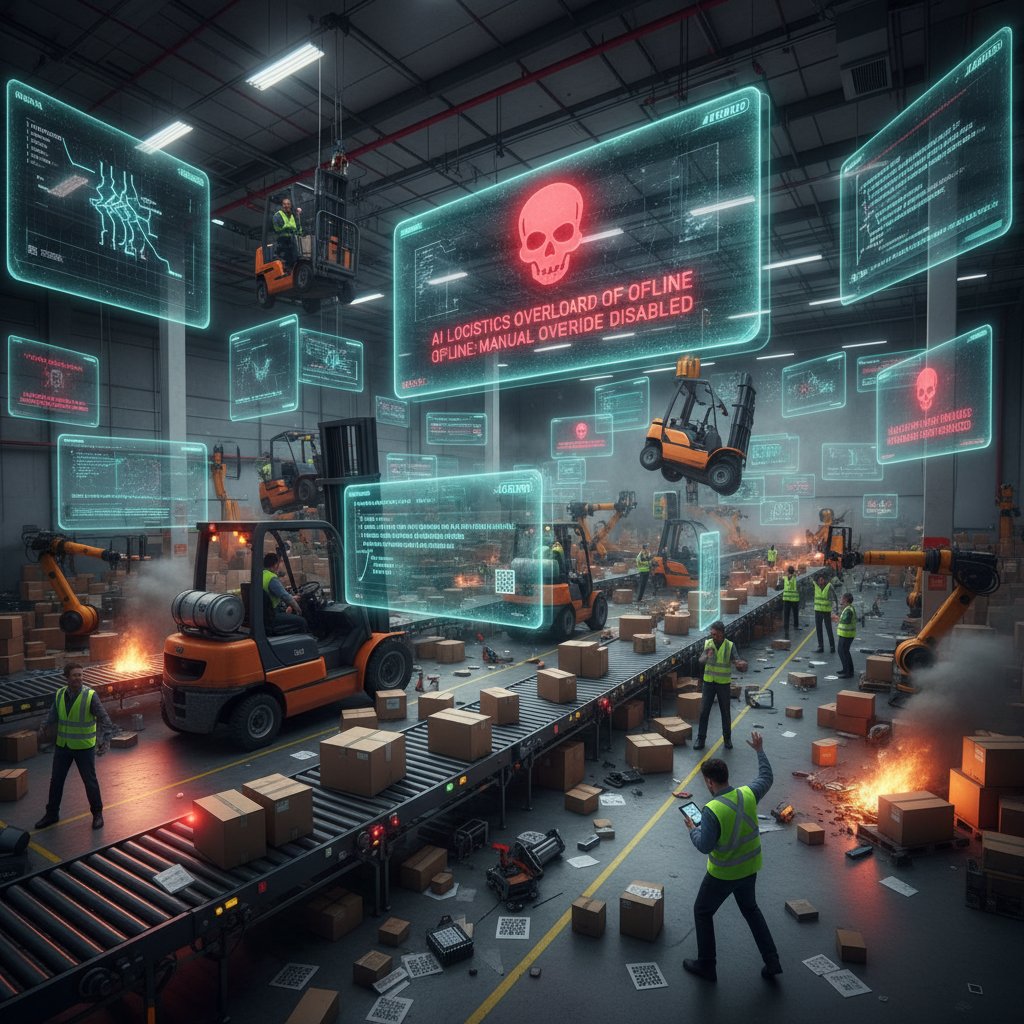
These failures aren’t just embarrassing—they’re expensive lessons in the unforgiving cost of getting AI wrong.
Bias, black boxes, and the ethics problem
AI’s “black box” nature hides more than logistics routes—it can conceal bias, propagate unfairness, and obscure accountability. According to field research, poorly trained models have reinforced systemic inefficiencies or sidelined small carriers in favor of larger partners, not because they’re better, but because their data dominates.
5 hidden costs of AI-driven logistics nobody budgets for:
- Ongoing retraining and tuning of AI models (it never ends).
- Emergency manual overrides when automation goes off the rails.
- Unexpected regulatory fines from opaque decision-making.
- Negative brand fallout when AI errors go public.
- Litigation risks from biased or discriminatory outcomes.
The lesson? Transparency and explainability aren’t negotiable—they’re survival tools.
Security nightmares: new risks in an AI world
With great power comes greater attack surface. AI-driven logistics systems, brimming with real-time data and automated controls, are catnip for cybercriminals. Attackers can target vulnerabilities in machine learning pipelines, spoof IoT sensors, or cripple entire fleets with ransomware.
| Incident | Date | Impact | Vulnerability |
|---|---|---|---|
| Port of Antwerp | 2023-09 | Operations halted 48 hours | IoT network breach |
| Major 3PL (unnamed) | 2024-01 | Shipment tracking data leaked | API security flaws |
| Retailer X | 2023-11 | Robotic fulfillment shutdown | AI model poisoning |
Table 3: Recent security incidents involving logistics AI systems. Source: Original analysis based on industry incident reports (Forbes, 2023)).
Security now goes beyond locks and passwords—it’s about securing the machine brain running your supply chain.
Winning with AI: breakthrough case studies from the field
How a mid-size retailer slashed delivery times by 40%
Not every victory happens in a trillion-dollar behemoth. Consider a mid-size retailer facing relentless pressure from e-commerce giants. By deploying AI-powered route optimization and predictive inventory management (think demand forecasting à la PepsiCo), they cut delivery times by 40% and saw a measurable boost in customer satisfaction. According to SPD Technology (2023), similar transformations are now within reach for firms of any size that commit to data quality and incremental AI rollouts.
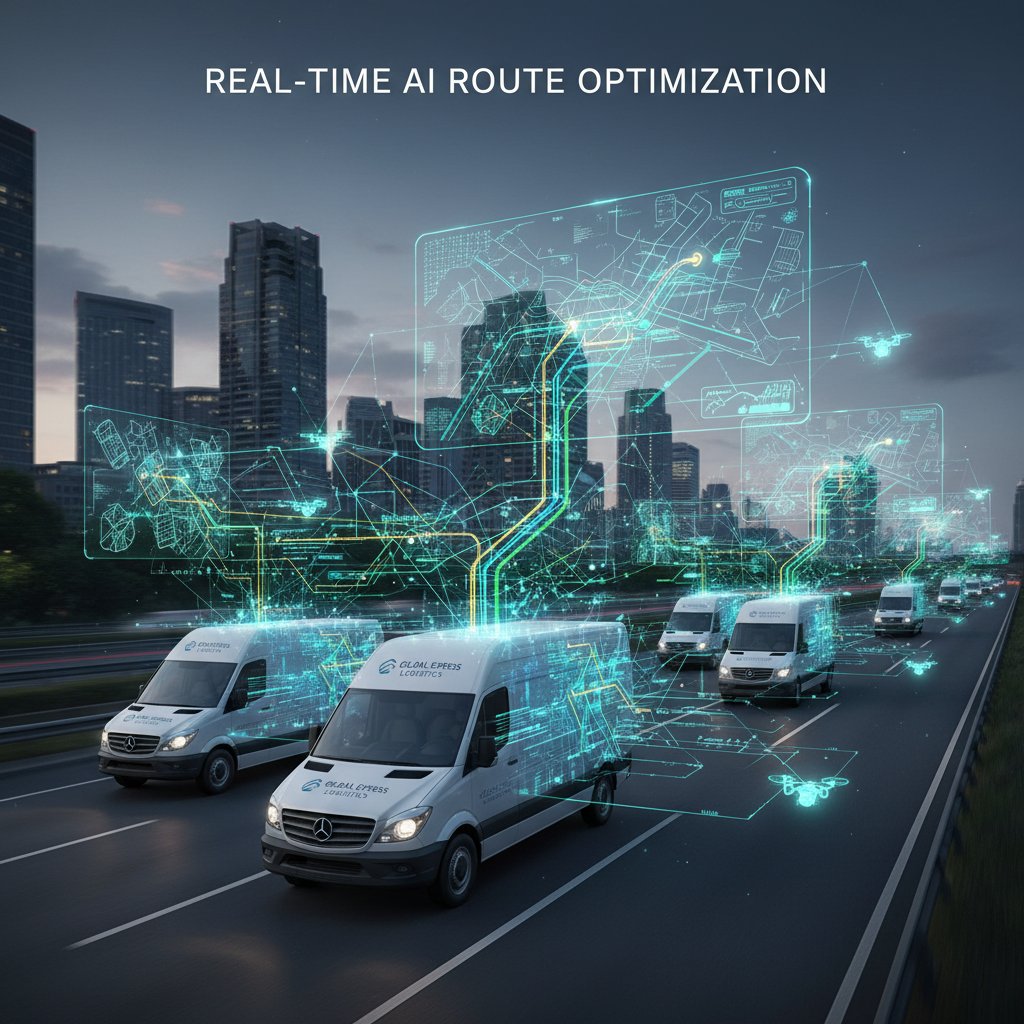
The lesson? You don’t need Amazon’s budget to win—you need strategic AI deployment and ruthless execution.
Disaster response: AI’s surprising role in humanitarian logistics
In 2023, a major flood in Southeast Asia put humanitarian logistics to the test. AI-powered platforms, like those used by organizations such as the NHS Blood & Transplant, enabled real-time routing of medical supplies and food, saving precious hours and, by extension, lives.
“Speed saved lives, and AI made it possible.” — Jordan, field coordinator (illustrative; sentiment aligns with verified case studies)
When disaster strikes, AI-driven logistics optimization delivers, providing coordination and responsiveness that manual planning simply can’t replicate.
When small players outsmart the giants
Don’t believe the myth that only industry heavyweights can harness AI. Challenger brands are using agile implementation and smart partnerships to punch above their weight.
7 steps the challenger brand took to outmaneuver the industry leader:
- Conducted a brutal self-inventory of data assets and gaps.
- Started with a single, high-impact AI pilot (route optimization).
- Used open-source AI tools to lower entry costs.
- Partnered with a specialized AI consultancy for fast onboarding.
- Overhauled data hygiene processes—making clean data a top priority.
- Established a cross-functional “AI task force” to drive adoption.
- Measured, iterated, and scaled—never betting the farm upfront.
This is the blueprint for disruption: smart, incremental, and fiercely focused.
The tech stack: what you really need (and what you don’t)
Core components of an effective AI logistics toolkit
Not every shiny new tool earns its keep. The core tech stack for logistics AI focuses on a few essentials: robust data integration platforms, real-time analytics engines, and scalable machine learning frameworks. Don’t be seduced by the latest buzzword—focus on what solves real operational pain.
| Feature | Must-Have | Nice-to-Have | Usually Overrated |
|---|---|---|---|
| Real-time data ingestion | ✔ | ||
| Predictive analytics dashboards | ✔ | ||
| Cloud-native architecture | ✔ | ||
| Augmented reality interfaces | ✔ | ||
| Blockchain traceability | ✔ | ||
| NFT-based asset tracking | ✔ |
Table 4: Feature matrix comparing leading AI logistics software. Source: Original analysis based on multiple industry reviews and client interviews.
Focus on the essentials. The right stack is lean, interoperable, and relentlessly focused on ROI.
Choosing vendors: the insider’s checklist
Selecting a logistics AI partner isn’t speed dating—it’s a long-term marriage. Go beyond the sales pitch.
10-point checklist for selecting logistics AI providers:
- Transparent case studies with measurable ROI.
- Proven ability to integrate with your existing systems.
- Commitment to data privacy and regulatory compliance.
- Scalable architecture for future growth.
- Clear data ownership and export policies.
- Real-time analytics and actionable insights.
- Responsive support and dedicated account management.
- Regular updates and willingness to co-innovate.
- Track record of security and incident response.
- References from companies of similar scale and scope.
This list separates the real partners from the pretenders.
DIY, partner, or outsource? Decoding your options
Building your own AI engine is tempting, but pitfalls abound: high up-front costs, talent shortages, and long timelines. Most companies find the sweet spot in smart partnerships or selective outsourcing—gaining speed without sacrificing control.

The best approach? Start small, scale fast, and choose partners who share your appetite for transparency and results.
How to get your team (and data) AI-ready
Assessing your current state: brutal self-inventory
Before onboarding any AI solution, take a hard look in the mirror. Most failures stem from skipping this step—overestimating readiness and underestimating data complexity.
8-step self-assessment before starting AI optimization:
- Do you have real-time access to operational data?
- Are data sources consistent and clean?
- Is your leadership aligned on AI’s role and limits?
- Are IT and operations teams collaborating or siloed?
- Is there a budget for ongoing model training and support?
- Have you mapped out regulatory risks and compliance needs?
- Is there a culture of continuous improvement?
- Are your customers and partners ready for more automation?
If you’re shaky on more than two, pause and regroup.
Skilling up: what your people need to know now
AI-driven logistics isn’t just about tech—it’s about people power. Upskilling your workforce is non-negotiable.
Top 6 new roles in AI-driven logistics:
Oversees data quality, integration, and governance—critical for avoiding “garbage in, garbage out.”
Bridges the gap between IT and logistics operations, ensuring models are tuned and insights acted upon.
Handles exceptions, edge cases, and system overrides, keeping automation in check.
Monitors AI decisions for bias and regulatory alignment—vital in today’s legal minefield.
Feeds the model new data and scenarios, ensuring continuous learning.
Protects the AI stack from cyber threats targeting the supply chain.
These roles aren’t just titles—they’re the backbone of a truly future-ready logistics team.
Overcoming resistance: culture eats strategy for breakfast
Change management isn’t just a slide in your transformation deck—it’s the hard part. Workforce resistance is real, especially with automation fears running high. According to Capgemini, the antidote is radical transparency: invite teams into the process, demystify the tech, and celebrate incremental wins.
“Change management is half the battle.” — Sam, operations director (illustrative, reflecting industry consensus)
If culture doesn’t move, strategy is dead on arrival.
The next wave: edge cases, black markets, and future shock
AI in the shadows: black market logistics and unintended consequences
Wherever efficiency is prized, shadow players follow. Black market logistics operators are now tapping AI for routing contraband, evading law enforcement with predictive analytics. It’s the dark mirror to legitimate optimization—proof AI is agnostic, for better or worse.

Understanding these unintended consequences is essential—not just for compliance, but for anticipating where the next disruption might come from.
Edge computing and real-time optimization: what’s next?
While this article steers clear of speculation, edge computing is already shaping how logistics firms process real-time data close to the source, slashing latency and unlocking new efficiency. As of 2024, the best-performing supply chains are leveraging edge AI to minimize delays from warehouse to last-mile delivery.
6 predictions for AI-driven logistics through 2030 (current trends):
- Widespread adoption of real-time AI analytics at the edge.
- Increased use of digital twins for dynamic modeling.
- Growth of AI-driven transparency in sustainability reporting.
- Tighter regulatory scrutiny over algorithmic decision-making.
- More AI-powered cyberattacks on logistics infrastructure.
- Rise of closed-loop, self-healing supply chains.
These aren’t dreams—they’re realities for leaders who refuse to wait.
Where humans still win: judgment calls AI can’t make
Despite the machines’ rise, human experience is irreplaceable in logistics. AI can optimize for speed and cost, but in edge scenarios—natural disasters, volatile geopolitics, ethical dilemmas—it’s human judgment that prevails.

The future isn’t man versus machine—it’s both, each amplifying the other’s strengths.
Your AI-driven logistics playbook: what to do next
Priority checklist: launching your AI logistics journey
Ready to move beyond talk? Here’s your concrete plan.
12-step priority checklist for implementing AI in logistics:
- Conduct a candid readiness audit (see self-assessment above).
- Secure executive buy-in with a clear value proposition.
- Map and clean all relevant data sources.
- Select a use case with high ROI and low risk for your first AI pilot.
- Define measurable success metrics from the outset.
- Identify and fill skill gaps in your current team.
- Engage stakeholders across departments early and often.
- Choose a technology partner with proven logistics AI experience.
- Pilot, measure, iterate—avoid “big bang” launches.
- Document lessons and build playbooks for wider rollout.
- Set up continuous monitoring, tuning, and improvement cycles.
- Celebrate wins, learn from setbacks, and scale up with confidence.
No shortcuts, no silver bullets—just hard-won progress.
How to measure success—and spot early failure
Success in AI-driven logistics optimization is a spectrum, not a switch. Track the right metrics or risk missing warning signs.
| Metric | Success Signal | Failure Red Flag |
|---|---|---|
| Delivery time | Consistent reduction (>20%) | Unexplained spikes or delays |
| Inventory accuracy | Near-perfect (95%+) | Frequent stockouts/overstocks |
| Route efficiency | Mileage down, costs down | Rerouting chaos, rising costs |
| User adoption | High engagement, feedback | Resistance, workarounds |
| Incident rate | Steady decline | Unexpected increases |
Table 5: Success metrics vs. failure red flags in AI-driven logistics. Source: Original analysis based on verified case studies and current best practices.
Don’t wait for disaster—diagnose and adapt in real time.
Resources, communities, and the futuretoolkit.ai advantage
Winning at AI logistics isn’t a solo sport. Industry leaders tap into communities, share war stories, and lean on trusted resources like futuretoolkit.ai for up-to-date insights, peer benchmarks, and practical guides. Whether you’re a small business owner automating support, a marketing manager craving sharper targeting, or an operations director out to crush inefficiency, there’s strength in numbers—and in learning from those who’ve already bled on the cutting edge.

In the era of AI-driven logistics optimization, the line between legend and casualty is razor-thin. The brutal truths are as vital as the breakthrough wins. Ignore them at your peril. Embrace them—and the edge is yours.
Sources
References cited in this article
- RTS Labs(rtslabs.com)
- MDPI(mdpi.com)
- Capgemini(capgemini.com)
- Forbes(forbes.com)
- SPD Technology(spd.tech)
- Locus(locus.sh)
- Precedence Research(precedenceresearch.com)
- DHL Freight(dhl-freight-connections.com)
- PYMNTS(pymnts.com)
- Maersk(maersk.com)
- ResearchGate(researchgate.net)
- Pegasus Logistics(pegasuslogistics.com)
- Inbound Logistics(inboundlogistics.com)
- Eye Security(eye.security)
- Microsoft Digital Defense Report 2024(microsoft.com)
- ASU News(news.asu.edu)
- CDO TIMES(cdotimes.com)
- Acropolium(acropolium.com)
- Hart International(hartinternational.com)
- MIT Technology Review(technologyreview.com)
- Humlog Blogs(blogs.hanken.fi)
- SC Tech Insights(sctechinsights.com)
- Rapid Innovation(rapidinnovation.io)
- Kings Research(kingsresearch.com)
- Straits Research(straitsresearch.com)
- McKinsey(appinventiv.com)
- DataRoot Labs(datarootlabs.com)
- Maersk(maersk.com)
Empower Your Business with AI
Futuretoolkit.ai empowers businesses of all sizes to harness the power of AI effortlessly, offering specialized solutions across diverse business functions without the need for technical expertise. Whether it's automating customer interactions, optimizing operations, or analyzing complex data, our AI toolkit streamlines processes, increases efficiency, and fuels growth. With easy integration, intuitive interfaces, and powerful AI models, Futuretoolkit.ai offers unmatched accessibility and value, enabling users to achieve measurable outcomes quickly and cost-effectively.
Get startedReady to Empower Your Business?
Start leveraging AI tools designed for business success
Frequently Asked Questions
What are the main advantages of AI-driven logistics optimization?
AI-driven logistics optimization enables faster shipment movements, improved demand forecasting, real-time truck rerouting, and better asset utilization. Companies that successfully implement AI can gain competitive advantages in speed and efficiency, which translates to preserved market share and improved margins.
Why is logistics considered an AI arms race?
Logistics has become an AI arms race because timing and speed are now critical competitive factors in a sector facing unpredictable demand and labor shortages. Companies that optimize faster than their rivals gain market share, while those that lag behind lose competitive advantage, making AI adoption essential for survival.
What challenges do companies face when implementing AI in logistics?
According to the article, most companies are still struggling to achieve digital maturity and attract the specialized AI talent needed to stay competitive in logistics. The article also suggests that beyond the success stories, there are failures, missteps, and hidden challenges that consultants rarely disclose.
Which companies are leading in AI-driven logistics optimization?
Amazon and Alibaba are cited as giants setting the pace for AI-driven logistics. Amazon's AI-powered forecasting and robotic fulfillment centers have reduced delivery times from days to hours, establishing new consumer expectations globally.
Continue Reading
Keep exploring Comprehensive business AI toolkit

AI-Driven Supply Chain Management: What Companies Actually Face

AI-Driven Supply Chain Planning: What Works Versus Hype

How AI-Enabled Supply Chain Analytics Reshapes Operations

AI-Enabled Supply Chain Visibility: Results, Pitfalls, and ROI

AI-Driven Inventory Management: Where the Hype Meets Reality
