


AI-Driven Business Intelligence: 7 Risks Vendors Won’t Mention
Written with AI assistance under our editorial guidelines
AI-driven business intelligence platforms promise revolutionary insights, but vendors obscure significant limitations. While 80% of enterprise BI tools now include AI features, only 23% of organizations report these actually drive actionable change. Most marketed "AI" capabilities are merely basic automation rather than genuine machine learning intelligence.
If you think you’ve seen hype, you haven’t met AI-driven business intelligence. This isn’t just dashboard eye-candy—it’s a paradigm shift that’s rewiring boardroom logic and reshaping how organizations move from data chaos to actionable insight. But with every seismic shift comes a wake of brutal truths, hidden wins, and enough smoke and mirrors to make even the most seasoned exec question reality. In 2025, the data tsunami is real, the stakes are higher, and myths about machine learning BI are more seductive—and dangerous—than ever. This piece peels back the veneer, exposes the costs no vendor will admit, and shows you the untapped wins that only the boldest are seizing. Whether you’re a skeptic, a zealot, or just tired of being sold “AI-powered everything,” get ready for the clear-eyed story of business AI solutions that’s as unfiltered as it is essential.
Why AI-driven business intelligence is rewriting the rules
The evolution: from dashboards to decision engines
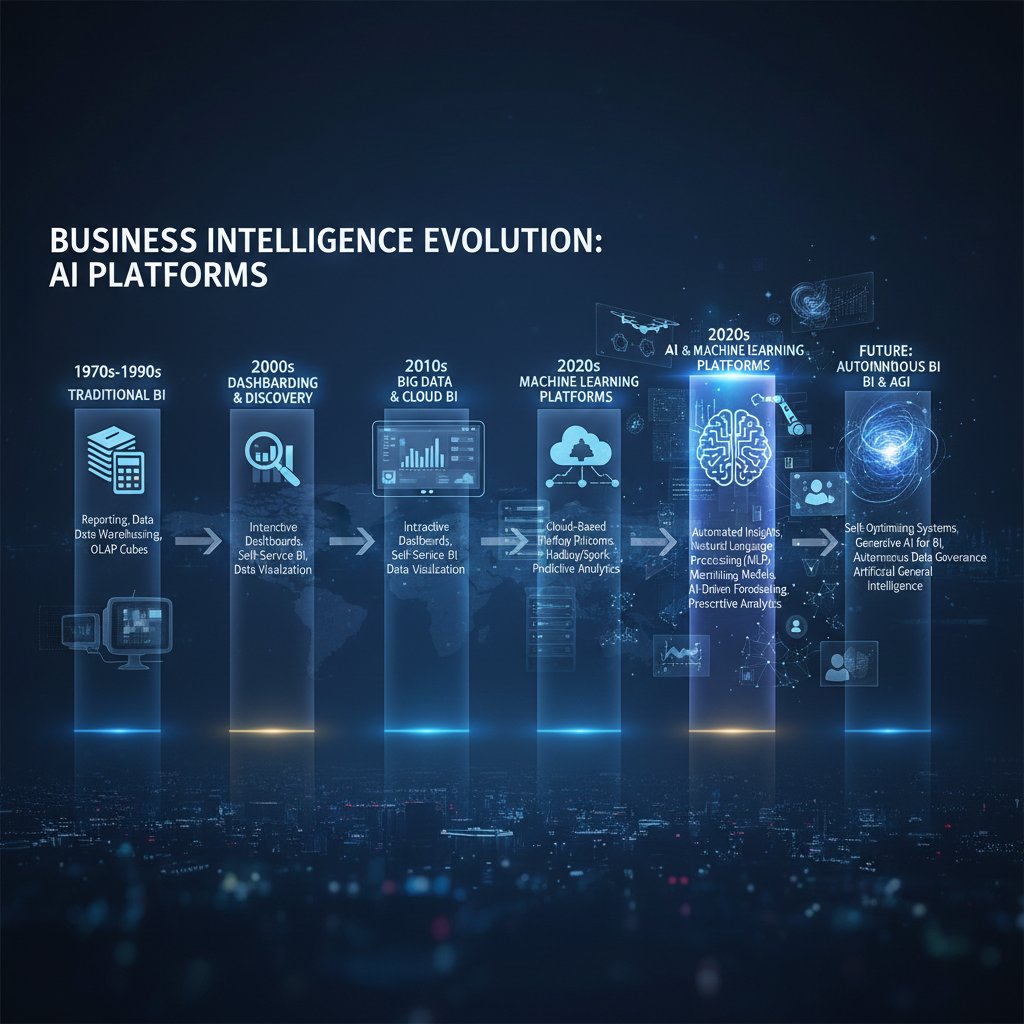
Ten years ago, business intelligence (BI) was about static dashboards and rearview reporting. You’d click through clunky interfaces, marvel at pie charts, and try to convince yourself that “knowing what happened” was enough. It wasn’t. Early BI promised clarity but delivered confusion, with most systems devolving into expensive spreadsheet replacements.
That changed when machine learning and automated decision-making muscled in. The new era? Platforms that not only interpret historical data but forecast, prescribe, and sometimes even act—blurring the line between analytics and operational command center. According to research from Gartner, as of 2024, more than 80% of enterprise BI tools offer some form of AI-powered analytics, but only 23% of organizations report these features leading to actionable change (Gartner, 2024). This gap between promise and payoff is where the real story begins.
The hype—what’s real, what’s vendor smoke
Scan any vendor’s website and you’ll read about “revolutionary AI” that “extracts hidden insights instantly.” The truth? Most so-called “AI” in BI tools is little more than automated reporting or surface-level prediction. As Samantha, an AI strategist, puts it:
"Most AI in BI today is lipstick on a spreadsheet." — Samantha, AI strategist
According to a recent Forrester analysis, over half of platforms branded “AI-powered” offer only basic automation, not true intelligence or learning (Forrester, 2024). Business AI solutions are evolving, but buyer beware: if it sounds magical, it’s probably marketing.
Why this matters now: the data tsunami
By 2025, businesses are drowning in data. IDC’s 2024 report shows global data volumes doubling every two years, with retail, healthcare, and finance leading the pack (IDC, 2024). But more data hasn’t meant more insight—legacy BI tools are buckling under the strain, unable to surface what matters before it’s obsolete. AI-driven business intelligence is billed as the lifeboat, but the reality is more complex.
| Industry | Avg. Data Growth (2023-2024) | % Data Used for Decisions | Actionable Insights Gap |
|---|---|---|---|
| Retail | 38% | 19% | High |
| Healthcare | 45% | 23% | High |
| Finance | 41% | 29% | Moderate |
| Manufacturing | 35% | 24% | Moderate |
| Marketing | 32% | 31% | Low |
Table 1: Data growth and actionable insight gaps by industry, 2023-2024.
Source: IDC, 2024
The message is clear: without real AI, the signal-to-noise ratio will only get worse.
The hidden costs and risks no one wants to talk about
The myth of ‘plug and play’ AI
Ask any vendor, and they’ll swear their AI-driven BI solution is “plug and play.” The reality? Deploying machine learning BI at scale is a minefield of technical, operational, and cultural hurdles. Even with products pitching “no-code” or “accessible AI,” real-world implementations are messy.
- Data quality nightmares: AI is only as good as your input. Most organizations discover they lack the clean, labeled data needed—even after years of “prepping.”
- Expensive integration headaches: Connecting AI BI with legacy systems can spiral into months of development, especially if internal data standards are inconsistent.
- Model drift and degradation: Without ongoing tuning and monitoring, AI models can become less accurate over time, leading to bad recommendations.
- Regulatory and compliance pitfalls: Unclear data lineage or opaque decision algorithms can put you on a collision course with regulators.
- Change management resistance: People don’t trust black boxes—especially when jobs or bonuses are on the line.
- Hidden cloud and compute costs: Training and running large AI models isn’t cheap, and costs can balloon unexpectedly.
- Vendor lock-in: Many platforms use proprietary formats, making it hard to switch or scale flexibly.
These are the “implementation taxes” few sales decks mention but every organization pays.
When bias becomes invisible—and dangerous
AI-driven business intelligence promises objectivity, but machine learning algorithms are only as neutral as their training data. If your historical data is riddled with bias—say, favoring certain customer segments or regions—AI will perpetuate these inequities, but faster and on a larger scale. According to a 2024 MIT study, more than 70% of production AI models in BI inadvertently reinforced existing organizational biases (MIT Sloan, 2024). The consequences? Skewed hiring, discriminatory lending, or flawed risk assessments—all delivered with algorithmic confidence.

Cost-benefit breakdown: the good, the ugly, the unpredictable
The sticker price for an AI-powered BI platform is only the beginning. Ongoing training, cloud storage, and compliance can double or triple TCO in practice. While AI can generate massive ROI by automating reporting and surfacing hidden trends, it’s common for companies to hit budget overruns in the first year.
| Model Type | Upfront Costs | Ongoing Costs | Flexibility | Avg. ROI (Year 1) |
|---|---|---|---|---|
| Traditional BI | Low-Moderate | Low | Limited | 8-15% |
| AI-driven BI | Moderate-High | High | High | 18-34% |
| Hybrid BI | Moderate | Moderate | High | 15-25% |
Table 2: Cost-benefit analysis of BI models.
Source: Original analysis based on [Gartner, 2024], [IDC, 2024]
Bottom line: Know your use cases and budget for the long game.
Debunking the biggest myths about AI in business intelligence
AI means full automation—think again
There’s a dangerous fantasy that you can “set and forget” an AI-driven BI system and let it run the business. But the reality is raw predictions without human judgment are a recipe for disaster. Imagine a self-driving car with no steering wheel—sure, it’ll get you somewhere, but you might not like the destination. As Marcus, a BI lead, famously quipped:
"AI is your co-pilot, not your autopilot." — Marcus, BI lead
Even the smartest models need guardrails and domain expertise to interpret edge cases, spot outliers, and ask the questions the algorithm can’t.
Only tech giants can afford real AI-driven BI
Until recently, the narrative was that only Fortune 500s could afford scalable, machine learning-based BI. But the game has changed. Platforms like futuretoolkit.ai now democratize access, letting mid-sized enterprises and nimble startups tap advanced analytics without a PhD in data science—or a seven-figure IT budget. According to Deloitte’s Small Business Technology Report (2024), 43% of surveyed SMEs deployed at least one AI-powered analytics tool last year (Deloitte, 2024), a number up 16% from 2022.

If it’s AI-powered, it must be smarter
Many believe “AI-powered” is synonymous with “better.” The truth is, poorly configured AI can underperform even simple rule-based analytics. A 2024 case from a national retailer revealed that their AI-driven forecasting model misread seasonality, leading to a 12% inventory shortfall, while a legacy rules-based approach would have flagged the anomaly. The lesson? AI is powerful, but not infallible. Results depend on setup, oversight, and the quality of business questions asked.
Inside the AI black box: how does it really work?
From data lakes to deep learning: the workflow explained
At its core, AI-driven business intelligence is a pipeline—a series of connected steps that turn raw data into insight.
- Data ingestion: Pulling data from every available source—sales, CRM, web traffic, IoT sensors—into a secure warehouse or “data lake.”
- Data cleansing: Removing duplicates, standardizing formats, and flagging inconsistencies.
- Feature engineering: Transforming messy raw data into structured variables AI can “understand.”
- Model training: Feeding data into machine learning algorithms, adjusting parameters to minimize error.
- Prediction and interpretation: Generating forecasts, detecting outliers, and surfacing recommendations.
- Action and feedback loop: Automating reports, flagging anomalies, and gathering user feedback to improve future results.
Definition list:
A storage repository that holds a vast amount of raw data in its native format until it’s needed. Essential for AI BI because structured and unstructured data can be analyzed together.
The process of selecting, modifying, or creating new variables (“features”) from raw data to improve model performance.
The phenomenon where the statistical properties of the target variable change over time, causing model performance to degrade.
The iterative process of finding the optimal settings for a machine learning algorithm to maximize accuracy.
When AI systems not only recommend but execute business actions without human intervention (e.g., adjusting prices in real time).
The degree to which the internal mechanics of a machine learning system can be explained in human terms—a hot-button issue for AI-driven business intelligence.
What nobody tells you about training and tuning
Developing robust AI models for BI is less like building a rocket and more like raising a teenager—messy, unpredictable, and full of surprises. Training requires huge volumes of labeled data, much of it painstakingly annotated by humans. Once deployed, models are vulnerable to drift, requiring constant monitoring and recalibration. According to O’Reilly’s AI Adoption Survey (2024), 63% of firms reported model degradation within 12 months of launch (O’Reilly, 2024). If your vendor treats AI as a static solution, run.

Real-world stories: wins, wipeouts, and lessons learned
Case study: AI-driven BI in retail—unexpected outcomes
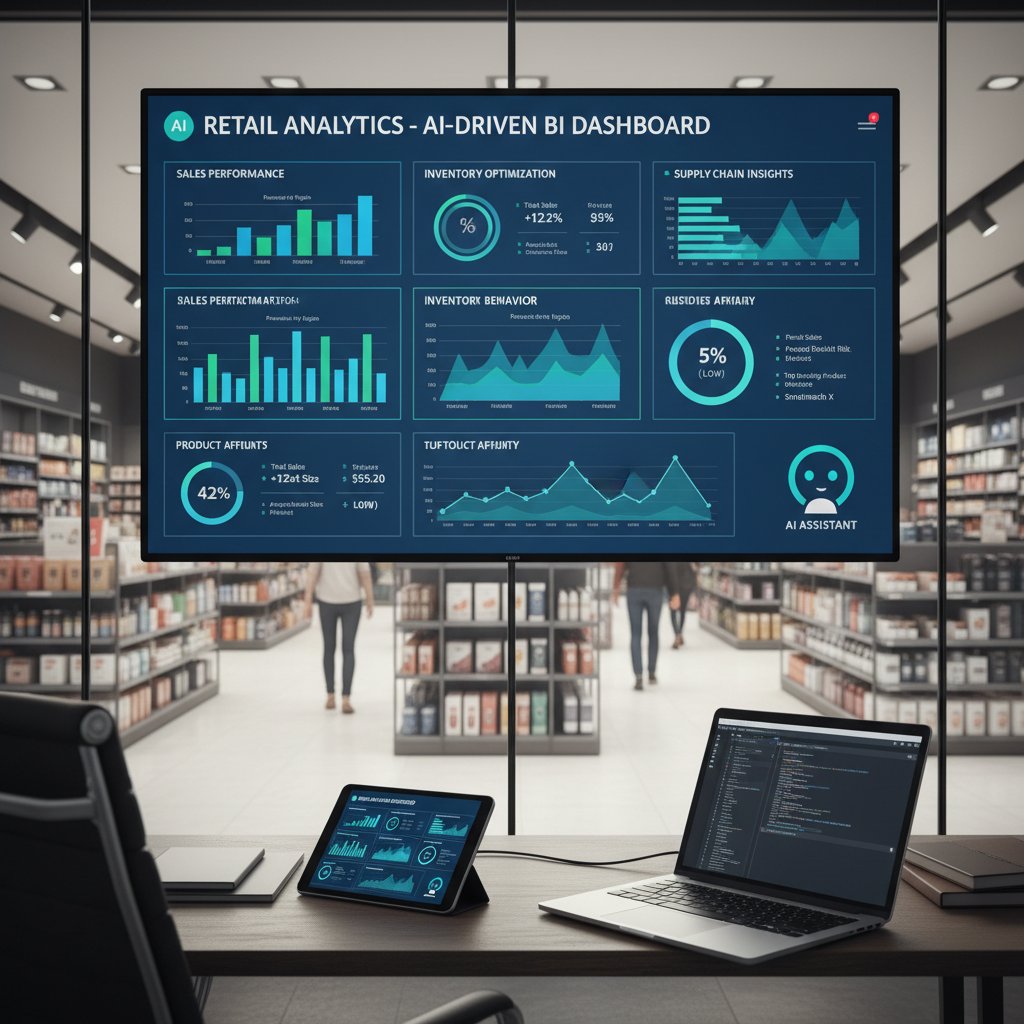
A major European retailer adopted AI-driven BI to optimize inventory and personalize promotions. Initial results were staggering: customer wait times dropped by 40%, and inventory accuracy improved by 30%. But within six months, a glitch in the promotion algorithm triggered an unanticipated surge in demand for a low-margin item, leading to stockouts and revenue loss. According to the project lead, the biggest lesson was the need for business-savvy oversight and robust fail-safes.
Hidden failures: lessons from the trenches
Not every story is a win. Consider a financial services firm that rolled out AI BI with fanfare, only to face employee revolt. Despite flawless technical deployment, analysts distrusted the opaque logic of the recommendations. Adoption stalled, and the project was shelved within 18 months. As Alex, project manager, put it:
"Sometimes the tech is fine—the culture isn’t." — Alex, project manager
Without trust and buy-in, even the most advanced tools gather dust.
Beyond the obvious: surprising industries using AI BI
While finance and retail dominate headlines, some of the most creative uses of AI-driven business intelligence happen far from the boardroom.
- Agriculture: AI BI analyzes crop health data and predicts optimal harvest times, increasing yields and reducing resource waste.
- Nonprofits: NGOs use AI BI for optimizing donor engagement and measuring program impact, stretching limited resources.
- Energy: Power companies leverage AI to forecast demand spikes and optimize grid performance, reducing blackouts.
- Education: Schools use AI BI to personalize learning pathways and identify students at risk of falling behind.
- Construction: Project managers predict equipment failures and optimize site logistics with AI-driven insights.
- Hospitality: Hotels dynamically adjust rates and forecast occupancy based on AI analysis of regional events and booking trends.
These unconventional sectors prove the reach—and relevance—of business AI solutions.
How to choose the right AI BI toolkit (and not get burned)
Red flags: what experts won’t tell you
Choosing an AI BI platform is high stakes. Here are the warning signs that industry insiders whisper about but rarely admit publicly:
- Opaque pricing models: If you can’t estimate total cost of ownership up front, you’re likely in for sticker shock.
- Proprietary lock-in: Platforms using non-standard data formats or requiring custom integrations make migration painful.
- Overpromising automation: “Full automation” is rarely realistic—look for nuanced messaging.
- Weak explainability: If the platform can’t show how decisions are made, expect pushback and regulatory headaches.
- No clear upgrade path: Stagnant roadmaps mean your solution could be obsolete in two years.
- Limited compliance features: Especially in regulated industries, weak compliance is a dealbreaker.
- Poor support for hybrid data sources: If combining cloud, on-prem, and external data isn’t seamless, look elsewhere.
- Inflexible reporting: Rigid templates that can’t adapt to your real questions are a red flag.
Features that actually matter (and those that don’t)
Don’t be seduced by buzzwords. Here’s what industry experts say actually counts.
| Feature | Must-Have | Nice-to-Have | Redundant |
|---|---|---|---|
| Easy data integration | ✓ | ||
| Transparent AI explainability | ✓ | ||
| Custom alerting | ✓ | ||
| Fully automated action | ✓ | ||
| Advanced visualization | ✓ | ||
| Built-in ML model zoo | ✓ | ||
| Branded dashboards | ✓ | ||
| Proprietary scripting | ✓ |
Table 3: Feature matrix of AI BI platforms.
Source: Original analysis based on [Gartner, 2024], [Forrester, 2024]
Focus on what drives business value, not showy demos.
Step-by-step: your AI BI readiness checklist
Before you dive in, benchmark your organization’s AI BI maturity with this 10-step checklist:
- Assess data quality: Is your data clean, complete, and labeled?
- Map data sources: Are all key business systems accessible?
- Define clear use cases: What high-impact business problems are you solving?
- Engage stakeholders: Is there buy-in from both IT and business teams?
- Review compliance: Are privacy and regulatory requirements mapped?
- Plan for integration: Can the solution integrate with your existing stack?
- Budget realistically: Did you account for hidden costs—training, storage, ongoing support?
- Check for explainability: Can you audit AI decisions?
- Develop a feedback loop: Is there a mechanism for continuous improvement?
- Pilot before scaling: Can you run a controlled test with clear metrics?
Following these steps is your best insurance against buyer’s remorse.
AI-driven BI and the human factor: who wins, who loses?
How AI is changing work—now and next
AI-driven business intelligence is more than a technical upgrade; it’s a catalyst for cultural change. Roles are shifting: data analysts become “AI translators,” business leaders need data literacy, and IT must collaborate with every department. IDC’s workforce study (2024) shows that 64% of companies see a net increase in productivity, but 22% report job restructuring as AI BI shifts workflows (IDC, 2024). The bottom line? Adapt or be automated.

The ethics and power dynamics of automated insight
AI BI doesn’t just optimize—it redistributes power. Who gets to ask the questions? Who interprets the results? Here are four ethical concepts every organization must confront:
The risk that AI perpetuates or magnifies social and organizational biases encoded in historical data.
The need for clear explanations of how AI arrives at its recommendations—a must for trust and accountability.
Protecting personal and proprietary information from misuse, breaches, or unethical sharing.
Defining who is responsible when automated decisions go wrong—AI vendors, end users, or the organization?
Ignoring these isn’t just a moral hazard; it’s a source of legal and reputational risk.
Can AI-driven BI democratize decision-making?
The promise of AI BI is to empower everyone, not just data elites. But the reality is more nuanced. As Priya, operations lead, says:
"We thought it would empower everyone, but…" — Priya, operations lead
Without intentional design, AI BI can actually centralize power in the hands of those who control the algorithms. True democratization requires training, oversight, and cultural openness—not just technology.
The future of business intelligence: what’s next and what to watch
Emerging trends: beyond predictive to prescriptive
The leading edge of AI-driven business intelligence is shifting from “predictive” (what’s likely to happen?) to “prescriptive” (what should we do about it?). Top platforms now recommend, simulate, and even automate complex business decisions in real time. Autonomous business processes—where AI not only interprets but executes—are already in play in supply chain and marketing functions.

What could go wrong? Black swans and blind spots
Despite the promise, AI BI is not immune to systemic risks. Here are seven critical threats and resilience tips:
- Model drift leading to undetected errors.
- Overfitting to historical trends, missing new disruptions.
- Unintended automation spiraling out of control.
- Biased algorithms undermining fairness and trust.
- Data breaches or privacy violations.
- Regulatory backlash slowing deployment.
- Dependency on a single vendor or technology stack.
Building resilience means cross-checking results, maintaining human oversight, and keeping an exit strategy handy.
How to stay ahead: learning, adapting, evolving
Continuous adaptation is the new survival skill. Here’s how to build a future-proof business intelligence strategy (and yes, platforms like futuretoolkit.ai are a good resource):
- Invest in data literacy for all employees.
- Pilot new AI BI features on controlled projects.
- Solicit feedback from frontline users, not just execs.
- Regularly audit AI models for bias and drift.
- Diversify vendors to avoid lock-in.
- Prioritize explainability in tool selection.
- Develop incident response plans for AI errors.
- Stay plugged in to industry best practices and updates.
Are you ready? Self-assessment and next steps
Quick self-check: is your business ready for AI-driven BI?
Test your organization’s readiness with this practical assessment:
- Do you know where your critical business data lives?
- Is your executive team aligned on the goals for AI BI?
- Have you mapped key stakeholders and their needs?
- Can you articulate the metrics for success?
- Are compliance and privacy risks understood?
- Is there a clear plan for change management?
- Have you budgeted for ongoing support and improvement?
If you answer “no” to more than two, it’s time for some groundwork.
Recap: key takeaways and action plan
AI-driven business intelligence isn’t a silver bullet—but it’s not smoke and mirrors, either. Here’s what you need to remember:
- AI BI is rewriting business norms—embrace the discomfort.
- Hidden costs and risks are real—plan for them.
- Don’t fall for myths; demand substance over sizzle.
- Culture and ethics are as important as tech.
- Continuous learning is non-negotiable.
- The right toolkit can level the playing field—choose wisely.
If you’re ready to move beyond the hype, evaluate your readiness, and tap into the untapped wins, now’s the time to act. Staying passive isn’t an option—the future of business intelligence is already rewriting the rules.
Empower Your Business with AI
Futuretoolkit.ai empowers businesses of all sizes to harness the power of AI effortlessly, offering specialized solutions across diverse business functions without the need for technical expertise. Whether it's automating customer interactions, optimizing operations, or analyzing complex data, our AI toolkit streamlines processes, increases efficiency, and fuels growth. With easy integration, intuitive interfaces, and powerful AI models, Futuretoolkit.ai offers unmatched accessibility and value, enabling users to achieve measurable outcomes quickly and cost-effectively.
Get startedReady to Empower Your Business?
Start leveraging AI tools designed for business success
Frequently Asked Questions
What percentage of enterprise BI tools actually offer AI-powered analytics?
According to Gartner's 2024 research, more than 80% of enterprise BI tools offer some form of AI-powered analytics, though only 23% of organizations report these features actually leading to actionable change.
What is the main gap between AI BI promises and reality?
While vendors market 'revolutionary AI' that extracts insights instantly, most so-called 'AI' in BI tools is actually just automated reporting or surface-level prediction—described by an AI strategist as 'lipstick on a spreadsheet.'
How has business intelligence evolved over the past decade?
BI has shifted from static dashboards and rearview reporting ten years ago to modern platforms powered by machine learning that can forecast, prescribe, and sometimes act—blurring the line between analytics and operational command centers.
What does Forrester research say about AI-powered BI platforms?
According to Forrester's 2024 analysis, over half of platforms branded 'AI-powered' offer only basic automation rather than true intelligence or learning capabilities.
Continue Reading
Keep exploring Comprehensive business AI toolkit

AI-Driven Business Analytics Platforms: Separating Reality From Hype

AI-Enabled Business Intelligence Reporting Tools: Roi, Risks, Reality

AI-Driven Business Intelligence Analytics: Impact and Risks

AI in Business Intelligence Reporting: Adoption Versus Real Value

AI-Powered Business Intelligence Dashboards: Myths and Realities
