


AI-Driven Business Performance Dashboards and the New Power Map
Written with AI assistance under our editorial guidelines
Organizations faced unprecedented data volume and velocity post-pandemic, overwhelming traditional analysis tools like spreadsheets and static reports. AI-driven dashboards emerged as the solution, offering real-time processing and actionable insights to help leaders make faster decisions and regain control in increasingly complex business environments.
In the era where buzzwords are currency and hype often outpaces reality, nothing tells the story of modern business anxiety quite like the explosive rise of AI-driven business performance dashboards. If you’ve sat through a boardroom PowerPoint, been pitched by a consultant in a tailored suit, or watched data analysts struggle under the weight of endless spreadsheets, you know the real question isn’t “Should we use AI dashboards?” but “What’s the cost of not using them—and what brutal truths are we ignoring in the gold rush?” This guide pulls back the curtain on the AI dashboard phenomenon sweeping industries in 2025. We’ll strip away the vendor gloss, investigate the wins and the pitfalls, and reveal the hard realities only insiders whisper about. If you’re expecting an easy story of seamless digital transformation, buckle up: the world of AI business analytics is more raw, more complex, and—at its best—more empowering than the sales pitches admit.
Why AI-driven dashboards became the must-have tool nobody wanted to admit they needed
The post-pandemic data deluge: how business changed overnight
The COVID-19 pandemic didn’t just accelerate digital transformation; it detonated it. Organizations that once prided themselves on slow deliberation were suddenly drowning in a tidal wave of real-time data—customer behaviors, supply chain shocks, remote workforce metrics—all demanding immediate attention. According to a 2024 study by McKinsey, over 80% of global enterprises reported a significant increase in data volume and velocity post-pandemic, with leaders citing “analysis paralysis” as a top concern (McKinsey, 2024). That data deluge didn’t just overwhelm systems; it shattered decision-making models rooted in gut instinct and intuition.

In this new landscape, the old toolkit—Excel, static reports, and ad hoc PowerPoints—proved woefully inadequate. Businesses needed tools that could digest mountains of data at breakneck speed, surface actionable insights, and help leaders regain control. The answer, for many, was the AI-driven dashboard: a digital command center promising clarity in chaos, and—at least in theory—restored power to those willing to invest in the future.
From spreadsheets to sentience: the mythic rise of AI dashboards
To understand how we arrived at the current obsession, it’s worth tracing the evolution from clunky spreadsheets to today’s predictive, AI-powered dashboards. In the 1990s, business intelligence (BI) was synonymous with manual data wrangling. Reporting cycles dragged for weeks, with analysts laboring over endless rows and columns. By the late 2000s, dashboard tools began offering more visual, interactive ways to understand performance, but true intelligence was still missing—a dashboard was only as good as the human interpreting it.
The inflection point came in the late 2010s, when advances in machine learning and natural language processing made it possible to automate not just visualization, but interpretation. Suddenly, “AI-driven” dashboards could flag anomalies, recommend actions, and even predict future trends—all in real time. The result? A new arms race for “sentient” dashboards that promised to make business not just faster, but smarter.
| Year | Key Technology | Game-Changing Feature |
|---|---|---|
| 1990s | Excel, manual reporting | Hand-built charts, static monthly reports |
| 2005 | Early BI tools | Interactive dashboards, basic drill-down |
| 2015 | Cloud analytics | Real-time data blending |
| 2020 | Machine learning integration | Predictive insights, anomaly detection |
| 2024 | NLP, automated recommendations | Conversational analytics, self-optimizing dashboards |
Table 1: Evolution of business performance dashboards, from static spreadsheets to AI-driven intelligence.
Source: Original analysis based on Gartner, McKinsey, 2024
The FOMO factor: executive anxiety and the AI gold rush
There’s no understating the role of executive FOMO (fear of missing out) in the dashboard arms race. As news headlines trumpeted the rise of “data-first” disruptors and unicorn startups, leaders worried about being seen as dinosaurs. Vendors, sensing opportunity, leaned hard into the narrative. The result: rapid, sometimes reckless adoption.
"Everyone was jumping on AI dashboards because they were terrified of being left behind," says Jordan, a digital strategist. "But few stopped to question what they were actually buying, or if their data was even ready for AI."
— Jordan Lee, Digital Transformation Strategist
In this environment, dashboards became the new status symbol—less a measured decision, more an insurance policy against obsolescence. But as any survivor of the last tech bubble will tell you, gold rushes leave plenty of casualties in their wake.
How AI-driven business performance dashboards really work (and where they don’t)
The engine room: what powers an AI dashboard
Strip away the glossy user interface, and the guts of a true AI-driven dashboard are a cocktail of cutting-edge technologies. Machine learning algorithms sift through historical and real-time data, surfacing patterns invisible to human analysts. Natural language processing (NLP) transforms raw data into conversational insights—think “What happened to sales last week?” answered in plain English. Real-time data pipelines keep the dashboard’s pulse synced with the business’s heartbeat, ensuring insights are never stale.

But the magic lies in orchestration. Each component—ML models, data connectors, NLG layers—must play perfectly together, or the dashboard devolves into just another pretty face. According to a 2024 survey by Dresner Advisory, 61% of organizations cited “integration complexity” as a top challenge in AI dashboard deployment (Dresner Advisory, 2024). In other words: behind every seamless dashboard demo is a team sweating bullets to keep the pipes unclogged.
Beyond the buzzwords: what 'AI' actually means here
If you’ve ever sat through a vendor pitch, you know “AI” is tossed around like confetti—often without substance. But in the world of business dashboards, the term covers a spectrum of capabilities. Here’s what actually matters:
Algorithms that automatically detect patterns and trends in vast datasets, learning and adapting over time. Example: Predicting quarterly sales dips based on historical performance.
Sophisticated ML models inspired by the human brain, capable of deep pattern recognition. Example: Spotting fraudulent transactions through complex behavioral analysis.
The use of models to forecast future outcomes. Example: Estimating inventory needs for next month based on demand spikes.
Enabling dashboards to interpret natural, conversational queries—“Show me last quarter’s best-selling products”—and return insights in plain English.
When vendors blur these definitions, it’s often to mask limitations. As Forrester notes, “Not all ‘AI dashboards’ are created equal; savvy buyers probe beyond marketing fluff to understand what’s actually under the hood” (Forrester, 2024).
When the magic fails: limits of AI in real-world performance
For all the hype, AI dashboards have hard edges. Algorithms can only be as good as the data they’re trained on. Bias creeps in. Black box models can obscure accountability. And sometimes, “real-time” data is anything but, due to integration lags or technical bottlenecks.
| Promise | Reality | User Impact |
|---|---|---|
| Instant, accurate insights | Data latency, integration hiccups | Delayed decisions |
| Predictive analytics eliminate uncertainty | Overfitting, false positives | Misguided strategies |
| “Self-service” for all employees | Steep learning curves, poor UX | Underutilized tools |
Table 2: AI dashboard promises vs. real-world outcomes. Source: Original analysis based on Dresner Advisory, 2024, Forrester, 2024
The lesson? There’s as much art as science in getting value from these systems. No dashboard, however advanced, can substitute for strategic thinking and a culture willing to challenge the machine.
The real impact: how AI dashboards are rewriting business power dynamics
Who actually wins: data scientists, managers, or the algorithms?
The democratization of data promised by AI dashboards has, in practice, shifted the center of gravity in many organizations. Decision-making authority once held tightly by managers and executives is increasingly shared with, or even deferred to, algorithms. Data scientists become gatekeepers, tuning models behind the scenes, while frontline employees get access to insights once locked in ivory towers.
"Sometimes it feels like we’re working for the dashboard, not the other way around," says Priya, operations manager at a multinational logistics firm.
This isn’t just a shift in workflow—it’s a transformation of power. In organizations that embrace dashboard-driven culture, transparency often increases, but so does anxiety. Who decides what data matters? Who controls the narrative when the dashboard and the gut say different things?
New hierarchies: transparency, accountability, and the AI effect
AI dashboards can foster unprecedented transparency—everyone sees the same numbers, in real time. But they can also create new blind spots. Opaque algorithms and shifting metrics sometimes obscure, rather than clarify, what’s really happening.

According to a KPMG 2023 report, 48% of executives expressed concern about “algorithmic opacity”—the risk that decision logic is hidden within black box models (KPMG, 2023). In other words, AI dashboards can democratize access, but also centralize control in the hands of those who program the algorithms.
Case study: when dashboards changed a company’s fate
Consider the case of a mid-size retail chain that implemented an AI-driven dashboard to optimize inventory and customer engagement. In the first six months, the company slashed stockouts by 30% and increased upsell conversions by 18%. But the transition wasn’t smooth. Staff struggled with the learning curve, and early model errors led to a costly overstock incident.
Unexpected benefits and drawbacks:
- Reduced manual reporting overhead, freeing analysts for strategic work
- Initial morale drop as employees felt “judged” by algorithmic KPIs
- Faster, more objective decision cycles—but sometimes at the expense of local knowledge
- Improved customer satisfaction metrics, but persistent concerns over data privacy
The bottom line: The real-world impact is messy and unpredictable. Success depends as much on change management and data culture as on the underlying technology.
Mythbusting: 7 lies your vendor wants you to believe about AI dashboards
No, AI dashboards don’t fix bad data (they amplify it)
Perhaps the most dangerous myth is that AI dashboards can turn “messy” data into gold. In reality, they’re more like an amplifier: feed them garbage, and you get garbage—at breathtaking speed and scale.
"Garbage in, garbage out has never been more real than with AI," says Alex, CTO at a leading fintech firm.
According to Harvard Business Review, nearly 40% of executives cite data quality as the top obstacle to AI dashboard ROI (Harvard Business Review, 2024). If you’re not brutally honest about your data hygiene, the dashboard won’t save you—it’ll just make the pain more public.
Plug-and-play is a fantasy: the messy truth about setup
Vendors love to tout “plug-and-play” solutions, but the reality is a labyrinth of integration, configuration, and culture clash. Here’s what a real implementation looks like:
- Requirements gathering: Interview stakeholders and clarify real business needs.
- Data inventory: Audit all relevant data sources for quality and accessibility.
- Integration planning: Design data pipelines, connectors, and permissions frameworks.
- Model customization: Tailor AI models to business context; avoid generic templates.
- User testing: Validate dashboard with real users and iterate based on feedback.
- Training and onboarding: Conduct in-depth user training sessions across roles.
- Ongoing monitoring: Set up continuous model and data quality checks.
These steps aren’t optional; skip them, and you’ll join the growing club of failed dashboard launches.
The hidden costs: time, training, and culture shock
Beneath the promise of “efficiency gains” lurk hidden costs—time spent wrangling messy data, training employees, and navigating resistance. According to a 2024 Gartner report, total cost of ownership (TCO) for enterprise AI dashboards is often underestimated by 30–50% (Gartner, 2024).
| Investment Area | Initial Cost | Long-term Cost/Benefit |
|---|---|---|
| Software license | High | Lower over time |
| Integration | Medium | Recurring maintenance |
| Employee training | High | Lower (after adoption) |
| Data quality initiatives | Medium | High value add |
| Culture change | High | Lasting impact |
Table 3: The real cost-benefit breakdown of AI dashboard adoption. Source: Original analysis based on Gartner, 2024, Harvard Business Review, 2024
Ignoring these realities can turn even the flashiest dashboard into a costly dust collector.
Choosing your AI dashboard: what matters in 2025 (hint: it’s not what you think)
Features versus outcomes: what should drive your choice?
It’s tempting to be seduced by vendor feature lists—AI-powered this, predictive that. But the organizations seeing real value are those relentlessly focused on outcomes. Does the dashboard measurably improve decision speed? Can it reduce costly mistakes? Does it actually empower frontline workers, or just overwhelm them?

According to a 2024 MIT Sloan study, companies that “start with outcomes, not features” are 2x more likely to achieve ROI from AI dashboards (MIT Sloan, 2024). If your selection process resembles a beauty pageant, you’re probably asking the wrong questions.
Red flags: what to avoid in vendor demos
Look past the demo dazzle. Here are seven warning signs that should have you running for the exits:
- Vague definitions of “AI” with no technical specifics
- Overpromising on “plug-and-play” integration
- Lack of clear data lineage or audit trails
- Opaque pricing models with hidden fees
- No evidence of user training or support commitment
- Demos that avoid real, messy data in favor of cherry-picked examples
- No explanation of what happens when the AI gets it wrong
Each of these signals a dashboard that may look slick in the showroom but crumble under real-world pressure.
Checklist: are you really ready for AI dashboards?
Before signing on the dotted line, run through this 10-point readiness assessment:
- Do we have clean, accessible data sources?
- Is leadership aligned on desired outcomes?
- Are frontline users involved in requirements gathering?
- Do we have resources for integration and ongoing maintenance?
- Have we identified key metrics and KPIs?
- Is our culture open to data-driven decision-making?
- Do we have a plan for user training and support?
- Is there a process for ongoing feedback and improvement?
- Are we clear on data privacy and compliance concerns?
- Do we have realistic expectations about time and ROI?
If you can’t answer “yes” to most of these, take a breath—and fix the gaps before deploying.
Beyond the hype: practical strategies for getting real value from your AI dashboard
Customization is king: tailoring dashboards to your business DNA
One-size-fits-all dashboards are a myth. The highest-performing organizations are obsessed with customization—tweaking models, layouts, and alerts to fit their unique workflows and culture. According to a 2024 IDC survey, “customization level” was the top predictor of AI dashboard satisfaction (IDC, 2024).
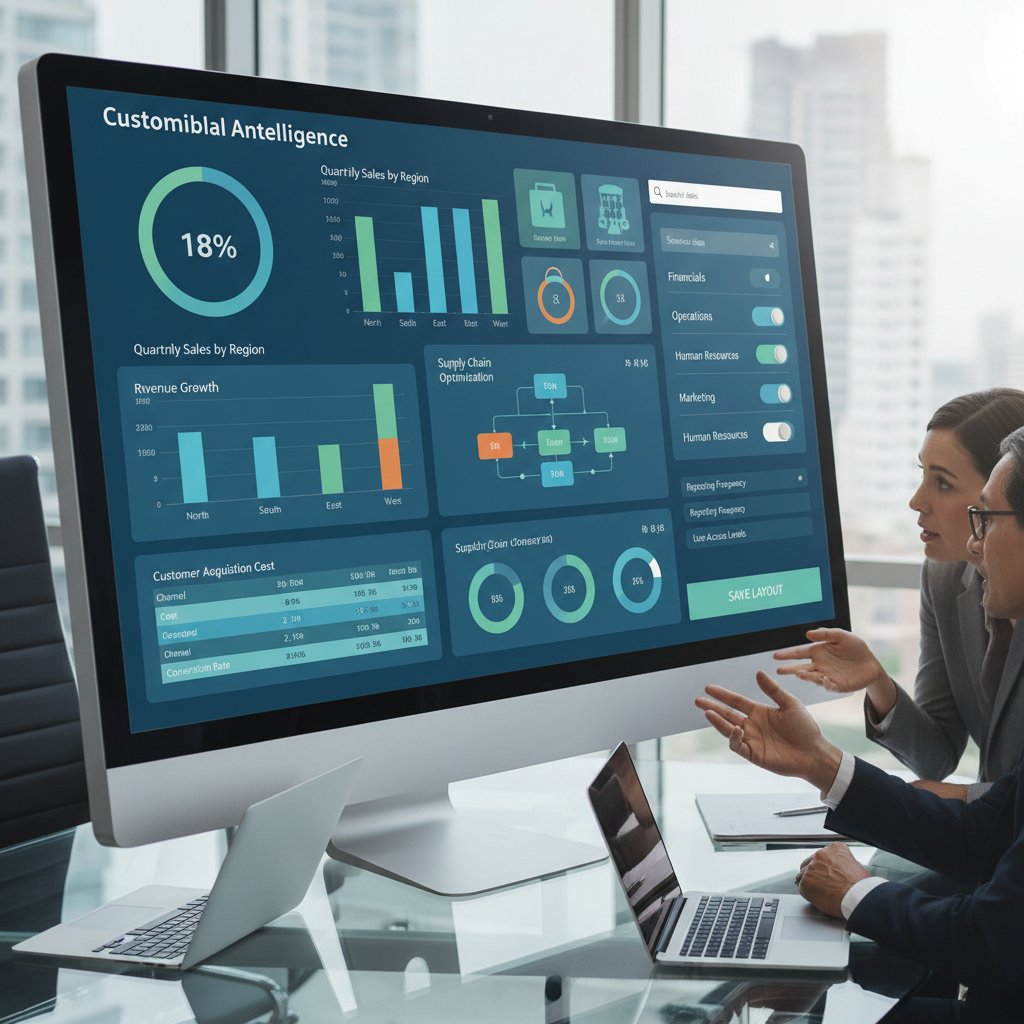
A generic dashboard might get you through a demo, but it rarely stands up to the messy, idiosyncratic realities of your actual business challenges.
Critical metrics: what to track (and what to ignore)
The art of dashboarding is as much about what you ignore as what you obsess over. Vanity metrics—like total page views or followers—can distract from real performance indicators.
The king of top-line KPIs. But context is everything—look for growth rates and trends.
A critical metric for understanding retention and long-term value.
The ultimate test of marketing and sales alignment.
Often overlooked, but strongly predictive of future revenue.
Tied directly to cost savings and productivity. Look for process-specific metrics.
The key: Ruthlessly prioritize the numbers that move the business, not just the ones that look good on a slide.
Continuous feedback: the secret to dashboard longevity
Dashboards that age gracefully are those that evolve. Build continuous feedback loops into your deployment:
- Regular user surveys to surface pain points and wish lists
- Embedded feedback buttons for real-time input
- Scheduled review meetings with stakeholders
- A/B testing of dashboard layouts and alerts
- Usage analytics to identify underutilized features
- Cross-functional teams to drive ongoing improvements
According to a 2024 Deloitte study, organizations that “close the feedback loop” see 40% higher dashboard adoption rates (Deloitte, 2024).
Industry spotlights: unexpected places AI dashboards are thriving (and failing)
Manufacturing: real-time optimization or data overload?
In manufacturing, AI-driven dashboards are revolutionizing everything from predictive maintenance to dynamic scheduling. On the factory floor, real-time optimization is king—AI models can auto-adjust production lines in response to data spikes.

Yet the sheer volume of sensor and process data can lead to information overload. According to Manufacturing.net, 57% of plants struggle to translate dashboard insights into actionable changes (Manufacturing.net, 2024). The challenge: separating actionable signal from noisy data.
Healthcare: promise and peril in patient data analytics
Healthcare’s embrace of AI dashboards has been dramatic—think patient scheduling, outcomes tracking, and even diagnostic support. But the stakes are high: errors can cost lives, not just market share.
| Application | Benefit | Risk |
|---|---|---|
| Patient scheduling optimization | Reduced wait times | Privacy, compliance concerns |
| Predictive diagnostics | Earlier detection of illness | False positives, overreliance |
| Resource allocation | Cost savings, better outcomes | Algorithmic bias |
| Real-time patient monitoring | Immediate intervention | Alert fatigue, data overload |
Table 4: AI dashboard applications in healthcare—balancing benefits and risks. Source: Original analysis based on Healthcare IT News, 2024
The verdict: AI dashboards can save time and improve outcomes, but only with rigorous validation and transparent oversight.
Creative industries: the rise of AI-powered intuition
It might sound counterintuitive, but creative sectors—marketing, design, media—are among the fastest adopters. Dashboards are used for:
- Real-time campaign performance tracking and optimization
- Audience sentiment analysis across social channels
- Predicting content virality using ML-powered trend spotting
- Automated A/B testing for ad creatives and headlines
- Dynamic pricing and inventory for e-commerce launches
- Workflow management for distributed creative teams
Here, dashboards augment, not replace, human creativity—freeing talent from grunt work and pointing intuition toward what matters most.
The next frontier: risks, ethics, and the future of business AI dashboards
Algorithmic bias and the illusion of objectivity
One of the most insidious risks is that AI dashboards can project a false sense of objectivity. Bias—whether in the training data, model design, or data collection—can creep in undetected.
"We trust the dashboard, but who’s checking the algorithm?" asks Morgan, compliance lead at a global insurer.
Numerous audits have found that, without rigorous oversight, AI dashboards can reinforce existing inequities, rather than correct them (AI Now Institute, 2024). Transparency and accountability aren’t optional; they’re existential.
Transparency wars: black-box AI vs. explainable dashboards
As businesses grapple with regulatory scrutiny and public skepticism, the push for explainable AI is intensifying. Here’s how to ensure transparency:
- Demand detailed documentation of model logic and data sources.
- Require audit trails for all automated decisions.
- Enable users to “drill down” into algorithmic recommendations.
- Regularly review models for bias and drift.
- Establish clear escalation paths for human override.
These steps are fast becoming table stakes for any credible AI-driven dashboard deployment.
What’s next: will AI dashboards empower or replace human judgment?
The battle lines are clear. On one side: faith in automation to eliminate bias and error. On the other: the conviction that human context and judgment remain irreplaceable. Most experts agree the answer is not either/or, but both-and. The dashboards that thrive are those that keep humans—not algorithms—in the driver’s seat.

It’s not about surrendering power, but wielding it more wisely.
Your AI dashboard toolkit: resources, services, and what to read next
Integrating with futuretoolkit.ai and other essential platforms
Navigating the crowded AI dashboard landscape requires robust, adaptable resources. Platforms like futuretoolkit.ai have emerged as central hubs, offering accessible, industry-specific AI solutions that can be tailored for everything from retail analytics to financial forecasting. Their value lies in lowering the technical barrier, letting decision-makers implement cutting-edge analytics without needing a team of PhDs. For organizations seeking to integrate AI dashboards into their broader analytics ecosystem, leveraging such a toolkit ensures both speed and scalability.
Expert picks: books, podcasts, and reports worth your time
Staying ahead in the AI dashboard game means constantly updating your playbook. Here are seven resources vetted by industry insiders:
- “Data Science for Business” by Foster Provost & Tom Fawcett (book)
- “Competing on Analytics” by Davenport & Harris (book)
- “The AI Effect” (podcast, MIT Technology Review)
- “Gartner Magic Quadrant for Analytics and Business Intelligence Platforms” (2024 report)
- “Harvard Business Review: How to Build Better Dashboards” (2024 article)
- “AI Now Institute Annual Report” (2024)
- “Deloitte Insights: AI Adoption in Business Analytics” (2024)
These resources cut through the hype, offering practical guidance and a deeper understanding of the risks and rewards.
Where to go from here: building your AI dashboard action plan
Ready to get serious? Here’s an eight-step action plan to launch or optimize your AI-driven business performance dashboard:
- Define clear, outcome-based objectives for the dashboard.
- Inventory and audit your existing data sources.
- Choose a platform—considering integration, scalability, and support.
- Assemble a cross-functional team for requirements and feedback.
- Pilot with a small, high-impact use case—learn fast, iterate.
- Invest in user training, onboarding, and culture change.
- Establish feedback loops and processes for continuous improvement.
- Regularly audit models for bias, transparency, and relevance.
Take these steps, and you’ll be far ahead of the majority still lost in the fog of dashboard hype.
In the cutthroat arena of 2025 business, AI-driven dashboards are less a luxury and more a survival tool. But as you’ve seen, the real work starts after the contract is signed—the wins are bold, but the truths can be brutal. If you want your organization’s data story to be one of empowerment, not disillusionment, approach AI dashboards with clear eyes, sharp questions, and a relentless focus on real, measurable value. The revolution isn’t in the technology alone—it’s in the culture, strategy, and grit to use it wisely. For those ready to leap, the futuretoolkit.ai ecosystem and the hard-won insights above are your blueprint. The rest? They’ll be left reading yesterday’s dashboard—wondering where all the time, and opportunities, went.
Empower Your Business with AI
Futuretoolkit.ai empowers businesses of all sizes to harness the power of AI effortlessly, offering specialized solutions across diverse business functions without the need for technical expertise. Whether it's automating customer interactions, optimizing operations, or analyzing complex data, our AI toolkit streamlines processes, increases efficiency, and fuels growth. With easy integration, intuitive interfaces, and powerful AI models, Futuretoolkit.ai offers unmatched accessibility and value, enabling users to achieve measurable outcomes quickly and cost-effectively.
Get startedReady to Empower Your Business?
Start leveraging AI tools designed for business success
Frequently Asked Questions
What caused the rapid adoption of AI-driven business dashboards?
The COVID-19 pandemic accelerated digital transformation and created a massive post-pandemic data deluge. According to a 2024 McKinsey study, over 80% of global enterprises reported significant increases in data volume and velocity, with leaders citing 'analysis paralysis' as a top concern, making traditional tools like Excel and static reports inadequate.
Why are AI dashboards considered a 'must-have tool nobody wanted to admit they needed'?
Organizations were overwhelmed by real-time data on customer behaviors, supply chain shocks, and remote workforce metrics that demanded immediate attention, but the old decision-making models based on gut instinct and intuition could no longer handle this complexity. AI dashboards emerged as a solution to digest large volumes of data quickly and surface actionable insights.
What limitations did traditional business tools have that AI dashboards were designed to overcome?
Traditional tools like Excel spreadsheets, static reports, and ad hoc PowerPoints proved inadequate for handling the volume and velocity of post-pandemic data. Organizations needed tools that could process mountains of data at high speed, surface actionable insights, and help leaders regain control in the chaos.
What does the article suggest about the reality of AI dashboards versus vendor marketing?
The article indicates that the reality of AI business analytics is 'more raw, more complex, and—at its best—more empowering than the sales pitches admit,' suggesting there is a gap between vendor claims and the actual challenges and benefits of implementation.
Continue Reading
Keep exploring Comprehensive business AI toolkit

AI-Powered Business Analytics Dashboards: Myth Versus Reality

AI-Powered Business Intelligence Dashboards: Myths and Realities

How AI-Enabled Business Analytics Dashboards Changed Enterprise Decision-Making

AI-Enabled Business Intelligence Dashboards: Hype, Failure, Payoff

AI-Driven Business Performance Analysis and Hidden ROI
