


AI-Driven Business Resilience Planning When Disruption Is Default
Written with AI assistance under our editorial guidelines
Traditional business resilience plans fail because they rely on static predictions of threats that evolve faster than organizations can adapt. AI-driven resilience planning must instead enable continuous, real-time monitoring and dynamic response strategies that adjust as disruptions unfold, making adaptability and honest assessment critical for survival.
In the age of relentless disruption, AI-driven business resilience planning isn’t just a shiny buzzword—it’s the difference between being tomorrow’s headline and tomorrow’s cautionary tale. Forget the glossy brochures and boardroom optimism. The raw truth? Crises don’t wait for you to catch up, and traditional continuity plans might as well be ancient relics. Business resilience today means facing hard realities, debunking the hype, and leveraging artificial intelligence with a healthy dose of skepticism. As 71% of organizations now deploy generative AI (McKinsey, 2024), the stakes have never been higher for those who dare to future-proof their companies. This isn’t about survival of the fittest—it’s about survival of the most adaptive, the most unflinching, and the most brutally honest. Here’s the unfiltered roadmap to AI-driven business resilience: the wins, the traps, and the truths few dare to say out loud.
Why traditional resilience planning is dead
The myth of static contingency plans
For decades, executives clung to three-ring binders—plans built on the illusion that you can predict and codify every possible threat. Recent crises, from global pandemics to cyber meltdowns, have shredded this fantasy. According to NATO (2024), static response plans routinely failed because they lagged behind evolving threats, leaving organizations exposed. These documents, created in lengthy cycles, only offered false comfort while the world moved faster than their printer queues.

"Most companies don’t realize their ‘plan B’ was obsolete before it hit the printer." — Alex
The reality is blunt: in the time it takes to draft, approve, and communicate a static plan, the risk landscape mutates. Whether it’s ransomware taking down a hospital network or climate events upending logistics, reactionary planning is a relic. Companies must pivot to live, adaptive strategies if they want to stand a chance.
How disruption became the default
Once, disruption was the rare exception—a black swan event that upended the status quo every few years. Now, volatility is the norm. The acceleration is relentless: AI, pandemics, geopolitical shocks, and climate chaos don’t wait for quarterly reviews. According to Planetizen (2024), traditional planning cycles cause strategies to become obsolete even before implementation. Take a look at the evolution of major business disruptions in the last decade.
| Era | Major Disruptions | Response Paradigm | AI Role in Resilience |
|---|---|---|---|
| Pre-2015 | Natural disasters, financial crises | Static, manual contingency | Minimal |
| 2016-2020 | Cyberattacks, supply chain shocks | Hybrid, tech-assisted plans | Early predictive analytics |
| 2021–Present | Pandemic, AI bias, systemic cyber | Dynamic, AI-driven, continuous | Deep learning, scenario modeling |
Table 1: Timeline of major business disruptions before and after widespread AI adoption.
Source: Original analysis based on NATO, 2024, Planetizen, 2024
Today, the only constant is change. The myth of business as usual is shattered—the new normal is rapid, sometimes chaotic adaptation. If your company isn’t building resilience as a continuous process, you’re already a step behind.
The cost of ignoring AI-driven change
The price of resisting AI in resilience planning is steep—and not just in missed growth. According to McKinsey (2024), organizations slow to adopt AI lost ground on multiple fronts: exposed attack surfaces, poor resource allocation, and eroded trust. Behind the scenes, hidden costs pile up:
- Lost market share: Agile competitors exploit AI to anticipate disruptions and respond in real time, leaving laggards behind.
- Increased vulnerability: Static plans miss emerging threats, especially in cybersecurity, where AI-powered attacks move faster than manual defenses.
- Escalating insurance premiums: Insurers increasingly penalize organizations lacking advanced, AI-driven risk management.
- Talent drain: Skilled employees want to work with the best tools—outdated organizations lose them to more innovative rivals.
- Operational drag: Manual crisis response is slow, error-prone, and costly compared to automated AI workflows.
Ignoring AI-driven resilience isn’t just risky. It’s a liability that grows with every passing quarter.
What AI-driven business resilience planning really means
Defining AI resilience beyond the buzzwords
AI resilience isn’t just slapping a machine learning model onto yesterday’s problems. At its core, AI-driven business resilience planning is about leveraging adaptive algorithms to anticipate, absorb, and recover from disruption—before it derails your operations. It means automating the detection of weak signals, running real-time scenario analyses, and augmenting human intuition with data-driven foresight.
Key terms explained:
The use of artificial intelligence to automate, optimize, and adapt business continuity and risk management in real time.
Algorithms that analyze historical and real-time data to flag emerging risks, model likely outcomes, and guide proactive action.
Simulating a spectrum of disruption scenarios (from cyberattack to supply chain collapse) using AI to stress-test organizational responses.
Systematic errors in AI outputs that arise from flawed or incomplete training data—can undermine resilience if left unchecked.
The integration of human judgment and oversight with AI-driven insights, ensuring checks and balances for critical decisions.
How AI models anticipate the unpredictable
The true power of AI in resilience planning lies in its relentless pattern recognition and scenario forecasting. While humans may be blinkered by cognitive bias or overwhelmed by data deluge, AI excels at digesting massive datasets, spotting micro-trends, and simulating what-if scenarios. According to Forbes (2023), Amazon leverages AI-driven trend monitoring to preempt supply chain disruptions, rerouting inventory before delays cascade. This isn’t guesswork; it’s real-time, data-fueled foresight.
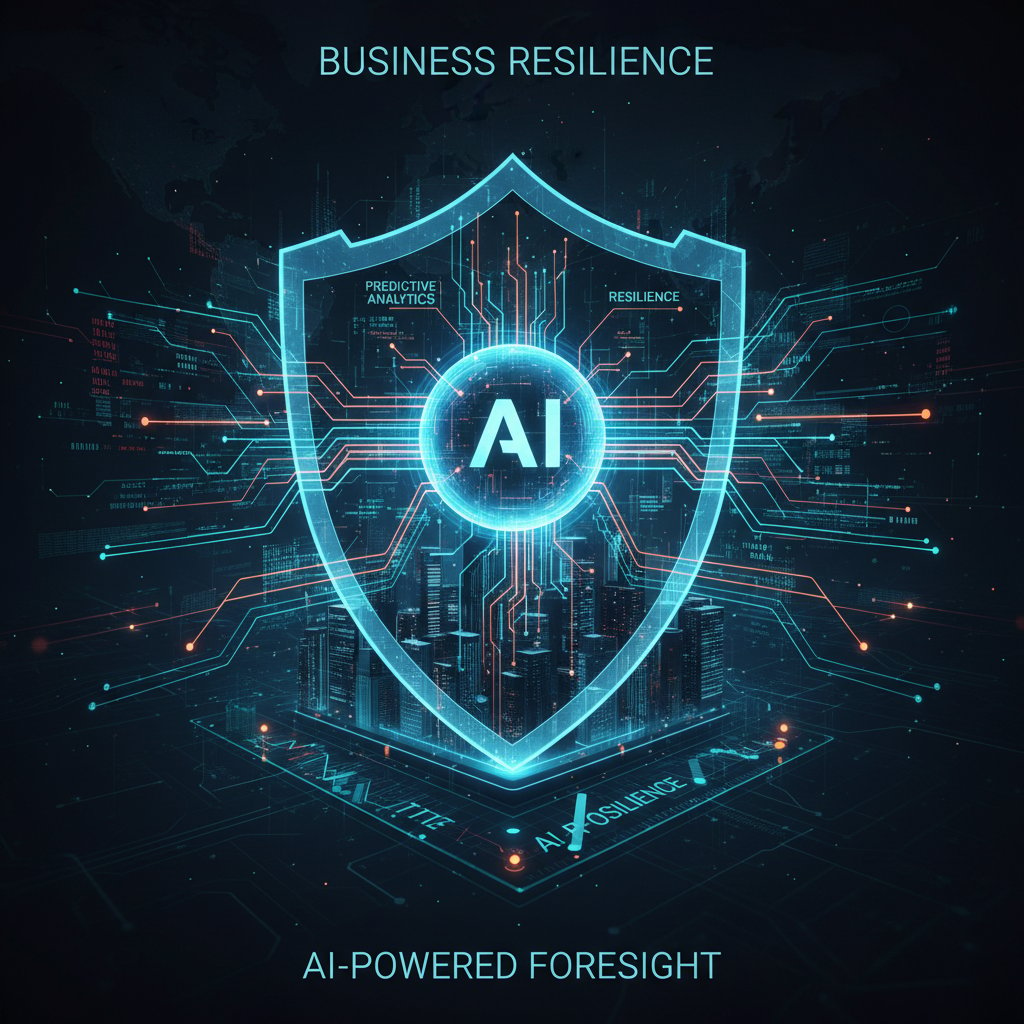
AI models don’t just react; they anticipate, flagging threats before they metastasize. Whether it’s identifying financial red flags or predicting weather-driven infrastructure risks, AI is the ultimate early warning system—when fed with high-quality, unbiased data.
From black swans to gray rhinos: Rethinking risk
Risk isn’t always dramatic and unpredictable. While the business world loves to obsess over “black swans”—rare, unforeseen catastrophes—most existential threats are “gray rhinos”: obvious, lumbering, but routinely ignored. AI, for all its mystique, excels at reading these signals, often faster than any human could.
"AI reads the signals we ignore. That’s its superpower—and its danger." — Priya
But here’s the kicker: when AI models absorb bad data or miss context, they can amplify errors, leading to catastrophic decision-making at machine speed. This dual-edged sword makes rigorous oversight and continuous model auditing non-negotiable.
AI vs. human intuition: The ultimate resilience showdown
Strengths and blind spots of each approach
In the adrenaline rush of a crisis, who do you trust: cold, data-driven algorithms or the gut instincts of seasoned leaders? The showdown isn’t as clear-cut as it seems. Humans bring context, creativity, and moral judgment—factors AI can’t replicate. Yet, according to ServiceNow (2024), AI outpaces humans in processing complexity, speed, and relentless pattern recognition.
| Feature | AI-driven planning | Human intuition |
|---|---|---|
| Data processing speed | Instant, handles terabytes | Limited by cognitive load |
| Pattern recognition | Unbiased (if data is clean) | Prone to cognitive bias |
| Adaptability | Needs retraining | Rapid, context-aware |
| Ethical reasoning | Absent | Present |
| Scenario creativity | Limited to learned data | Can imagine untested options |
Table 2: AI vs. human intuition in business resilience planning.
Source: Original analysis based on ServiceNow, 2024
The truth? It’s not a battle, it’s a collaboration—or it should be. Both sides have blind spots, and resilience is built on fusing their strengths.
When AI gets it wrong (and why it matters)
Despite the hype, AI doesn’t always save the day. Real-world failures abound: biased training data led one bank’s AI to misclassify legitimate transactions as fraud, causing a PR nightmare. Another company saw its AI-driven supply chain model spiral out when a single data feed went dark, triggering a cascade of bad decisions.
Red flags to watch for when over-relying on AI for resilience:
- Opaque decision-making: Black box models make it impossible to explain (or defend) automated actions in a crisis.
- Garbage in, garbage out: Low-quality or biased data can drive catastrophic errors—fast.
- Overconfidence in automation: Teams lulled into complacency by “smart” systems miss early warning signs.
- Lack of human oversight: Critical context and ethical considerations go missing when humans abdicate responsibility.
Ignoring these pitfalls turns AI from savior to saboteur.
The art of hybrid resilience teams
The smartest organizations don’t pick sides—they build hybrid teams where AI augments human judgment, not replaces it. According to recent research by Guidehouse (2023), companies with hybrid resilience teams outperform those with siloed approaches in response speed and accuracy.
"The smartest teams know when to let the algorithm lead—and when to yank the plug." — Morgan
Best practices? Define clear decision thresholds, invest in cross-disciplinary training, and foster a skeptical, questioning culture where no AI output goes unchallenged. In resilience, diversity of thinking is the real algorithm.
Inside the AI resilience toolkit: What actually works
Essential AI tools for business continuity
Not all AI is created equal. The best resilience tools are modular, scalable, and (crucially) transparent in their logic. According to CompTIA (2023), the global AI market hit $208B, with solutions ranging from predictive analytics to intelligent automation.
Step-by-step guide to building your AI resilience stack:
- Assess your risk landscape: Use AI-powered risk mapping to identify vulnerabilities across operations.
- Deploy predictive analytics: Implement tools that surface early warnings from internal and external data.
- Automate response workflows: Leverage AI-driven orchestration to accelerate incident response and recovery.
- Continuously monitor and adapt: Use real-time data feeds to retrain models, ensuring they stay relevant as threats evolve.
- Build in transparency: Choose platforms that offer explainable AI outputs, making it easy to audit decisions.
How futuretoolkit.ai fits into the landscape
When it comes to robust, industry-tailored AI solutions, futuretoolkit.ai has carved a niche as a trusted resource. The platform empowers businesses of all sizes—no technical background required—to access resilience-building AI, from automated crisis simulation to predictive analytics. Its focus on accessibility and tailored integration makes it a go-to for organizations unwilling to compromise on agility or insight.
Checklist: Are you AI-resilient yet?
Ready to find out if your company makes the cut? Use this actionable checklist to measure your progress.
- Is your risk mapping dynamic and AI-augmented, not static?
- Do you use AI-driven predictive analytics for early warning across all business units?
- Is there a clear escalation path from AI models to human decision-makers?
- Are AI outputs auditable and explainable to stakeholders?
- Do you continuously retrain your AI models with fresh, unbiased data?
- Are hybrid teams empowered to challenge and override AI decisions?
- Have you stress-tested your resilience stack in live crisis simulations?
If you’re missing more than two, your “resilience” might be more myth than reality.
Real-world case studies: AI resilience in action
Tech sector: Predicting and dodging disaster
When a leading cloud services provider faced a surge of coordinated DDoS attacks, it wasn’t just firewalls that kept the lights on. The company deployed AI-driven crisis simulations, running thousands of “what if” scenarios in real time. The result? Zero downtime, rapid resource allocation, and a post-crisis debrief that rewrote their entire continuity playbook.

It’s proof that in fast-moving crises, manual response isn’t just slow—it’s obsolete.
Retail: Surviving supply chain chaos
A global retail giant staring down supply chain gridlock turned to AI for salvation. According to Forbes (2023), the company’s AI rerouted logistics in hours, not days, dynamically sourcing alternative suppliers and optimizing delivery routes as conditions changed. The result? Smoother operations and a template for real-time, AI-driven resilience.
Lessons learned:
- Real-time data is non-negotiable.
- AI can’t replace human negotiation, but it can set the table.
- Proactive scenario modeling beats reactive firefighting every time.
Energy & nonprofits: Unexpected adopters
It’s not just the big-dollar tech players. Nonprofits and energy firms, traditionally slow to innovate, now leverage AI for resilience. According to ScienceDirect (2024), an energy provider used AI to optimize grid resilience during extreme weather, reducing outages by 30%. Meanwhile, a nonprofit deployed AI to anticipate funding shortfalls and pivot programs before gaps turned into crises.
The unique outcome? Even resource-limited organizations can gain resilience superpowers—provided they prioritize quality data and staff enablement.
Controversies, challenges, and the dark side
Data bias and black-box risks
Let’s not romanticize AI. When algorithms inherit bias from flawed data, disaster lurks. In 2023, a financial services firm’s AI flagged entire zip codes as high risk due to historical data bias, inviting regulatory scrutiny and reputational damage. Black-box models make it impossible to explain why decisions were made—a critical flaw in crisis scenarios.
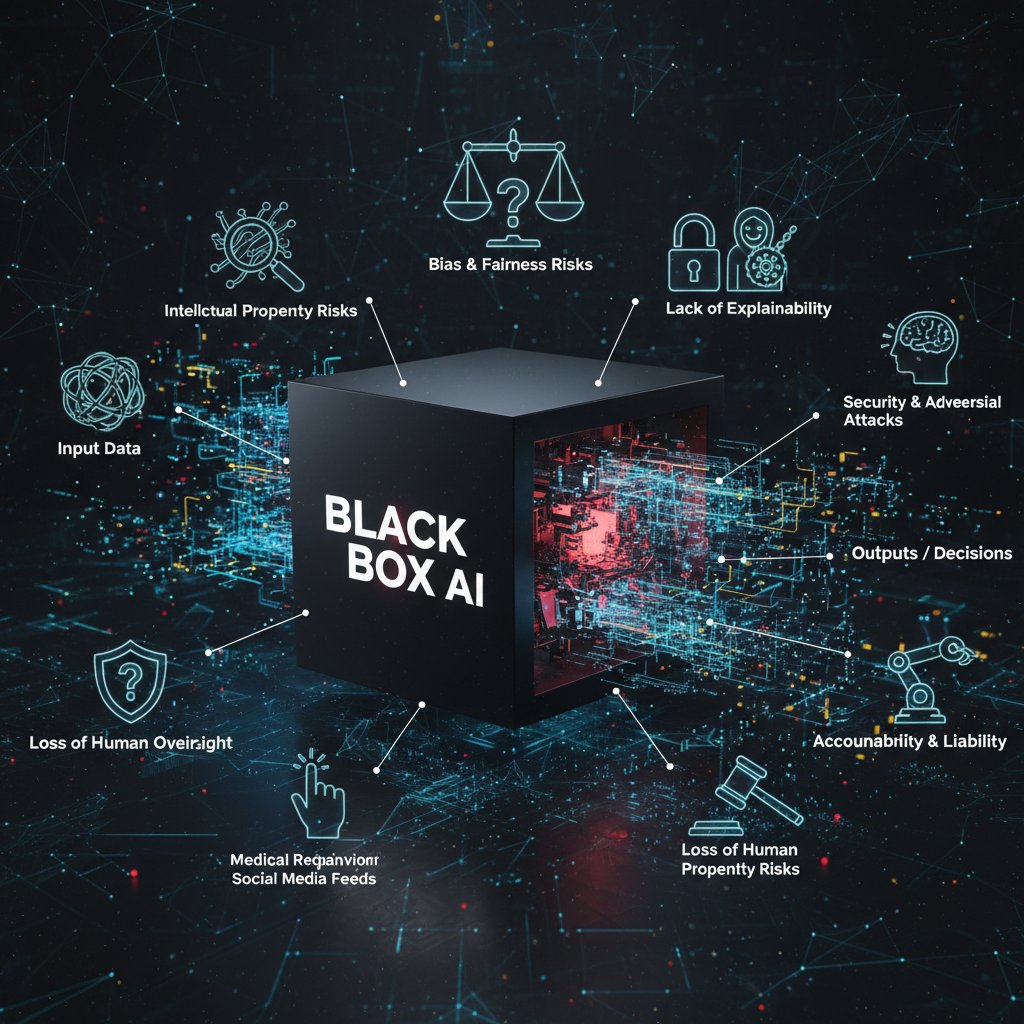
This is why regulatory frameworks like the EU Cyber Resilience Act (2023) now demand transparency, auditability, and human oversight in all critical AI deployments. Companies must treat “explainability” not as a nice-to-have, but as a compliance baseline.
Vendor lock-in and tech dependency
AI promises freedom—until it doesn’t. Relying on a single vendor for your resilience stack risks catastrophic lock-in. Switching costs can skyrocket, especially if proprietary models are involved. Common red flags in AI partnerships:
- Opaque pricing or contract terms: Hidden fees and restrictive renewal clauses.
- Little to no data portability: Difficulty exporting your own data or models.
- Lack of independent auditability: No access to model logic or performance metrics.
- Overpromising on “plug-and-play” features: Inflexible systems that crumble under real-world complexity.
Stay vigilant: resilience means flexibility, not dependency.
Myth-busting: AI will replace all crisis managers
Let’s kill the myth: AI won’t (and shouldn’t) replace human crisis managers. According to ServiceNow (2024), the best outcomes arise when AI augments human expertise—not when it tries to automate it out of existence. Humans set strategic priorities, interpret ambiguous signals, and manage the ethical dimensions of crisis response.
Nuanced analysis shows that the future is hybrid. AI handles scale and speed; humans provide judgment, creativity, and accountability. The organizations that thrive are those that blend both, not those that chase one over the other.
Future trends: Where AI resilience is heading next
The rise of explainable AI in resilience planning
Transparency isn’t just a compliance checkbox—it’s a strategic necessity. As AI becomes more deeply embedded in business resilience, organizations are investing in explainable AI tools that empower teams to interrogate decision logic. According to Deloitte (2024), companies with transparent AI systems see 25% faster crisis resolution.
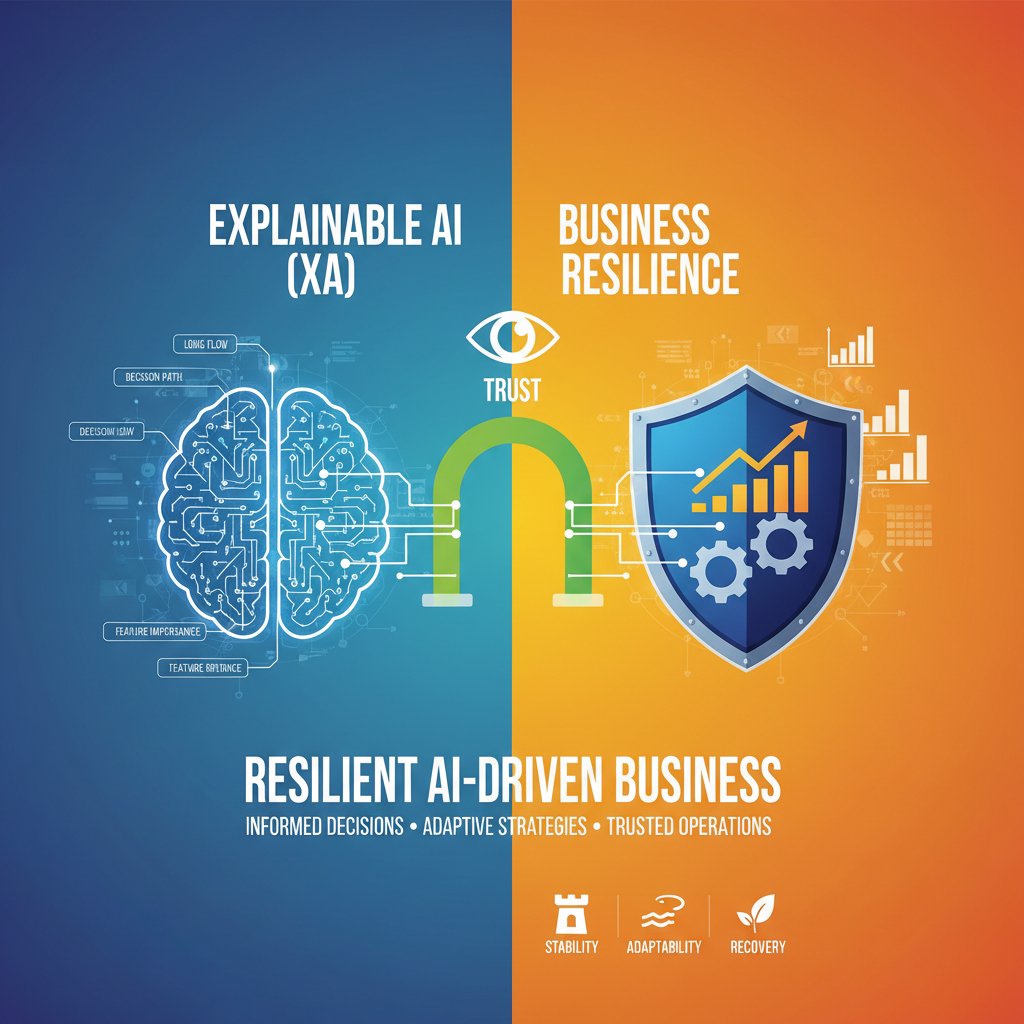
Explainable AI builds trust, simplifies audits, and lets humans challenge (and improve) algorithmic choices.
Resilience as a service: New business models
A quiet revolution is underway: resilience-as-a-service. Subscription-based AI platforms now offer plug-and-play access to world-class resilience tools once reserved for Fortune 500s. According to CompTIA, AI’s annual growth rate is 19%, and 25% of U.S. startup investment in 2023 targeted AI companies, democratizing access for SMEs.
SMEs, often lacking IT resources, can now buy resilience as easily as cloud storage. It’s a game-changer—provided you choose partners committed to transparency and portability.
Societal impacts and the resilience gap
But there’s a catch: AI may widen the resilience gap between haves and have-nots. According to Guidehouse (2023), organizations with poor data infrastructure can’t realize AI’s full potential, leaving them exposed.
| Industry | High AI Resilience | Moderate AI Resilience | Low AI Resilience |
|---|---|---|---|
| Finance & Tech | 85% | 10% | 5% |
| Retail & Logistics | 60% | 30% | 10% |
| Healthcare | 55% | 35% | 10% |
| Nonprofits/NGOs | 20% | 50% | 30% |
Table 3: Industries most and least prepared for AI-driven crises (2024).
Source: Original analysis based on Guidehouse, 2023
Bridging this gap is the next great challenge for policymakers and business leaders alike.
Practical playbook: Building your AI-driven resilience plan
Mapping business-critical risks with AI
Every bulletproof resilience plan starts with brutal self-awareness. Begin by mapping your business-critical risks—honestly, exhaustively, and aided by AI. Modern tools scour internal and external data, surfacing vulnerabilities human teams might overlook.
Step-by-step guide to risk mapping with AI:
- Inventory assets and dependencies: Catalog everything—people, tech, vendors, data.
- Ingest real-time data feeds: Plug in sources ranging from IoT sensors to market news.
- Run AI-powered scenario simulations: Stress-test responses to a range of disruptions.
- Document and prioritize risks: Use AI analytics to rank threats by likelihood and impact.
- Continuously update as new data arrives: Make risk mapping a living process, not a one-off event.
Integrating AI into your existing workflows
Change management is the real battleground. According to ScienceDirect (2024), organizations that provide training and empower staff to adapt AI tools see 30% higher adoption rates.
Tips for seamless AI adoption:
- Start small: Pilot AI on a non-critical workflow before scaling.
- Co-create with staff: Involve end users in tool selection and design.
- Invest in training: Demystify AI with hands-on workshops and transparent documentation.
- Establish clear escalation paths: Ensure humans can always intervene, especially in ambiguous cases.
Process matters as much as technology.
Measuring success: Metrics that matter
What gets measured gets managed. The right KPIs separate resilience theater from real progress.
| KPI | Benchmark Value | Why it matters |
|---|---|---|
| Time to detect disruption | < 10 minutes | Early warning saves millions |
| Automated response rate | > 80% | Indicates maturity of AI stack |
| Post-crisis recovery time | < 48 hours | Speed equals competitive edge |
| Model retraining frequency | Quarterly or faster | Keeps pace with new threats |
| Human-AI override incidents | < 5% | Shows balanced, safe automation |
Table 4: Sample KPIs and benchmarks for AI-driven resilience planning.
Source: Original analysis based on McKinsey, 2024
Track these relentlessly. Celebrate improvement, but never stop questioning.
Glossary: Cutting through the jargon
Essential terms for AI-driven resilience planning
In a field thick with buzzwords and acronyms, clarity is survival. Here are the terms that matter:
Using AI algorithms to analyze current and historical data, forecasting likely future outcomes. Critical for spotting disruptions before they escalate.
The process of simulating various “what if” events using data-driven models. Helps organizations stress-test plans for unlikely but impactful threats.
Systemic, unintentional errors in AI outcomes due to flawed training data or model design. Can undermine resilience and fairness if unchecked.
AI models that provide transparent rationale for their outputs, enabling audit, trust, and compliance—crucial for regulated sectors.
Outsourced, subscription-based access to AI-driven resilience tools—making advanced capabilities available without in-house IT investment.
A cross-functional team where humans and AI collaborate—balancing speed and insight with context and judgment.
Conclusion: The new resilience—beyond survival
AI-driven business resilience planning isn’t a luxury—it’s a necessity for any organization with ambitions beyond mere survival. The brutal truth is clear: disruption is now a constant, and only the adaptive, the skeptical, and the relentless thrive. The companies leading the charge understand resilience as a living, breathing practice—one that fuses the relentless logic of AI with the irreplaceable nuance of human judgment. According to current data, those who master this blend not only weather crises but emerge stronger, faster, and more trusted by customers and stakeholders alike.
"Tomorrow’s leaders won’t just survive—they’ll shape the storm." — Alex

If you take away one thing, let it be this: resilience isn’t about avoiding the fire. It’s about learning to rise from the ashes, smarter and bolder than before. And with the right AI-driven strategy—grounded in reality, not hype—your organization can do just that.
Sources
References cited in this article
- Forbes(forbes.com)
- CompTIA(connect.comptia.org)
- Guidehouse(guidehouse.com)
- ServiceNow(servicenow.com)
- PwC(pwc.com)
- Deloitte(www2.deloitte.com)
- World Economic Forum(weforum.org)
- S&P Global Ratings(spglobal.com)
- Sophos(invenioit.com)
- Allianz(commercial.allianz.com)
- ScienceDirect(sciencedirect.com)
- 4C Strategies(4cstrategies.com)
- ScienceDirect(sciencedirect.com)
- Forbes(forbes.com)
- Oxford Insights(oxfordinsights.com)
- Forbes(forbes.com)
- HBR(hbr.org)
- ACM(dl.acm.org)
- HPE(hpe.com)
- BryghtPath(bryghtpath.com)
- Forbes(forbes.com)
- MIT Technology Review(reviewofailaw.com)
- Medium(medium.com)
- CultureMonkey(culturemonkey.io)
- Forbes(forbes.com)
- BCI World Hybrid(thebci.org)
- Tools for Humans(toolsforhumans.ai)
- Profiletree(profiletree.com)
- BryghtPath(bryghtpath.com)
- ClipMove(clipmove.com)
- DRI International(drive.drii.org)
- BARR Advisory(barradvisory.com)
- GrowthJockey(growthjockey.com)
- ScienceDirect(sciencedirect.com)
- Google Cloud(cloud.google.com)
- Northeastern University(news.northeastern.edu)
- AICOMPetence(aicompetence.org)
- TIME(time.com)
Empower Your Business with AI
Futuretoolkit.ai empowers businesses of all sizes to harness the power of AI effortlessly, offering specialized solutions across diverse business functions without the need for technical expertise. Whether it's automating customer interactions, optimizing operations, or analyzing complex data, our AI toolkit streamlines processes, increases efficiency, and fuels growth. With easy integration, intuitive interfaces, and powerful AI models, Futuretoolkit.ai offers unmatched accessibility and value, enabling users to achieve measurable outcomes quickly and cost-effectively.
Get startedReady to Empower Your Business?
Start leveraging AI tools designed for business success
Frequently Asked Questions
Why are traditional static contingency plans no longer effective for business resilience?
Traditional static plans are ineffective because they become obsolete before implementation, as the risk landscape mutates faster than organizations can plan for it. According to NATO (2024), static response plans routinely fail because they lag behind evolving threats, leaving organizations exposed to crises like ransomware attacks and climate events that don't wait for quarterly reviews.
What has changed about disruption in modern business environments?
Disruption has shifted from being a rare exception to becoming the default norm. Volatility from AI, pandemics, geopolitical shocks, and climate chaos is now constant, making the old planning paradigm where disruptions were black swan events obsolete.
How widespread is AI adoption in organizations today?
According to McKinsey (2024), 71% of organizations now deploy generative AI, making the stakes higher than ever for those seeking to future-proof their companies through AI-driven business resilience planning.
What is the key difference between traditional resilience and AI-driven resilience planning?
Traditional resilience relies on static, predictable contingency plans, while AI-driven resilience emphasizes live, adaptive strategies that can respond to evolving threats in real time rather than through lengthy planning cycles.
Continue Reading
Keep exploring Comprehensive business AI toolkit

AI-Powered Business Resilience Analytics for Nonstop Disruption

How AI Strengthens Business Continuity Planning

AI-Driven Scenario Planning: How Companies Use It to Manage Risk

AI-Enabled Business Continuity Software When It Actually Fails

AI Solutions for Business Continuity Management: Myth Versus Reality


