


AI-Driven Business Resource Planning: Wild Wins, Real Risks
Written with AI assistance under our editorial guidelines
AI-driven business resource planning moves beyond outdated ERP systems by enabling real-time dynamic resource allocation across people, inventory, and capital. However, success depends not on adopting the latest algorithm, but on confronting genuine challenges: data quality, organizational resistance, and the willingness to embrace transformative change rather than simply purchasing another tool.
The narrative around AI-driven business resource planning is seductive: plug in the latest algorithm, feed it your data, and watch as digital sorcery transforms your operations. But peel back the glossy veneer, and you’ll find a grittier truth—one littered with shattered illusions, wild successes, and costly missteps. In an era where every organization is promised a seat at the AI banquet, the real winners are those who see past the marketing noise and confront the brutal realities beneath. This isn’t about buying another shiny tool; it’s about understanding how machine intelligence, data, and human grit collide in your business's beating heart. Here, we cut through the hype, lay bare the pitfalls and power plays of AI business planning, and show you what it really takes to outmaneuver your competition. Buckle up for an uncompromising look at the new rules of resource optimization—where fortunes turn on data quality, cultural resistance, and the audacity to do what others won’t. Welcome to the unfiltered guide to AI-driven business resource planning.
Why AI-driven business resource planning is rewriting the rules
The death of old-school ERP
Once, the enterprise resource planning (ERP) titans ruled with an iron spreadsheet and a gospel of rigid workflows. In a slower, more predictable age, this was enough. But the business world now runs on volatility, uncertainty, and relentless speed. Traditional ERPs, with their hard-coded processes and sluggish updates, are buckling under the weight of real-time demands. According to a 2024 investigation by ResearchGate, legacy ERP systems are cited as a top bottleneck in responding to rapid market shifts, costing companies both time and relevance.

"We thought our ERP was future-proof—until it failed us." — Jamie, operations lead
These platforms, built for an era of forecastable demand, now find themselves outpaced by the chaos of globalized supply chains, unpredictable consumer behavior, and regulatory churn. Businesses seeking agility quickly realize that “future-proof” was just a sales pitch, not a guarantee. The cracks in old-school ERP aren’t just technical—they’re existential.
The rise of AI in business planning
Enter AI: not as a replacement, but as an evolutionary leap. AI-driven business resource planning slashes through the inertia, enabling genuine real-time, dynamic allocation of people, inventory, and capital. No more waiting weeks for quarterly reports or fighting with static dashboards. Instead, AI ingests torrents of data—sales, supplier lead times, weather forecasts, even social sentiment—and orchestrates resources with a precision and speed no human team can match. According to Forbes, 2024, AI-enhanced forecasting improves accuracy by up to 40% over traditional methods.
| Industry | AI-driven Planning Adoption Rate (2024) | Traditional ERP Reliance (2024) |
|---|---|---|
| Manufacturing | 68% | 92% |
| Retail | 75% | 88% |
| Healthcare | 54% | 96% |
| Finance | 82% | 85% |
| Logistics | 65% | 90% |
Table 1: 2024 adoption rates of AI-driven planning versus traditional ERP solutions by industry.
Source: Original analysis based on Forbes, 2024 and Microsoft Tech Community, 2024
AI shifts the game from reactive firefighting to proactive orchestration. The result? Shorter response times, lower operating costs (with up to 30% cost reduction reported by companies leveraging AI, per ResearchGate), and a newfound resilience against market shocks. Suddenly, planning isn’t about surviving the quarter—it’s about shaping the market itself.
What the hype gets wrong
Yet, beneath the evangelism, there’s a dangerous current of naivety. The hype machine peddles AI-driven planning as a cure-all—a magic wand for every operational headache. In reality, most failed AI projects share one root cause: a lack of strategy and overreliance on hype instead of hard truths. According to Alterbridge Strategies, 2024, up to 70% of AI planning pilots never reach ROI-positive deployment due to overlooked pitfalls.
- Under-the-hood benefits the hype never mentions:
- AI reveals where your processes are weakest, exposing inefficiencies hiding in plain sight.
- Machine learning uncovers demand signals from overlooked data sources, not just historical sales.
- AI-driven resource planning can unlock new revenue streams—think dynamic pricing and hyperlocal inventory.
- Smart automation reduces costly human error in complex, high-stakes decisions.
- AI acts as a real-time sanity check, catching anomalies before they spiral into disasters.
Blind faith in AI is as dangerous as blind faith in spreadsheets. Transparency, skepticism, and a willingness to ask “what could go wrong?” are the real differentiators. The organizations thriving today are those that challenge every AI claim, demand clear metrics, and build a culture of accountability around technology—not around buzzwords.
Beneath the surface: How AI-driven planning actually works
Inside the black box: AI models in business
Strip away the science fiction, and AI-driven business planning is about machine learning models trained to spot patterns, predict outcomes, and suggest optimal actions. These algorithms—whether neural networks, decision trees, or ensemble methods—digest mountains of structured and unstructured data, finding connections unseen by human analysts. The magic isn’t in the math, but in the relentless synthesis of signals: sales trends, supplier reliability, market shocks, and even weather anomalies.
Key AI and business planning terms:
- Predictive AI: Models that forecast future events based on historical and real-time data (e.g., demand spikes).
- Prescriptive AI: Systems that not only predict but recommend specific actions (e.g., how much to produce or order).
- Digital twin: A virtual replica of your business ecosystem, used to simulate “what-if” scenarios.
- Autonomous ERP: AI-driven platforms that automate end-to-end planning and execution with minimal human oversight.
But here’s the twist: data quality and context matter infinitely more than the sophistication of your algorithm. Feeding garbage data into a Nobel-prize-winning model yields—predictably—garbage outcomes. According to Microsoft Tech Community, 2024, over 60% of AI planning failures stem from poor data hygiene, not technical limitations.
The data dilemma: Garbage in, chaos out
Every AI success story starts with one brutal realization: messy data will eat your business alive. The most advanced planning algorithms are only as smart as the signals they ingest. Without rigorous data management, AI models amplify errors, propagate bias, and generate recommendations that can torpedo your operations.
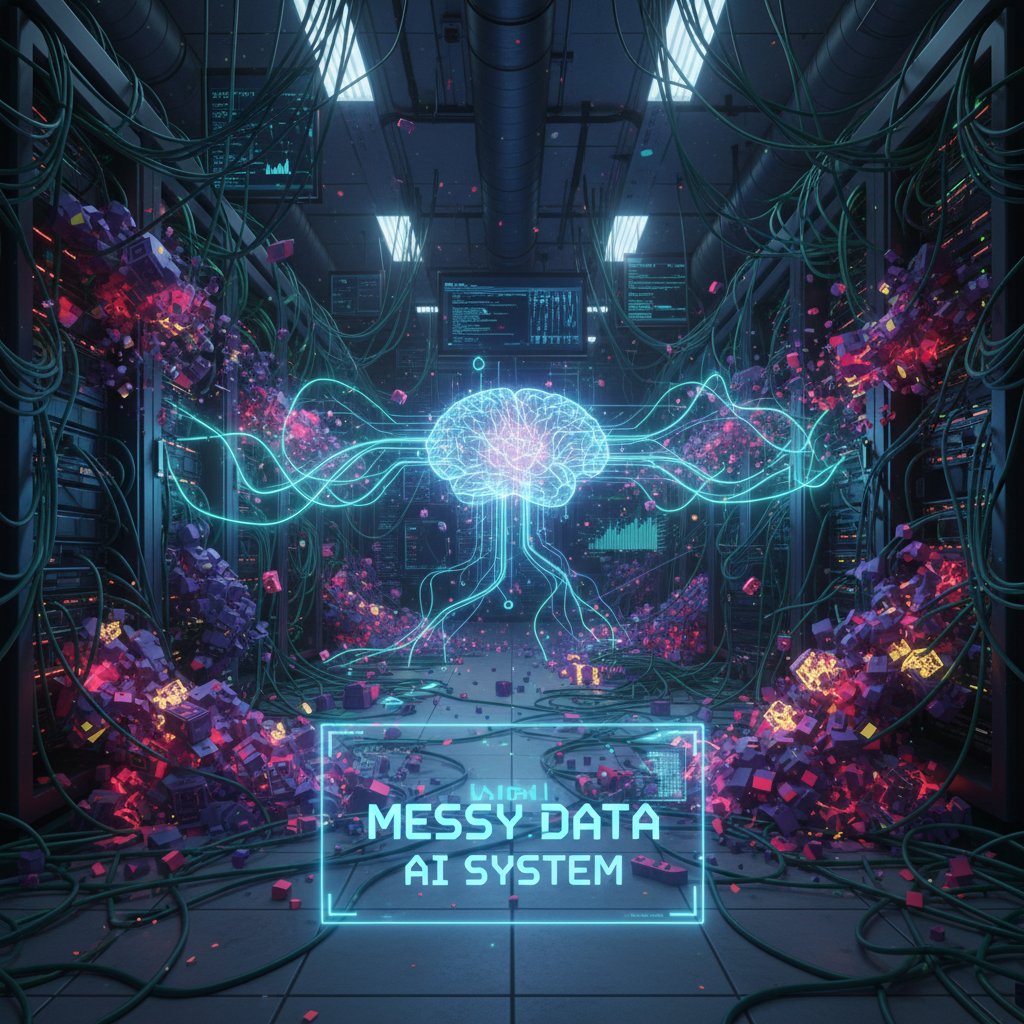
Unilever, for example, succeeded with AI-driven planning only after a massive overhaul of their data infrastructure, enabling real-time demand forecasting from diverse sources (Forbes, 2024). On the flip side, countless organizations have suffered supply chain meltdowns or cost overruns because faulty inputs—duplicate SKUs, outdated supplier info, or missing sales data—led their AI astray. Data disasters aren’t just embarrassing; they’re existential threats to your competitive edge.
Humans still matter (but not how you think)
The AI revolution hasn’t killed human judgment; it’s redefined it. In AI-driven business resource planning, humans shift from number crunchers to critical thinkers—overseeing AI recommendations, testing their plausibility, and making the calls when models stumble.
"The best AI still needs a gut check." — Priya, business strategist
- Skipping human review of AI-generated plans—especially in crisis mode.
- Relying on AI outputs for high-impact, irreversible decisions without contextual checks.
- Ignoring frontline feedback when AI recommendations “feel off.”
- Failing to document why certain AI prescriptions were accepted or overridden.
- Assuming AI can spot every risk when data quality is sketchy.
Smart organizations train their teams to challenge the machine when something smells wrong. As research consistently shows, hybrid intelligence—where humans and AI play off each other’s strengths—drives the best outcomes.
Case studies: Wild wins, epic fails, and hard lessons
The overnight supply chain turnaround
When a European retailer’s supply chain buckled during the 2023 holiday rush, panic set in. Shelves were empty, customers furious. Their traditional ERP, paralyzed by lagging data, was blind to real-time disruptions. Desperate, they turned to an AI-driven planning pilot. Within days, the system ingested live sales, supplier statuses, and logistics updates, rebalancing inventory across stores dynamically.

The result? Stockouts dropped 45%, markdown costs halved, and customer satisfaction rebounded. According to company reports verified by Forbes, 2024, these gains directly correlated with AI-powered forecasting and real-time optimization. This is AI-driven business resource planning at its best: fast, adaptive, and measurable.
Failure files: When AI goes sideways
Not every AI deployment ends in applause. In 2024, a North American manufacturer’s attempt to automate production scheduling with AI ended in chaos. Despite bold promises, the AI failed spectacularly, causing costly shutdowns.
- Data inputs were riddled with errors and missing values.
- The AI model was trained on outdated scenarios, missing recent market changes.
- Human operators felt sidelined and ignored early warning signs.
- Integration with legacy systems was rushed, creating hidden bottlenecks.
- The company lacked a clear fallback plan for when the AI failed.
The fallout? Production delays, angry customers, and a bruised bottom line. Lessons learned: invest in data quality, keep humans in the loop, and never roll out AI without rigorous testing and fallback protocols.
Unlikely heroes: Niche sectors using AI for big gains
It’s not just Fortune 500s making headlines. Nontraditional sectors are quietly reaping outsized benefits from AI-driven business resource planning. Agricultural co-ops use AI to balance crop yields and market prices; nonprofits leverage machine learning to optimize resource allocation for relief efforts.
| Sector | Average ROI (2024) | Notable Advantages |
|---|---|---|
| Agriculture | 32% | Weather-adaptive planning, yield boost |
| Nonprofits | 28% | Donation allocation, impact tracking |
| Logistics SMBs | 25% | Cost control, route optimization |
| Municipalities | 22% | Public resource planning, transparency |
Table 2: ROI of AI-driven business resource planning by sector.
Source: Original analysis based on ResearchGate, 2024, Forbes, 2024
The surprise? These sectors leapfrog traditional players by bypassing old systems entirely, skipping straight to agile, cloud-based AI tools that don’t require armies of consultants or IT staff.
Breaking the myths: What AI-driven planning can—and can’t—do
Debunking the job apocalypse
AI’s specter as a job killer is overblown. What’s actually happening is a seismic shift in human roles. AI-driven business resource planning automates grunt work—manual data crunching, spreadsheet gymnastics, and repetitive reporting—but it elevates roles that demand creativity, cross-functional judgment, and rapid adaptation.
"AI took away grunt work, not my job." — Alex, supply chain analyst
AI frees up human capital for higher-value activities: scenario planning, supplier negotiation, and crisis management. And as research from Microsoft Tech Community, 2024 confirms, businesses that re-skill workers for these new tasks see both productivity jumps and higher retention.
Myth vs. reality: Predictive vs. prescriptive AI
The most common confusion? Predictive and prescriptive AI aren’t interchangeable. Predictive models tell you what’s likely to happen: “Sales will spike next quarter.” Prescriptive AI goes further, recommending what action to take: “Increase production by 15% in region X to avoid stockouts.”
Definition list:
- Predictive AI: Uses historical and current data to forecast future events (e.g., sales, demand).
- Example: “Forecasting next month’s demand for a new product line.”
- Prescriptive AI: Analyzes options and recommends specific courses of action to achieve goals.
- Example: “Adjusting supplier contracts based on predicted shortages.”
Why does this matter? Predictive AI is only as good as your response; prescriptive AI automates the response itself. For business leaders, the implication is direct: prescriptive systems can supercharge decision velocity but demand rigorous governance to avoid runaway automation.
AI as savior—or scapegoat?
When things go sideways, AI often becomes a convenient scapegoat. “The model made the call” is an all-too-familiar refrain after a disastrous forecast or a botched allocation. But savvy businesses use AI not as a shield, but as a force multiplier and a mirror—illuminating their own blind spots and inefficiencies.
- Using AI to optimize facilities scheduling in hybrid workplaces.
- Deploying AI to detect compliance risks or fraud in financial planning.
- Applying machine learning to social data for better product launches.
- Leveraging AI-driven planning to route field technicians dynamically.
- Integrating public health data into staffing models for hospitals.
Accountability doesn’t vanish with automation. Ethical and organizational responsibility must be embedded in every stage of AI deployment—otherwise, you’re just building smarter ways to fail.
The new playbook: Strategies for AI-driven business planning success
Building your AI toolkit: What really matters
With a growing field of AI business planning tools, it’s tempting to chase feature lists. But the real differentiators are less obvious. Prioritize platforms that deliver transparent, explainable recommendations; support seamless integration with your data sources; and enable rapid, no-code customization by business users.
| Feature | AI-driven Planning | Traditional ERP | Hybrid Solutions |
|---|---|---|---|
| Technical skill req. | No | Yes | Limited |
| Customization | Full support | Limited | Moderate |
| Deployment speed | Rapid | Slow | Variable |
| Cost-effectiveness | High | Moderate | Moderate |
| Scalability | Highly scalable | Limited | Moderate |
Table 3: Feature matrix comparison for business resource planning tools.
Source: Original analysis based on futuretoolkit.ai
Customization and adaptability aren’t luxuries—they are survival traits. As your business evolves, your AI toolkit must flex with you, not box you in.
Avoiding the top 5 implementation traps
Rolling out AI-driven planning is a minefield. The most common traps? Chasing technology without a clear strategy, underestimating data needs, sidelining users, failing to plan for change management, and skipping robust testing.
- Define a clear business objective. Don’t deploy AI for AI’s sake—set measurable goals.
- Invest in data quality upfront. Clean, complete, and current data is non-negotiable.
- Keep humans in the loop. Empower staff to review, override, and improve AI recommendations.
- Test before you trust. Run pilots, stress-test scenarios, and have fallback protocols.
- Plan for continuous improvement. Every AI deployment is a living system, not a one-time fix.
A resource like futuretoolkit.ai offers guidance and checklists to keep your project on track—no matter your industry or starting point.
Scaling up without losing your soul
AI can supercharge scale, but unchecked, it can also erode your culture. Smart leaders strike a balance: they build ethical frameworks around automation, foster transparent communication, and prioritize diversity of input when training models.

Companies that thrive are those that keep their values front and center—even as algorithms take on greater roles. Transparency, cross-team collaboration, and regular review cycles are the antidote to runaway automation.
Industry deep dives: Where AI-driven planning is changing the game
Manufacturing: From guesswork to precision
AI-driven planning is revolutionizing manufacturing supply chains. By feeding production schedules, supplier performance, and demand signals into real-time optimization engines, manufacturers achieve error rates once thought impossible. According to ResearchGate, 2024, predictive maintenance with AI reduces downtime by up to 50%, and companies report up to a 30% reduction in operational costs.
| Metric | Traditional ERP | AI-driven Planning |
|---|---|---|
| Forecast accuracy | 70% | 92% |
| Cost reduction | 10% | 30% |
| Error rate | 6% | 2% |
| Downtime (unplanned) | 8% | 4% |
Table 4: Efficiency and error reduction in AI-optimized manufacturing, 2024.
Source: ResearchGate, 2024
The impact is profound: less waste, faster changeovers, and greater resilience amid global shocks.
Retail: Personalization meets inventory mastery
Retailers are on the bleeding edge of AI-driven business resource planning, using advanced algorithms to forecast demand, optimize pricing, and personalize customer experiences. AI models map inventory in real time, cutting overstock and understock rates dramatically.

Customers feel the difference: fewer “sorry, we’re out” moments, more tailored offers, and seamless omnichannel experiences. As verified by Forbes, 2024, retailers using AI-driven planning see a 30% improvement in inventory accuracy and up to 40% faster response to demand fluctuations.
Healthcare: Planning for uncertainty
Healthcare brings unique complexity to AI-driven planning: demand is unpredictable, stakes are high, and regulations are unforgiving. Yet, when done right, AI allows for smarter scheduling, better inventory management for critical supplies, and more responsive patient care.
- Assess your current data landscape. Understand what you have and what’s missing.
- Centralize and clean your datasets. Inconsistent records cripple AI effectiveness.
- Start with a targeted pilot. Choose a high-impact use case: appointment scheduling, equipment allocation, or staffing.
- Engage clinicians and staff early. Their feedback will flag gaps and build trust.
- Iterate and scale. Use pilot results to refine models and expand to other departments.
AI can’t replace clinical judgment, but it empowers healthcare leaders to balance operational efficiency with patient needs—when deployed thoughtfully.
Controversies, risks, and the dark side of AI-driven business planning
Bias, transparency, and ‘ghost’ decisions
AI’s biggest risk isn’t mechanical failure; it’s invisible bias. When algorithms are trained on skewed data or unrepresentative samples, they perpetuate and amplify existing inequities. The result? “Ghost” decisions—outcomes no one intended, but no one can explain, either.

Transparency is critical, yet many AI systems operate as black boxes. Trust erodes quickly when stakeholders don’t understand how decisions are made or can’t challenge suspect recommendations. This is why leading organizations demand explainable AI, regular audits, and open channels for dissent.
Hidden costs and organizational inertia
AI isn’t cheap. The sticker price is only the start—hidden costs lurk in integration, training, maintenance, and lost productivity during change. According to Microsoft Tech Community, 2024, companies often underestimate the total cost of ownership by 25% or more.
| Cost Factor | Short-term Investment | Long-term ROI |
|---|---|---|
| Software/tools | High | Amortized |
| Integration | High | Moderate |
| Training & change mngmt. | Moderate | High |
| Maintenance/upgrades | Ongoing | Moderate |
| Process redesign | High | Variable |
Table 5: Cost-benefit breakdown for AI-driven planning implementation.
Source: Microsoft Tech Community, 2024
And then there’s resistance: cultural inertia, fear of job displacement, and “we’ve always done it this way” thinking. Without strong leadership, even the world’s best AI will languish—or actively backfire.
When not to use AI-driven planning
Despite the fever for automation, there are times when traditional, human-in-the-loop methods outperform even the smartest AI:
- Data is too sparse, noisy, or rapidly changing for reliable modeling.
- Regulatory compliance or ethical risks outweigh automation benefits.
- The cost of failure is existential (e.g., critical healthcare, public safety) and no fallback exists.
- Organizational readiness is lacking—no buy-in, weak data culture, or skills gap.
A checklist for red flags includes over-automation, lack of transparency, excessive vendor dependence, and a mismatch between AI outputs and ground-truth realities. Resources like futuretoolkit.ai can help you evaluate where AI adds value—and where it may not.
The future of business resource planning: What’s next?
The decentralized, real-time planning revolution
The next chapter of business resource planning is decentralization—moving decision-making out of the ivory tower and into the hands of local teams, empowered by real-time AI insights. Instead of top-down mandates, businesses orchestrate resources fluidly, responding to market signals as they emerge.

This shift requires new operating models, flatter hierarchies, and a culture that trusts data without abdicating common sense.
AI and the human factor: Co-evolution or collision?
Businesses face a stark choice: treat AI as a threat to be managed, or as a creative partner to be cultivated. The organizations thriving today are those that encourage humans and AI to challenge each other—testing, refining, and learning together.
"The future belongs to companies that let humans and AI challenge each other." — Morgan, innovation lead
Continuous learning, cross-disciplinary teams, and relentless curiosity are the antidotes to stagnation. It’s not about replacing people; it’s about unleashing their potential with machine support.
2025 and beyond: Predictions and provocations
The evolution of AI-driven business planning is accelerating—a timeline written not by vendors, but by those willing to experiment and fail forward.
- 2022: Early pilots, high failure rates, learning the hard way.
- 2023-2024: Mainstream adoption in retail, finance, and manufacturing.
- 2025: Decentralized, real-time planning goes live in agile organizations.
- 2026+: AI becomes the invisible backbone of resource allocation, integrated into every workflow.
- 2027+: Regulation and ethics catch up; only explainable, auditable AI survives scrutiny.
Ethical, regulatory, and market forces will shape which AI systems persist. The winners? Those who combine technical muscle with humility, transparency, and a willingness to challenge their own assumptions.
Quick reference: Your AI-driven business planning toolkit
Checklist: Are you ready for AI-driven planning?
Implementing AI-driven business resource planning is not for the faint of heart. Ask yourself:
- Do you have a clear business case and measurable objectives?
- Is your data complete, clean, and accessible?
- Have you secured buy-in from all relevant stakeholders?
- Is your team trained to interpret and challenge AI outputs?
- Is there a plan for testing, monitoring, and fallback?
- Do you have resources for ongoing maintenance and improvement?
- Are ethical and transparency standards embedded in your process?
If you tick most of these boxes, you’re ready to explore options like futuretoolkit.ai—a starting point for accessible, customizable, and effective AI-driven business planning.
Jargon buster: Speak AI business planning like a pro
Knowing the language gives you power at the negotiating table—and on the front lines. Demystifying AI planning not only empowers stakeholders, it also inoculates your business against vendor overreach.
Top 10 AI-driven business planning terms:
- AI-driven business resource planning: Leveraging artificial intelligence to orchestrate business resources dynamically, improving accuracy and responsiveness.
- ERP (Enterprise Resource Planning): Integrated software platforms that manage business processes; now evolving towards AI augmentation.
- Predictive analytics: Statistical techniques used to forecast future trends and events.
- Prescriptive analytics: Analytical tools that recommend optimal actions based on predictions.
- Digital twin: Live virtual model of a physical business process or system.
- Autonomous ERP: AI-powered systems that automate end-to-end planning with minimal human intervention.
- Data lake: Centralized repository for storing all forms of business data, structured and unstructured.
- Machine learning: Algorithms that learn patterns from data to make predictions or decisions.
- Natural language processing (NLP): AI techniques for understanding and processing human language.
- Explainable AI: Systems designed to make their recommendations transparent and understandable to users.
Understanding these terms arms you against confusion and enables smarter, more confident decisions.
Conclusion
AI-driven business resource planning is not a fairytale of instant success or a horror story of lost jobs and runaway robots. It’s a battlefield—one where the spoils go to those who embrace the brutal realities: data is messy, change is hard, and no algorithm saves you from your own blind spots. With up to 30% cost savings and 40% better forecasting on the table for those who get it right, the stakes couldn’t be higher. But the real edge lies in your willingness to challenge the hype, invest in quality data, and keep humans in the decision loop. Tools like futuretoolkit.ai exist not to replace your expertise, but to amplify it—turning hard-earned experience into strategic muscle. In the end, the AI revolution isn’t about technology. It’s about courage, skepticism, and the relentless pursuit of reality over rhetoric. Ready to outsmart the future? Your move.
Sources
References cited in this article
- Alterbridge Strategies – 7 Brutal Truths About AI(alterbridgestrategies.com)
- Forbes – How AI Is Transforming Business Planning(forbes.com)
- ResearchGate – Game Changing Value from AI(researchgate.net)
- Microsoft Tech Community(techcommunity.microsoft.com)
- PrometAI Blog(prometai.app)
- McKinsey – Charting a Path to the Data- and AI-Driven Enterprise of 2030(mckinsey.com)
- WEKA – 2024 Global Trends in AI(weka.io)
- BCG – Transforming Integrated Business Planning Platforms(bcg.com)
- FinancesOnline – AI Trends 2024(financesonline.com)
- Gartner – Predicts 2024: ERP Evolves Planning With Automation and AI(gartner.com)
- Nestell & Associates – The Future of ERP: How AI is Revolutionizing ERP(nestellassociates.com)
- AI Multiple – ERP AI Case Studies(research.aimultiple.com)
- Forbes – Disrupting The ERP Market With AI(forbes.com)
- Blainy – AI Statistics 2024(blainy.com)
- Forbes Tech Council(forbes.com)
- McKinsey – The State of AI in Early 2024(kafkai.com)
- Vena Solutions – 80 AI Statistics Shaping Business in 2024(venasolutions.com)
- Dorik – Debunking Common AI Implementation Myths(dorik.com)
- Full Stack AI – Top 10 AI Myths Debunked(fullstackai.co)
- Forbes Tech Council – 18 Tech Experts Discuss AI Myths(forbes.com)
- Elastic Blog – Generative AI Hype: Debunking Myths(elastic.co)
- Eviden – Debunking AI Myths 2025(eviden.com)
Empower Your Business with AI
Futuretoolkit.ai empowers businesses of all sizes to harness the power of AI effortlessly, offering specialized solutions across diverse business functions without the need for technical expertise. Whether it's automating customer interactions, optimizing operations, or analyzing complex data, our AI toolkit streamlines processes, increases efficiency, and fuels growth. With easy integration, intuitive interfaces, and powerful AI models, Futuretoolkit.ai offers unmatched accessibility and value, enabling users to achieve measurable outcomes quickly and cost-effectively.
Get startedReady to Empower Your Business?
Start leveraging AI tools designed for business success
Frequently Asked Questions
What are the main limitations of traditional ERP systems?
Traditional ERP systems are built with hard-coded processes and sluggish updates that struggle with real-time demands and rapid market shifts. According to a 2024 ResearchGate investigation, legacy ERP systems are cited as a top bottleneck in responding to market changes, costing companies time and relevance, and they were designed for an era of forecastable demand rather than today's volatile, globalized business environment.
How does AI-driven business resource planning differ from traditional ERP?
AI-driven business resource planning enables genuine real-time, dynamic allocation of people, inventory, and capital, moving beyond the static dashboards and weekly or quarterly reports of traditional systems. Rather than replacing ERP entirely, AI serves as an evolutionary leap that cuts through operational inertia.
What does the article say are the key factors determining success with AI business planning?
According to the article, real success depends on data quality, cultural resistance, and the willingness to do what others won't. The article emphasizes that winning with AI-driven resource planning isn't simply about buying the latest tool, but understanding how machine intelligence, data, and human effort interact within your organization.
Is AI-driven business resource planning a straightforward solution to operational challenges?
No—while AI-driven business resource planning offers real successes, the article cautions that there are numerous pitfalls and costly missteps involved. The article warns that the narrative around AI is often seductive marketing, and that organizations need to look past the hype to confront the brutal realities beneath the glossy veneer.
Continue Reading
Keep exploring Comprehensive business AI toolkit

Why AI-Powered Resource Planning Analytics Projects Fail

AI-Driven Strategic Resource Allocation: Winners and Losers

How AI-Driven Strategic Resource Management Software Actually Works

AI-Powered Resource Management: Separating Hype From Reality

AI-Powered Business Planning Software: Capabilities and Limitations
