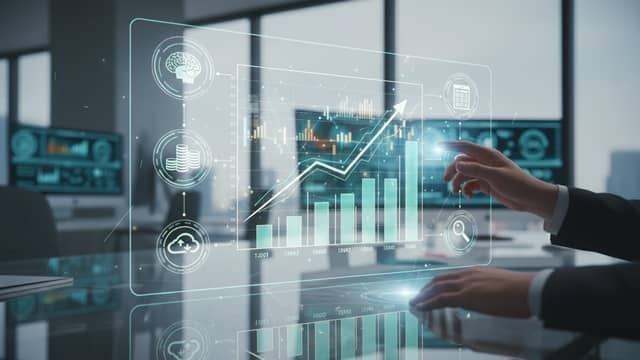
What does predictive analytics do for a business?
Predictive analytics uses historical and current data to estimate future outcomes such as revenue, sales volumes, customer behaviour or equipment failures. Businesses apply it to forecasting, customer insight and maintenance planning so decisions rest on projected patterns rather than intuition alone.
How is AI used in business intelligence reporting?
AI is applied to automate report generation, summarise data and surface patterns across large datasets that manual analysis would miss. The articles here also discuss the trade-off: automated reporting can bury the context and questioning that produce genuine insight.
Where does AI analytics tend to fail?
Failures typically appear when data quality is poor, when models are trusted without review, or when the tool is adopted without a clear decision it is meant to support. Finance and risk applications covered in this section show both strong results and cases where automated outputs backfire.